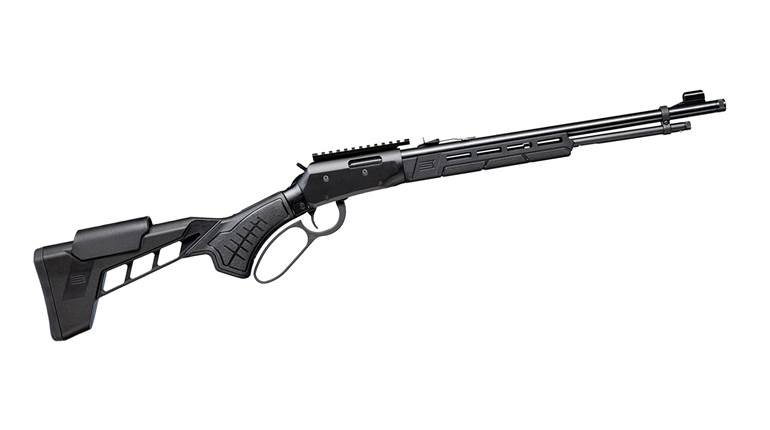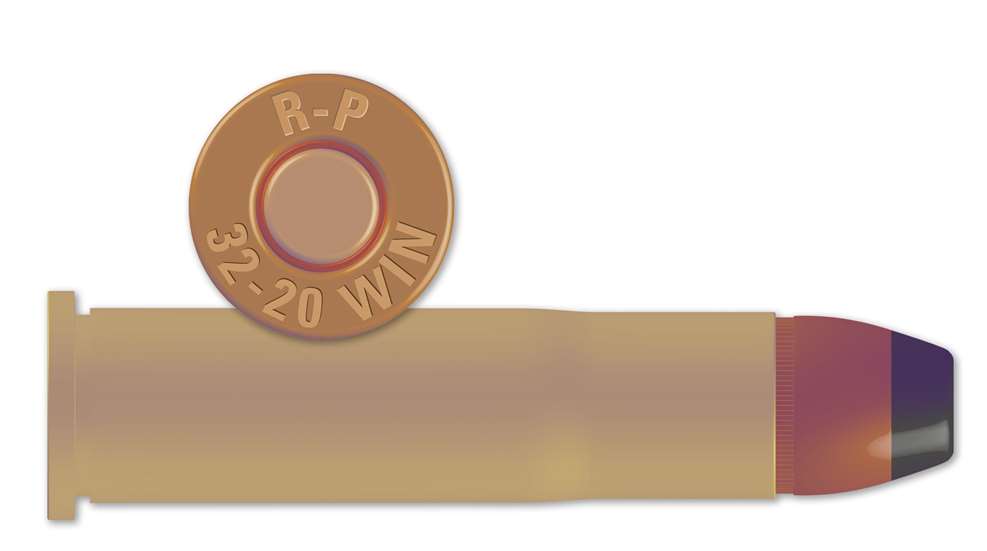
The .32-20 Winchester Center Fire gained a fair following after it was introduced in 1882 in the Winchester Model 1873 rifle as a cartridge of modest power and good accuracy for small-game hunting and target shooting. Through the years, it has been chambered in a host of rifles and handguns, smoothly making the changeover from blackpowder to smokeless propellants.
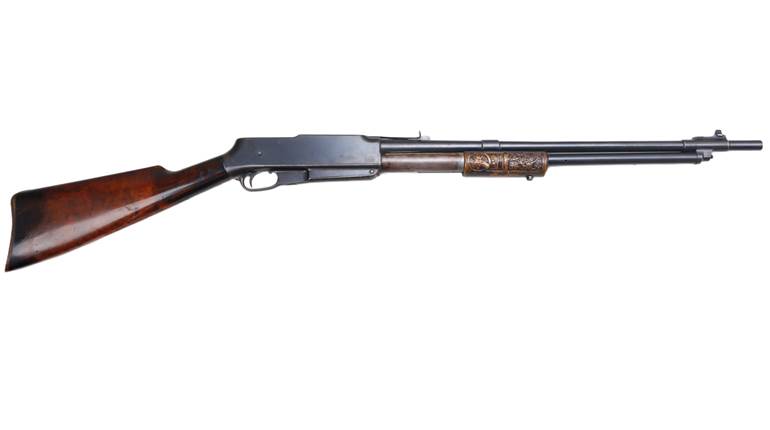
 Its original factory load was 20 grains of blackpowder that fired a 115-grain lead bullet at about 1,170 f.p.s. An ancient box of Western .32-20 ammunition of mine loaded with 115-grain jacketed-soft-nose bullets turned in a velocity of 1,139 f.p.s. fired from the 24" barrel of my Winchester Model 1892 rifle. Western and Remington also introduced high-speed loads for rifles; an old box of Western Super-X .32-20 Win. High Velocity cartridges loaded with 80-grain jacketed point-expanding bullets registered a velocity of 1,934 f.p.s. from the Model ’92. A warning on the box states, “Do Not Use in Pistols, Revolvers or M73 Winchester Rifles.” Today’s .32-20 factory loads defer to those relatively frail guns with 100- and 115-grain lead bullets fired at between 1,000 and 1,200 f.p.s. Fired through a strong rifle like the Model ’92, 100-grain bullets can be propelled upwards of 1,700 f.p.s., however, doing so is hard on cases, which are extremely scarce these days. Plus, with a rifle’s open sights, it’s doubtful that shots will be taken past 100 yards.
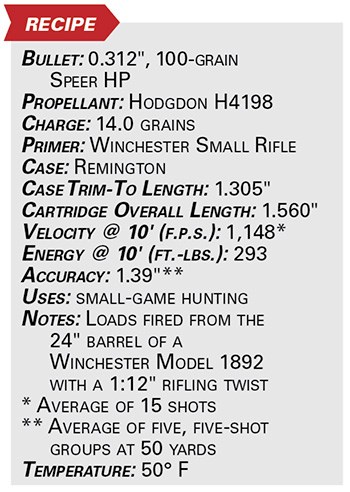
Unlike some old cartridges, jacketed bullets for the .32-20 Win. are still commonly available because of the popularity of .312-cal. handgun cartridges such as the .327 Fed. Mag. In my testing, Speer 100-grain bullets reached a leisurely speed of 1,148 f.p.s. from the Winchester ’92, and recoil barely bumped the rifle’s front sight off target. My Model ’92 was made in 1894, and working its lever cycled the action as smoothly as water pouring from a glass.
Most Popular