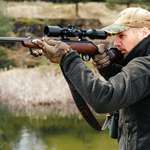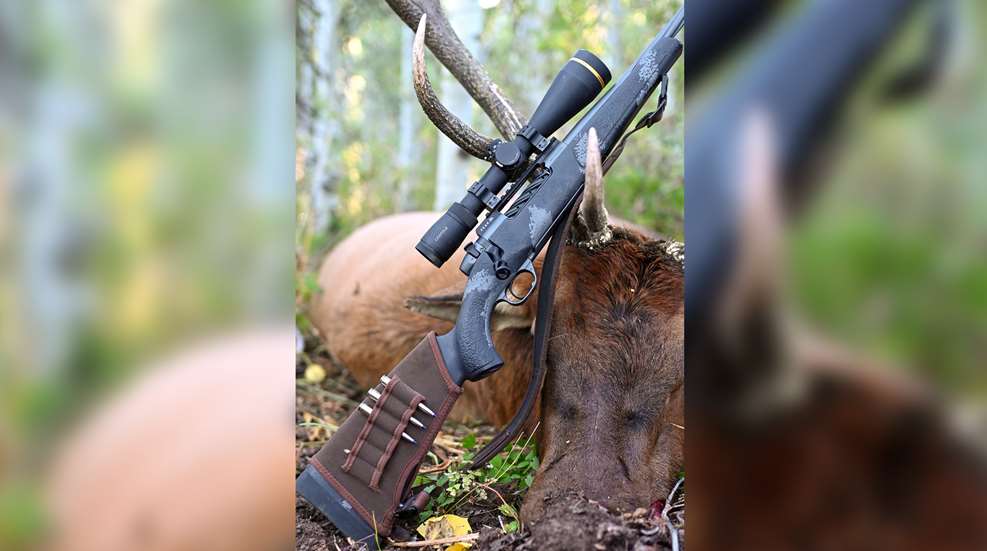
As multiple gunmakers hustled to produce 7 mm Backcountry prototypes in the weeks leading up to our hunt, it was lucky happenstance that Weatherby was first to the gate. Mostly because of long admiration for the company and family behind it, the Wyoming brand was my preference, and, in retrospect, the supplied Mark V Live Wild model is a perfect fit for the new cartridge.
First and foremost among its attributes, given the elevated pressures, is action strength, and there’s no doubt the Mark V’s nine-lug lockup, fortified by a vented bolt and enclosed shroud, is rock-solid. Since its origination in 1958, it’s been dubbed “the world’s strongest action,” by the maker and others, and while I can’t verify that, I was happy to have such muscle on my side. The action’s famously slick, 54-degree bolt lift is likewise top of the pack. The 20", No. 2-contour barrel on the pre-production Live Wild test model was not as wispy-looking as some I’ve used, and the overall balance yielded enough muzzle steadiness for purposeful field marksmanship. Based on the paltry copper fouling I found, the bore must be mirror-smooth, and sandbag groups fired with the single available load were more than satisfactory.
While not showy, almost everyone in camp complimented the Live Wild’s looks. That starts with the stock’s hand-sponged paint job in a versatile camouflage pattern that belongs in the mountains. Spiral fluting on the barrel and bolt body, plus a skeletonized bolt handle, make for pleasing accents and practical weight reduction.
At first, it had been my inclination to lighten the user-adjustable Trigger Tech trigger from the factory-set 4 lbs., 8 ozs. But, partly because it was breaking so cleanly and partly because I was so short on ammo, I held off until after the hunt and it worked fine that way. Then, eased down to 2 lbs., 8 ozs., it helped shave a few tenths of an inch off my benchrest groups.
Though we didn’t have to do much hard hiking, the 5-lb., 7-oz., rifle is an obvious match for marathon alpine hunters, and the balance will aid shot opportunities from black timber to wide-open scree fields.
Something else I appreciate is the suggested pricing of $1,649, according to weatherby.com, which makes it one of the most affordable current Mark Vs, and among the few early 7 mm Backcountry rifles priced under $2,000. Live Wild models can be had with 22", 24" or 26" barrels amongst the 20 chamberings offered in addition to 7 mm Backcountry, but casting objectivity to the wind, I heartily recommend any prospective customer whose best hunts entail long, hard, uphill miles, to look at this rifle/cartridge combo first.
Most Popular