** When you buy products through the links on our site, we may earn a commission that supports NRA's mission to protect, preserve and defend the Second Amendment. **
Gallery
1 of 1
Loading
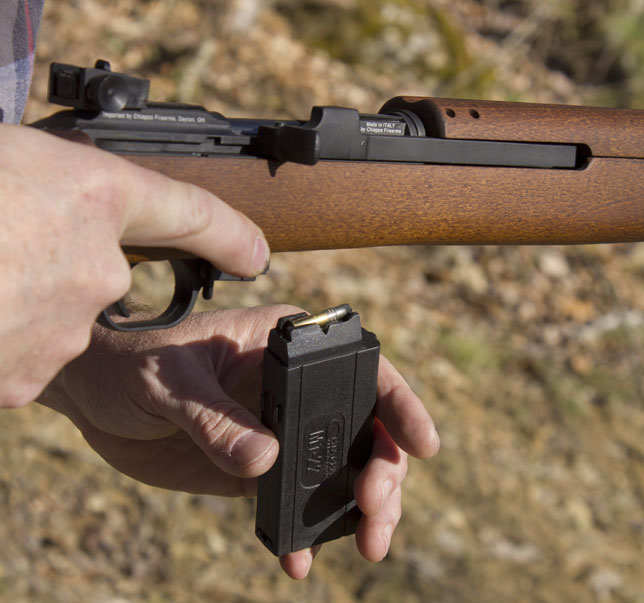
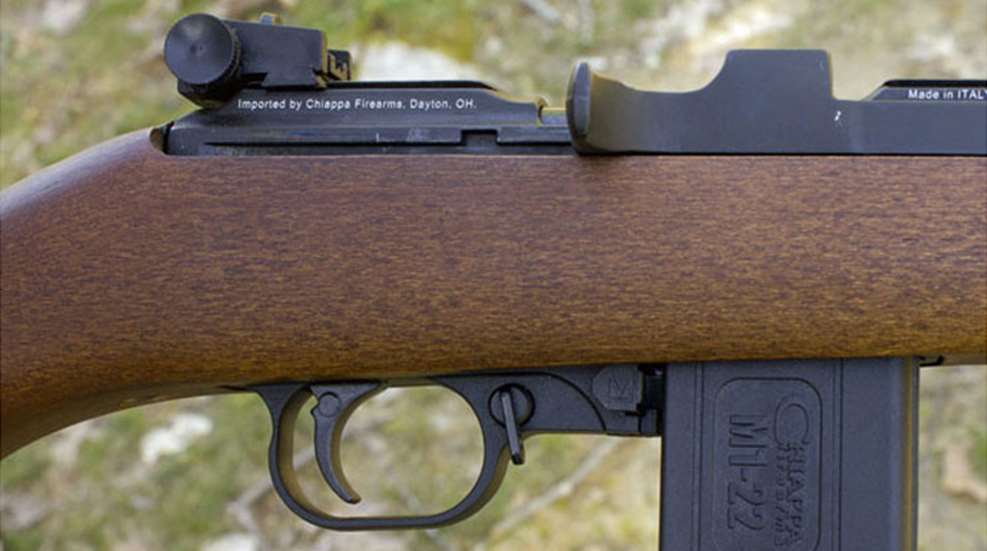
To load the Citadel M1-22, insert the magazine, pull the operating handle to the rear and release. Notice the dovetail scope mounts forward and aft of the action, which allows scope mounting.
1 of 1
Sights and Optics
The rear sight on the M1-22 attaches directly to the dovetailed receiver. It is fully adjustable and can be removed so that a scope can be installed.
1 of 1
Replication
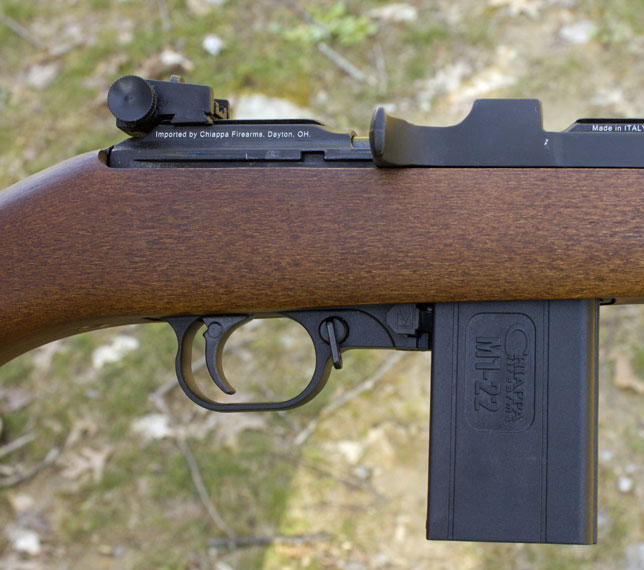
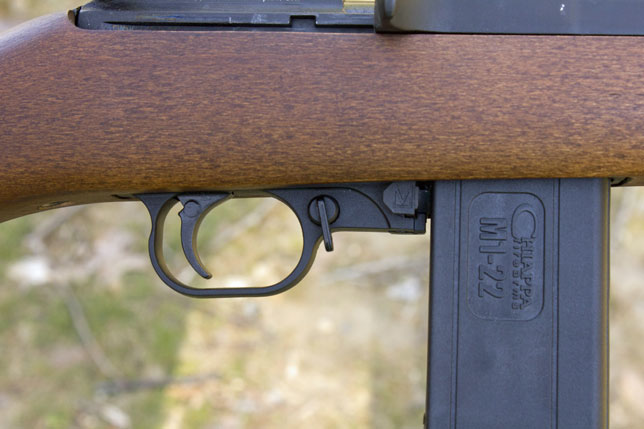
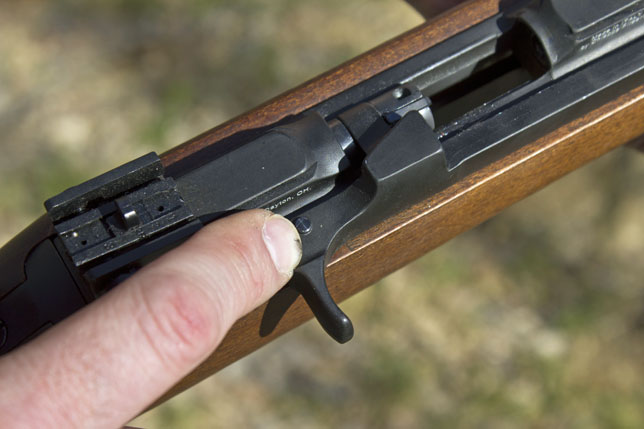
On the Citadel M1-22, the safety and magazine release replicate those on original M1 Carbines.
1 of 1
Butt Plate
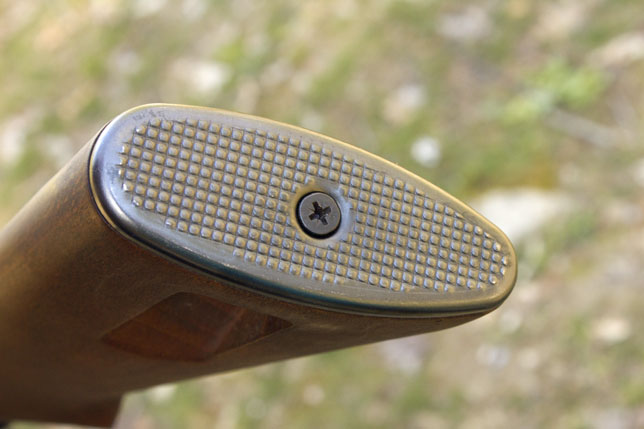
Citadel's M1-22 is fitted with a steel buttplate that copies those on the original M1 Carbine.
1 of 1
Oiler/Sling
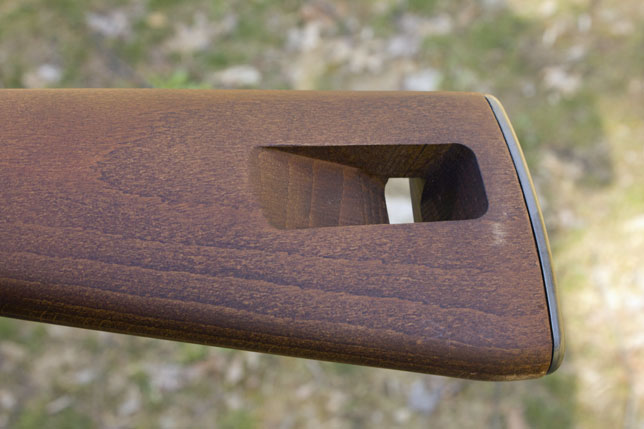
Like with original M1 Carbines, the Citadel M1-22 has the cut out in the butt stock for the oiler/sling combination.
1 of 1
Bayonet Lug
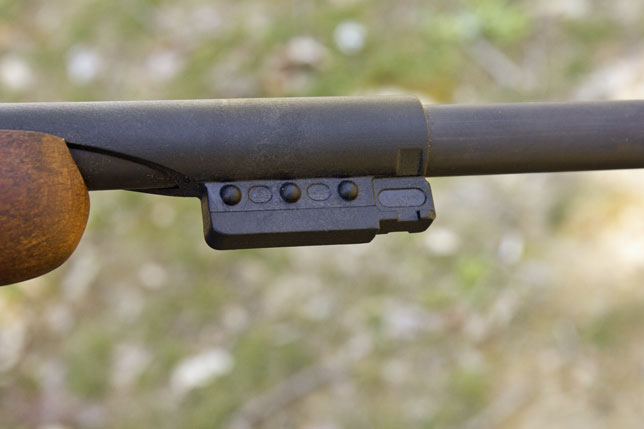
True to the configuration of the original M1 Carbine, the new Citadel M1-22 has the bayonet lug.
1 of 1
Early Problems
On the original M1-22 provided by Chiappa, which was from a first production run, the extractor did not work properly. Chiappa assured this problem had been corrected and the replacement rifle extracted fired and unfired cases flawlessly.
1 of 1
Operating Lever
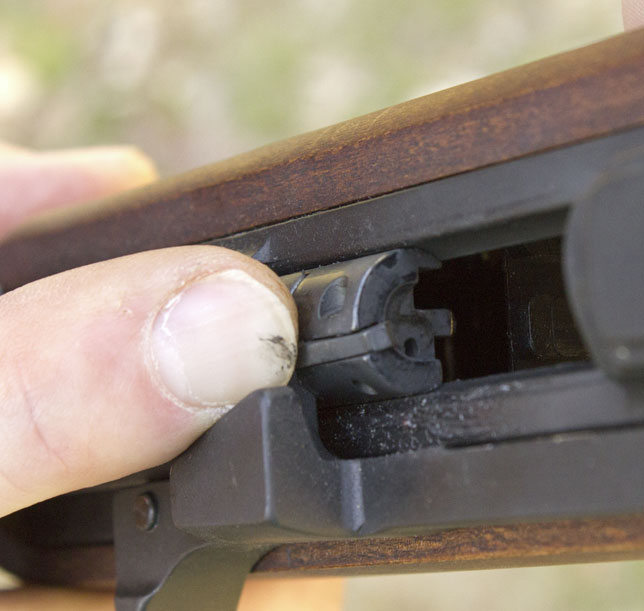
On the M1-22's operating lever is a small button that can be depressed when the lever is pulled to the rear. If this button is depressed the action is locked open.
1 of 1
Magazine
The 10-round magazines on the Citadel M1-22 were easy to load, insert and remove from the rifle. The magazine follower also causes the action to lock open after the last round has been fired.
If there are two things that are popular in the firearms world right now, it is suppressors and pistol-caliber carbines (PCC). Silent Steel USA has both bases covered with its new Streamer Series PCC suppressors.

Colt Canada has been awarded a $273 million contract to modernize Canada's fleet of military rifles through the Canadian Modular Assault Rifle Project.

Few proprietary eponyms in the knife world are as well-recognized as KA-BAR, the combat/utility design originally requested by the U.S. Military during World War II and used with success by countless troops in conflicts since.
In colonial America, it was firearms from other countries that armed soldiers, but for most of the civilian populace, American-made fowlers fit the bill.