In the mid-19th century, a number of notable gunmakers developed transitional designs as firearms evolved from the muzzleloaders to breechloaders. Westley Richards, a British firm, developed a breechloading cavalry carbine that, due to its unique mechanism, earned the name "Monkey Tail" carbine. Watch our "American Rifleman Television" I Have This Old Gun segment above to learn the history of this unique "capping breechloader."
"Westley Richards is a venerable English firearms manufacturer. It's been around since 1812, and it's still currently manufacturing firearms to this day," NRA Museum Director Philip Schreier said. "In the 19th century, one of their innovative military guns was what we now call the 'Monkey Tail carbine.' It was an attempt to come up with a single-shot breechloading, cartridge-firing weapon that was a carbine by nature, something shorter to use while mounted. And it had an interesting lever that popped up from the back of the gun that went over the wrist of the longarm and exposed the breech."
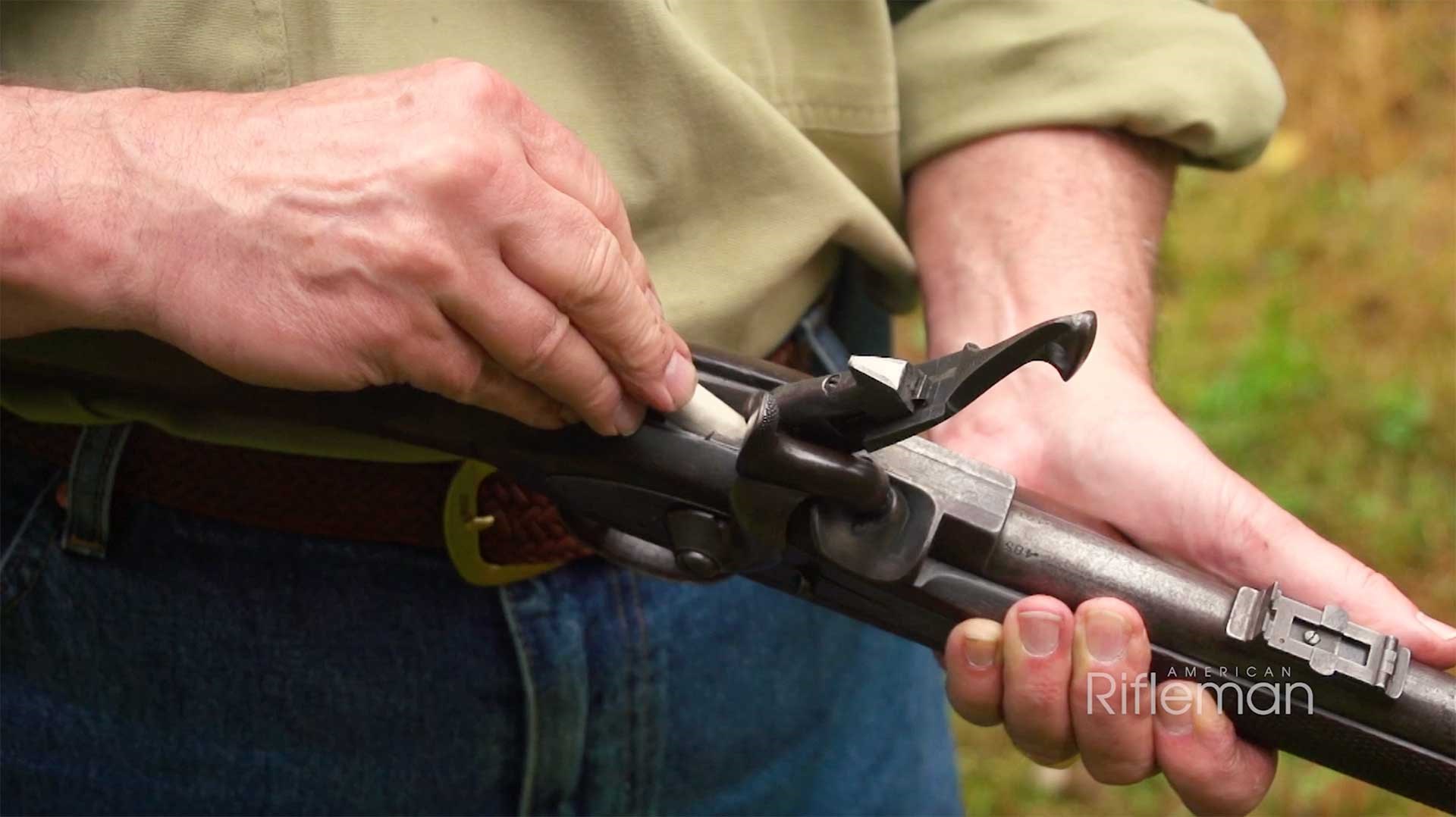
As a capping breechloader, the Monkey Tail carbine required a separate primer that was added to a percussion nipple by the shooter and detonated with an external hammer, much like previous muzzleloading arms. However, the Westley Richards design made use of not just a novel breechloading mechanism but also a unique cartridge design, too.
"The Westley Richards, unlike a lot of capping breechloaders at the time, made use of a combustible cartridge rather than a metallic cartridge," American Rifleman Executive Editor Evan Brune said. "So this was a paper-wrapped projectile with a felt wad at the base. Now the reason for the felt wad was they needed some way to seal the breech against excess gas leakage, and that felt was intended to provide that."
Once the gun was fired, the felt wad from the previous shot remained in the breech and was pushed forward into the front of the chamber by the nose of a fresh cartridge. Upon firing a subsequent shot, the wad would be blown out of the barrel, clearing the action and also helping to reduce black powder fouling.
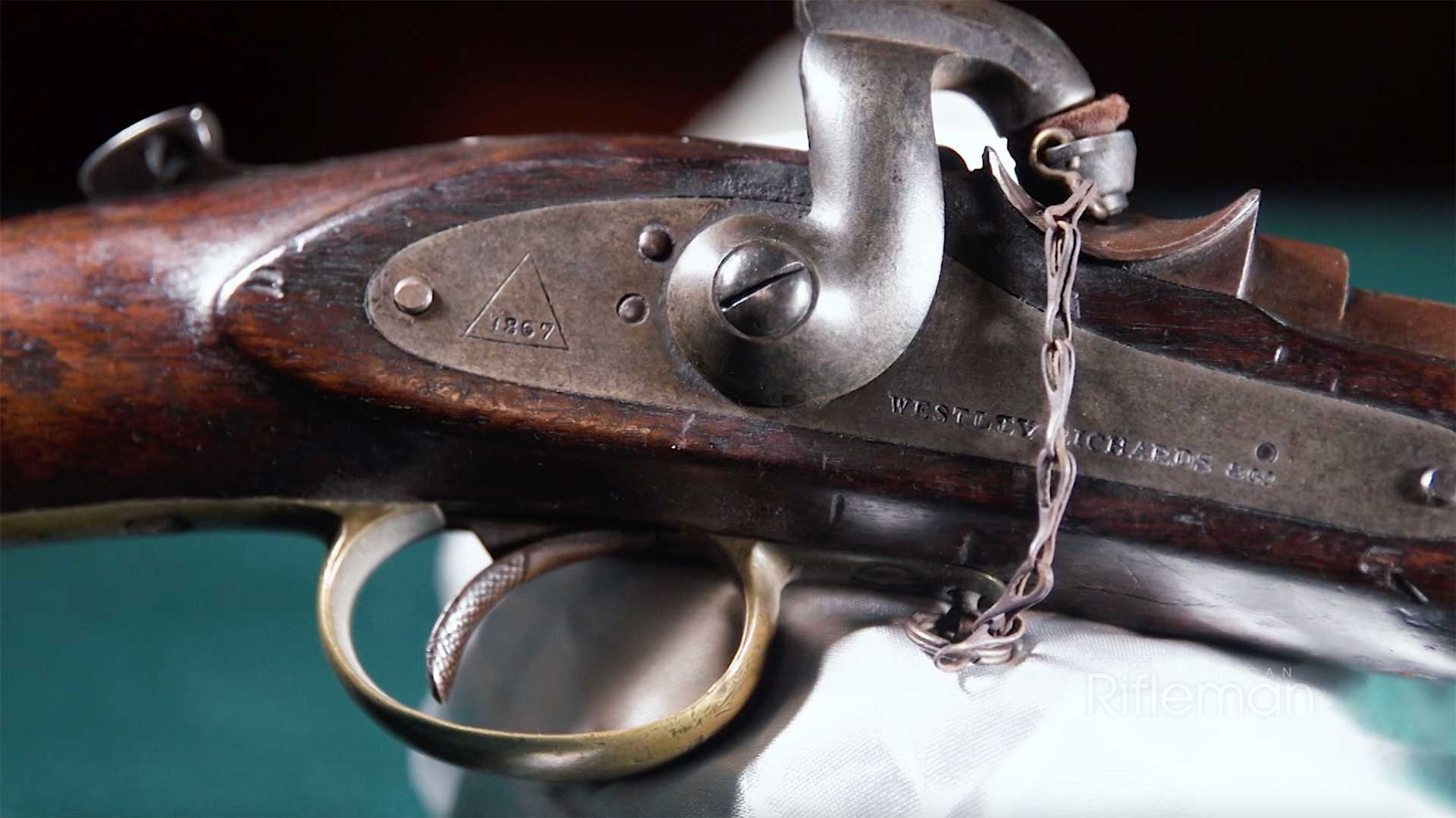
"So interestingly, these guns, they were intended for the British military, and there were some purchases, Yeomanry regiments, that sort of thing, would buy 'em," NRA Media Editorial Director Mark Keefe said. "But the lion's share of these things ended up going to the Portuguese. But of all people, the guys who really liked them were the Boers."
To watch complete segments of past episodes of American Rifleman TV, go to americanrifleman.org/videos/artv. For all-new episodes of ARTV, tune in Wednesday nights to Outdoor Channel 8:30 p.m. and 11:30 p.m. EST.