I have learned a lesson recently on life and legacy when it comes to the guns we invite into our lives. From battered wood stocked deer rifles topped with purple-patinated Leupold scopes to bespoke shotguns and trusted woods carry revolvers, the guns we choose to have in our life have the power to both tell and carry on stories. With that premise in mind, I want to share with you a recent build in 338 ARC. What began as a story to write became a legacy to craft.
Someone very close to me lost his father early this year. I had the honor of helping him go through his father’s gun collection to inventory, clean and appropriately store. Each occupant of the safes was pulled out for such purpose, but, before being returned, the story behind it was relayed. Each story was different yet shared a common theme: every gun brought a smile and a mental trip back to a memory with the man he called “Dad.”
My mind shifted as I entered serial numbers and models into an Excel sheet that hot Texas weekend. What legacy was I curating with my gun choices? What memory palette was I creating with my sons with the pieces I chose to bring into my gun room? Those questions and more swirled through my head like the tumbleweeds blowing across the neighbors’ field.
Story Time
I had a story to write. Cartridges of the World (18th Edition) had commissioned a story on the 338 ARC from Hornady and its potential impacts on ballistic innovation going forward. I decided to build one in addition to writing the story.
Diving deeper into the history, development and theory of the 338 ARC was both fascinating and thought-provoking. Here’s a primer on what the 338 ARC is and why it’s a cartridge worth knowing about.
The 338 ARC was actually conceived around 2016 when the Department of War approached Hornady looking for a subsonic chambering that would have greater terminal effectiveness at longer ranges than the current market option: the 300 Blackout.
With an effective range of about 75 yards and maxed out bullet weight at 180 grains, 300 Blackout wasn’t fitting the parameters the DoW was seeking. Hornady tested and developed a subsonic 315-grain bullet based on the DOD approved 6.5 Grendel case shortly after but ended up shelving the project for a period of time as DoW shifted focus to another project.
Fast-forward to 2024, and it was time to revisit the 338 ARC. In the interim, two other ARC offerings had successfully launched, the 6 mm ARC and the 22 ARC. The 338 ARC hit the market in 2024 with the 307-grain Sub-X as well as a supersonic 175-grain hollow point. This combination is important for a couple of reasons.
For reference, “ARC” stands for "Advanced Rifle Cartridge." This is a Hornady concept that touts efficacy of a given cartridge through a multitude of platforms and price points. Bottom line: whether your ARC flavor is a Ruger or a Gunwerks, there is an expectation of functionality, performance and accuracy based on case, powder and projectile design within a given set of parameters.

First, the subsonic climate up to that point had been consumed by the 300 Blackout and the 8.6 Blackout. The 8.6 was viewed as the latest and greatest. With extreme heavy for caliber bullets and incredibly fast barrel twist rates, the 8.6 used the blender effect to achieve its goals; spin a really heavy bullet, really, really fast and hope it gets to the target in one piece.
The 8.6 Blackout, based on a 6.5 mm Creedmoor case, was AR-10-compatible and short-action (for bolt guns) friendly. The case size made achieving proper and consistent pressures a delicate proposition and the extreme bullet speed down the barrel made monolithics a must and catastrophic bullet failure a real possibility. Even the slightest bullet imperfection could lead to fragmentation and thus diminished accuracy and effectiveness downrange. This also made it so that only heavy bullets could be shot out of a given platform with no option to change up loads out of the same gun.
The 338 ARC changed this. With a SAAMI-specified 1:8-inch twist rate, the 307-grain Sub-X, as well as the 175-grain hollow point, both stabilized beautifully. The cup-and-core construction, when coupled with the more mellow twist rate, led to increased consistency downrange and versatility from behind the gun.
 In addition to projectile versatility, the 338 ARC, based on the 6.5 Grendel case, made achieving consistent pressures a more attainable proposition. The dimensions make it AR-15 compatible or micro-action friendly, if it's going in a bolt gun. The effective range is akin to a .44 Mag. for energy with the Sub X, or up to about 200-300 yards, situationally dependent.
Let’s Build a Gun
The 338 ARC was created for a more tactical future in both build and execution. With AR-15 compatibility, it was ideally suited to be both compact and effective. I contemplated the options. While I have built a couple of ARs, they are modular in mindset and don’t give the classic, timeless feel I’m seeking for this build.
I want to create a rifle that will one day wear dings and dents from tree stands and woods walks. Decades down the road, I hope to see wear in the finish left by hands that processed a deer and then were casually wiped on worn camo before making the trek out of the woods. I wanted a gun that would inspire stories, adventure and a sense of legacy, not a "50 Shades of Black" polymer piece that got dismantled like a LEGO set to accommodate a new upper. A bolt gun it would be.
 Sentiment aside, there is another reason I turned away from the socially acceptable and ideally engineered AR-15 for this build.
We know the 338 ARC is designed to be in a micro action. There are not a lot of micro action options out there that are “action only.” I was specific on what I wanted for a barrel, so a barreled action from the limited options out there didn’t fit my parameters. I contacted Hornady about the potential pitfalls of using a short action vs. a micro. The consensus was that it would not alter function or performance if done correctly with precision-focused components. While I would increase overall gun length slightly due to the short vs. micro action, it would still yield the results I sought.
Armed with that knowledge, I contacted Defiance Machine to help me find the action that would fit my needs and goals. There were a few tenets that I kept in mind as we went over my needs.
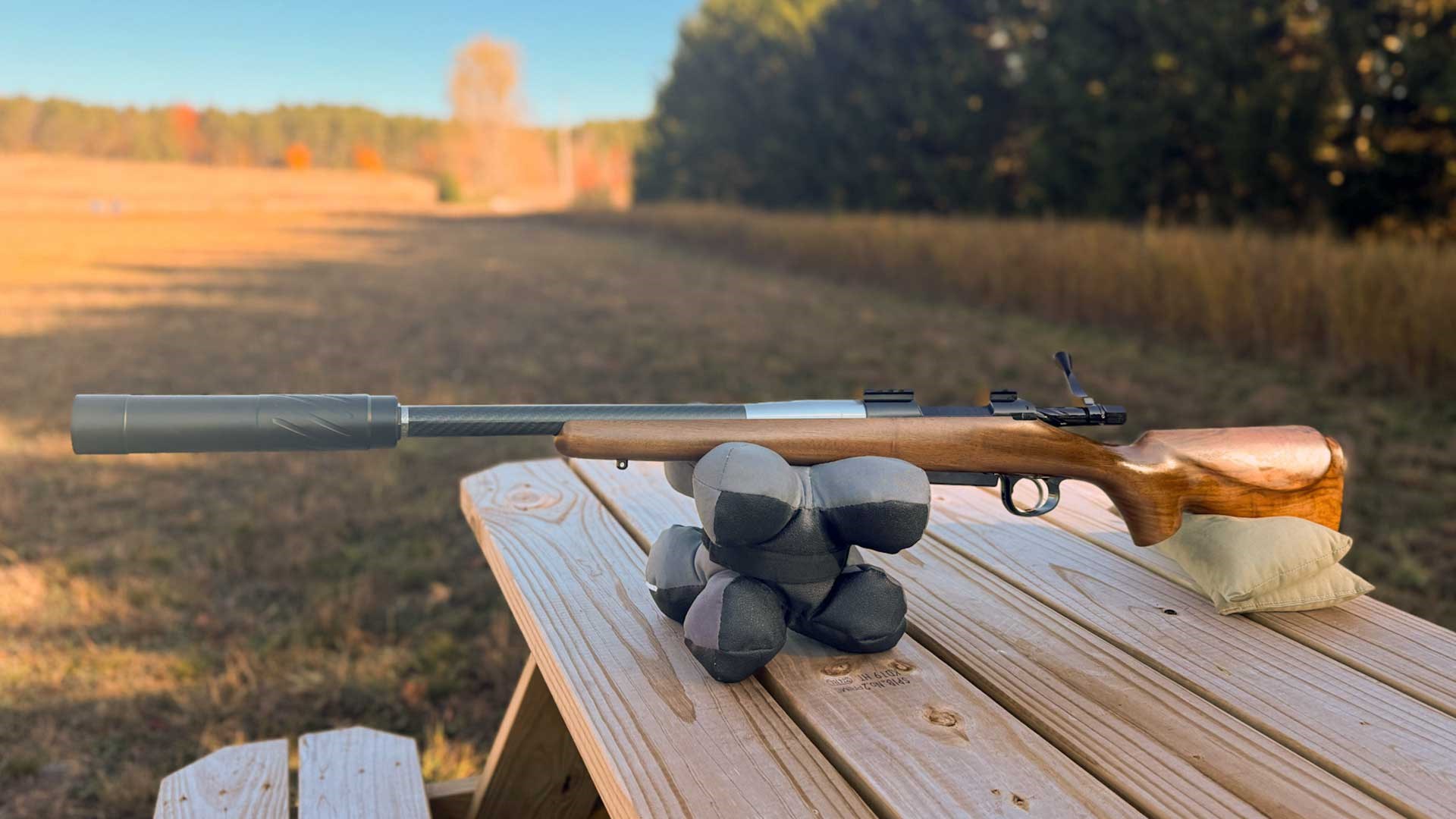 First, I didn’t need anything ultra lightweight. This was not going to be mountain rifle where every ounce mattered. Additionally, I knew I wanted a carbon-fiber-wrapped barrel, so a full weight action would place my balance point appropriately.
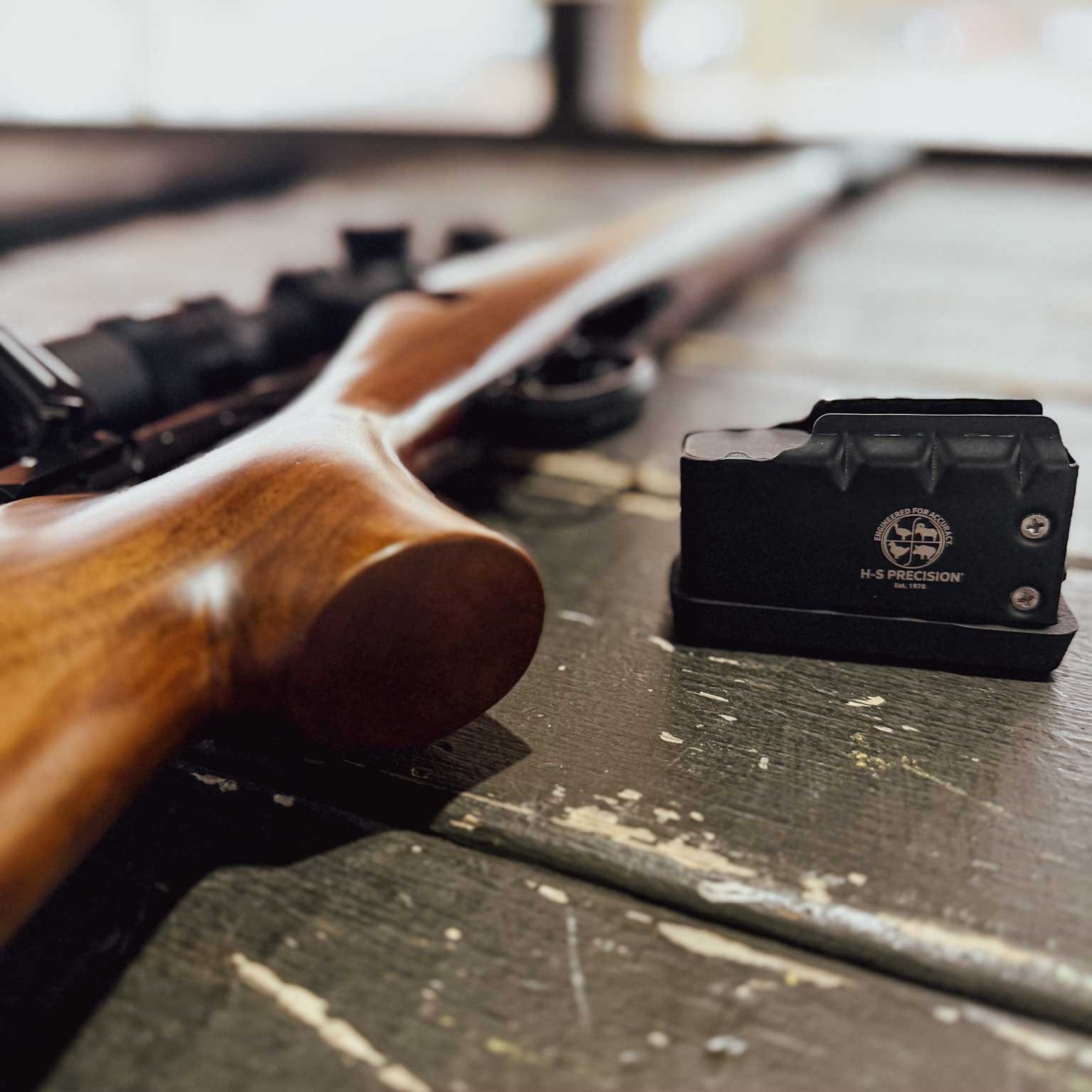
I wanted a Remington 700-style footprint with a three-position safety to give it some classic flair. As it was not going to be a dangerous game gun, controlled round feed was not necessary. I needed something that was magazine-compatible in lieu of traditional bottom metal. With building a micro action round on a short action gun, I wanted to ensure reliable feeding and performance. A properly made magazine was the best way to do this.
I elected to go with H-S Precision for the mags/mag box, which gave me the precision fit and aesthetic I wanted. Their products are incredibly high quality with impeccable tolerances and functionality. They present with as near of a flush-mount look as you can find without true bottom metal.
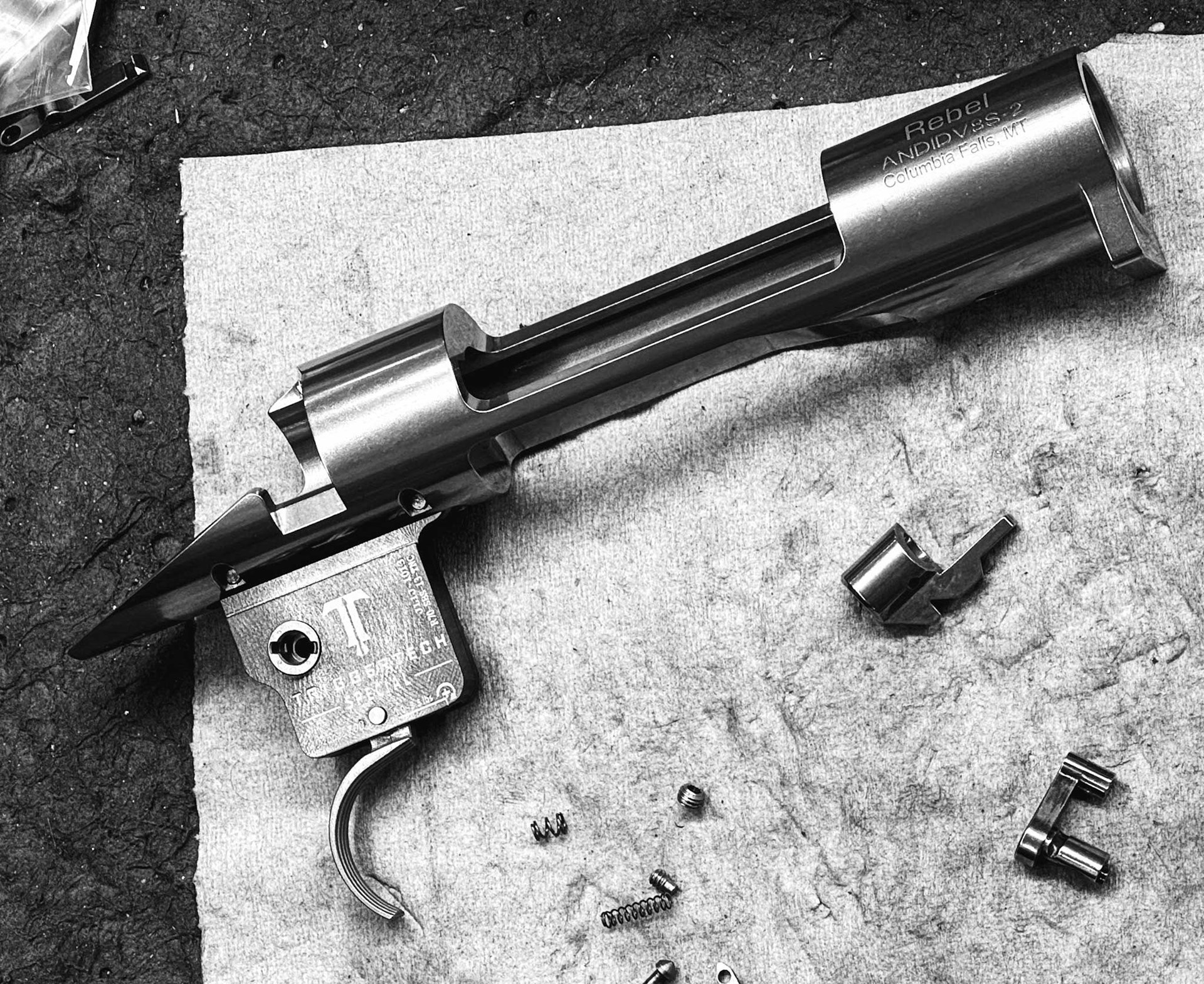
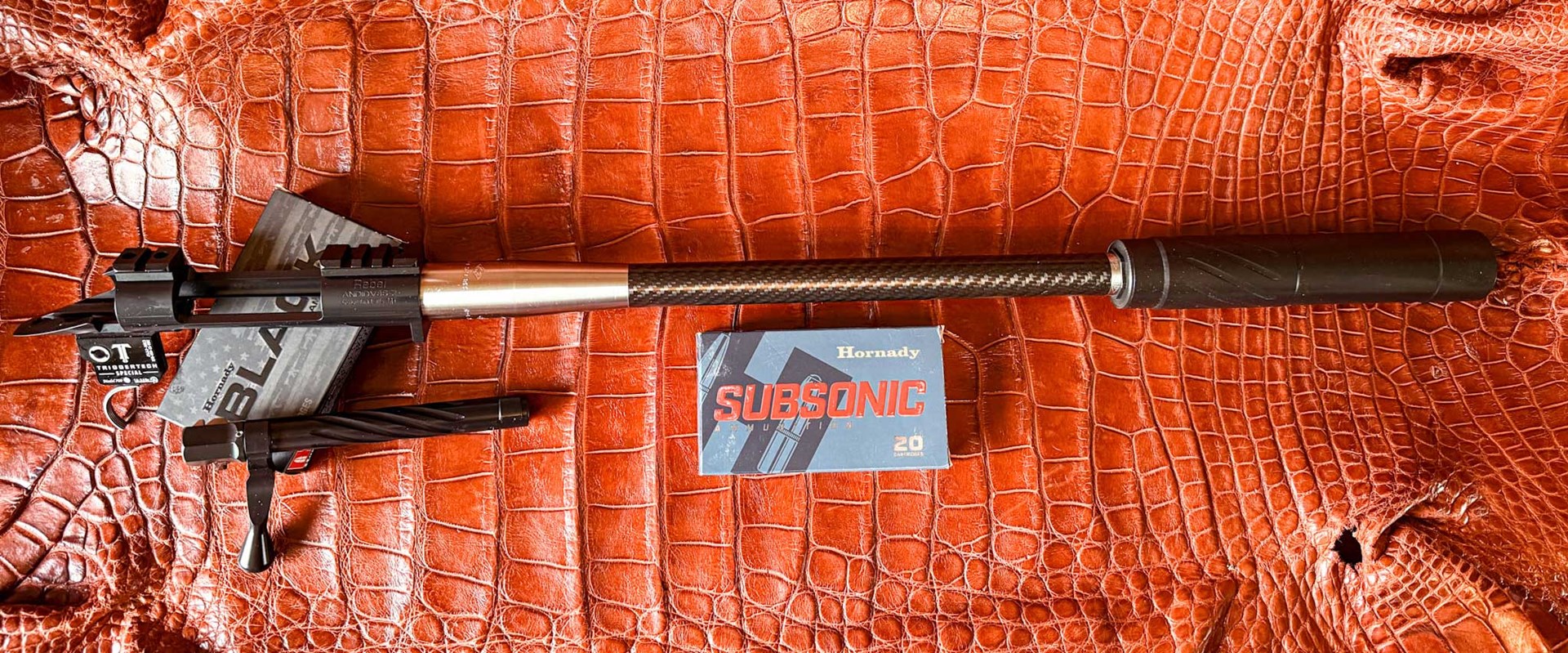
Continuing with the action, I selected the Defiance Rebel Hunter action. It has a split top rail to allow for top loading, if desired (I like this feature in rifles for a variety of reasons). Due to the pressures, recoil (lack of) and outside range of this chambering, I didn’t need the rigidity of an integral top rail.
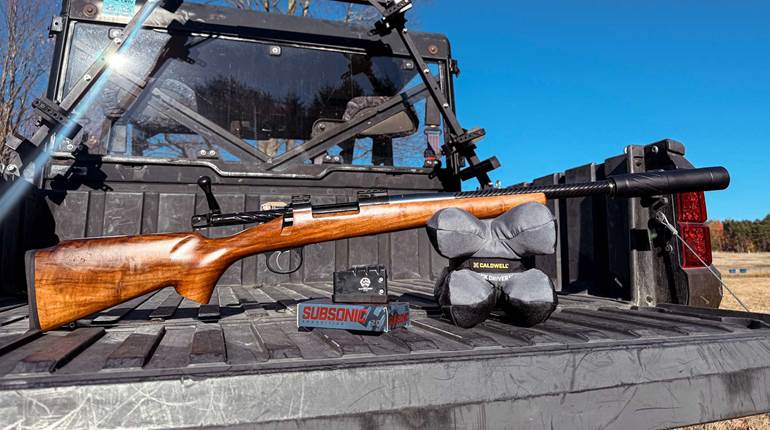
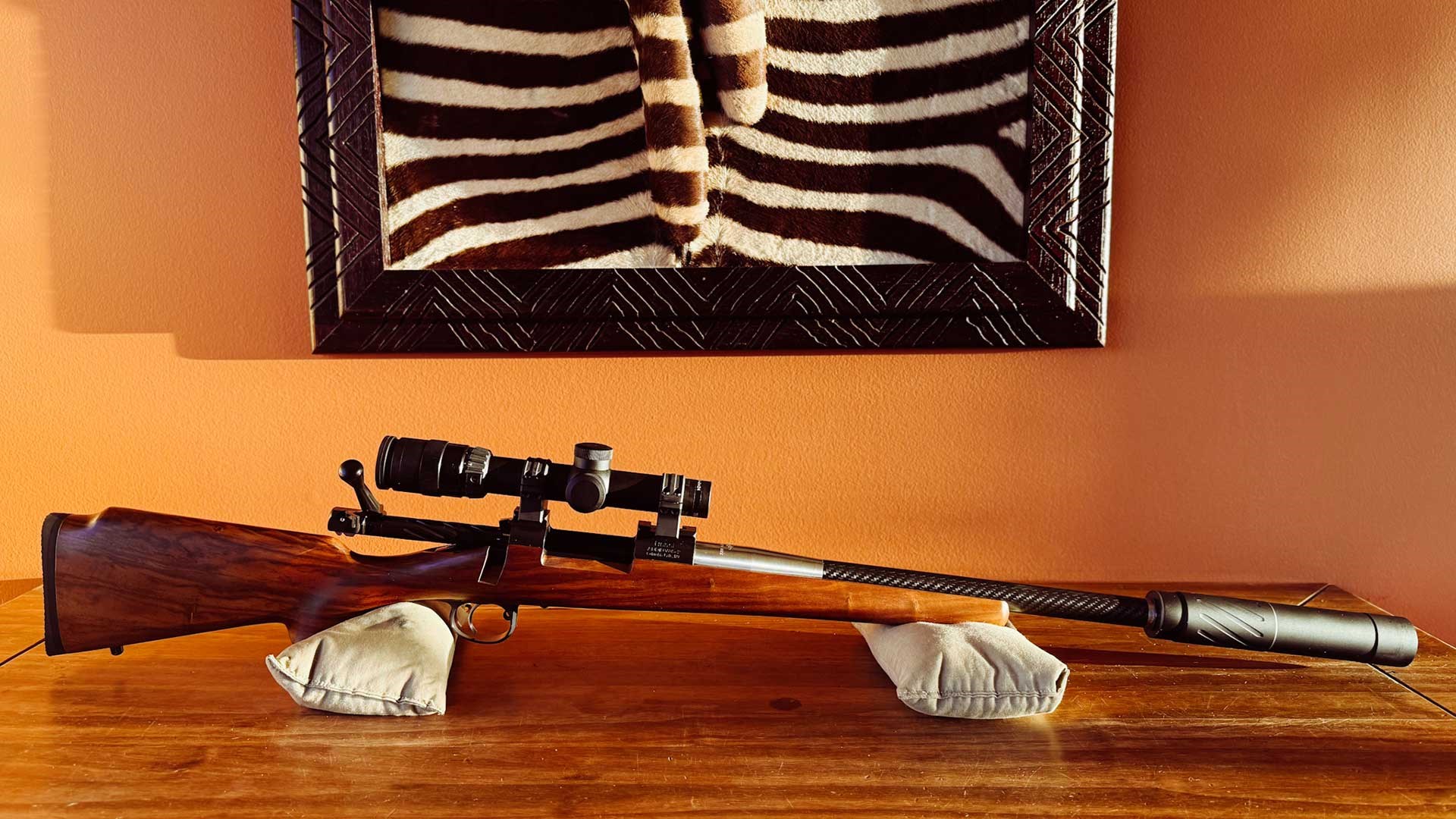 For the barrel, I selected a medium contour carbon barrel from BSF Barrels twisted to the SAAMI-spec 1:8-inch twist rate. It is threaded to accommodate my Banish 46 suppressor from Silencer Central.
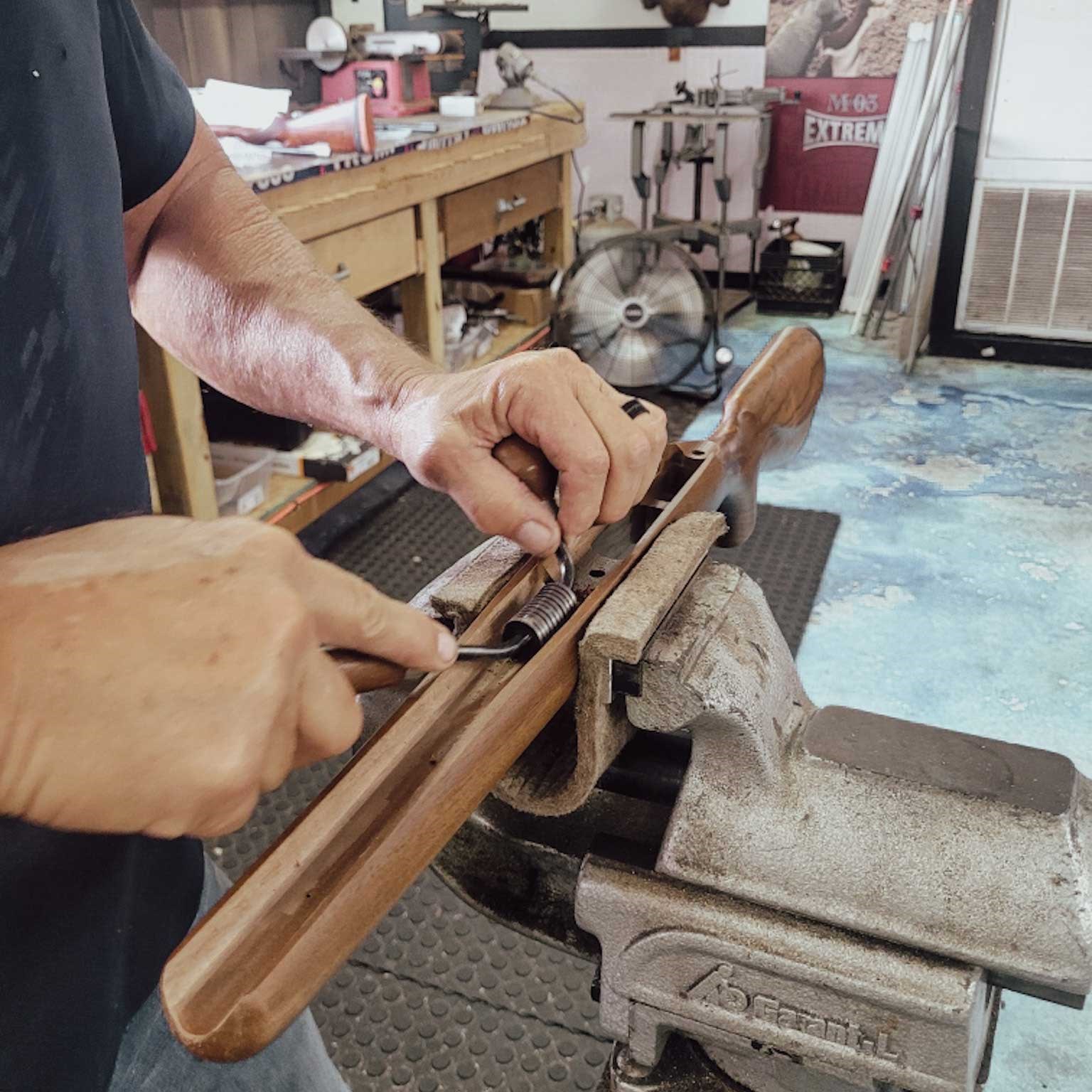
All of this is gently nestled into a custom-made walnut stock from Kaysa Enterprises out of the San Antonio, Texas, area. With a shortened length of pull and Monte Carlo comb, it is the perfect capstone to a fun-sized ensemble.
For an optic, I decided on a Trijicon AccuPoint 1-4X 24 mm with a triangle-topped post to start. This is a great sub-200-yard whitetail setup. At some point, I will be mounting a Trijicon Credo to walk out further and have the ability to utilize holdovers with the more detailed reticle.
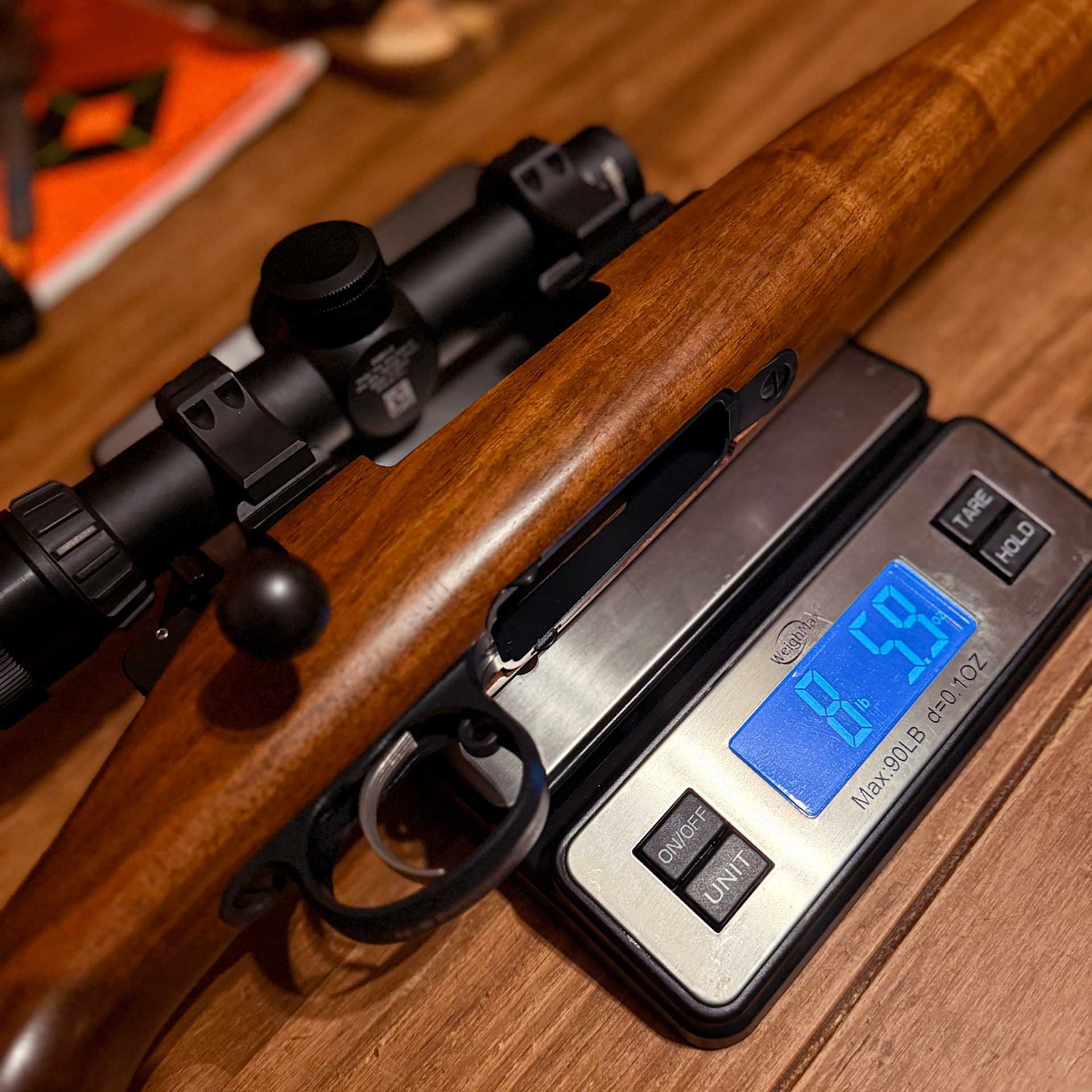 Initial range testing yielded accurate, repeatable, quiet and near recoil-free results. With the finished product coming in at 8.59 pounds (unloaded with scope and suppressor), it was a handy and fun-sized system. For deer season, this will definitely be my go-to for days afield.
At the end of all this, what did I accomplish? Hornady’s unofficial philosophy of the last 75 years is “We sell fun.” Well, based on the build process and performance so far of this particular chambering, I’d say they nailed it. With the feel and aesthetic of a classic safari rifle, the noise and recoil of a plinker and the downrange performance of a .44 Mag, the 338 ARC in a bolt gun is a delicious dichotomy of features, function and firepower.
Fun factor aside, did I achieve my stated goal? Did I build a “legacy” piece? I believe I did. This rifle is a petite, yet elegant, creation that combines precision components, timeless aesthetics and cutting-edge innovation. Initially, building the rifle was the story. I now know the best stories are ahead.