Some call it a bug-out bag, others a go-bag, but it’s the same thing regardless of terminology—a pre-packed survival kit in case you have to leave home in a hurry. A go-bag should include everything you and your family might need to sustain yourselves for a short time.
Before getting to the nuts and granola bars, let’s put the go-bag into perspective and understand what it is—and what it isn’t. A go-bag is not an apocalyptic bomb shelter with months of freeze-dried food, a chemical toilet and enough equipment to survive a long period of time. The purpose of a bug-out bag is to tide you over during a disaster that requires you to evacuate your home.
Hurricanes Katrina in New Orleans and Andrew in Florida are good examples of natural disasters that require short-term evacuation. The Mount St. Helens eruption is another example, just like the Yellowstone fires, Texas tornadoes, Mississippi floods and San Francisco earthquakes.
In addition to acts of God, there are also man-made disasters that rear their ugly heads. Rioters in Los Angeles, looters in New Orleans, anarchists in Seattle and other incidents of total societal break-down are frighteningly closer to the surface than many of us would like to admit.
Because catastrophes are regional in nature, your go-bag should be specific to your area’s propensities for trouble. It makes no sense for residents of rustic towns in the Midwest to prepare for mobs of looters over basketball games. However, it might be appropriate for you to prepare for civil unrest if you live in a large metropolitan area with a diverse population.
Similarly, natural disasters are geographic in nature. It’s unlikely that it will flood in Phoenix, and there won’t be a forest fire in Las Vegas. If you live in tornado alley, you already know what to expect. If you reside near the Missouri or Mississippi rivers, you already have sandbags. I won’t belabor the obvious.
Stay Or Go?
I’m not sure how many readers might get a reference to The Clash’s “Should I Stay Or Should I Go?” but it’s perfectly apropos here. The key question in a calamity is whether to bug-out or ride it out.
That decision is predicated on so many factors that it’s impossible to answer here, but I can tell you that if you do elect to evacuate, you have three choices. You can simply go, meaning you have no pre-existing plan and you’re simply bugging out. Option two is that you have a pre-determined destination—possibly a relative’s house or a favorite camping site. The third choice is that you have a pre-arranged rallying point where you and several close friends have agreed to meet and where you’ve pre-positioned additional supplies. In a chaotic break-down of law and order, strength definitely improves with numbers, so having a plan with some similarly disposed friends is highly recommended.
If you decide to stay, you still need provisions to last for several days and up to two weeks. I can’t think of any natural disaster, in which it would be possible to stay home, that’s gone two weeks before basic services were restored.
Don’t forget pets. You’ll need dog or cat food, as well as diapers for young children. You’ll obviously think of food and water, but don’t forget the “what goes in must come out” scenario either. A bag of chlorinated lime should be kept on hand to use in a latrine (at least two feet deep). Think about other issues of garbage disposal too. A good stock of heavy-duty trash bags should tide you over.
Go-Bag Contents
So now we come to the go-bag itself and what it should contain. As much as I would really like my go-bag to be ready for “Red Dawn” when I take to the hills to wage guerilla war against Spetsnaz invaders, the truth is that guns and ammunition comprise a small portion of a well-equipped go-bag.
Communication tools should be a top priority. A crank-powered radio to hear emergency news, a cell phone and even a satellite phone are all good ideas. A set of walkie-talkies is a good idea as well.
Medical needs must be addressed. You’ll need a “boo-boo kit” for small cuts and nicks, and a properly put together trauma kit with a tourniquet and combat bandages.
Food should be dried or canned. Include multi-vitamin packs and high-energy bars. OK, go ahead and throw in an MRE or two to make you feel more Red Dawnish.
When it comes to firearms, I keep an AR with a Trijicon 4X ACOG ready to go with eight spare magazines carried in an Eagle plate carrier. I also keep a Springfield Armory 1911 customized by Larry Vickers at the ready, so that little jewel along with six spare mags is definitely going with me. In my go-bag is a Glock 9 mm with three spare mags (even though I’m not a “Glock guy,” it’s a good general-purpose pistol if I have to loan someone a gun). My wife is a revolver person, so I’ve also packed a copy of her favorite snubby, an S&W Model 60 with Crimson Trace LaserGrips.
Nighttime is most dangerous, so I have set of BNVDs (binocular night vision devices) with the latest pinnacle tubes (the best I-squared tubes available). My AR has an ATPIAL infrared laser, which is hot ticket for shooting at night while wearing the BNVDs.
For white light, I have a SureFire LX2, the variable output LED that’s the size of MiniMag Light, but about 18,000 times brighter.
I live in the gun-friendly state of Nevada so my go-bag includes a 17 ounce SureFire suppressor for my AR. On my wish-list is an integrally suppressed Ruger 10/22 from Gemtech.
A Leatherman Wave, Glock shovel and Strider BT combat knife round out my tools, and I keep a compass and GPS in a side pouch and a CamelBak hydration bladder is clean and ready to be filled.
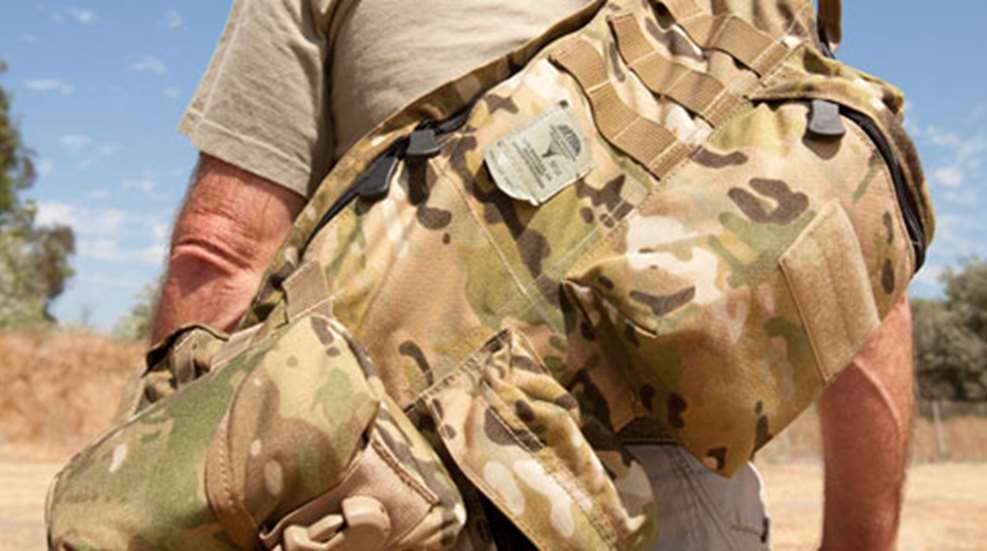
My go-bag itself is from SoTech and is called, appropriately enough, the Go Bag. I also have a small bag with nothing but magazines for my guns and a backpack with several changes of socks and underwear, lightweight wind shells and my wife’s clothes.
My bug-out destination is a rally point in the desert east of Henderson, Nev. If you’ve not planned for yours, now’s a good time to start.
Most Popular