Recently I underwent hip replacement surgery. Prior to that I had back surgery. To say my mobility has been compromised for a while would be an understatement. Let’s face it, as we age our ability to move—our athleticism—is lessened. But does that mean we must forfeit our right to defend ourselves from evildoers? I’d say not.
But first you must jettison the notion that because you are pitiful and can’t move very well, the bad guys will leave you alone. The bad guys are predators and scavengers. Just like a bunch of ravens around a calving area, they’ll target the weak calves until they are totally incapable of fending off scavengers. If you limp or walk in pain, you are a target, and an attractive one at that. Your impairment may tend to make you want to walk bent over a bit. This will further weaken you because you have difficulty in keeping track of those around you. Your situational awareness will be proportionally impaired, making you even more vulnerable.
Secondly, realize that because you are impaired or limited in mobility, you will probably not be able to fend off an assailant as well as you would if you were healthy. If you are armed, one of your primary responsibilities is to protect your firearm. It must not fall into the hands of a bad guy. Consequently you may have to go to it earlier than you might if you were not as vulnerable.
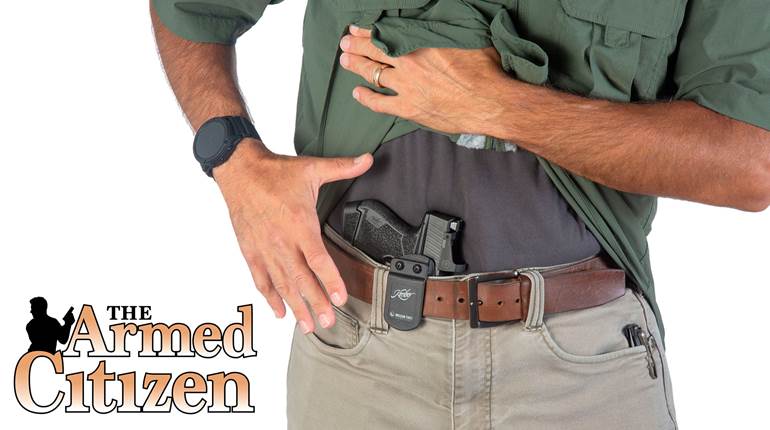
Finally, you will need to accept that your methods of carry will have to be modified. Each of us must work out the specifics of what those modifications might be, based upon our individual situation, but here are a few thoughts.
Most of us do not typically carry on-body in our home as a matter of course. However, we do often have a handgun stashed near where we spend most of our time at home. If your mobility is compromised, you need to consider whether you can really access your firearm in the event of a home invasion.
For example, my desk is a wrap-around setup—I call it the Command Center. It is where I spent the majority of my time before my surgeries. It is where I work, occasionally play or get entertained via the Internet. There are no fewer than three loaded handguns within arms’ reach at any time I am at my desk. These guns are the ones I primarily carry during my outings into the world. Often there are three or four more guns on, in or around my desk. They may be long guns or handguns, but almost always they are either loaded or have ammo close by.
This arrangement works well for me because the guns are accessible, and if I get into a fight and need a reload, I have a built-in New York reload available. But I live alone, and children are virtually never in my home. For people whose homes may get visitors from children probably would find my armament arrangement less than satisfactory.
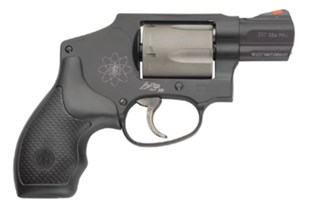
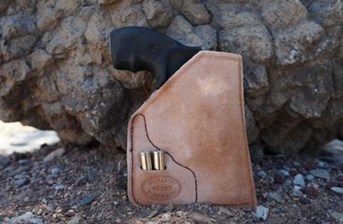
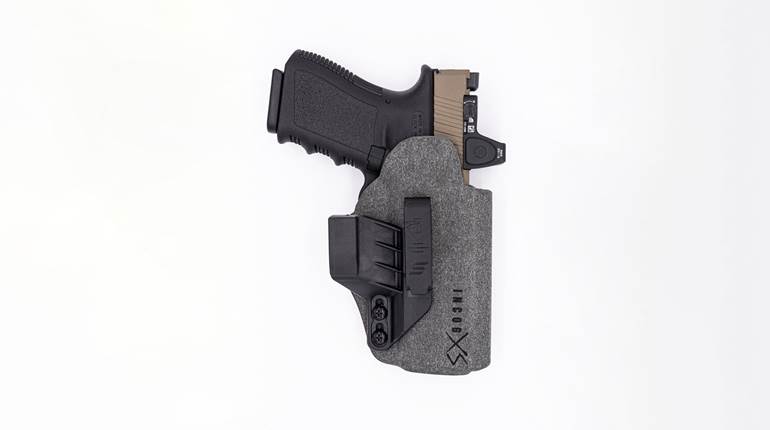
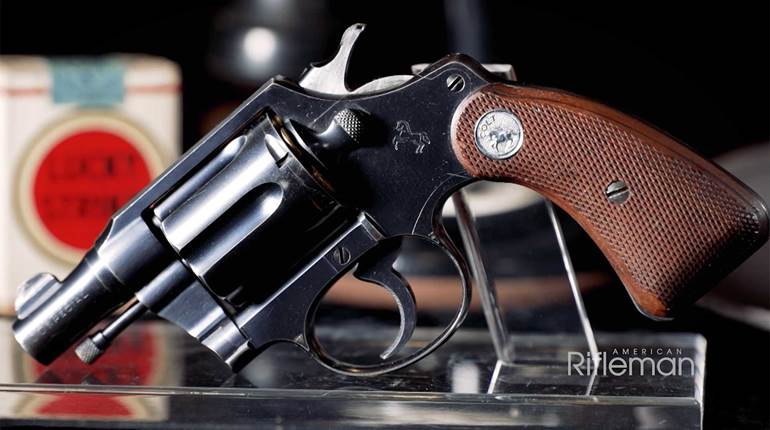
However, when I am in my kitchen preparing a meal, I am several steps from my pistol stash. Guns in kitchens can be a bit problematic what with grease, food and water splashing about. Most of the time I have a S&W Model 342PD in a pocket of myWrangler tactical jeans—I rarely wear BDUs—so I am covered there. And by the way, the gun is in a Simply Rugged Holsters’ Pocket Protector holster.Avoid the temptation to simply stuff a snubby ora pocket pistol into a pocket unprotected. I guarantee you it will suck up dirt and lint like a sponge and become useless about the time you really need it.
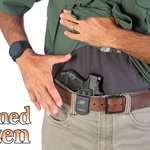
Suppose, though, you are on crutches—say after knee surgery. Your hands and arms are pretty preoccupied with keeping you upright and preventing you from falling. A belt or pocket holster is not a good option. Here is when an old-fashioned shoulder holster may be the best answer. Shoulder holsters have lost a lot of adherents with today’s modern concealed carriers. I don’t particularly care for them because they are confining, hot and it’s hard to get one to fit my 54-inch chest. For me a tanker-style holster would be a viable option. Where I live, concealment isn’t always a top priority, especially around the ranch. Tanker-style holsters like Mike Barranti’s 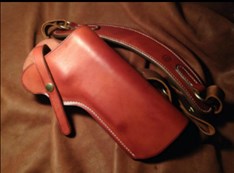
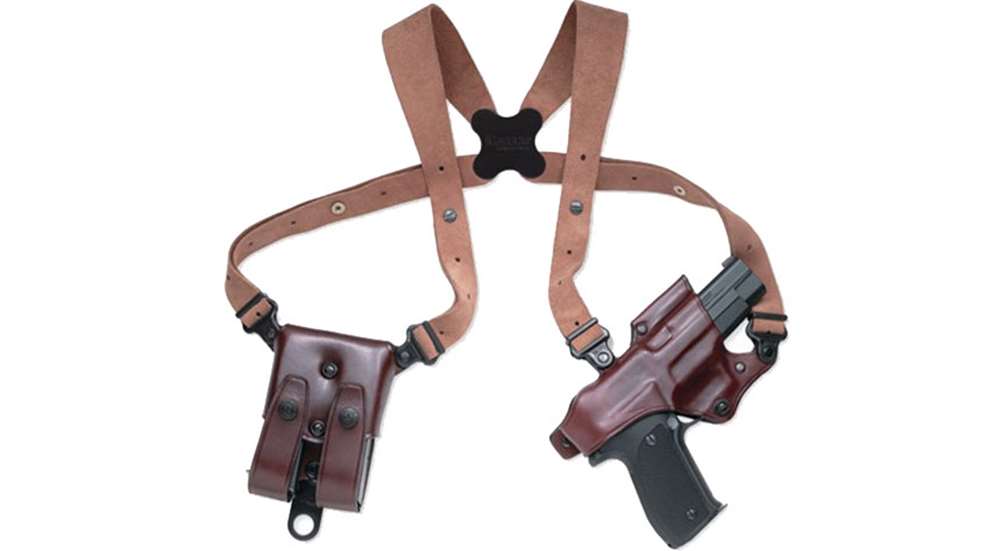
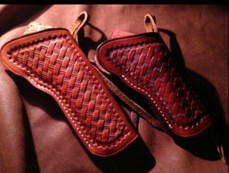 Northwest or Northeast Hunter rigs (right) puts your chosen handgun right on your chest, freeing your arms to do whatever they need to do. Simply Rugged offers its Chesty Puller rig that converts nearly any belt holster to a chest rig. Rob Leahy also offers handy extensions to that Chesty Puller rig so those of us with expanded girths can be comfortable. My neighbor and good friend Von Ringler makes his Wyoming Combination holster that can be pressed into service as either a belt, shoulder or chest rig. If a conventional shoulder holster trips your trigger, Galco’s Jackass system (shown top) seems to work well, plus it offers concealment capabilities when you step out into the bad old world. I would avoid like the plague any shoulder holster setup that carries the handgun in an upside down holster. It violates Rule 2 and could possibly set you up to blow a hole in your brachial artery.
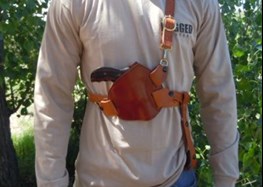
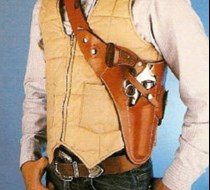
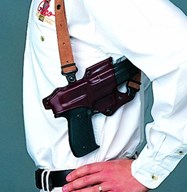
From left: Chesty Puller Suspension System from Simply Rugged Holsters; Ringler Wyoming Comination holster; Galco Jackass System
If you choose one of these relatively unconventional holster options you need to be aware that you will have to modify your draw and presentation to avoid sweeping some part of your anatomy with the muzzle. Drawing while standing from a shoulder or chest rig means you may have to deal with the support arm vis-à-vis the muzzle of your handgun. You’ll need to practice keeping that appendage clear of the muzzle during draw, presentation and re-holstering. Some will simply raise the arm like a chicken wing; others may try grabbing the strong-side shoulder with the support hand. Try both and see what works best for you. Then practice, practice, practice until it becomes as second nature to you as your conventional belt holster draw.
Say, however, you are confined to a wheelchair for the time being, and you have a chest rig. That means you will unavoidably be sweeping one or both of your legs during the draw. I don’t know any way around that predicament, but I would heartily recommend that you have Rule 3—Keep your finger off the trigger until your firearm is on target and you are looking over your sights—burned deeply into your cerebrum.
It can’t be repeated enough. Each of us is ultimately responsible for our own security; we are the ultimate first responder. Training helps us prepare, but rote drills can fool you into thinking you are better prepared than you truly are. If you aren’t what you once were, or perhaps you find yourself in a temporary condition of impaired mobility, think about what options you have to prepare yourself for an assault.
Images courtesy Simply Rugged Holsters, Barranti Leather Co., Ringler Custom Leather and Galco Gunleather.