** When you buy products through the links on our site, we may earn a commission that supports NRA's mission to protect, preserve and defend the Second Amendment. **
Compromise. That is the nature of the handguns lawfully carried concealed by millions of Americans every day. Do you sacrifice concealability to carry a larger gun in a major chambering, or do you sacrifice energy and go down to a smaller cartridge? Shot placement is the most crucial factor, and small .380 ACPs, such as the Glock 42 or Ruger LCP for example, deliver great concealability, but no one would argue that .380 is as effective in terms of stopping power as 9 mm Luger or .45 ACP. Another issue with small guns is just their shootability. Small, thin, light polymer-frame .45s—or 9 mms for that matter—can be a delight to carry, but border on masochism beyond the first magazine or so in training.
One of the other compromises made is barrel length. Yes, a 2¾" barrel is generally much easier to conceal than one that measures 5". And while there are velocity losses with shorter barrels, what “snubby” pistols and revolvers really deprive you of is sight radius. We shall get to that in a minute.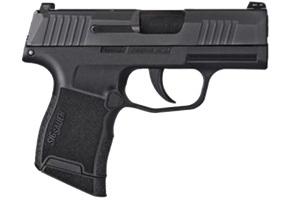
But what if you can have your cake and eat it too? Adequate defensive stopping power, meaning 9 mm Luger, with a magazine capacity of at least 10 rounds? It was an exercise in engineering, and SIG Sauer cracked it with the P365. It’s not as pleasant as a fullsize gun at the range, but this 9 mm “micro-compact” class is, indeed, becoming the next big thing.
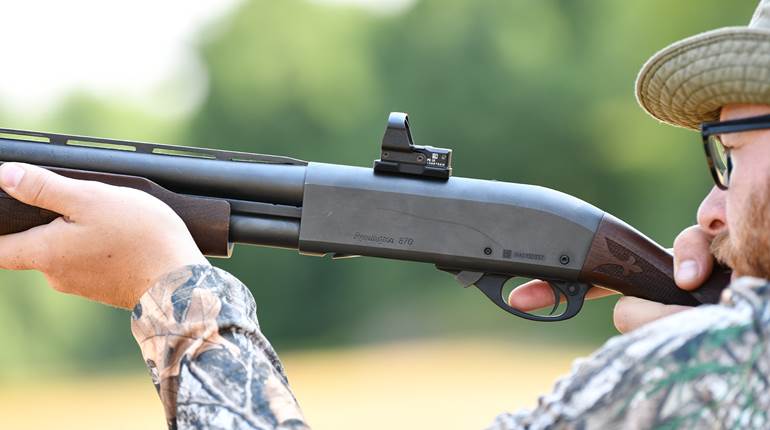
Most concealed carriers realize if they need to use their defensive firearm, odds are it will be at close range. But there are other circumstances that arise—you read the news—and some of the nation’s top trainers have been working with students to develop the skills and confidence necessary to hit a 6" plate consistently at 25 yards. Good sights are a must in such a situation, and the vestigial nubs on many of today’s carry guns are not up to the task. That is where the continuing trend of pistols with small reflex sights comes into play.
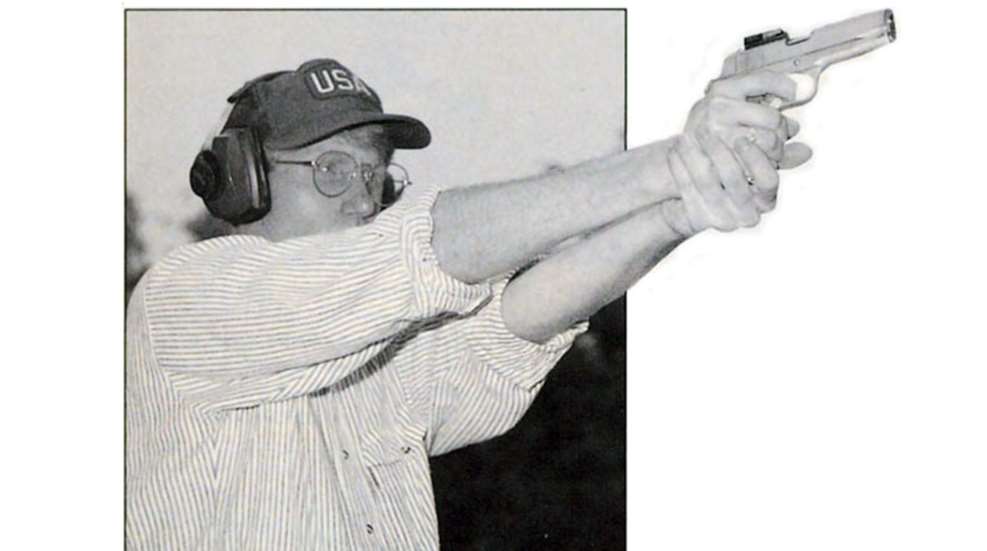
Even as carry guns of adequate power used to be considerably larger, so did red-dot sights. Years ago, I was in on the testing of the miniature EPC red-dot sight—it was literally epoxied to the slide behind the ejection port on a Colt Commander (you can read about it at americanrifleman.org/epc). About the same time, I began using a fullsize Aimpoint on a .38 Super Springfield Armory unlimited gun. With but one focal plane to worry about, I felt as if I was in the running with Rob Leatham. I could focus on proper trigger press and breathing and just put the dot—and the shots—in the black.
But that rig was, in retrospect, a gargantuan tube with a sturdy steel mount on a big compensated pistol that weighed almost as much as the M1 carbine—and would have carried concealed about the same.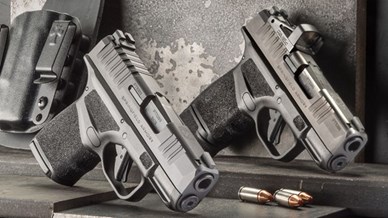
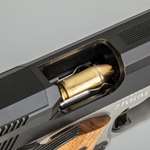
Red-dot sights have gotten smaller, and Springfield’s new micro-compact Hellcat pistol, ably evaluated by Executive Editor Joe Kurtenbach, took the use of such optics into account from the very beginning. For a mere $30 extra, you can get a Hellcat with its slide cut to accept a red-dot. While the accuracy results are given for our typical 7 yards, Joe also tested it at 25 yards with a Shield red-dot.
Just as the cell phone I carry today is considerably smaller than the bag phone hardwired to my truck in the 1990s, effective defensive handguns that give you the ability to hit at greater distances than arm’s length are getting smaller—and are more likely to be carried.
One of the other compromises made is barrel length. Yes, a 2¾" barrel is generally much easier to conceal than one that measures 5". And while there are velocity losses with shorter barrels, what “snubby” pistols and revolvers really deprive you of is sight radius. We shall get to that in a minute.
But what if you can have your cake and eat it too? Adequate defensive stopping power, meaning 9 mm Luger, with a magazine capacity of at least 10 rounds? It was an exercise in engineering, and SIG Sauer cracked it with the P365. It’s not as pleasant as a fullsize gun at the range, but this 9 mm “micro-compact” class is, indeed, becoming the next big thing.
Most concealed carriers realize if they need to use their defensive firearm, odds are it will be at close range. But there are other circumstances that arise—you read the news—and some of the nation’s top trainers have been working with students to develop the skills and confidence necessary to hit a 6" plate consistently at 25 yards. Good sights are a must in such a situation, and the vestigial nubs on many of today’s carry guns are not up to the task. That is where the continuing trend of pistols with small reflex sights comes into play.
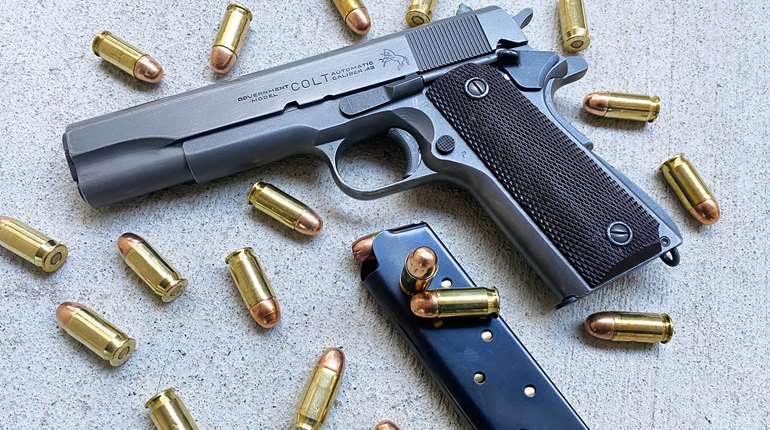
Even as carry guns of adequate power used to be considerably larger, so did red-dot sights. Years ago, I was in on the testing of the miniature EPC red-dot sight—it was literally epoxied to the slide behind the ejection port on a Colt Commander (you can read about it at americanrifleman.org/epc). About the same time, I began using a fullsize Aimpoint on a .38 Super Springfield Armory unlimited gun. With but one focal plane to worry about, I felt as if I was in the running with Rob Leatham. I could focus on proper trigger press and breathing and just put the dot—and the shots—in the black.
But that rig was, in retrospect, a gargantuan tube with a sturdy steel mount on a big compensated pistol that weighed almost as much as the M1 carbine—and would have carried concealed about the same.
Red-dot sights have gotten smaller, and Springfield’s new micro-compact Hellcat pistol, ably evaluated by Executive Editor Joe Kurtenbach, took the use of such optics into account from the very beginning. For a mere $30 extra, you can get a Hellcat with its slide cut to accept a red-dot. While the accuracy results are given for our typical 7 yards, Joe also tested it at 25 yards with a Shield red-dot.
Just as the cell phone I carry today is considerably smaller than the bag phone hardwired to my truck in the 1990s, effective defensive handguns that give you the ability to hit at greater distances than arm’s length are getting smaller—and are more likely to be carried.
Most Popular