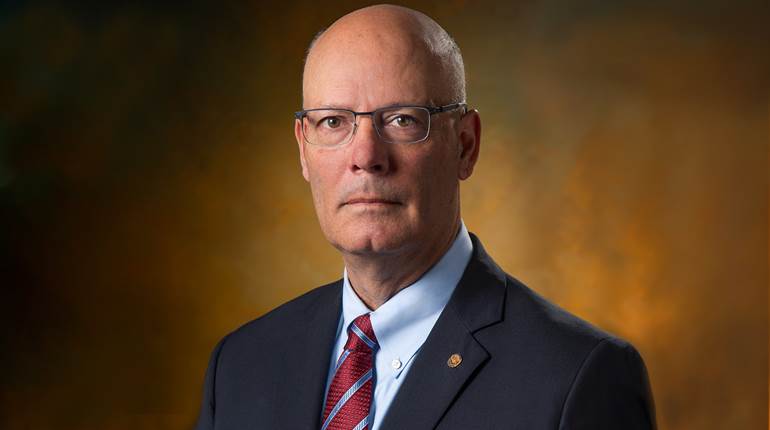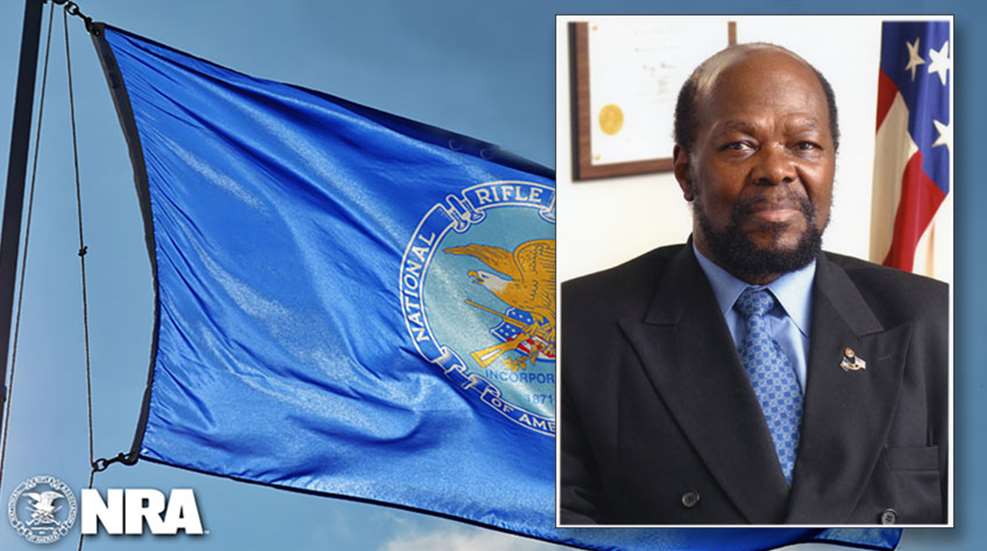
The Second Amendment lost a fierce defender and dedicated friend on Jan. 8, 2017, with the passing of Roy Innis—a longtime NRA Board member, the chairman of the Congress of Racial Equality and a fighter for freedom I am proud to have called my friend.
Roy was a man of passion and principle who defied stereotypes. He started out in the civil rights movement and, like Charlton Heston, he worked closely with Dr. Martin Luther King, Jr. Later he came to reject affirmative action and liberal policies that kept minorities dependent and defenseless. At one time a black separatist, he was also, as he put it, “one of the few non-bigoted black leaders around.”
Over time, Roy embraced a conservative libertarian philosophy, and he was well-known as one of America’s leading black conservatives. Roy pulled people together from eclectic groups across the political spectrum, and just as he embodied the best virtues of those various groups—he also brought out the best in those around him. “It’s about building bridges ... between different races, peoples and communities,” Roy said. “We’ve just begun to see what we can accomplish together.”
But he was a fighter for what he believed in, too. Roy got up every day and followed his conscience regarding what he thought was right. If that led him to collide with what was regarded as politically correct, he was willing to take the heat.
Many remember Roy as the man who not only clobbered a skinhead leader on “Geraldo,” but also as having knocked Al Sharpton onto the floor on “The Morton Downey Show.” As Ken Blackwell, former Ohio secretary of state, said, “He wasn’t a pacifist, as Al Sharpton and others found out.” I was honored to attend Roy’s annual Congress of Racial Equality (C.O.R.E.) dinners, where he was toasted—and sometimes roasted—by the likes of President George W. and Laura Bush, Howard Cosell, Muhammad Ali, Charlton Heston, Morgan Freeman, Don King, Rudy Giuliani, Ed Koch, Evander Holyfield and Barry Manilow. At one of those dinners in 1986, President Ronald Reagan honored him as “one of America’s outstanding civil rights leaders.” The right to defend yourself is your most fundamental civil right, so it’s fitting that Roy would serve on the Board of Directors of the NRA—the oldest civil rights organization in America. As executive vice president, I relied on Roy for his counsel, his courage and his passion to defend our Second Amendment-protected right to keep and bear arms for all Americans—regardless of race, creed, color or any other measure.
Sadly, when freedom is under siege, the first people to lose their rights are often those least able to fight for their rights, but the most likely to need those rights for their safety and survival. As Roy said, denying the Second Amendment’s protections to African Americans and the poor is the most unjust and injurious civil rights violation there is.
When the Wilmington, Del., Housing Authority denied the Second Amendment-protected rights of its residents—and the NRA helped one of those residents, Josephine Byrd, sue the authorities to reclaim her right to defend herself in her own home—Roy was quick to point out the shameful legacy of gun control. “These bans are racist. The gun laws in general have an inception in racism,” he said. “The old definition: A free man is free to bear arms. There’s always a connection to being able to bear arms and freedom, and therefore denial is clearly racist.”
Roy also served as an inspiring example for others. He once said about Byrd’s case, “She needs to get her sons, daughters and grandkids to fight with her. She needs to see the NRA as her friend. She needs to know her friends are fighting together with her for her civil rights in exactly the same way Dr. King fought for her civil rights. We need to continue the battle for the Second Amendment.”
In memory of Roy Innis, and in honor of all he did for the freedoms we share, I can think of no better tribute than to heed his words.
—Wayne LaPierre, Executive Vice President
Most Popular