Ask the average Civil War buff to name a Yankee or Confederate sharpshooter’s rifle and invariably the answer is “the Whitworth.” To be fair, the Whitworth probably wasn’t the most widely used long-range rifle during the War Between the States, but it was certainly one of the best and most sought-after by combatants on both sides.
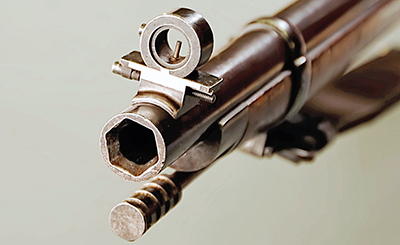
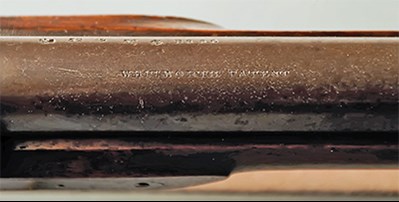 Designed by eminent English engineer Joseph Whitworth in response to a British Board of Ordnance desire for a universal rifle with which to equip its troops, his unique, smallbore (.451), hexagonal-bored longarm, with a pitch of one turn in 20", fired a proprietary 530-gr., six-sided projectile that fit mechanically within the grooves.
Several thousand were built for trials as early as 1858. Pitted against the issue .577 Pattern 1853 Enfield, the Whitworth showed promise, and different styles were ultimately tried. The gun performed extremely well accuracy-wise, especially at longer ranges. Within 500 yds. the Enfield and Whitworth were considered equals—past that range, the Whitworth excelled. But extreme bore fouling by blackpowder residue, the expense of building the guns and the increasing popularity of breechloaders eliminated the possibility of government contracts.
Meanwhile, Whitworth rifles had been eagerly accepted by target shooters, and a number of different models were produced by Whitworth’s firm. The guns employed a variety of open sights, as well as sophisticated telescopic sights developed by David Davidson.
 It didn’t take long to discover that conical bullets fired in Whitworths, because of setback, provided accuracy as good as hexagonal rounds, and subsequently the two types were used interchangeably.
Whitworth’s rifle received a considerable boost when, in 1860, Queen Victoria opened the new Wimbledon target ranges by pulling a silk cord attached to the trigger of a pre-sighted and machine-rested Whitworth rifle, hitting an iron target just off-center at 400 yds. Most shooters agreed that, because of its accuracy, the Whitworth had an effective range of between 800 and 1,000 yds.—a long shot indeed by the standards of the day.
Whitworths were prized sharpshooter arms during the Civil War, some numbers of them being run through the blockade by the rebels and selectively issued. The most common Confederate guns were marked “2nd QUALITY.” This did not mean they were inferior to other Whitworths, but that they had simpler sights, were less complex and employed Enfield-pattern locks without external slide-on safeties. They featured 33" barrels and checkered fore-ends and wrists. Other styles with Davidson scopes were also occasionally seen in the southern ranks.
 Probably the most famous Whitworth shot occurred during the Battle of Spotsylvania Court House on May 9, 1864, when Union Maj. Gen. John Sedgwick and his staff became the targets of Confederate sharpshooters at a distance later estimated to be between 500 and 1,000 yds. After admonishing his subordinates for ducking—“I’m ashamed of you dodging that way. They couldn’t hit an elephant at this distance”—a Whitworth bullet struck him in the head, just below his left eye. He was the most senior Union officer killed during the war.
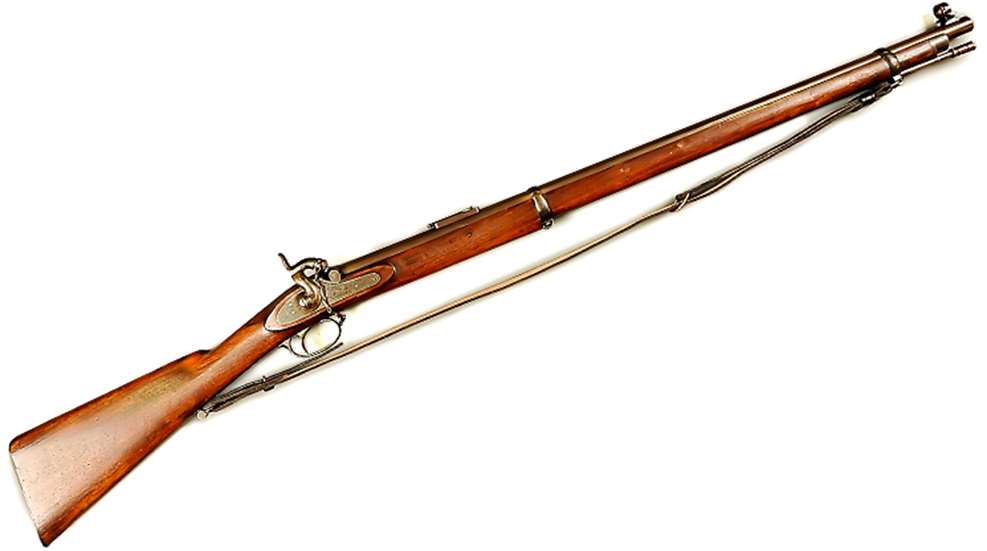
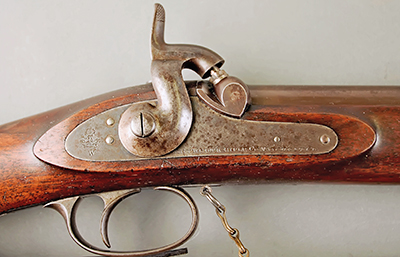
The rifle shown here is a superb-condition, military-style, target model with two bands and a 33" barrel. The rear sight is a ladder-style graduated to 1,200 yds., and the front is a very sophisticated, adjustable-style post-and-globe. Possessed of a pristine bore, it also has a scraper ramrod with swiveling head to help clear fouling between shots. Because of its condition, style and features, the gun is worth $6,500.
Gun: Whitworth Military Target Rifle
Manufacturer: Whitworth Rifle Co., Manchester, England
Condition: NRA Excellent (Antique Gun Standards)
Manufactured: 1863
Value: $6,500
Most Popular