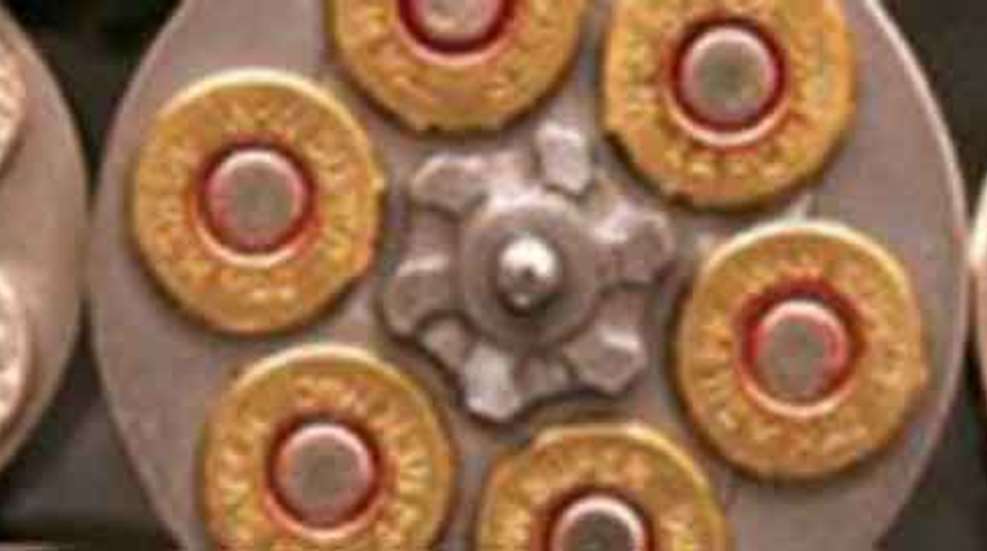
This is a subject that I have brought up before. Readers have always found it interesting, so we’ll take a look and see what today’s automatic-oriented shooters think about understanding the wheel (gun). I’m sure you have heard the old saying that revolvers always have a so-called “bad” chamber that shoots poorly. The saying sort of acknowledges the fact that a sixgun really is six guns, or six chamber/barrel combination. This is true and I have proved it many times. There are many reasons why and they all seem to come back to some minor misalignment between a given chamber and the revolver barrel. It is also possible for more than one chamber to be a trifle off. Finding the bad ones is fairly easy.
Settle the gun into a Ransom Rest with a good quantity of your favorite load and then mark the six chambers so you can return to them. Grease pencil works pretty well and is easily removed after the shoot. Now, systematically shoot a 10-shot group with each chamber-10 rounds through No. 1, then 10 through No. 2, etc. Obviously, change the target after each group. If there is a marked difference in group size, you will have identified the bad one or even two. You have also singled out the best. This is useful information, but not in the way you might think. For precision shooting, as in hunting, you can set the cylinder to fire that good chamber as the first up. If you hit, you won’t even need the next five. You are literally using the gun as a single shot.
But if you are using the revolver as a competition gun in silhouette, PPC and bullseye work, you need to determine the best team of five chambers. Back in the machine rest, shoot a group of five from five chambers, leaving out No. 1, then No. 2, etc. Again, change targets after each group, but make sure the targets are placed on the backer in the same relative spot. Now you are shooting to determine which team of five chambers produces the best group. Don’t be surprised if the best five includes the so-called “bad” chamber. Also, I once had the best chamber end up on a team of five that was not the best combination. That chamber shot fine groups, but its shots went away from where the others were shooting. OK?
Most Popular