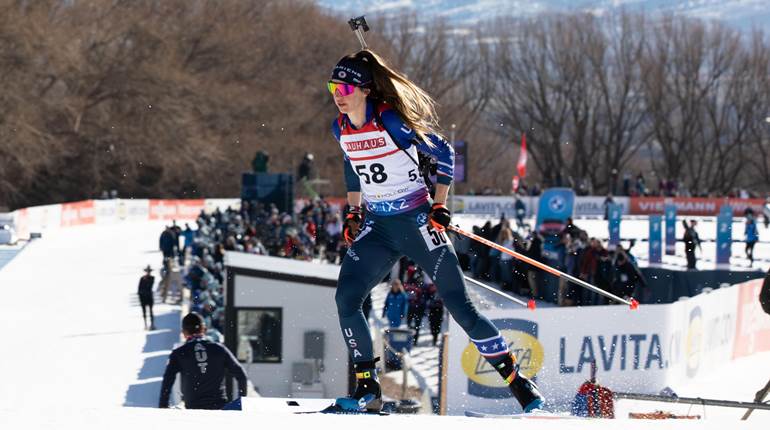
Beyond marveling at their incredible toughness and athleticism, I have been intrigued by gun-handling skills demonstrated by many of the Olympic biathletes in Sochi. The way they transition their rifles from carry mode to shooting position is fluid and fast. The technique most often employed is to reach back with the strong hand, grab the barrel behind the rear sight, then pivot the butt around the shoulder while simultaneously pulling the muzzle forward toward the target banks. At that point they grip the fore-end with the weak hand, slide the strong hand to the pistol grip and shoulder the rifle, ready to shoot. Clearly it is a well-practiced sequence and the stiff double-shoulder harnesses used to carry the rifles while skiing facilitate the fast transition. When done right, the method eliminates unnecessary movement and delay, and prepares the biathletes to shoot in just a couple of seconds.
Based on indignant letters we receive whenever we show African PHs carrying their rifles muzzle forward, this technique probably sparks safety concerns in some viewers. The camera angles don’t make it perfectly clear exactly what’s downrange, but I am guessing muzzle control is tightly monitored, and in watching the broadcasts I have not observed incidents where a muzzle drifts back to the firing line.
As hunters, we don’t often need to deploy our rifles so swiftly from on-the-back carry, but such a scenario is not unthinkable for those pursuing high-country game. In some competitive disciplines or in real-life tactical shooting, however, this biathlon technique could definitely help rifleman succeed or even survive.
Most Popular