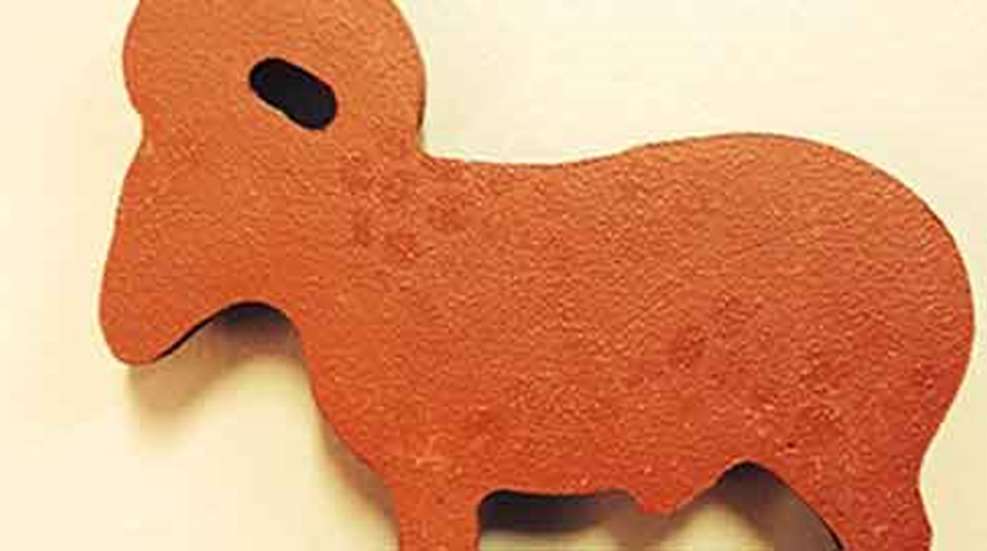
I am pleased to say that the original idea for this wildcat cartridge was mine. Since I am the most un-mechanical male on the planet, the actual development of the cartridge had to be done by Bob Smith and (mostly) Jim Rock of RPM (Rock Pistol Manufacturing). These guys know about mills and lathes and all. We all wanted a moderate velocity handgun cartridge in 7 mm, as that bore size looked to be just the ticket for long-range handgun work. It was the 70s and the heyday of IHMSA (International Handgun Metallic Silhouette Association) matches. Targets were the thick steel cutouts of animals, placed at as much as 200 meters from the firing line. Since the targets were heavy, it took a pretty powerful blow to topple one. That’s particularly true of the 200 meter ram, which weighed 54 pounds. The range mandated an accurate cartridge with a flat trajectory.
It was a blue-collar sport and the founders were sensitive to the economics of shooting, so inexpensive single shot pistols were the order of the day—Contenders and Merrills. In these guns, a rimmed cartridge was clearly superior to all others, so I spent a lot of time pouring over ammunition manuals and loading books. I wanted a rimmed case (for easy extraction) with a medium powder capacity and convertible to 7 mm. There were no super computer programs to do the searching for you in those times.
After no small amount of effort, the lightbulb over my head went blink one night. My base cartridge was the .225 Win. It was based on the venerable .30-30 and designed by Winchester to replace the .220 Swift. Unlike a couple of other 7 mm wildcats, we gave the 7 mm Merrill the same shoulder angle as the 7 mm Rem. Mag. Using medium- to heavy 7 mm bullets in neck-expanded and fire-formed .225 cases, we got power, flat trajectory, accuracy and (barely) bearable recoil. I was happy to be associated with the project.
Most Popular