1911s Tighter

by
posted on July 23, 2013
** When you buy products through the links on our site, we may earn a commission that supports NRA's mission to protect, preserve and defend the Second Amendment. **
wiley-clapp.jpg (3)

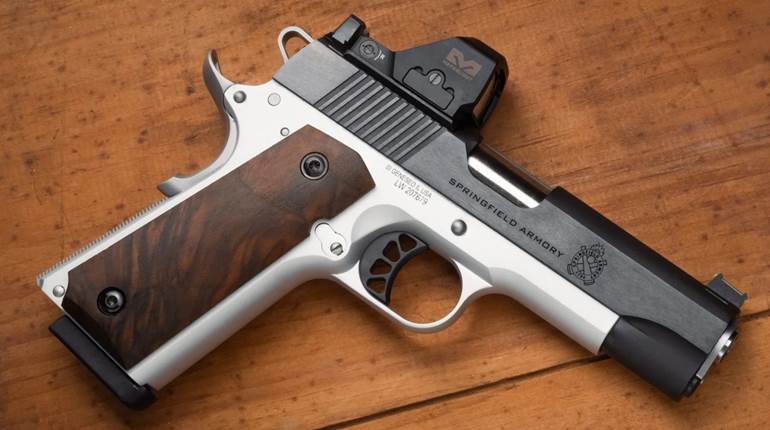
In a recent blog, I talked about the differences between the M1911 and M1911A1 pistols. A number of readers were kind enough to write in with favorable comments, which are much appreciated. If this kind of commentary is of use to my readers, I’ll try to include more of it in these electronic pages. Let me know what you would like to hear about and I’ll try to meet those requests.

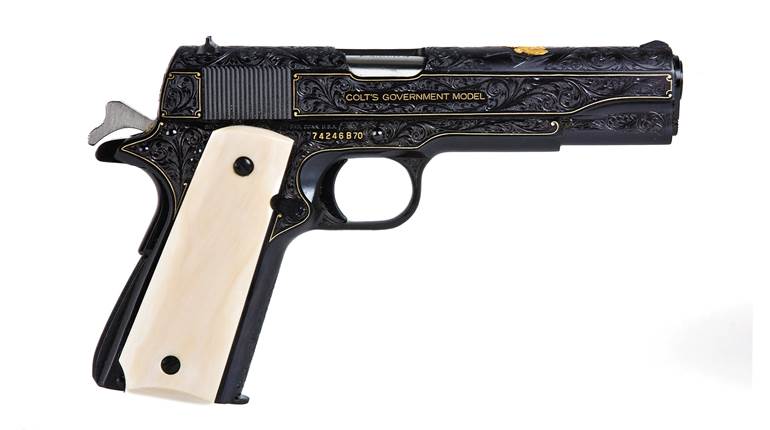
I was delighted to hear from a reader named John Browning. No, it wasn’t the famous one that died in 1926, but rather a gentleman named John W. Browning. He was inquisitive about the quality of the original 1911-era pistols being made to tighter specs than later guns. This is a matter that surfaces from time to time. To answer the question, I contacted one of the nation’s best pistolsmiths, who also happens to be a serious M1911/M1911A1 collector. He once had the opportunity to detail strip M1911 pistol, No. 9.

From this background, he replied instantly to the question: “Are original 1911s made to tighter specs than later ones?” No, they were not. Intended for rough service in field conditions, the 1911 was developed and produced with a certain amount of room for crud to accumulate before cleaning. The military services are often maniacal about clean weapons of all kinds, but they are realistic enough to know that there are times when it’s impossible. The first use of the 1911 may have been in the Punitive expedition into Mexico in 1916, which was a very sandy, dusty environment. For good reason, there is no major difference in specs for GI 1911s.

Latest

Finnish Mausers
Finnish Mausers

The Elusive Finnish Mausers

In the 1920s, the Finnish Shooting Sport Federation sought to replace the military’s venerable Mosin-Nagant. Its attempts to introduce Mauser target rifles as service rifles were eventually thwarted in the 1930s by design limitations and budgets.

The Armed Citizen® Dec. 22, 2025

Read today's "The Armed Citizen" entry for real stories of law-abiding citizens, past and present, who used their firearms to save lives.

Rifleman Q&A: Point Of Hold

Q: I have always been a rifle and handgun shooter, with little shotgun experience, and I am a little confused about the “point of hold” shown in the pattern illustrations of our magazine.

Preview: MTM Case-Gard Suppressor Protector Case

Secure, rugged and inexpensive, the Suppressor Protector Case by MTM Case-Gard is a convenient way to transport or store as many as three (cooled) silencers up to 10" in length.

A Bigger Rhino: The Chiappa 60DS L-Frame In .44 Mag.

The Chiappa Rhino revolver design is "anything but ordinary," and for 2026, the company is upscaling the concept to handle the .44 Magnum cartridge.

Preview: Magpul MOE QD Bipod For M-Lok

Simple, inexpensive and supremely easy to use, the new MOE QD Bipod For M-Lok is Magpul’s fastest-mounting bipod model by far, as it takes only about five seconds for the practiced hand to securely affix it to an M-Lok-clad fore-end.

Interests


Get the best of American Rifleman delivered to your inbox.