There is an old saying, repeated often enough to be a cliché, which says “Practice makes Perfect.” On the face of it, this might seem to apply to learning the skills of gunhandling and marksmanship. But when you think about the consequences of errors in handling a gun and using it skillfully under stress, then maybe it’s time to refine the cliché’d just a little. How about adding a word, making it “Perfect Practice makes Perfect?” In essence, this simply means that you must execute every aspect of a training regimen to perfection before additional repetitions will produce a beneficial effect. It has been pretty well established that you must do something on the order of 5,000 reps of a physical act before muscle memory takes over and it becomes habit. That’s a tall order.
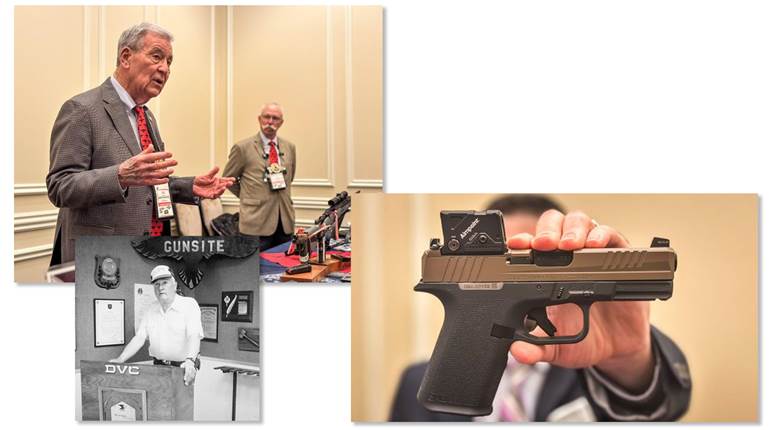
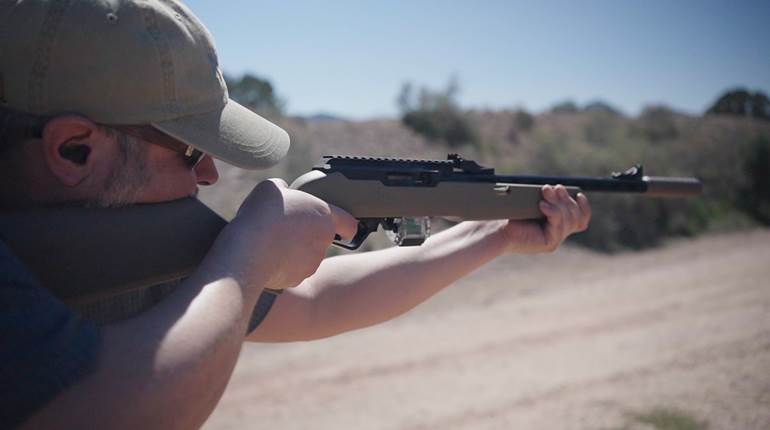
Let’s take something as simple as presenting the pistol from a holster. As taught at Gunsite, this is a five step sequence that begins with the pistol in a holster and ends with the gun locked into a hard Weaver stance, sights aligned on target and finger on the trigger. Students at the school practice the steps of the exercise enough to understand what the steps are. Performed properly, the presentation of the handgun minimizes the movement of the gun. It just comes out of the holster and goes straight to the final on-target position with no wasted motion. With conscientious effort, the presentation is very smooth and can be very quick. Although your initial practice sessions may seem tediously slow, they will become more productive in the long run.
There are two reasons why it is so vitally important that each step of the sequence be perfectly executed. First, if you vary from the proper technique, you are actually wasting time and effort and won’t produce the result that you want. Second, improperly performed steps are simply programing you to perform improperly. You will have to spend even more effort to unlearn the bad stuff. Either way, the practice session achieves nothing of value. Slow it down and go at it just one step at a time. In the case of the presentation drill, you will find that the five (properly performed) steps begin to blend into one another in such a way that it becomes a smooth, swift exercise that brings the gun out and on target quickly. And—to quote another Gunsite mantra—Smooth IS Fast.
Most Popular