10/16/2012
Based in Ramos Mejia, Argentina, Bersa is best known for its Thunder semi-automatic pistols—primarily chambered for .380 ACP. However, in 2010, the company introduced the BPCC line of concealed-carry guns. Originally available in 9 mm Luger or .40 S&W, the compact striker-fired sidearm was Bersa’s entrant into field of small carry guns chambered for “full-size” ammunition. Though the .40 S&W model was dropped from the line in 2011, the BP9CC seems at home among other polymer-frame, compact semi-automatics.
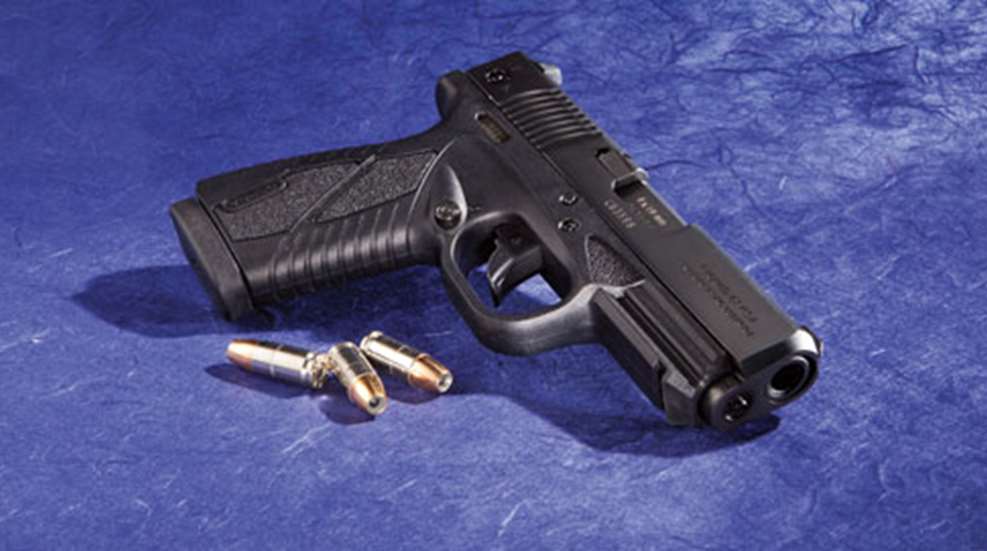
Overall dimensions for the BP9CC are 6.35-inches long, 4.8-inches tall and 0.94-inches wide. It weighs 21.1 ounces, unloaded, and has a 3.3-inch barrel. External controls include an ambidextrous magazine release button—in its usual position just behind the trigger guard—a disassembly pin and a key-operated locking safety. Other safety features are the loaded-chamber indicator—a metal flag behind that ejection port that is raised by the rim of a chambered cartridge—and a magazine disconnector that prevents firing if a magazine is not fully seated and locked in the magazine well. The stamped metal magazine holds eight rounds and utilizes a plastic follower.
The Bersa’s polymer frame has a fairly unique and modern appearance. Made of what Bersa calls High Impact polymer, it felt light but rigid. Applying pressure to the sides of the empty magazine well yielded no discernible flexing. Molded into the dustcover is a 1 1/2-inch section of Picatinny rail. Behind that, and just above the front of the trigger guard, an arrowhead-shaped portion of the frame has molded-in stippling in a fine, mosaic-like pattern. The stippled area tapers back toward the shooter and serves to guide the trigger finger into a good “ready” position outside and above the trigger well. It is present on both the right and left side of the frame. Also featuring stippling are two polygonal sections on each of the grip panels, providing purchase for the tips of the three supporting fingers. Front- and backstrap molding consists of shallow grooves that curve around the grip and angle down from back to front. The frame seems well made and the molding is precise and consistent.
Unfortunately, the same cannot be said for the BP9CC’s steel slide. At a distance all appears well, but up close the inconsistent finishing becomes apparent. Shallow pits and nicks mar what should be smooth surfaces, and edges are rounded and angled unevenly—most noticeably behind the rear sight where the rounded area undulates from 4 to 3 mm and up to 6 mm in width. Additionally, while most of the engraved words are crisp and clear, some markings look as though they were penned-in as an afterthought. Trouble continues upon inspection of the white three-dot sights. Dovetailed into the slide, Bersa says the front sight is of SIG Sauer design while the rear is of the Glock type. While the sights’ origins are not readily discernible, what is apparent is the front sight is metal, while the rear sight is plastic and hangs proud over the right-hand side of the slide. Puzzled as we were—not just with Bersa’s selection of sights, but also with their poor installation—it was nice to know that consistently left-of-bullseye shooting was not caused by evaluator error.
Disassembly, for those familiar with similar pistols, is somewhat different from the European-imported models. Once the gun is unloaded and the chamber cleared, insert an empty magazine and pull the trigger to release the tension on the striker spring. Drop the magazine, and assuming a “Glock” grip—anchoring the thumb on the backstrap while the other fingers come over the slide and apply rearward pressure—draw the slide back about 3/8 inch and align the disassembly guide notches that are cut into the rear of the slide and frame. Once the indicators are in line, the disassembly pin can be removed from right to left. Ease the slide assembly forward—it is under light tension from the recoil spring—and remove it from the frame. Once the recoil spring—the BP9CC uses a dual captured spring-in-spring design—and barrel are lifted out of the slide, the handgun is field-stripped and ready for maintenance.
During range evaluation, one of the first things noticed was the stiffness of the ambidextrous magazine release. The button required substantial force to activate—from either side. During shooting, it became apparent that the trigger would take some getting used to. Its face is wide, nearly 1/2 inch across, and forces the shooter to engage significantly more than just the tip of the trigger finger, as most are taught to do when shooting. The pull, while not unduly heavy—averaging slightly less than 4 pounds—feels gritty and long in part because the trigger first pivots back, under very light tension, for about 1/4 inch before beginning a comparatively heavy, grinding pull that lasts for another 1/4 inch before the break. While not ideal, the trigger did have a redeeming quality in its reset, which was short, gave clear audible and tactile cues and yielded follow-up pulls that were 2 pounds lighter than full-length squeezes.
All three ammunition types used in evaluation chronographed below advertised velocities, which is no surprise considering the BP9CC’s abbreviated barrel. Accuracy testing consisted of five consecutive, five-shot groups fired from a sand bag rest. As is our practice with short-barreled personal defense pistols, the targets were set at 7 yards. All ammunition tested produced sub-2-inch groups, and no malfunctions were encountered during evaluation.
Overall, the Bersa BP9CC performed well, especially in comparison to similar American- and European-made pistols. Where it falls short, though, is in fit and finish. A little more care and craftsmanship could make this Argentine offering a real competitor in the concealed-carry market.
Manufacturer: Bersa S.A.; Buenos Aires, Argentina
Importer: Eagle Imports; (732) 493-0333; www.bersa.com
Caliber: 9 mm Luger
Action Type: striker-fired, semi-automatic center-fire pistol
Frame: molded High Impact polymer
Barrel: 3.3"
Rifling: six-groove, 1:10" RH twist
Magazine: eight-round-capacity detachable box
Sights: dovetailed white three dot sights; rear drift adjustable
Trigger: 3-lb., 13-oz. pull
Overall Length: 6.35"
Width: 0.94"
Height: 4.8"
Weight: 21.1 ozs.
Accessories: plastic case, lock safety key, extra magazine, owner’s manual
Suggested Retail Price: $429
Most Popular