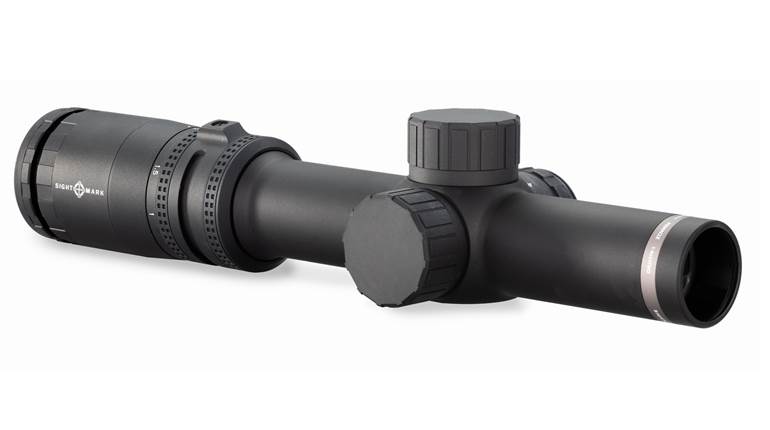
Family-owned Vortex Optics, which is based in Wisconsin, has been selected by the U.S. Army to produce and deliver up to a quarter million Next Generation Squad Weapons–Fire Control (NGSW-FC) systems over a 10-year production period. Contract terms begin this year with a minimum value of $20 million and maximum of $2.7 billion.
The Vortex Optics NGSW-FC, dubbed the XM157, was designed and built with the needs of the current and future warfighter in mind. Designed, invented and engineered entirely in house at the company’s headquarters, the Low Powered Variable Optic (LPVO) features a display overlay, laser rangefinder, ballistic solver, environmental sensors, aiming lasers, digital compass and wireless communication to provide for seamless connectivity on the battlefield.
The XM157 is built around a 1-8x30 mm LPVO with a glass-etched reticle on lenses made entirely in the United States. The fire control weighs less than many traditional LPVOs with current weapon-mounted laser rangefinders and mounts. The system allows our troops to engage threats quickly and effectively.
With an integrated Picatinny base that houses the Vortex Active Reticle system, the XM157 injects a digitally displayed image into the first focal plane of the optic and allows for intuitive displays to support ballistic drops, reticle shapes and sizes, and additional modes to display way points, identified threats and fields of fire. To account for a rapidly evolving battlefield and a broad range of climates and weather conditions, the optic withstood rigorous drop-testing, extreme hot and cold environments, immersion testing and tens of thousands of rounds of live-fire testing.
The combined technology enables the unit to range a target, send the information to an on-board ballistic solver, gather atmospheric information, and display an illuminated Active Reticle with the corrected aimpoint with wind holds in the sight picture. The solution takes tenths of a second and, despite the advanced technology, ease of use was a critical design feature. To provide flexibility in the field the XM157 can be controlled via an on-board keypad or a detachable remote.
Most Popular