One of the nicer things that happened to me as a gunwriter was an occasional trip to a handgun factory. One such trip happened in 1995, when I traveled to northern Spain to see the historic Astra plant that made a number of different handgun models. The factory was located in the Basque-country town of Guernica, not far out of the city of Bilbao. This is a famous place for the German bombing of the town in 1937, during the Spanish Civil War. It was all the more so because of a famous Picasso painting of the brutal affair, with many dead and wounded Spanish civilians. Most of the buildings were damaged or destroyed. At the time of my visit, there were no signs of the attack remaining, but the people clearly held a grudge.
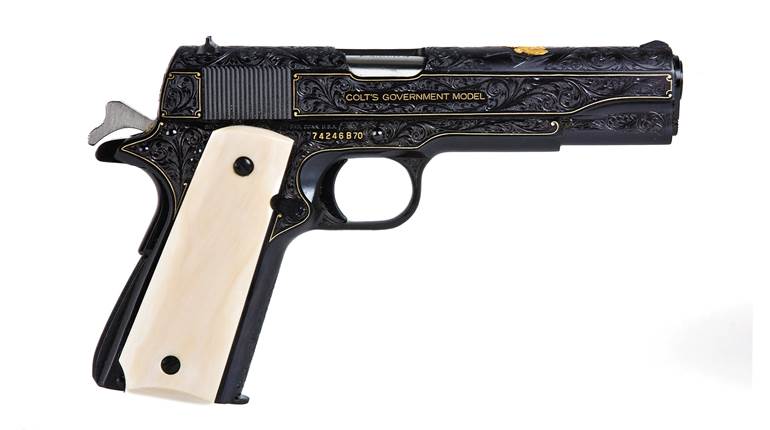
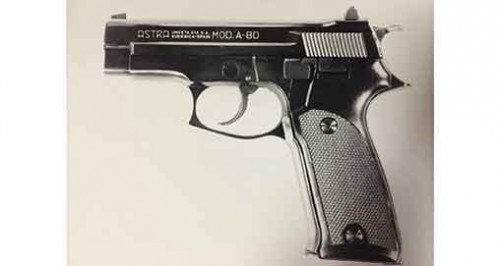 In the days when the Spanish arms industry was going full blast, three firms dominated the handgun business—Llama, Star and Astra. Astra was selling a series of service pistols (A70, A80, A90) in 9 mm and other calibers. Before we had a chance to look at the gunmaking operation, we (several other gunwriters were also guests) were taken to a handsome conference room by the corporate office. Paneled in regal hardwood, the room had some beautiful samples of ornamented products. Most of it involved thetypical Spanish practice of damascening guns, where the steel surfaces are layered with gold and then engraved. They also had cutaways of many pistols and some of them were also damascened. The plant itself was made of old-style brick and showed signs of being added to many times, but never subtracted from. A complex of small and large rooms and even a wing for some ultra-modern machinery, as well as ancient narrow stairs next to modern elevators, the Astra plant was delightful. Somewhere down in the bowels of the plant, we were ushered into an indoor range where I was ceremoniously offered the opportunity to fire the first A-75 in .45 ACP.
For me, the highlight of the visit was inthe museum/stockroom, where I was allowed to examine small quantities of guns that were no longer made. Among these was a stack of 900 series pistols—the Spanish Astra version of the broomhandle Mauser. Brand new in original packaging, the guns had been on those shelves for decades and there were even some of the select fire versions among them. Also, there were a series of big revolvers obviously patterned after the N frame S&Ws. I saw .357, .41 and .44 Magnums, as well as a two-cylinder wheel gun that let you shoot .45 Colt and .45 ACP. They even had a medium frame convertible that fired 9mm and .38 Special—dead ringer for the FN Barracuda. To me, all of this means that there are a lot of things going on in the world’s armories that we don’t know about. If American importers can’t sell a gun in the U.S. market, you’ll never see it. My hosts were courteous and helpful throughout the visit—typical Old World hospitality.
Most Popular