No doubt many shooters, especially new ones, find cartridge designations confusing. After all, a variety of means have been used through the years to establish them, including, but not limited to: projectile diameter in inches or millimeters; grain weight of blackpowder charge; year of introduction; and, in some cases, arbitrary marketing jargon. Add to those the gauge numbers assigned to shotguns, which are derived from an antiquated and seemingly arcane formula in which the larger number, counterintuitively, indicates the smaller bore size.
For instance, 12 gauge—the most popular shotshell size in America by far, thanks to its capacious hull and versatile loadings, and despite its reputation for rather stout recoil—is called that in reference to the number of balls that could be formed for its 0.729"-diameter bore from 1 lb. of lead.
With that methodology in mind, it’s easy to understand why the 20-ga. shotshell is not only smaller, with a bore size of 0.615", but less capable of holding as large a payload as a 12-ga. shell of equal length. The upside is that the 20 gauge, though trailing in range and on-target performance, produces less recoil even when propelled at the same velocity as that of its larger brother—no insignificant factor in its claim as the second-best-selling shotshell size in America.
Bearing all that in mind, and deliberately avoiding the near-limitless topic of choke constrictions, it’s perhaps not surprising that several references to the popular 20 gauge have coalesced in this issue.
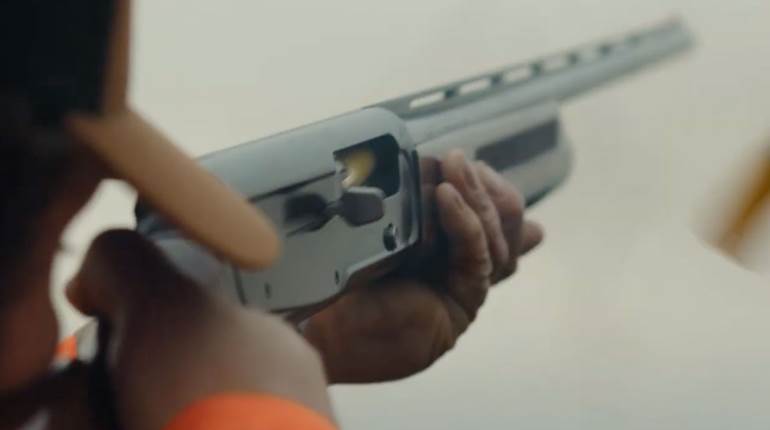
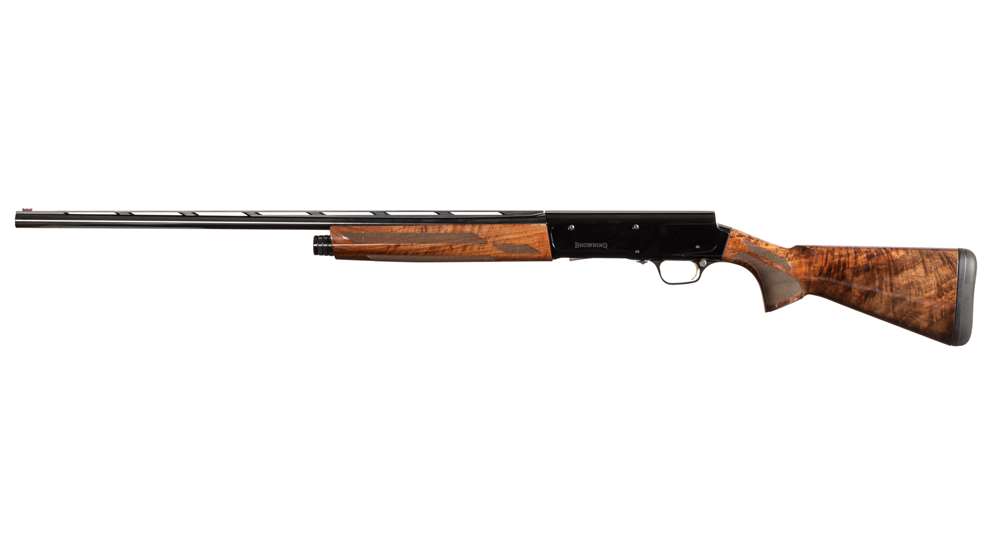
In “A Lightweight Hammer: Browning’s A5 Hunter 20 Gauge,” Editorial Director Mark Keefe evaluates the newest rendition of that company’s modern “Humpback,” which visually harks to John M. Browning’s original 12-ga. Auto 5. However, the new scattergun incorporates an entirely different operating mechanism that allows it to handle today’s wide variety of shells without swapping out components and still managing to deliver, in his words, “the finest-swinging and softest-shooting gun in a new generation of Brownings.”
Other nods to the 20 gauge can be found in this month’s Questions & Answers and Handloads departments. And while the former confirms that the 20 gauge does have its payload limitations, the latter reminds us that it is more than capable of getting the job done, especially when recoil-sensitive shooters are learning to hunt upland game. So, while the 20-ga. shell may be second place in sales, it’s by no means second-class and is likely to be with us for many years to come.
In “Brush-Busters Are Back!” big-game hunter and American Rifleman contributor Craig Boddington applies his decades of field experience to explaining the practical benefits of classic and newcomer straight-wall cartridges and what they bring to the table in a market seemingly overrun by high-velocity, long-range chamberings. Challenging the traditional notion that such cartridges “buck” brush, he nonetheless recognizes their value in hitting hard and putting down game on the spot.
Then, in “Will The Real Russian SKS Please Stand Up?,” author George Layman explains that, during the Vietnam War, many of the SKS carbines chambered in 7.62x39 mm—a cartridge so designated for its bullet diameter and case length—were incorrectly recorded as being Russian in origin. He then relays how recent research by archivists and collectors has proven that other licensed copies of the SKS—including examples from Romania and East Germany—were also brought into North Vietnam.
Whether for new shooters or lifetime gun aficionados, learning about the nuances of cartridges and firearms and what makes them unique is a worthwhile and interesting endeavor that can increase our enjoyment of, and appreciation for, America’s rich Second Amendment heritage. Just be careful—it just might become a passion.
Most Popular