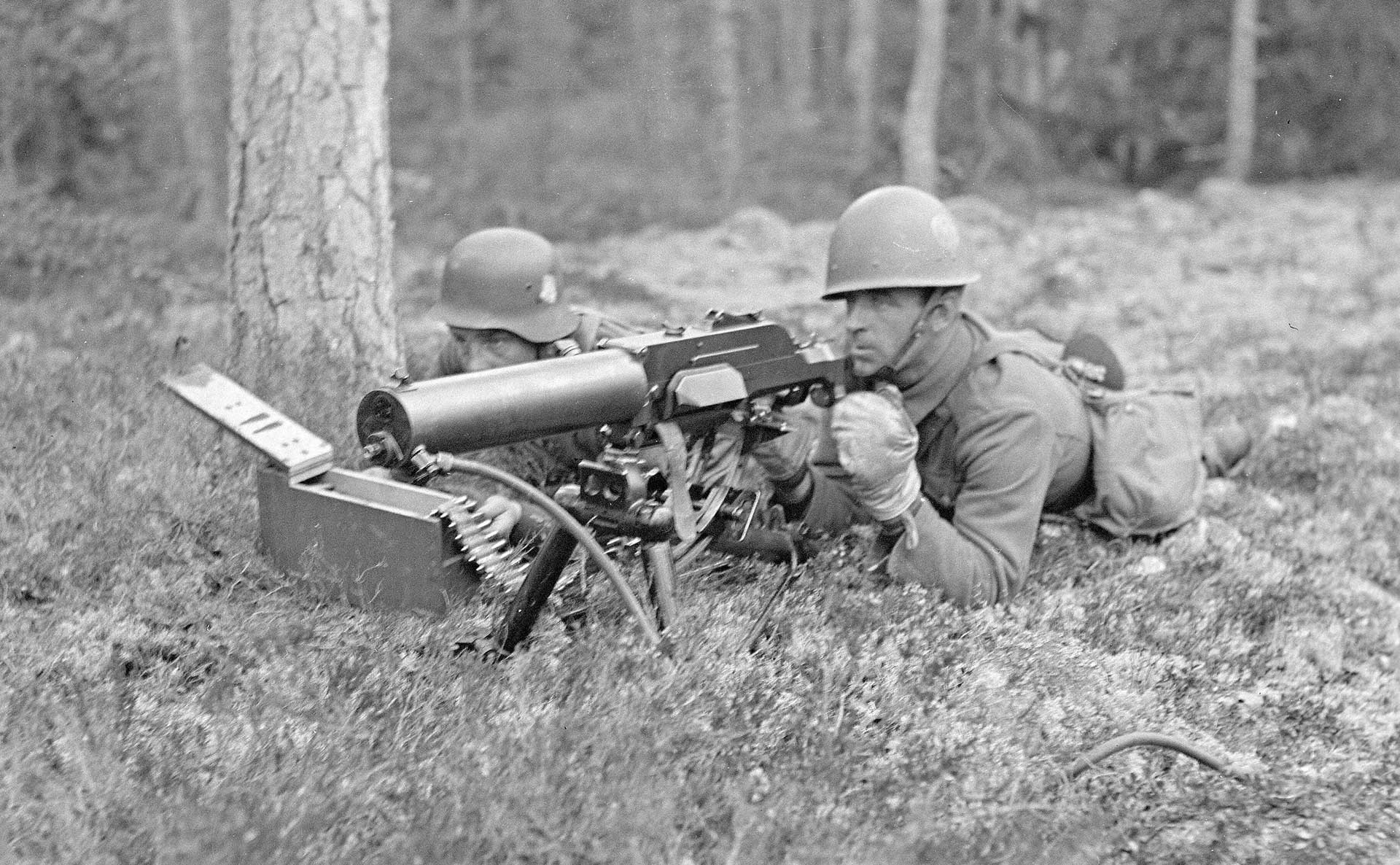
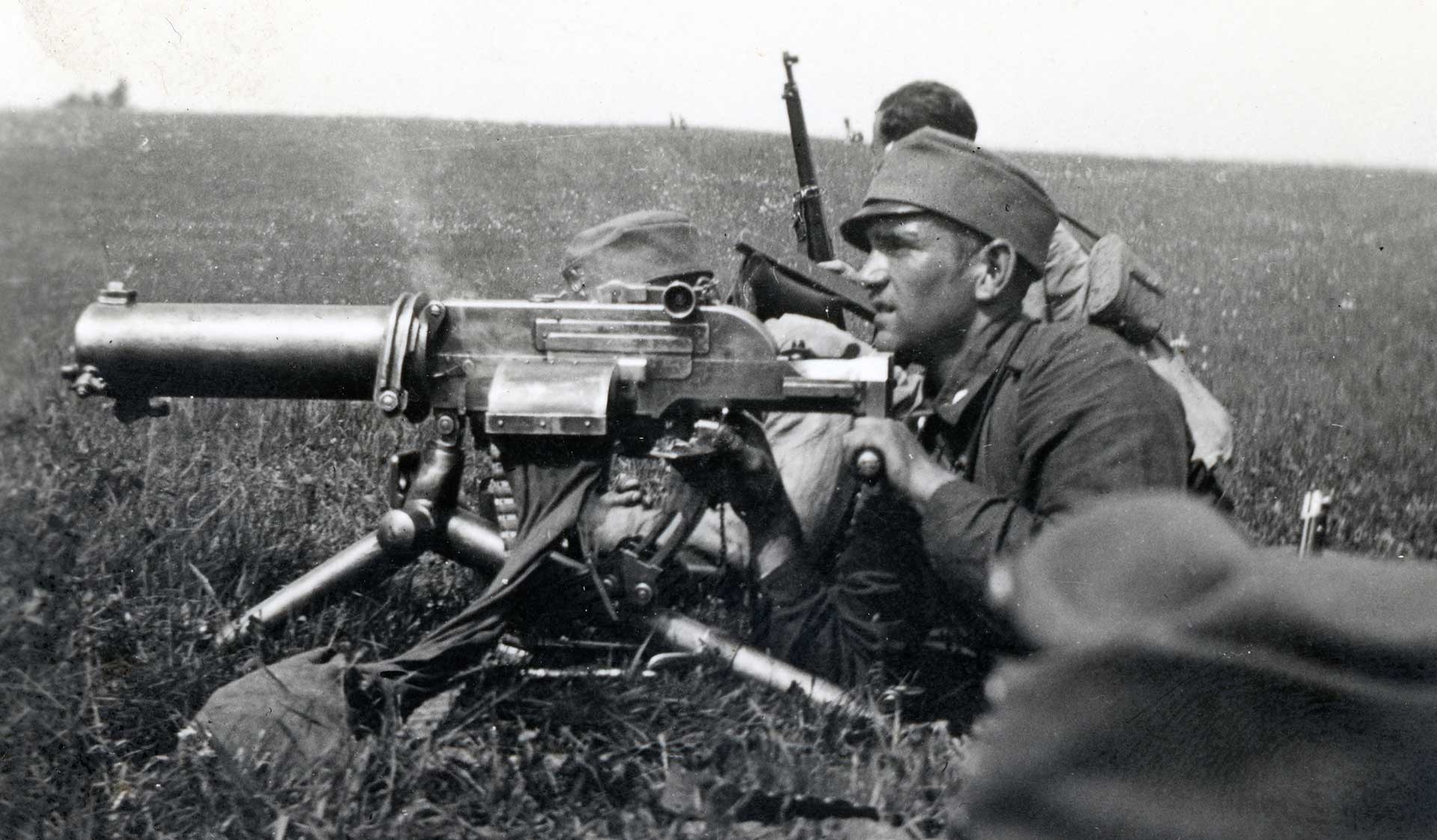
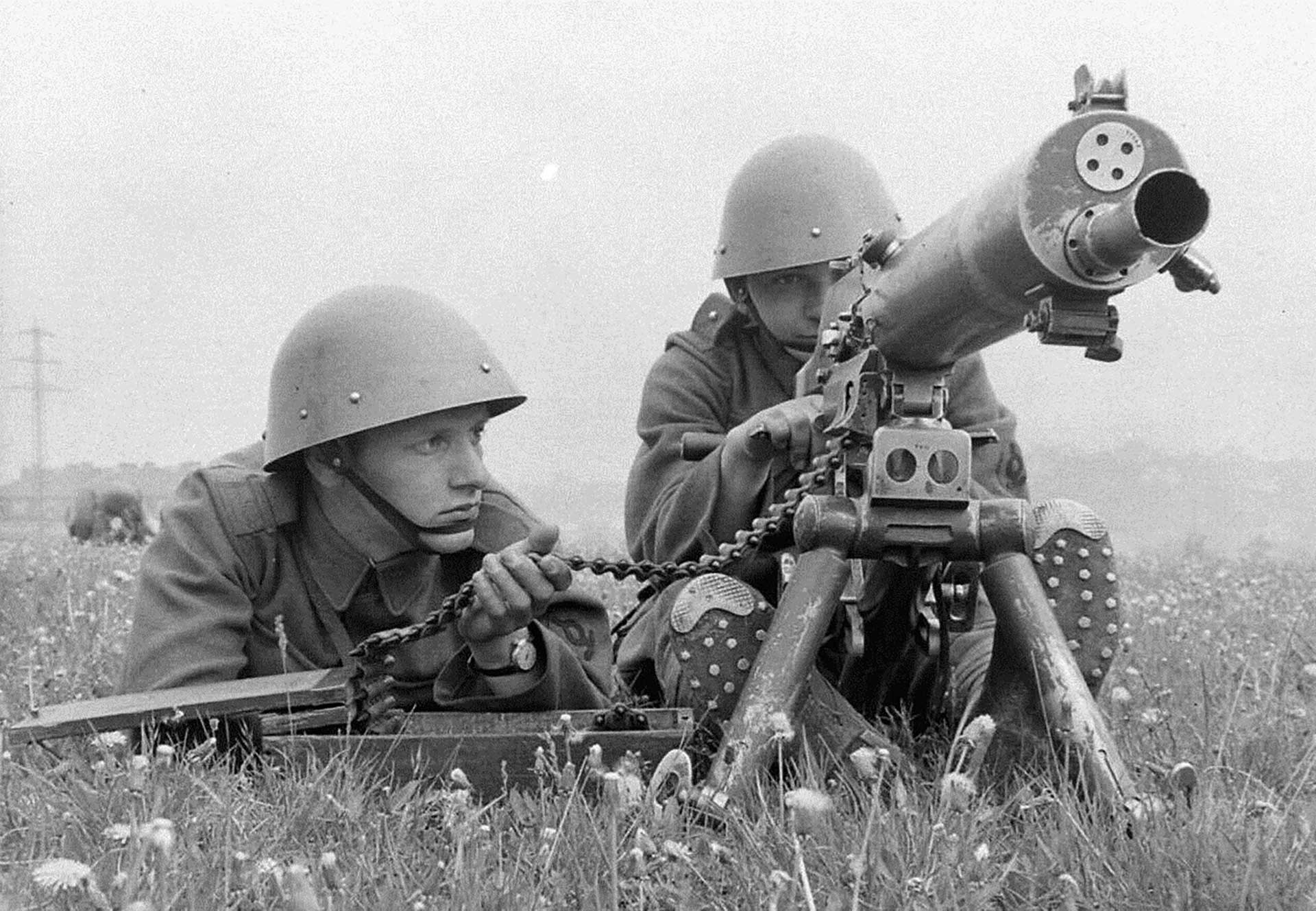
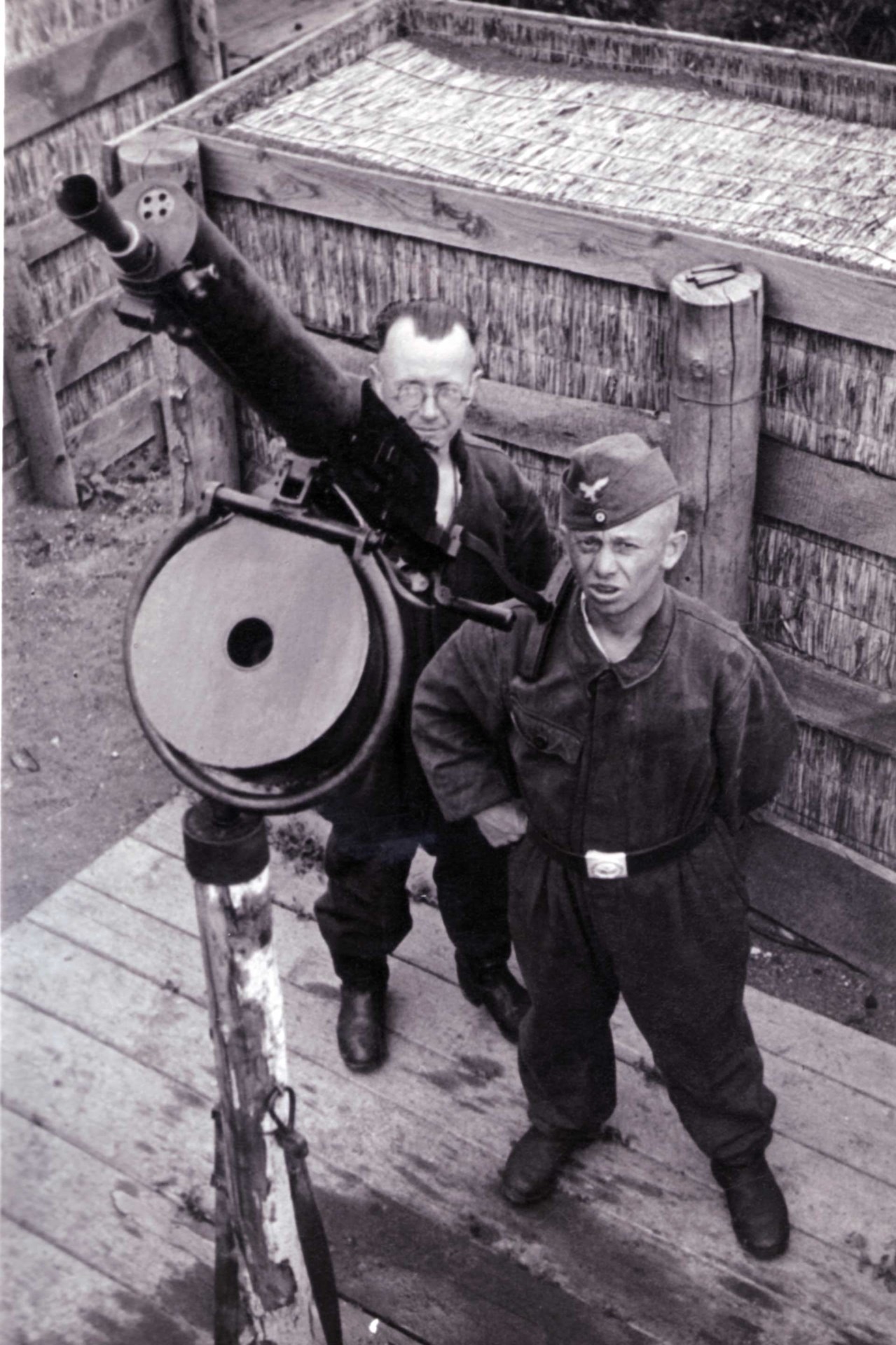
There were approximately 8 million combat deaths in World War I. After artillery, machine guns were the second leading cause of combat casualties. Some estimates put the total number of deaths related to machine gun fire in World War I at more than 2 million. Most folks remember the rapid-fire, death-dealing British Vickers, German MG08, French Hotchkiss, Russian Maxim and American Browning guns. Often forgotten among the fraternity of Great War "grim reapers" is the Austrian Schwarzlose.
German-born Andreas Wilhelm Schwarzlose was a bit latecomer to the early machine gun design community. But what he lacks in notoriety, his design makes up for in simplicity and ingenuity. Schwarzlose entered the full-automatic marketplace surrounded by well-known earlier designs and technologically fenced in by his competitors’ dominant patents. Consequently, he avoided the highly complicated lock and moving barrel of the Maxim gun—and Maxim had patented every workable method of recoil operation.
Another competitor, the French Hotchkiss Mle 1914, was gas-actuated and air-cooled—and Hotchkiss held the patents on much of that technology. Undeterred, Schwarzlose found a different solution for his machine gun, which he patented in 1902 and was first manufactured in 1905 by Steyr Arms in Austria.
A Heavy Spring, Large Bolt & Short Barrel
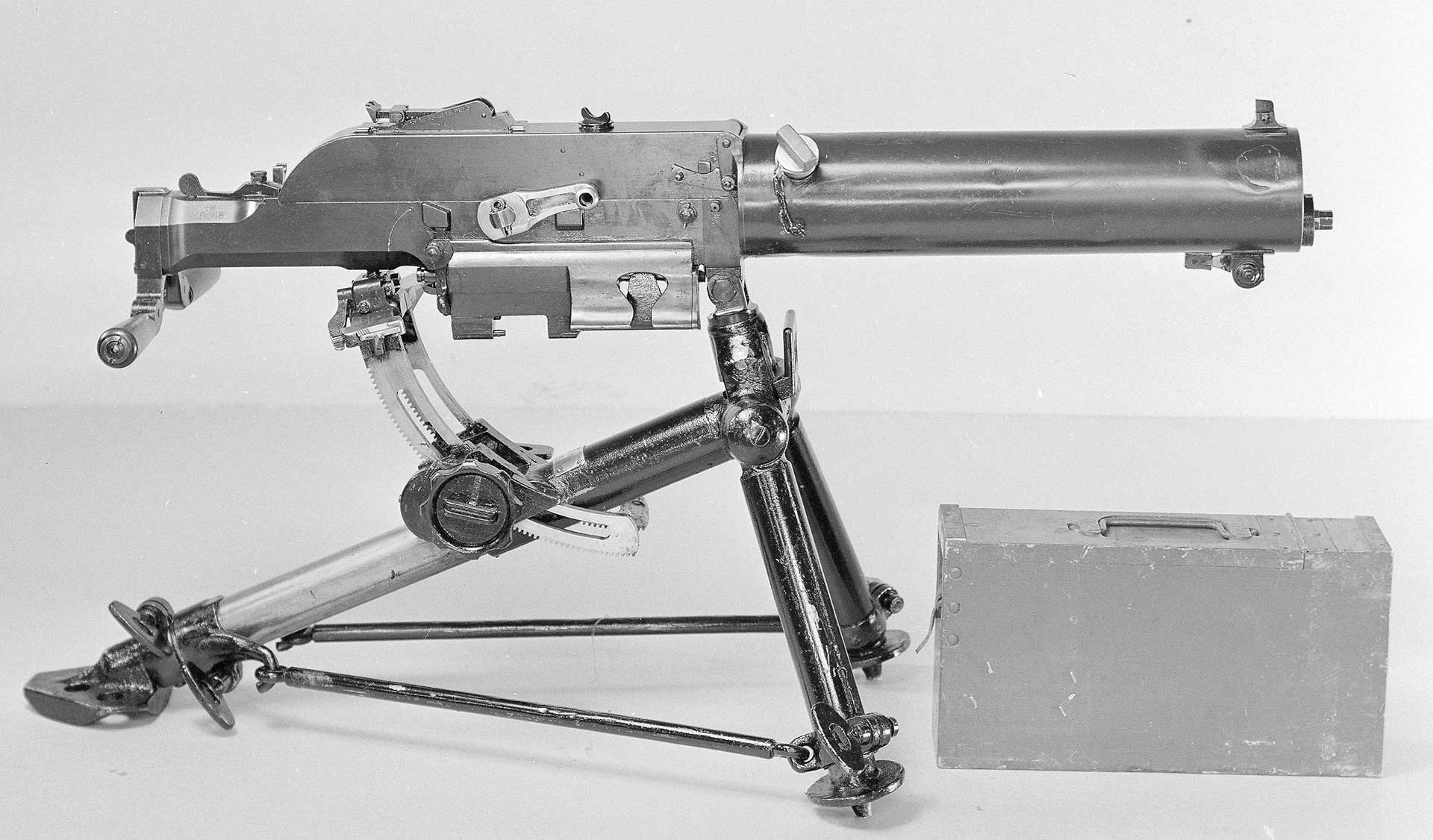
The Schwarzlose machine gun is a water-cooled, belt-fed firearm using a retarded-blowback operation and firing from a closed bolt. That reads like a horrible insult. However, it is technically correct, although the language seems impolite at best. The Schwarzlose method of toggle-delayed blowback requires a heavy breechblock and a pair of elbow-joint struts. When fired, the breechblock moves rearward, and as it does, it unfolds the struts and the Schwarzlose design redirects the recoil forces to the receiver. A large return spring is compressed by the bolt upon recoil, and the spring drives the bolt forward and into battery once again.
To ensure extraction, the Schwarzlose M.7 (8x50 mm R Mannlicher) uses a cartridge oiling system. To avoid using oiled or waxed cartridges, the gun employs an internal oiling system that sprays a tiny amount of oil into the chamber for each round. There is an oil reservoir and pump mounted in the top cover of the receiver, which is activated by the motion of the bolt. The oiling system sounds worse than it turned out to be—the Schwarzlose was not considered to be the lesser for it.
The updated 1912 model (M.7/12) removed the oil dispenser and was reworked to fire “dry ammunition.” More weight was added to the bolt, and a heavier drive spring was coupled with a revised toggle system to create a longer delay—enough to dispense with oiled cartridges.
U.S. military ordnance expert and Marine Corps Col. George Chinn, described Schwarzlose’s unique approach in the first volume of his magnificent series “The Machine Gun” (1951):
“Schwarzlose solved the problem in an unusual manner. A powerful mainspring and heavy bolt were used that provided enough inertia to resist the first rear-ward thrust of the exploding powder charge. But this alone was not sufficient. A comparatively short barrel was also employed, coupled with an arrangement of levers that caused the bolt to act at a mechanical disadvantage when trying to compress the mainspring suddenly.
To fire the weapon, a tag at the beginning of the cartridge belt is inserted in the belt guide at the lower right side of the feed. The belt is then pulled to the left and over the sprocket wheel of the feeder until the first cartridge engages a tooth. The charging handle is pulled smartly to the rear three times and released. The driving spring, in taking the parts to battery on the third return, aligns the round with the chamber.
The breech mechanism of the Schwarzlose is never positively locked. The necessary delay in opening the breech is largely dependent upon the inertia furnished by the elbow-type linkage, the resistance of a strong spring, and the absorption of the first shock of the early stage of peak pressure by the receiver. However, the major factor is the use of a 20 3/4-inch barrel. This is the maximum length that can be used to ensure the bullets clear the bore before the recoil of the bolt begins. If any longer barrel were used, to be safe, the mechanism would assume such large proportions that it could not remain in the portable machine gun class.
This system is appropriately designated retarded blow-back. Since the cartridge is extracted under relatively high gas pressure, it was found necessary to lubricate the ammunition. Schwarzlose settled this problem by installing, as an integral part of the weapon, a pump to lubricate the cases. This device pumped a squirt of oil in the chamber between each extraction and loading. The combination of the lubricated ammunition, heavy spring, large bolt assembly, and short barrel allowed the use of an unlocked action which proved quite satisfactory.”
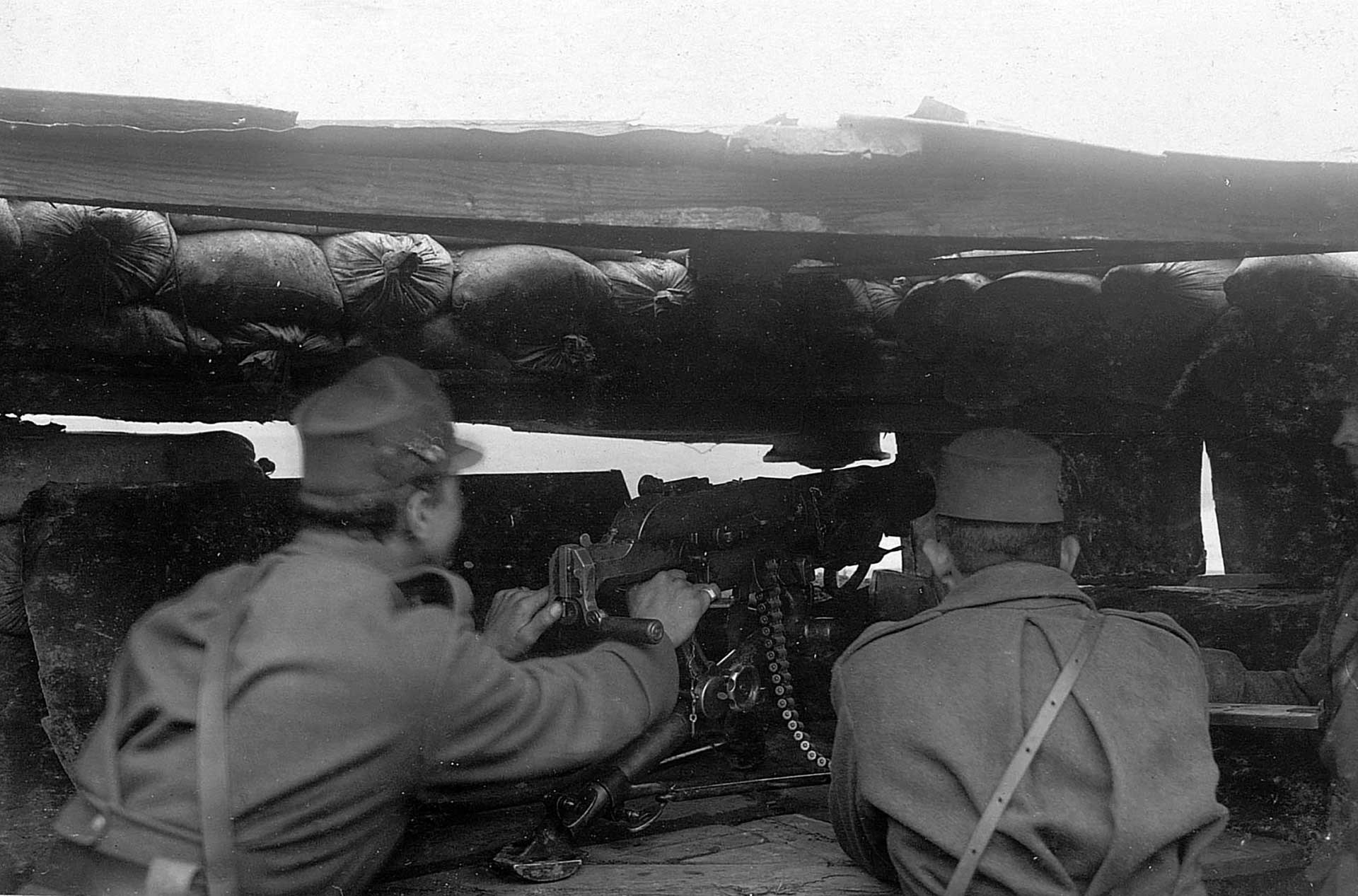
"All Thumbs" On The Trigger
The Schwarzlose has a double trigger on its twin spade grips. To fire, the left thumb depresses the automatic safety before the right thumb depresses the trigger. The machine gun is only capable of automatic fire, and the cyclic rate is low at 400 round per minute. Most gunners could trigger a single round with a bit of practice.
The Schwarzlose kept it simple, featuring few operating parts, and the gun can be disassembled in fewer than 30 seconds. For example, the star-shaped feed wheel has just two parts, and yet the Schwarzlose feed is considered the smoothest of all the World War I machine guns. Ammunition came in 250-round cloth belts.
Dual spade grips extend horizontally from either side of the receiver and fold up into a vertical position for travel. The 44-lb. tripod provided a stable gun platform, with a simple slide mechanism for traverse. Elevation was handled by a pair of racks below, adjusted by a knob on the reduction gear. The tripod itself featured folding and extendable legs and is quite low in its profile for a water-cooled machine gun of the era. There was an optional armored shield that could be fitted to the Schwarzlose tripod, offering protection for the gunner and loader, and including an armored sleeve that protected the nose and sides of the water jacket.
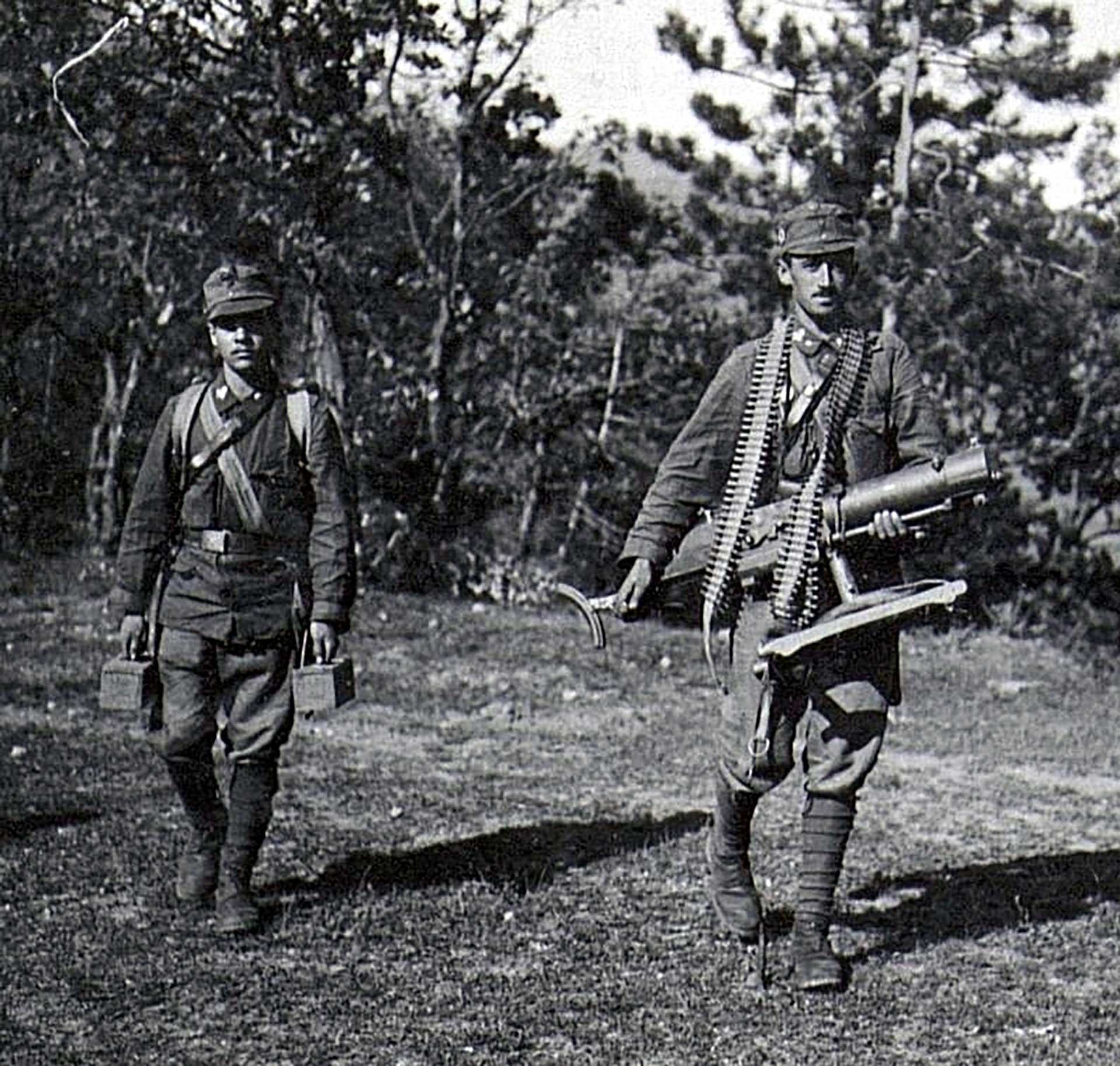
A “backpack mount” with a folding bipod was made for use by mountain troops, and there was also a small tripod that allowed the Schwarzlose to operate in the “man-portable” role, somewhat like the German MG08/15. In this mode, the gunner would use an extendable metal shoulder stock that attached to the left rear of the receiver. The shoulder stock connects via a rail and locks into place with a spring plunger.
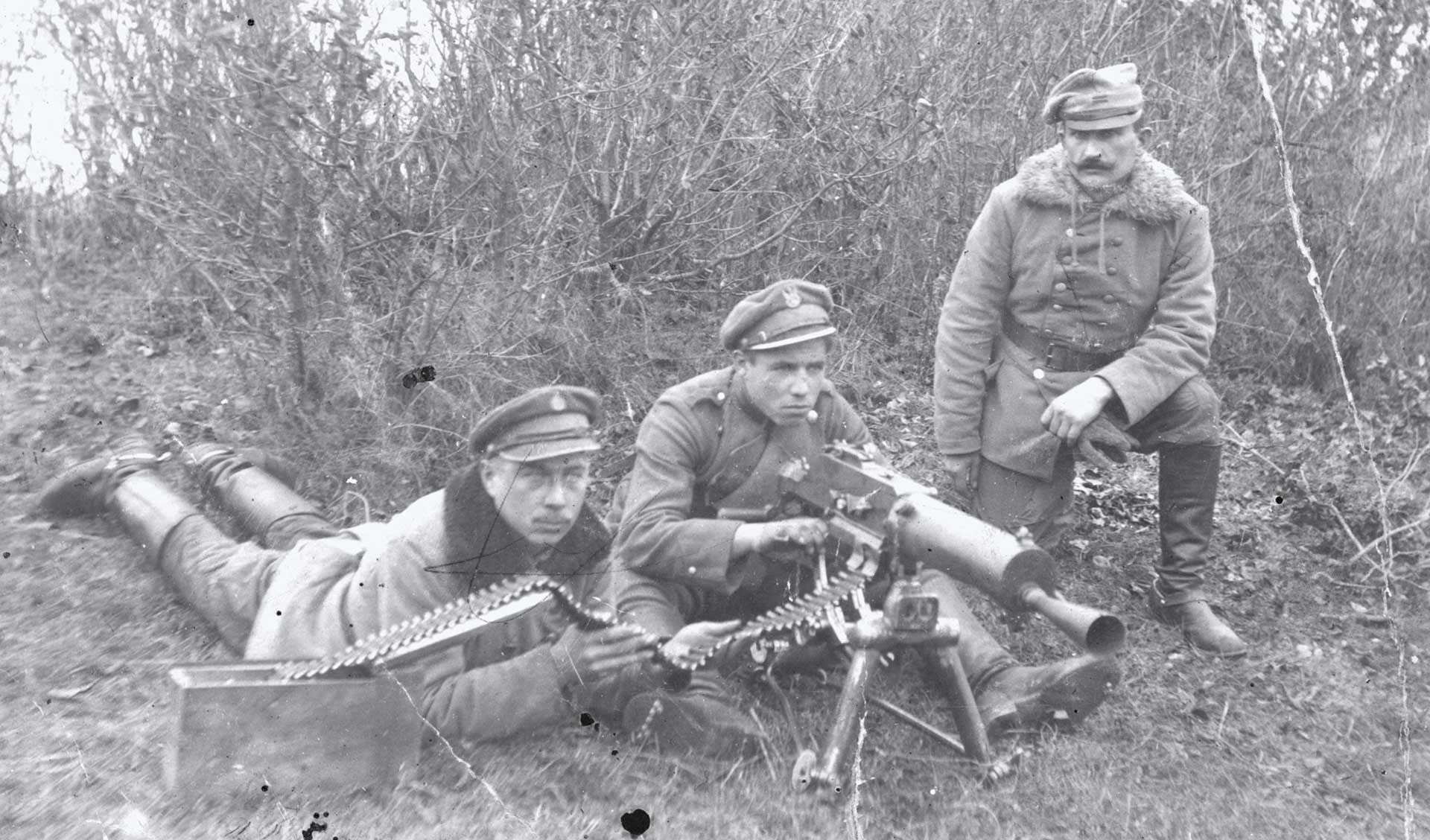
The normal crew for an infantry Schwarzlose was three or four, usually led by an NCO. Additional ammunition bearers were necessary for offensive operations.
Before World War I, the Schwarzlose was purchased by several European armies:
The Austro-Hungarian Empire: (8 mm)
Greece: (6.5 mm)
Netherlands: (6.5 mm)
Sweden: (6.5 mm)
(The British Kynoch machine gun used the Schwarzlose patent and produced a few guns in .303 British prior to World War One—but none was officially adopted by anyone.)
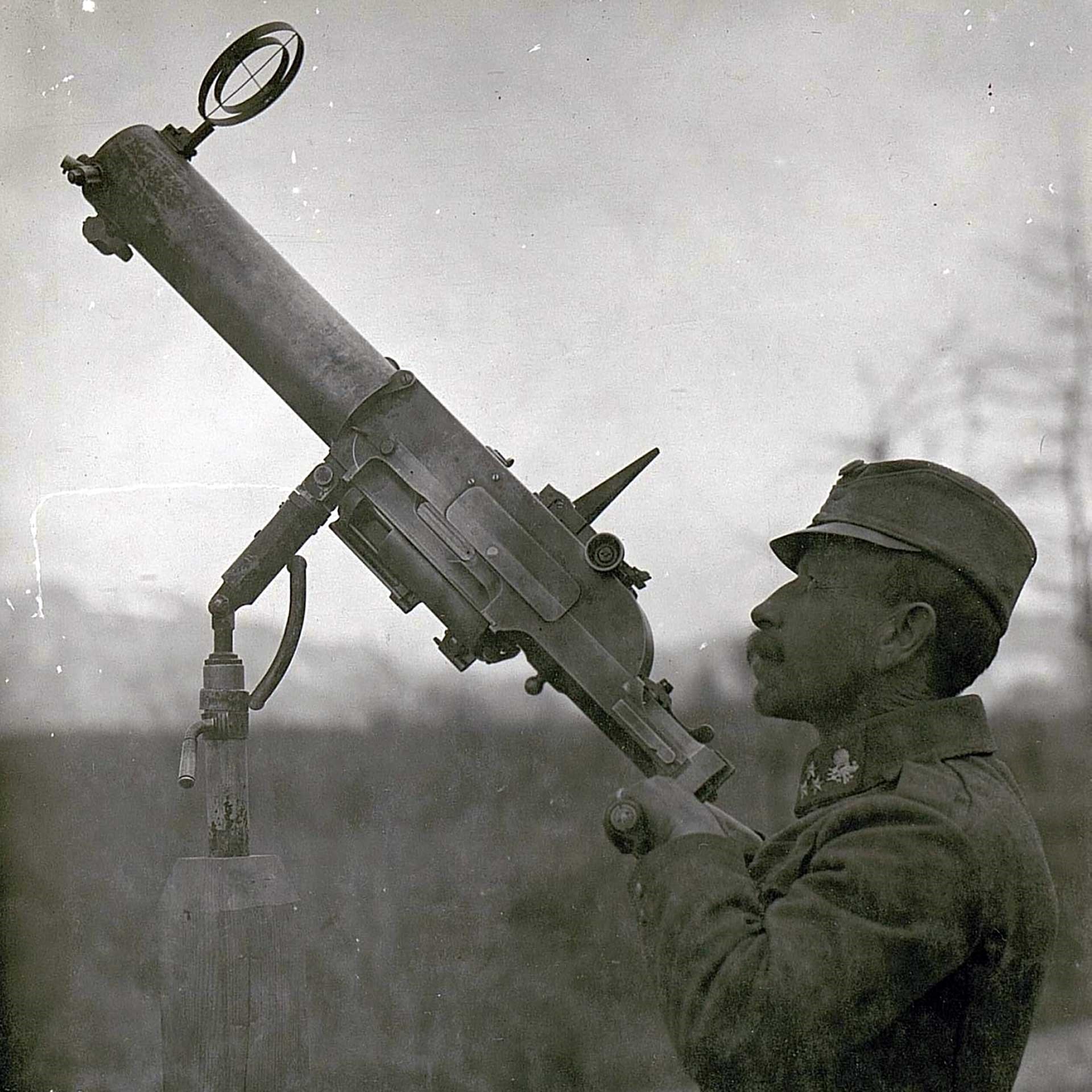
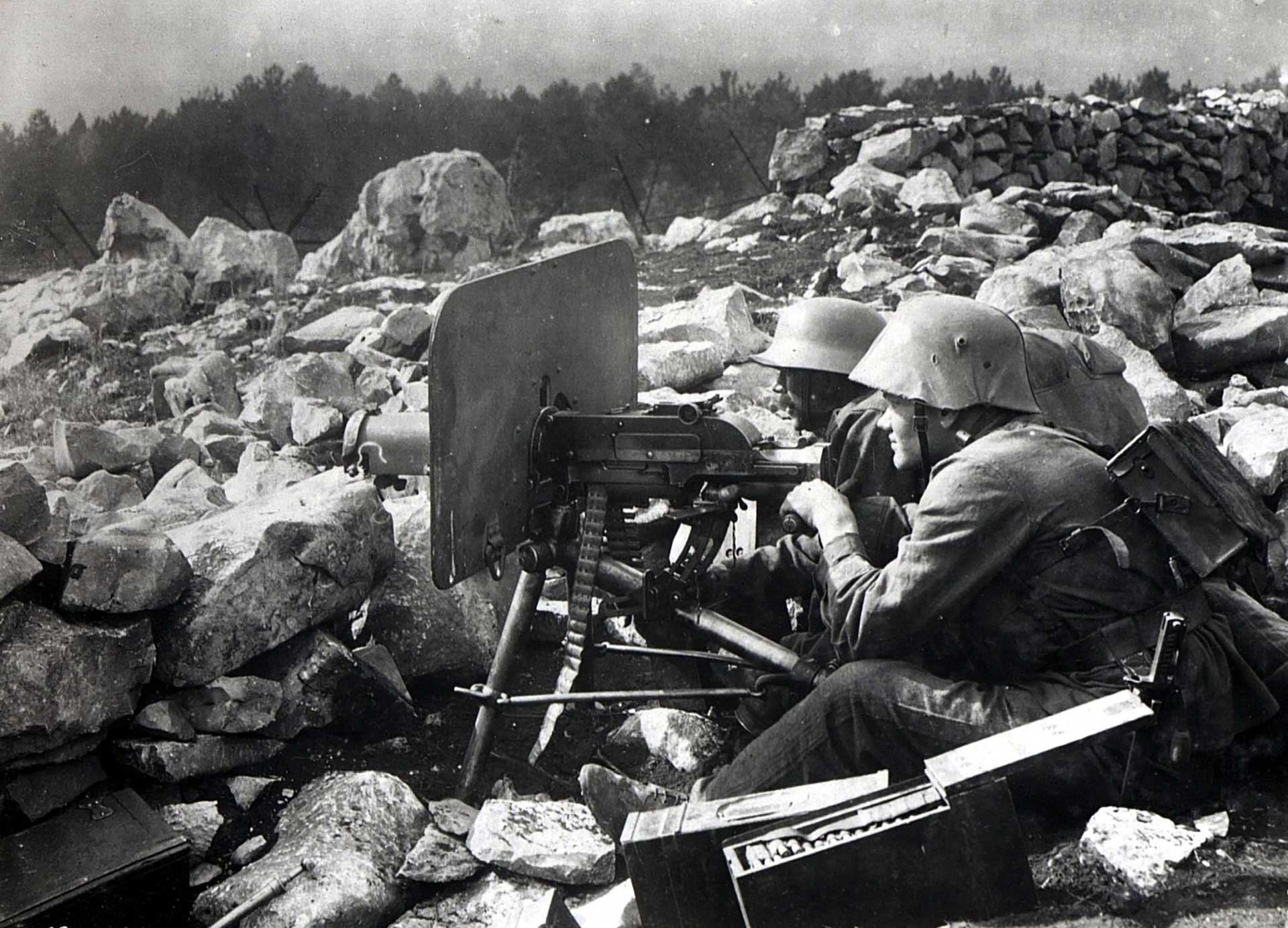
In Austro-Hungarian service, the Schwarzlose did yeoman work on the battlefields of the Balkans and Italy. These war theaters attracted little attention from Western media, and this is one of the primary reasons why the Schwarzlose is little known (or at least lesser known) among firearm enthusiasts today.
The Schwarzlose Goes Airborne
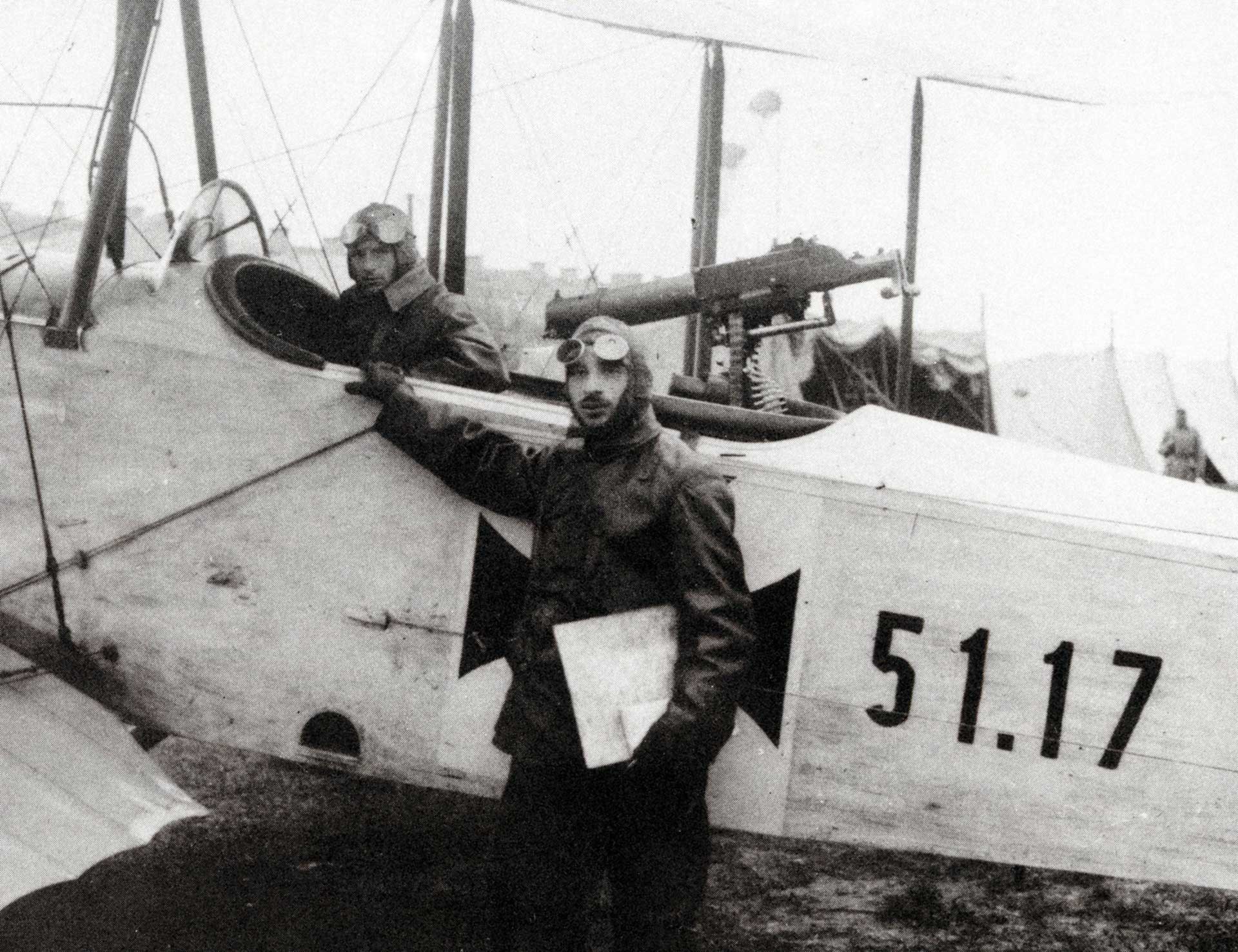
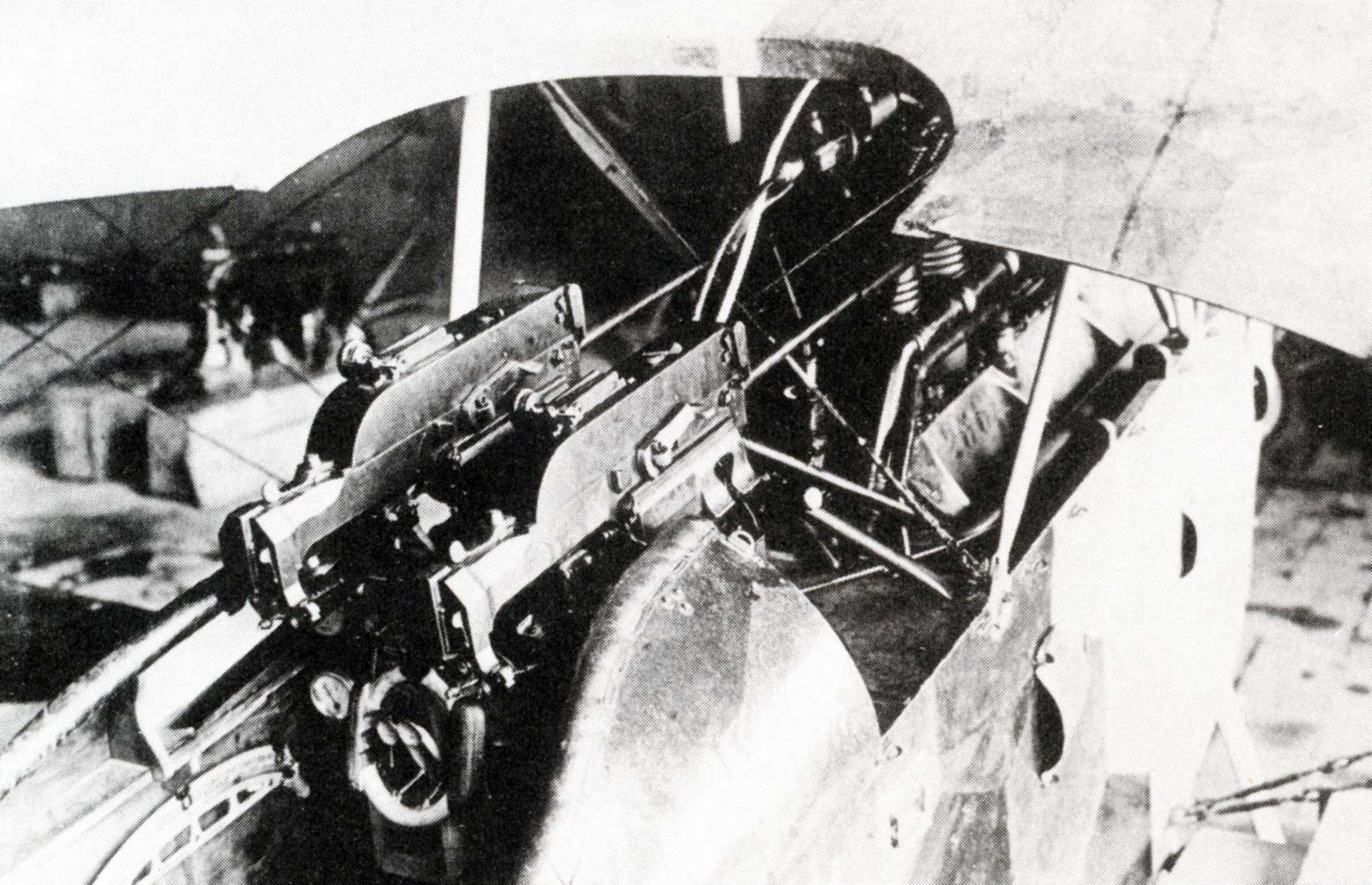
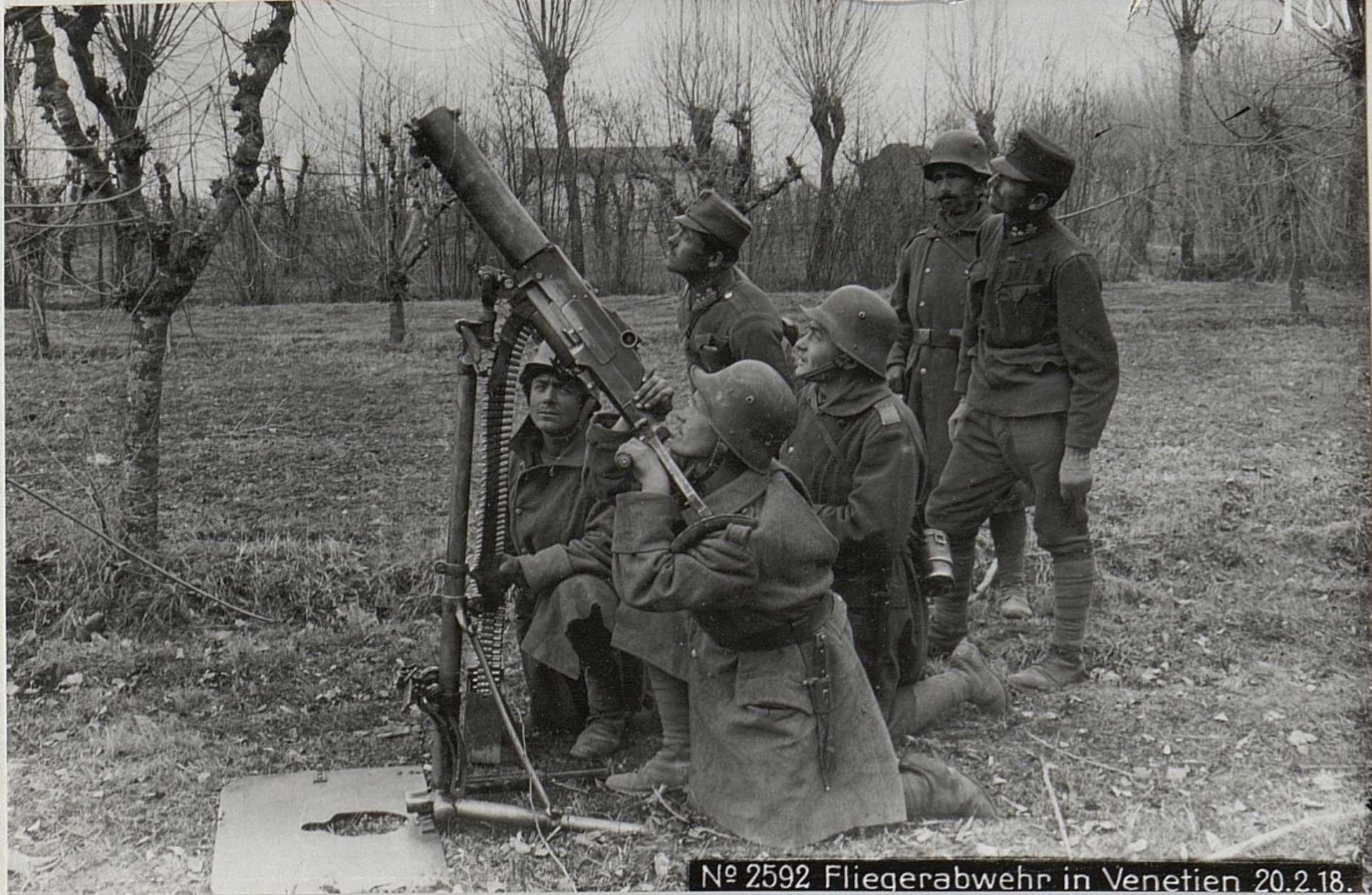
World War I was less than a year old when all the combatant nations sought to outfit their aircraft with machine guns. The Austro-Hungarian Luftfahrtruppe found the Schwarzlose problematic as an aircraft gun. Initially, the heavy, water-cooled gun was added, unmodified, as an observer’s gun on a ring mount. Later, the gun was modified by cutting slots in the cooling jacket, and then the jacket was removed completely as the constant flow of the cooler air at altitude was enough to keep the firearm from overheating.
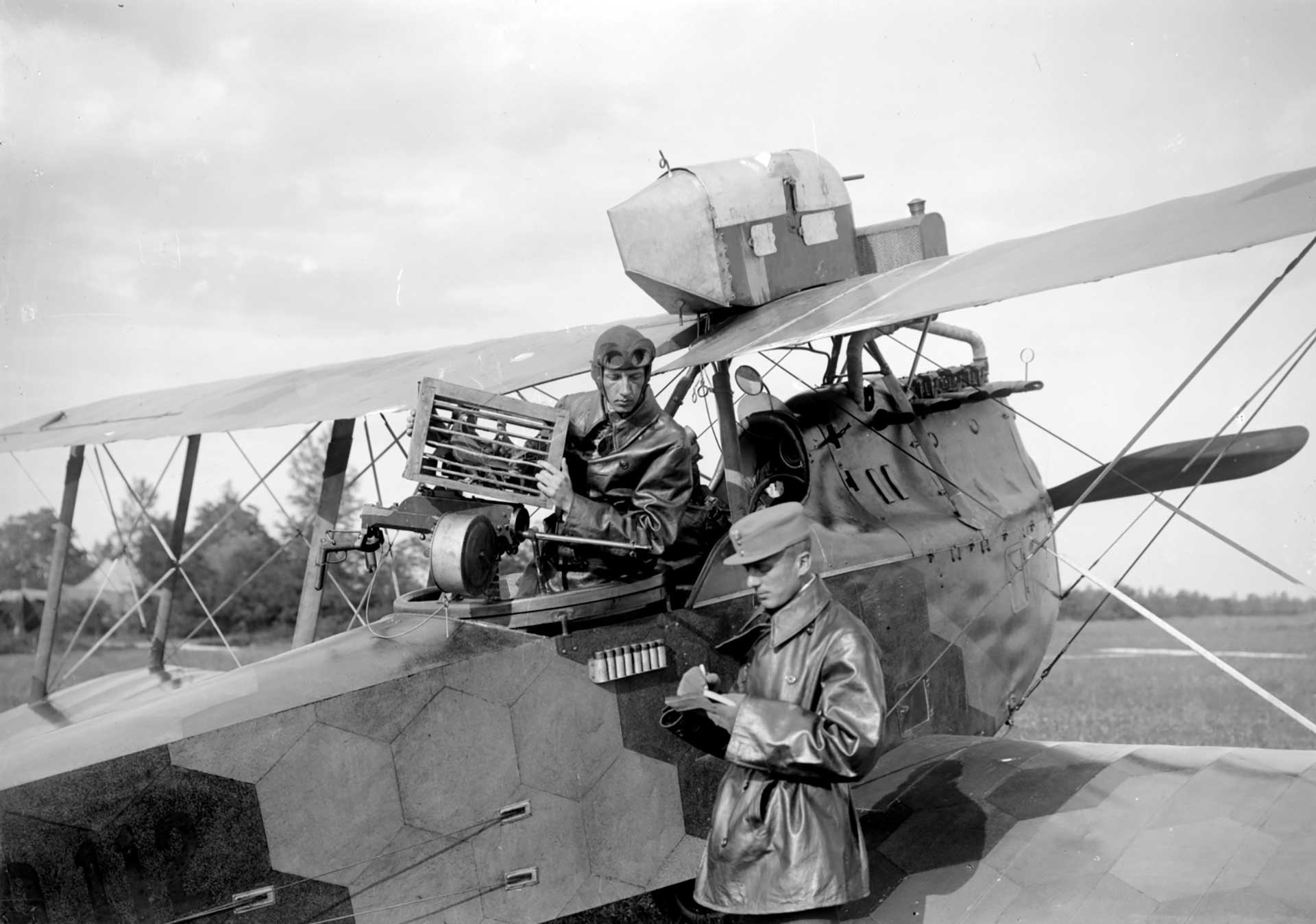
Fitting the Schwarzlose as a synchronized, forward-firing gun was particularly difficult. Its slow cyclic rate necessitated an engine rpm restrictor, and a “Kravics indicator” was regularly fitted to warn the pilot of synchronizing gear failure. With these limitations as a forward-firing gun, the Schwarzlose was commonly mounted to fire above the propeller arc, encased in a Type II VK gun pod. As an aircraft gun, the Schwarzlose was ultimately modified into the air-cooled MG-16. With the cyclic rate improved to nearly 900 rounds per minute, the MG-16 was a reasonably effective synchronized gun.
The Guns Keep Firing: Serving Between The Wars
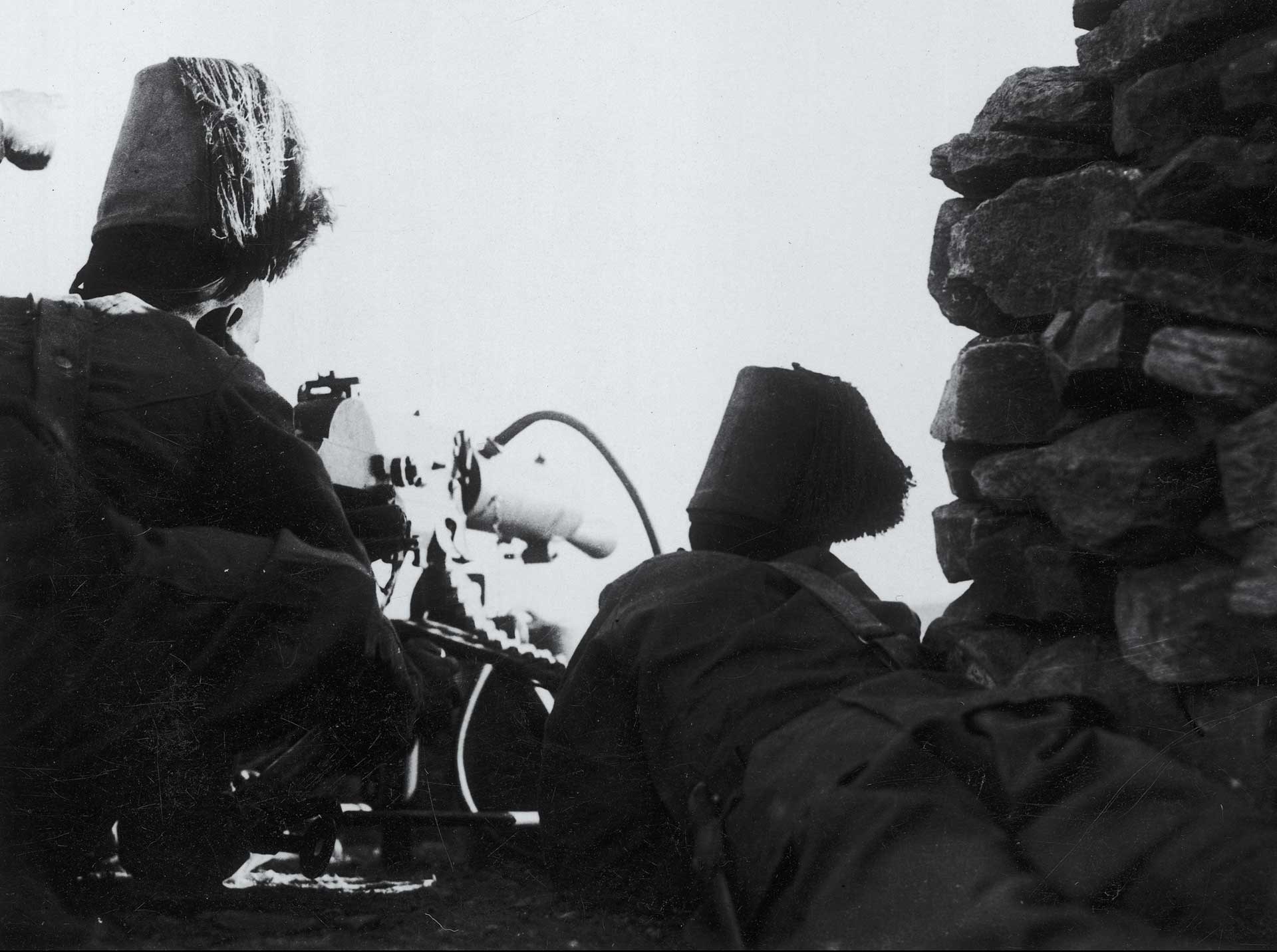
While the armistice of November 1918 ostensibly ended World War I, much fighting broke out in new areas. Many of the Schwarzlose guns of the former Austro-Hungarian empire found their way into the hands of new combatants. The M.7s and M.7/12s continued their deadly work, particularly in the Russian Civil War (1917-1922), the Polish-Soviet War (1919-1921), and the Greco-Turkish War (1919-1922). The Schwarzlose also served in the New World, in the hands of Colombian troops in the Colombia-Peru War of 1933. Some found their way to Spain during the Spanish Civil War (1936-1939).
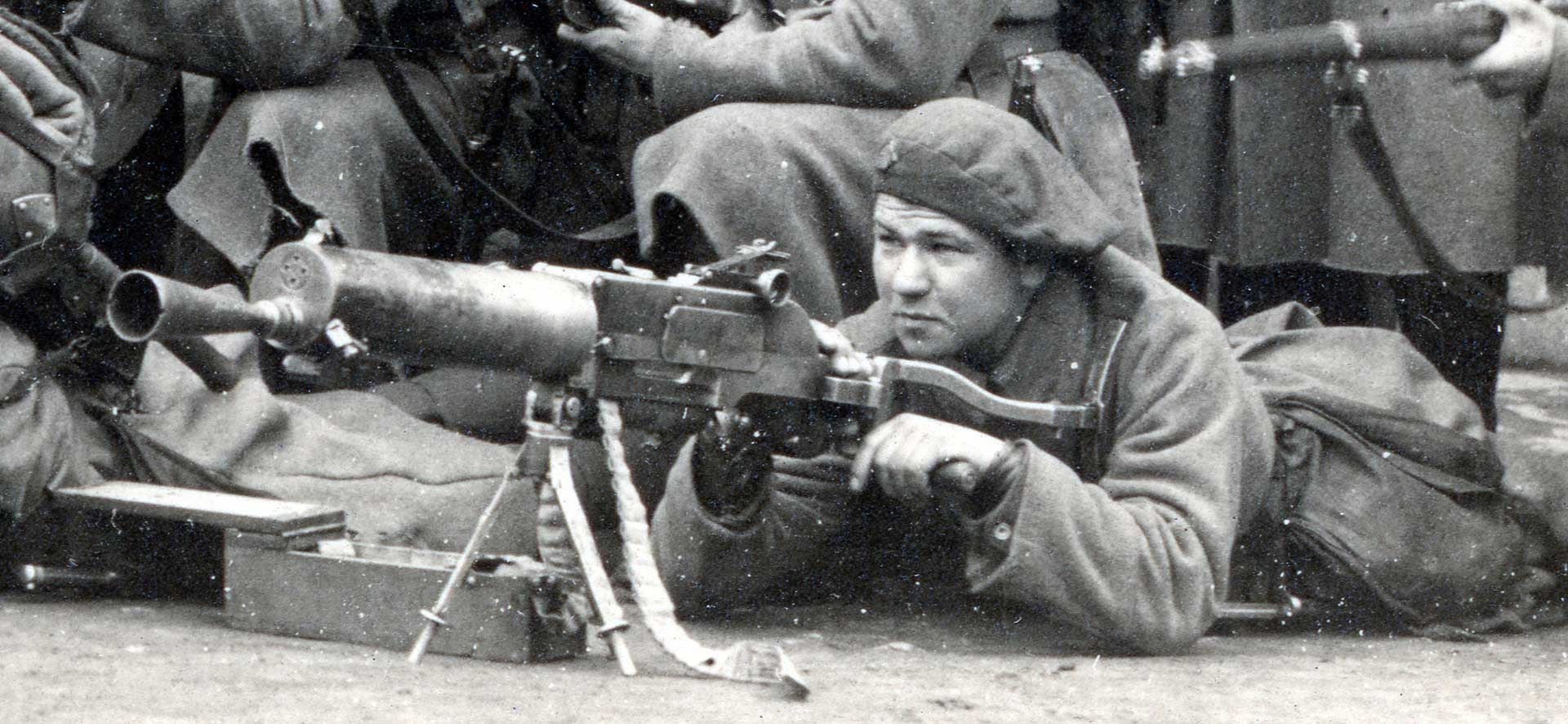
With the breakup of the Austro-Hungarian Empire came the formation of several new nations, and Czechoslovakia and Hungary adopted the Schwarzlose. The Czechs modified their guns (the vz.7/24) and re-chambered them to 8 mm Mauser. The more powerful cartridge necessitated a longer barrel and cooling jacket, and the Czechs embarked on an extensive rebuild program for the vz.7/24, including newly made replacement parts as well as many newly manufactured guns.
The Hungarians changed their Schwarzlose (the MG M.07/31) to 8x56 mm R to be consistent with their Mannlicher M1895 rifles. Romanian Schwarzlose went through several iterations. They were first converted to 7.62x54 mm R, and then about 1,000 were re-chambered in 8 mm Mauser and reworked with a 100 mm longer barrel/water jacket by Fabrique Nationale.
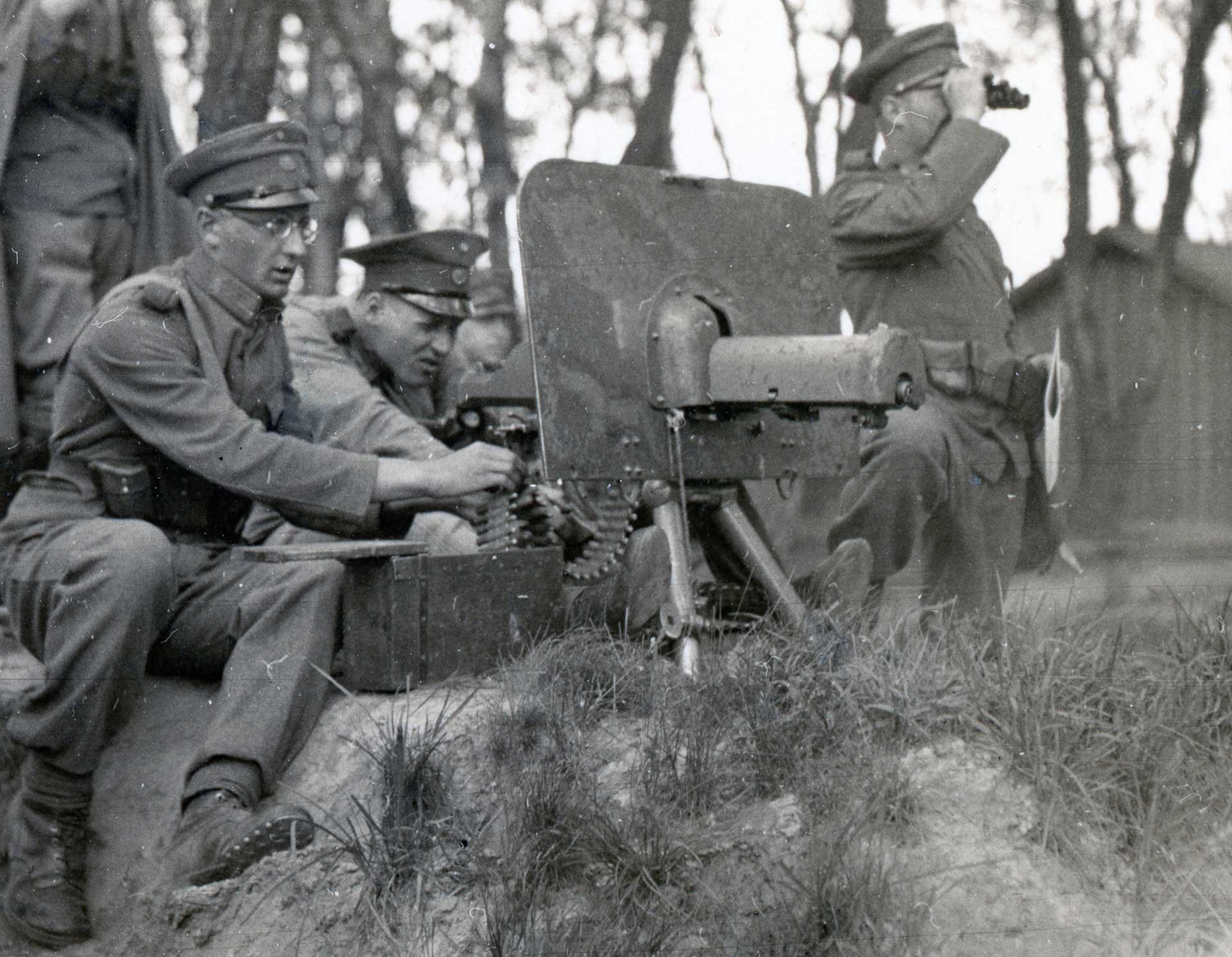
Soldiering On In The Second World War
When World War II began, the Schwarzlose was essentially a second-line machine gun, but it was by no means obsolete. Italy took in nearly 900 Schwarzlose guns as World War I reparations from Austria-Hungary, and some of these were converted to 6.5 mm Carcano. Many of the Italian guns were allocated to anti-aircraft duty within territorial units in Africa. While their cyclic rate was low for anti-aircraft work, the belt-fed Schwarzlose was one of the few Italian machine guns capable of sustained fire.
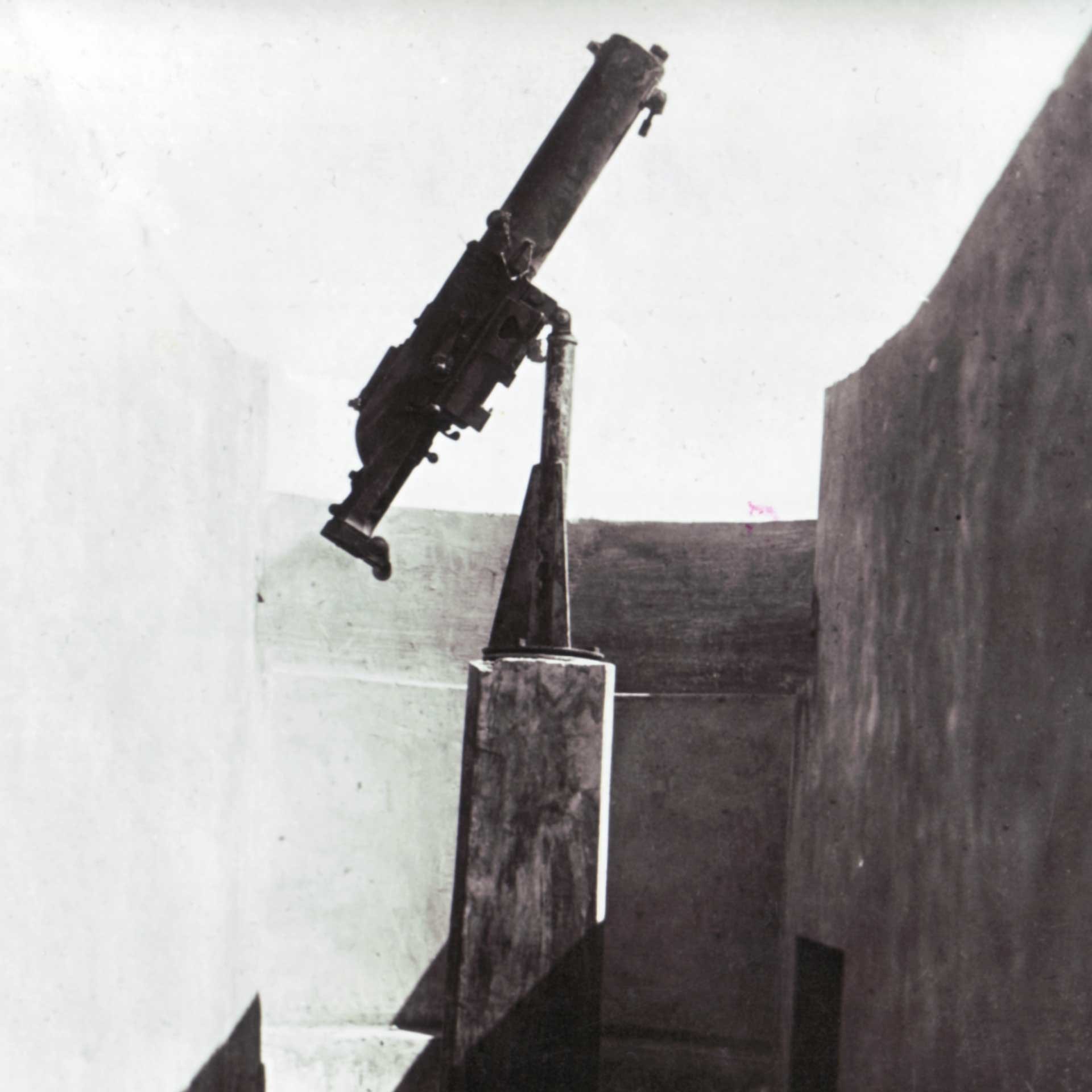
The Schwarzlose seems to have been a bit of mystery to U.S. Army intelligence: the Nov. 5, 1942, issue of the U.S. intelligence bulletin, “Tactical and Technical Trends” does not list the Schwarzlose among Italian machine guns. However, the Aug. 3, 1943 “US Army Handbook on the Italian Military Forces” comments on an 8 mm medium machine gun, model 07/12 (Schwarzlose): “This Austrian gun is used extensively.”
In the Wehrmacht, impressed Czech guns were frequently used as anti-aircraft weapons on the eastern front. Some Schwarzlose machine guns were used by second-line troops on occupation and anti-partisan duties. In Normandy, Allied troops found Schwarzlose MGs used as fortress guns—sometimes complete with specialized fortress mounts taken from Czech bunkers. In the final, desperate days of the Third Reich, Schwarzlose machine guns could be found among the hodgepodge of small arms used by the Volkssturm militia, as the Nazi regime crumbled around them.
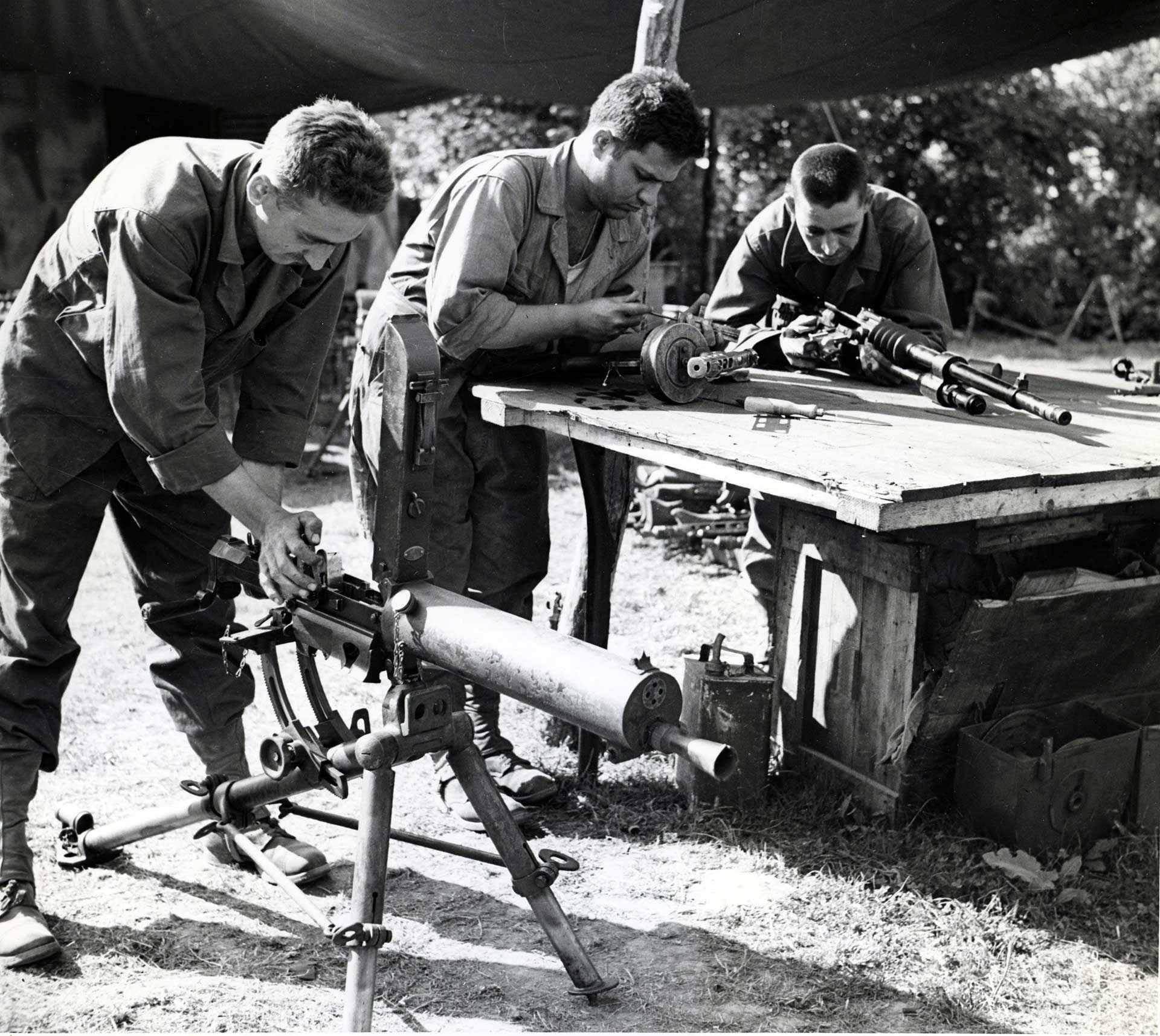
After more than 20 years of nearly continuous combat use, the Schwarzlose machine gun quietly faded into firearm obscurity—a highly capable military arm lost in the pages of history.
Schwarzlose Historical Imagery