After the harsh lessons of World War I, the French military planned a complete revamp of its infantry small arms. By 1922, new firearm concepts were being embraced, including a light machine gun design, a semi-automatic rifle and a submachine gun (SMG). The light machine gun would soon become the FM 24/29. The semi-auto rifle wouldn’t arrive until 1951, in the form of the MAS-49. Meanwhile, the French would dabble in submachine gun design, also using many foreign types, until they finally combined the features of many SMGs into their own—the MAT-49.
A Slow Road to a French SMG
With a second world war looming, the French reviewed several SMGs available on the international market. Nothing particularly impressed them, so by the spring of 1940, French forces faced the German blitzkrieg with a small collection of disparate SMGs. Several hundred MP 28/II (9 mm) were obtained from Belgian sources. An order for 3,000 of the expensive Thompson M1921 SMGs was placed in late 1939. A second order for 3,000 Thompson guns was placed but was not fulfilled by the time France fell in June 1940.
At the end of the Spanish Civil War in 1939, the French experienced a small SMG windfall, as they inherited about 3,200 Erma EMPs from Spanish Republican troops that fled to France and were disarmed at the border. Most of these guns were chambered in 9 mm, and the French decided to take them into service as the Pistolet-mitrailleur Erma – Vollmer de 9mm. While the Erma EMP was a fine SMG, the French had little more than 1,500 magazines available, and consequently, only about 500 of the weapons made it into action in the spring of 1940—many of these were issued to the Corps Francs with about one EMP per platoon (two magazines per gun).
During the 1920s, France made a significant commitment to national defense, and this came in the form of the extensive Maginot Line fortifications to secure the Franco-German border. While the practicality of the French forts is debatable, the Maginot Mentality’s impact on the nation’s military budget is undeniable. Many new weapons systems were cancelled outright, and many more suffered extreme delays in their development. Such was the case with the MAS modèle 38 SMG, which started out as the 9 mm STA 1922 and MAS 1924 immediately after the Great War.
These design concepts were stranded in limbo until the French military adopted the 7.65 mm French Longue cartridge (7.65×20 mm Long) in the mid-1930s. With the new ammunition came the experimental MAS-35, and then “Pistolet Mitrailleur MAS modèle 38” (MAS Model 38 Submachine Gun). The new SMG was desired in quantity, with 19,500 ordered in January 1939, but fewer than 2,000 were in service by the time of the German invasion in the spring of 1940.
The MAS-38 has a unique appearance, created by an odd layout of the receiver and buttstock—the barrel is offset from the receiver by about six degrees, with bolt recoiling through a tube that runs through the stock. Despite its odd look, the MAS-38 is a particularly high-quality SMG. Mostly machined from solid steel, it featured a buffered sear assembly to enable greater longevity of its internal parts. The entire weapon is just 24.5 inches long and only weighs 6.3 pounds. It fires from an open bolt, with a cyclic rate of about 600 rounds per minute. Magazine capacity is 32 rounds.
During the occupation, more than 20,000 MAS-38s were made under German direction, and these were used by Wehrmacht forces as the substitute standard “MP722(f),” and some were provided to Vichy French security forces. After the war the French continued production in quantity, with estimates ranging up to more than 100,000 produced by early 1950s.
Albeit quirky, the MAS-38 served France well. Robust and compact, it was France’s lone SMG design in the post-WWII colonial wars and was used primarily in Indochina. The 7.65 mm ammunition is somewhat underpowered, and while controllable the weapon offers no forward hand grip other than grasping the front of the magazine well. The stage was set for a French SMG design for a new age.
Welcome To The MAT-49
French forces finished World War II with a collection of SMGs from both Allied and Axis sources. Most numerous among these were the British Sten (9 mm), the US Thompson (.45 ACP) and M3 Grease Gun (.45 ACP and 9 mm), and the German MP 40 (9 mm). Individually or collectively, all these submachine guns were good and plentiful options, or at least good enough, by the standards of the era. As France became involved in a pair of post-colonial wars in Indochina and Algeria, the French Army’s World War II-era SMGs saw service in the early stages of the conflicts.
The “make-do-with-what-you-have” approach initially saved money for the cash-strapped French Republic, but the logistical nightmare of spare parts, plus multiple ammunition and magazine types, caused the French to seek out a single domestically produced solution. National pride certainly played a role, as did the economic strategy of restarting the French armaments industry. At a time when many nations were phasing out submachine guns, the French took the opportunity to use all they had learned about SMGs to create a sub-gun that was distinctly their own.
The Desire for Compact Firepower
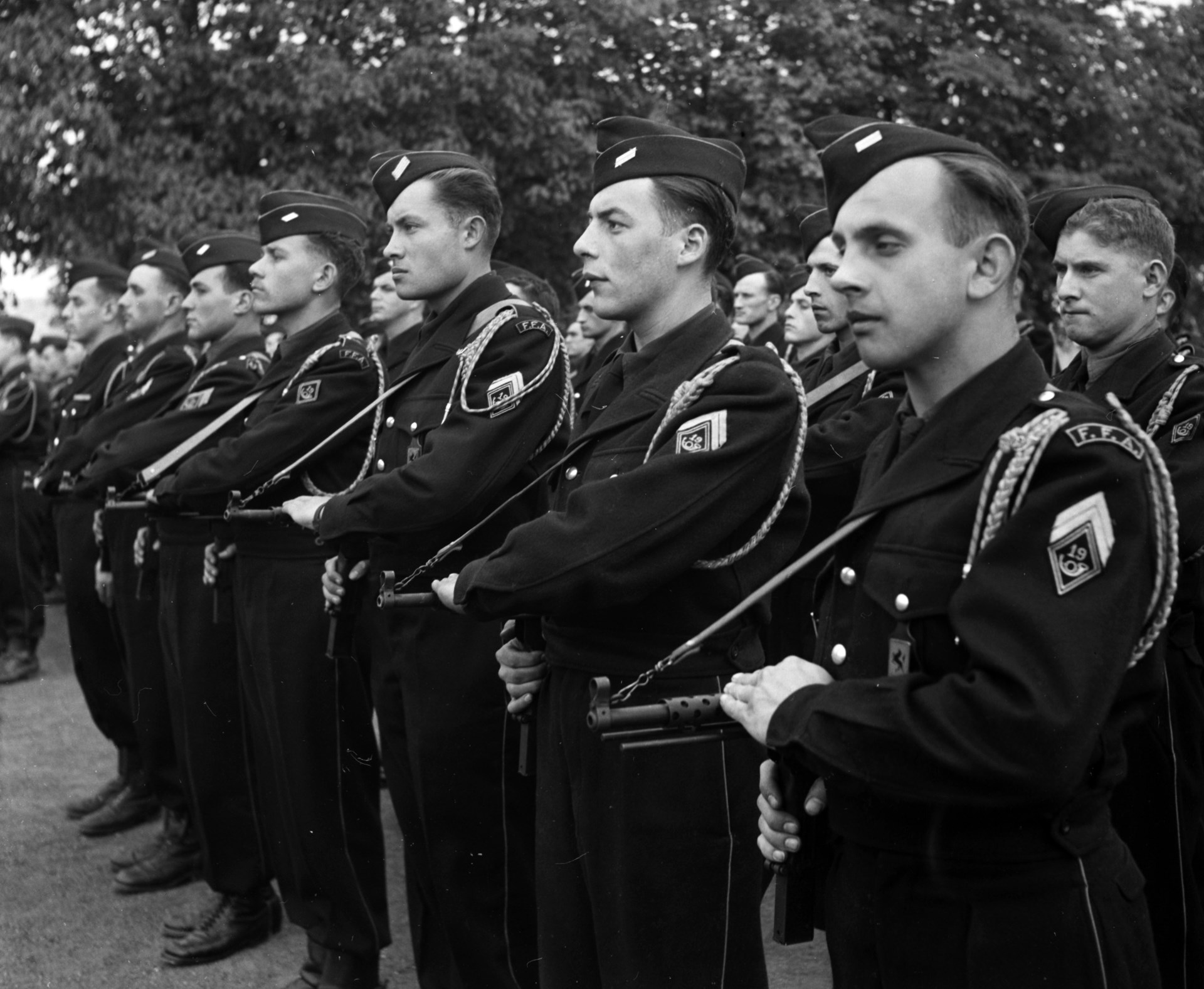
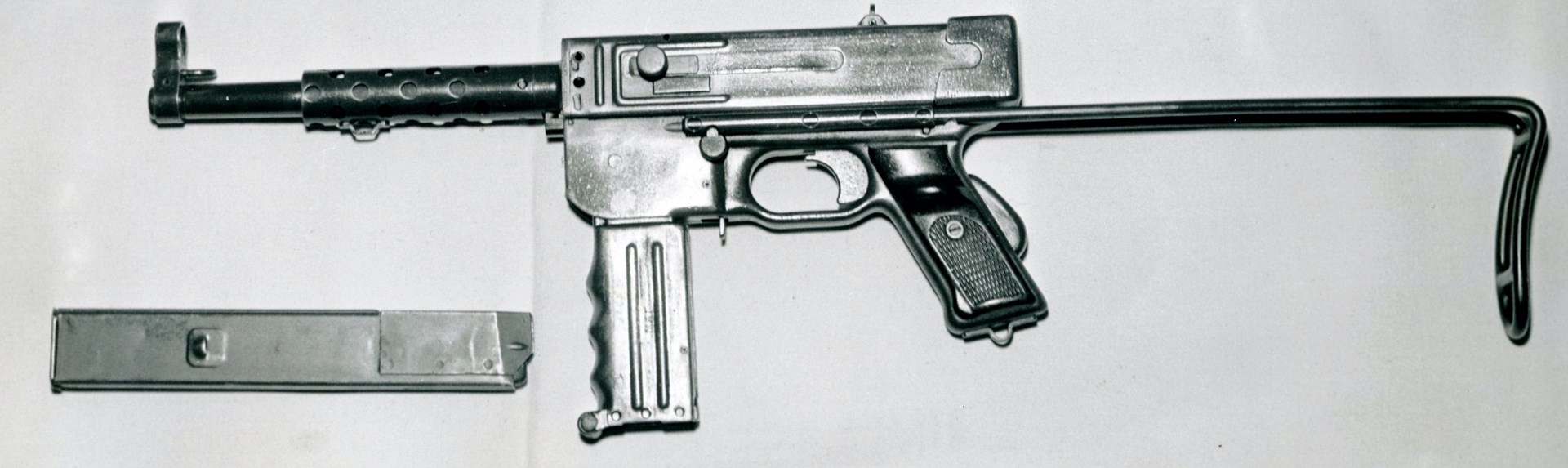
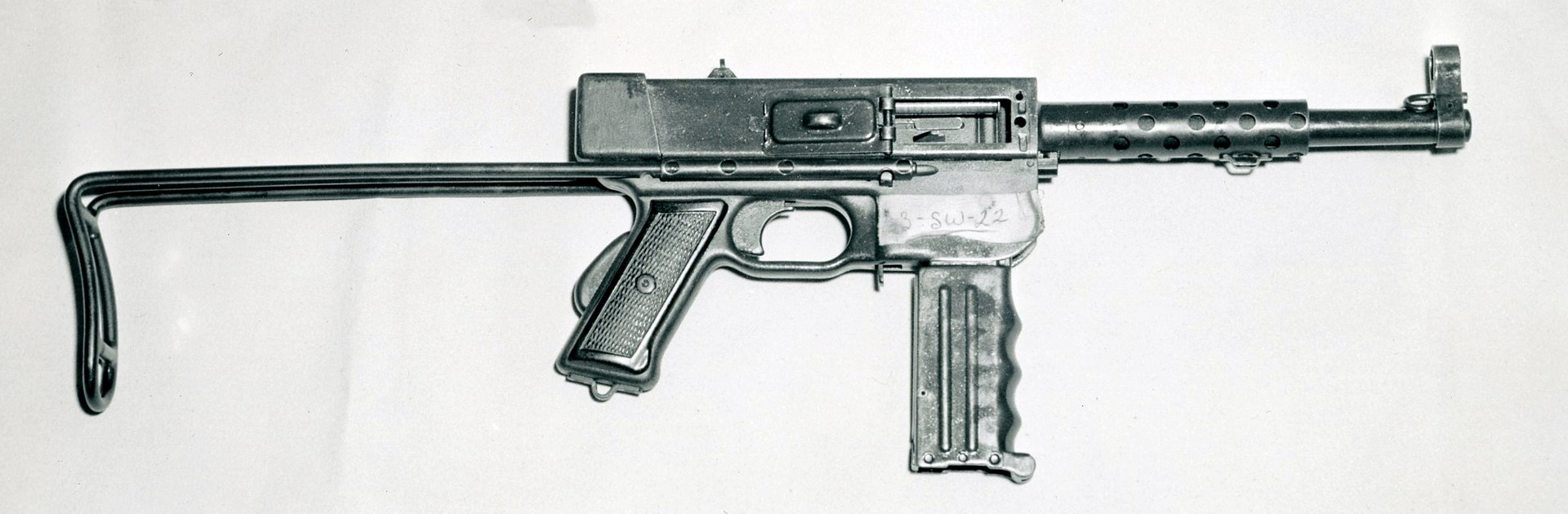
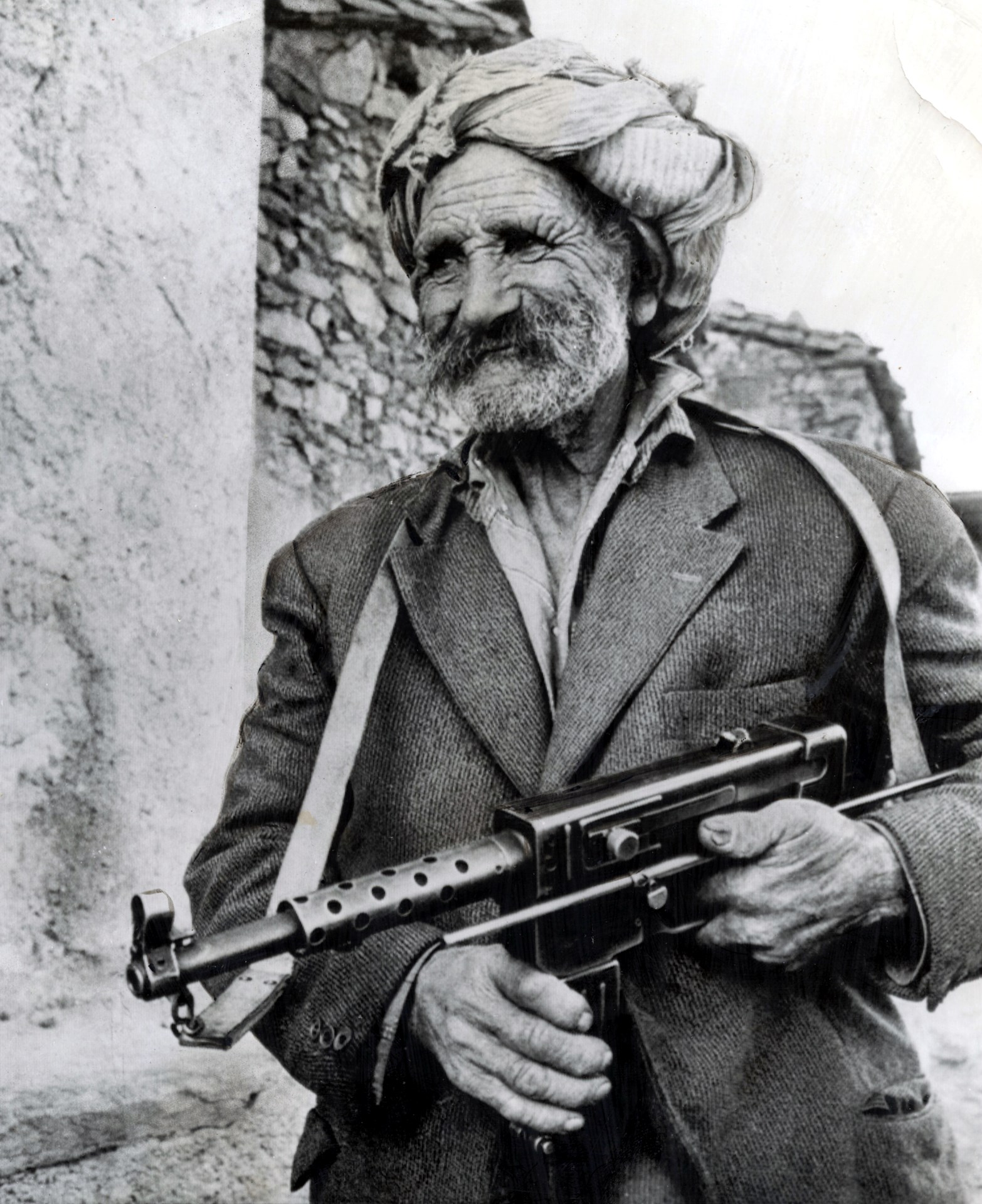
To meet the burgeoning needs of their new mechanized forces in NATO, and their rapid deployment airborne and Foreign Legion forces, the French placed particular emphasis on a space-saving design featuring a collapsing stock. By 1949, after testing several designs, the Pistolet Mitrailleur de 9mm Modele 1949 was selected and production soon began at Manufacture d’Armes de Tulle (M.A.T.)
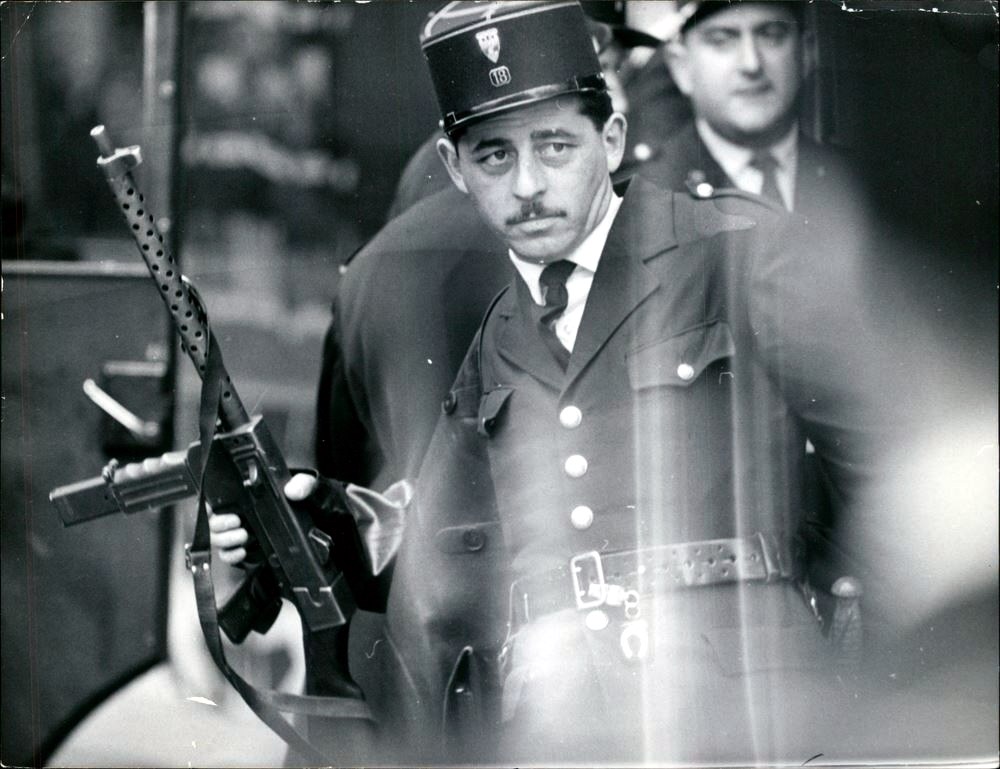
The new SMG was chambered in 9 mm, and production was centered around a metal stamping process that created a sturdy, yet cost-effective weapon for a wide range of applications. The MAT-49 was simple and rugged featuring a retractable stock made of heavy gauge wire. With its stock retracted the MAT-49 is just 18 inches long—with its stock extended, it is 28 inches (with a 9.1-inch barrel).
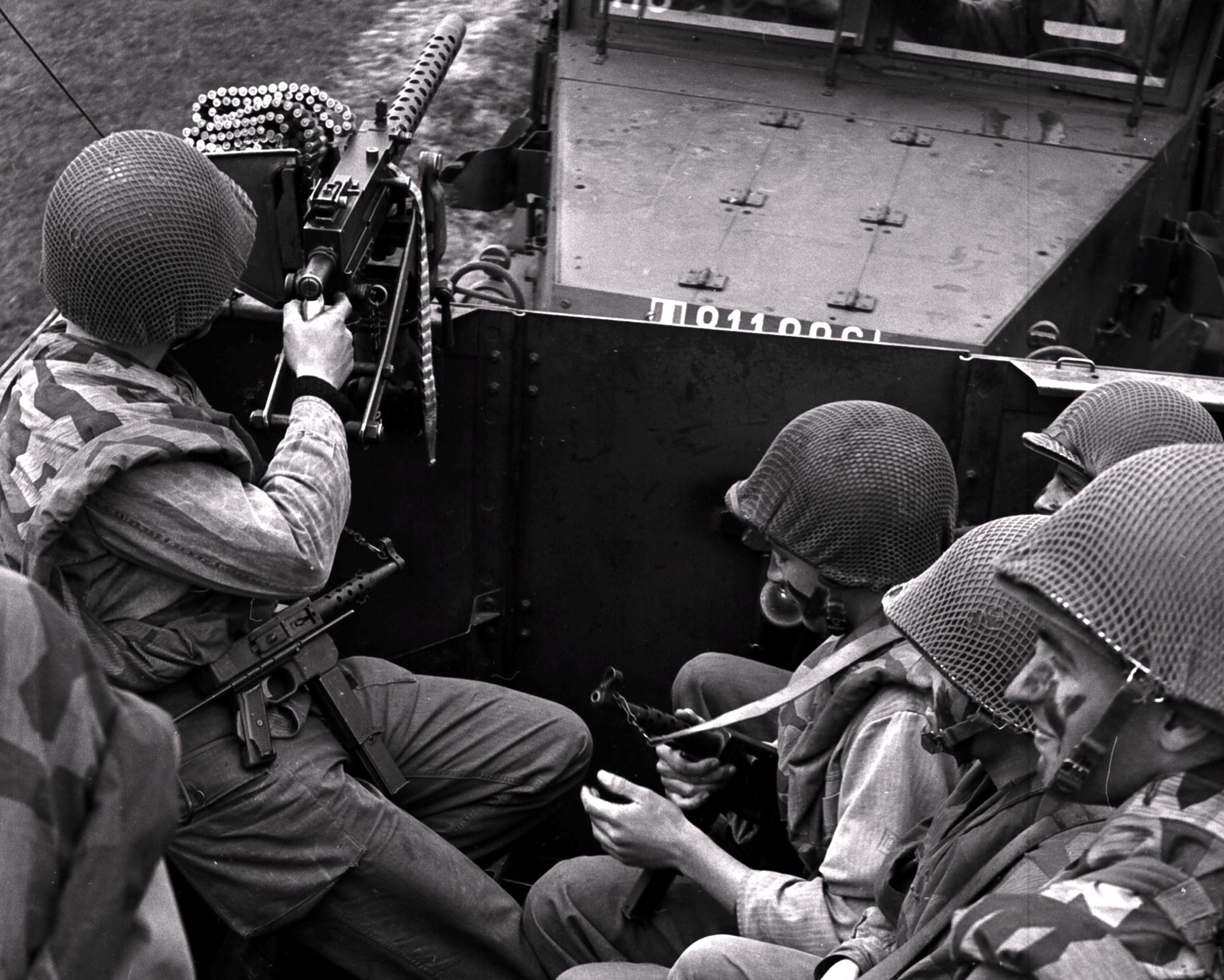
A unique feature is the folding magazine well, which tucks in neatly beneath the barrel—allowing a safe, compact carry that was particularly appealing for paratroops and vehicle crews. The magazine well could be quickly folded back into the firing position, and the well provides the forward hand grip. The weapon has a bit of heft, weighing nearly 9.5 pounds with a loaded 32-round magazine.
There is no manual safety on the MAT-49, rather, there's a prominent grip safety. The gun is blowback-operated, firing from an open bolt, with a cyclic rate of 600 rounds per minute. An experienced shooter can easily trigger single rounds. The MAT-49 uses a 32-round, double-stack, single-feed magazine—spring tension is tight, and the magazine loading tool is essential. There was also a 20-round, single-stack magazine, designed to be more resistant to sand and grit, and this was issued to troops in desert environments.
The MAT-49 At War
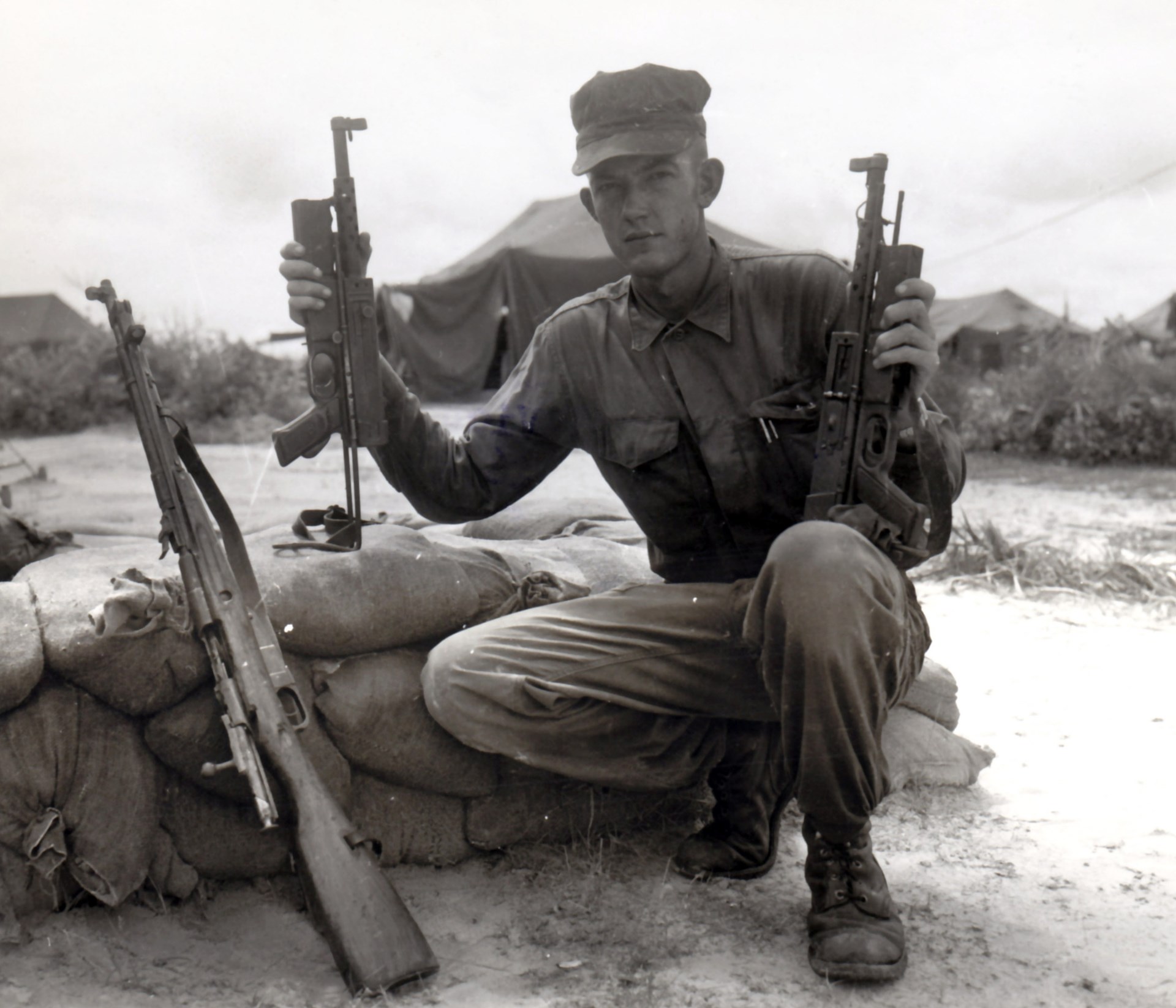
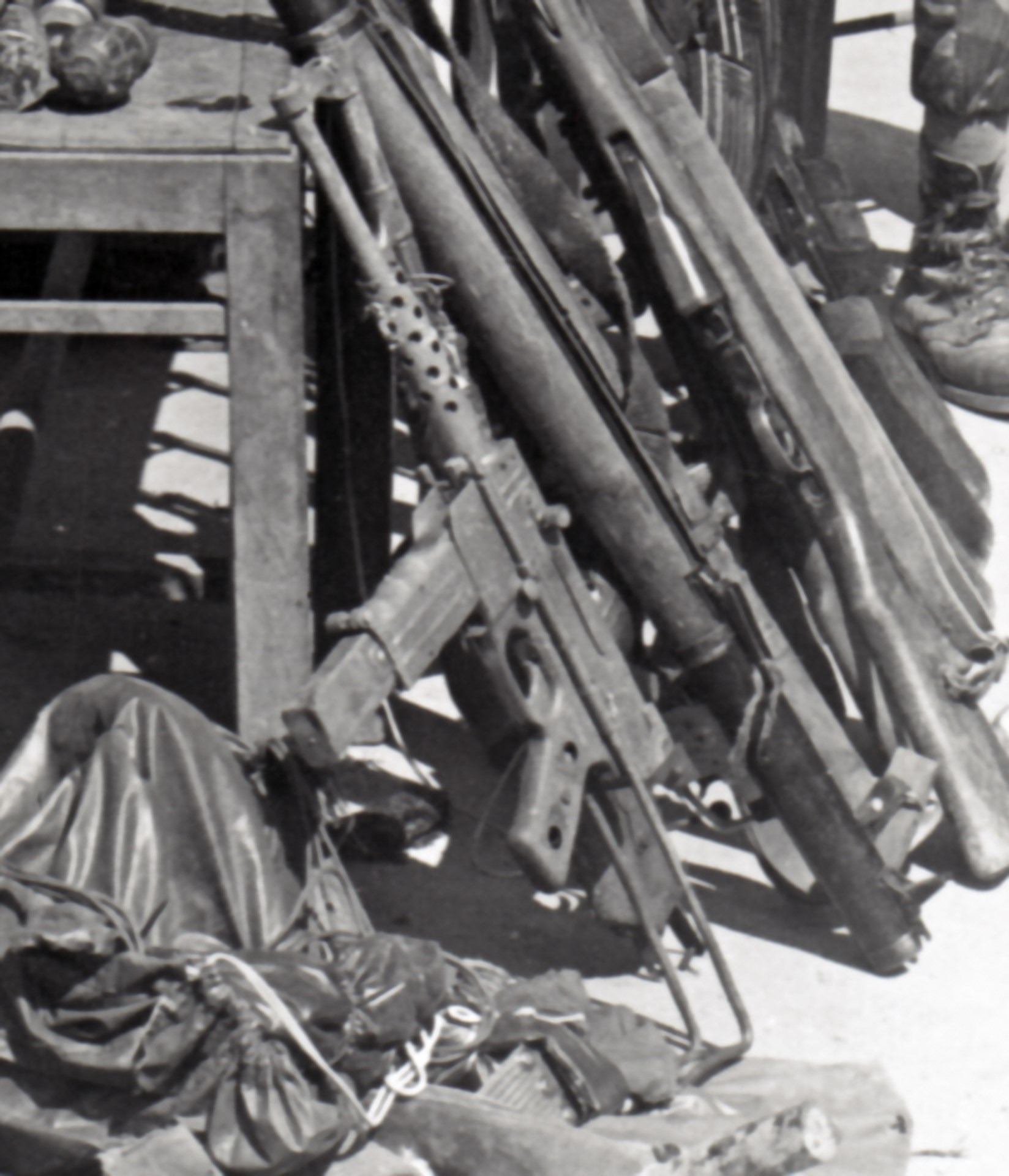
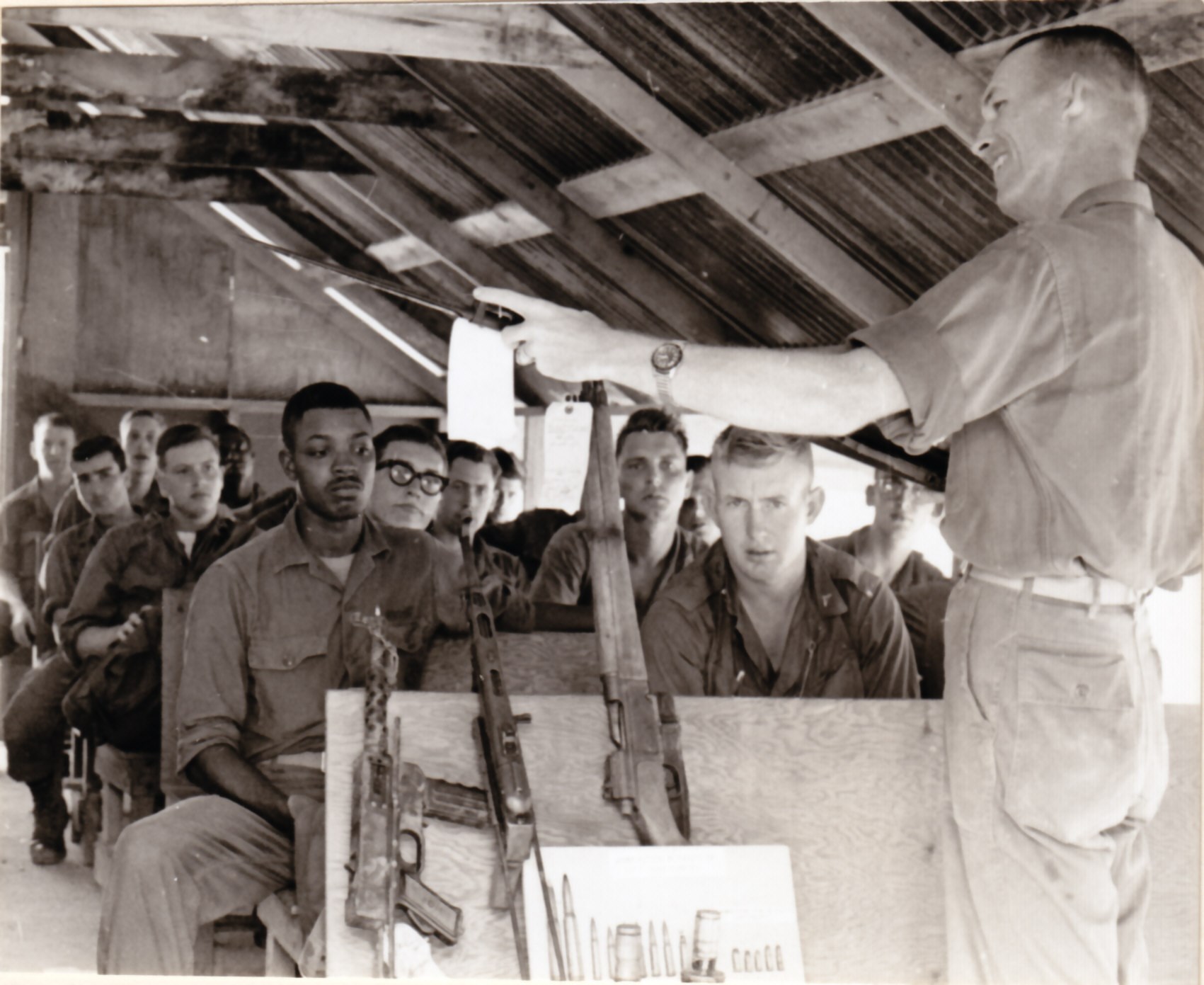
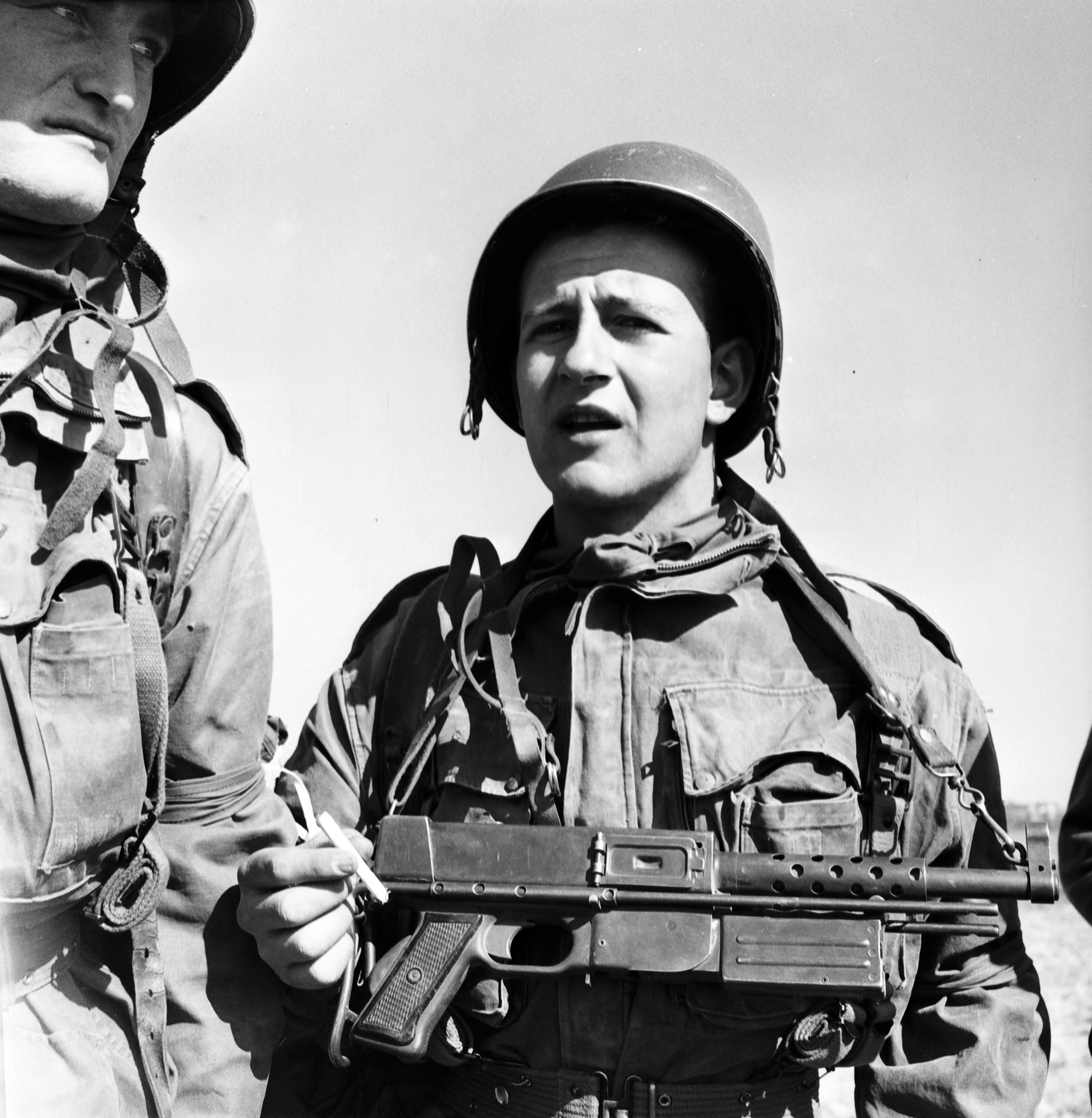
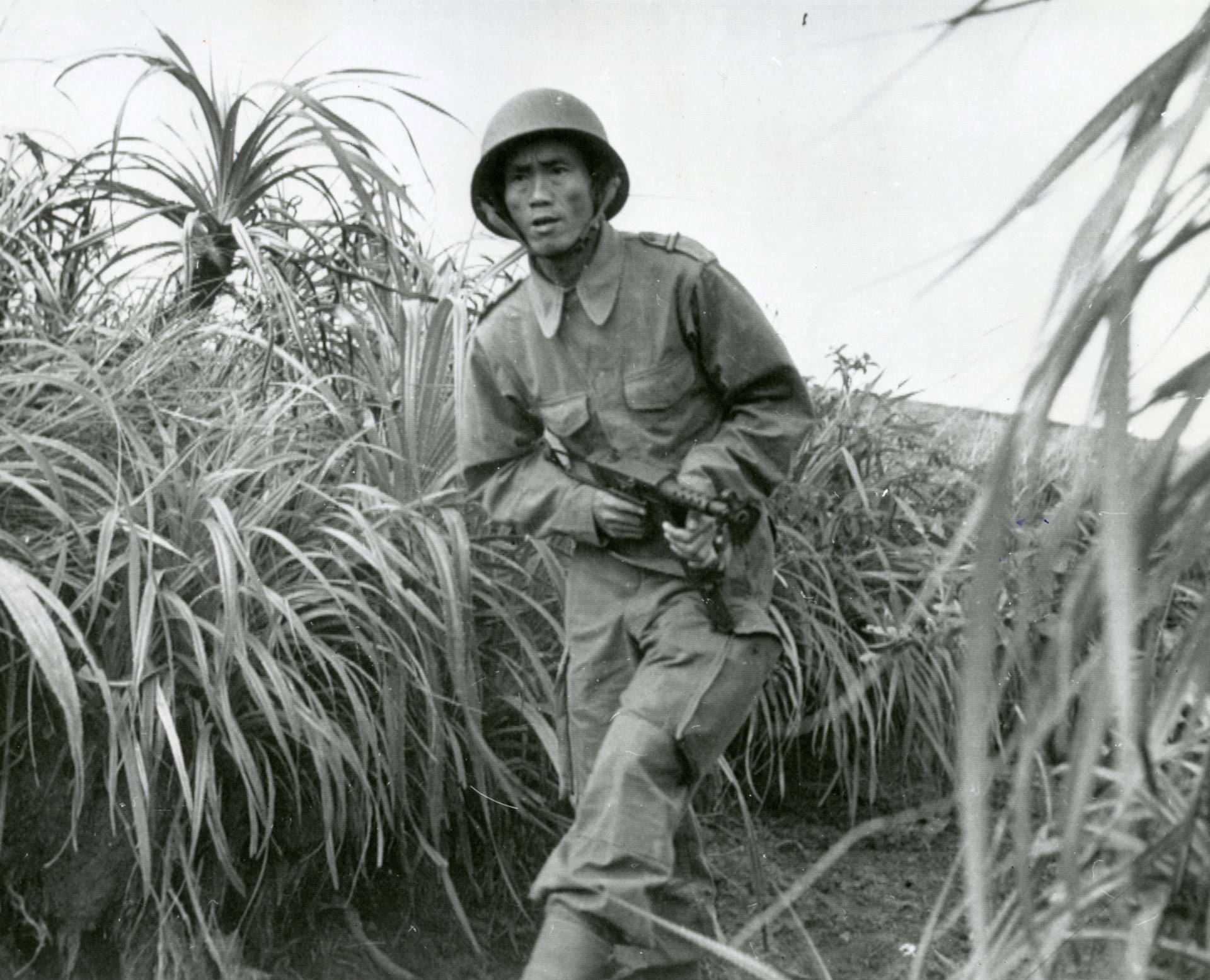
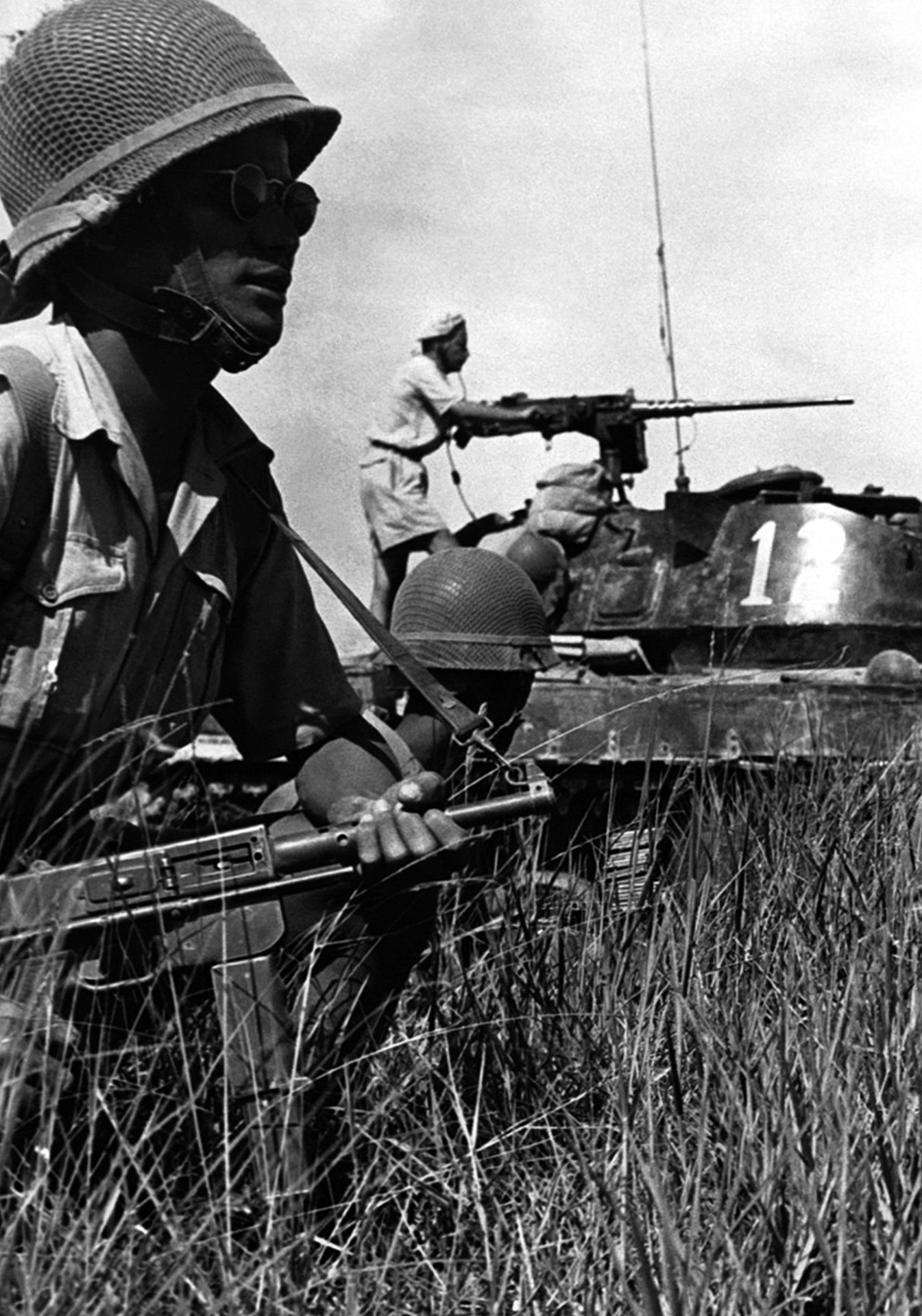
The MAT-49 was still quite new when its combat career began, arriving in Indochina during 1950 to see action against the Viet Minh’s general counteroffensive late that year. Through four years of bitter fighting until the French defeat at Dien Bien Phu in the spring of 1954, the MAT-49 became one of the iconic weapons of the First Indochina war. Many thousands were captured by the communist Vietnamese, and these would be used by the North Vietnamese Army (NVA) and the Viet Cong guerrilla forces.
The enterprising Vietnamese communists extended the service life of many of their captured SMGs by creating the “MAT-49 M”, equipped with a longer barrel and rechambered to use the 7.62x25 mm Tokarev round. These variants featured a higher cyclic rate (900 rounds per minute), and a 35-round magazine. The Viet Cong used these against US forces through the 1960s, and spare parts for the MAT-49 M were produced into the 1970s.
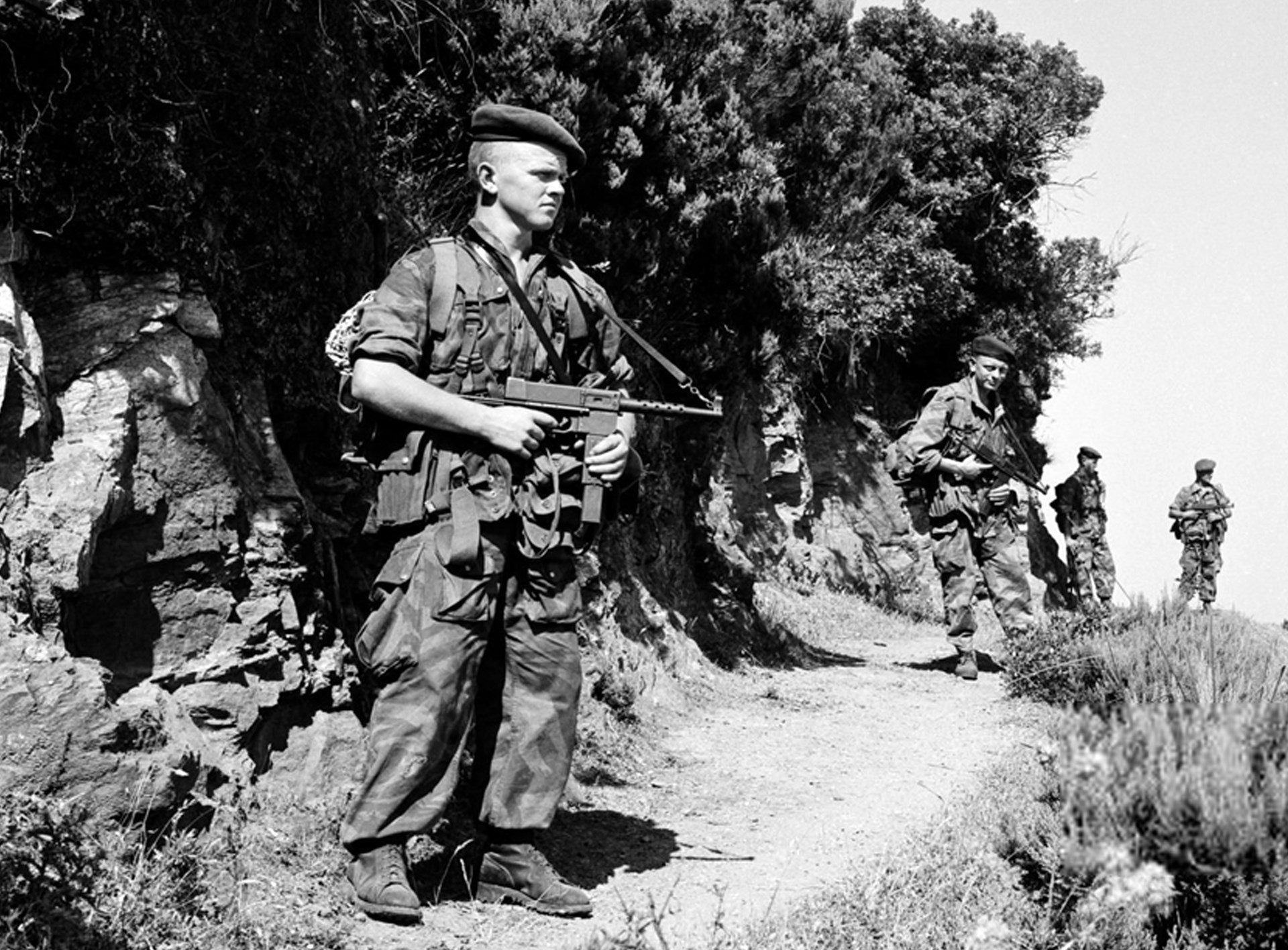
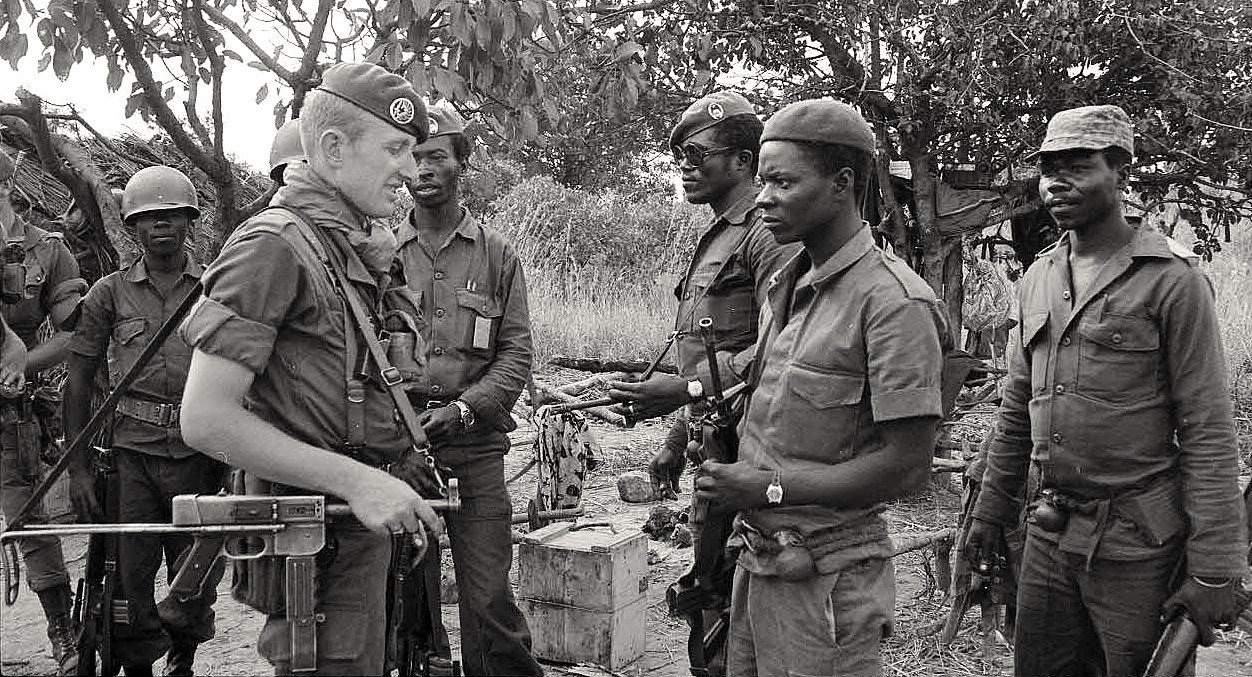
During 1958, the North Vietnamese sent a group of (unmodified) MAT-49 SMGs to Algerian communists fighting the French—an international gift of captured weaponry. Meanwhile, the MAT-49 fought on both sides of the war in Algeria from late 1954 until early 1962. Never fancy, but always reliable, troops trusted the MAT-49 to do its deadly work wherever they served. The weapon itself is a testament that the Cold War was much longer and far bloodier than most care to remember.
By 1979, more than 700,000 MAT-49s had been made, beginning at Tulle in 1949, and then at St. Étienne in the mid-1960s. The receiver and grip safety were updated along the way, but the rock-solid MAT-49 stayed functionally the same throughout its long service. While the French were at first reluctant to adopt an SMG, when they finally did their design provided a long-standing validation of the submachine gun concept, across three decades and three continents.