Most people who want to own a lever-action rifle are traditionalists. A lever action appeals to them because it is “the rifle that won the West” or the type of gun that grandpa carried to his deer stand. Part of that tradition is the tubular magazine underneath the barrel of that lever-action rifle. Though it might seem heretical, box magazines have been used on lever actions since the 1890s. As of late, the push to produce “tactical” lever-actions and rifles for the modern hunter has resulted in a resurgence of the the box-magazine-fed lever-action. One of the most recent examples is Henry’s Lever Action Supreme Rifle (LASR), a design aimed at making the lever gun reach its pinnacle.
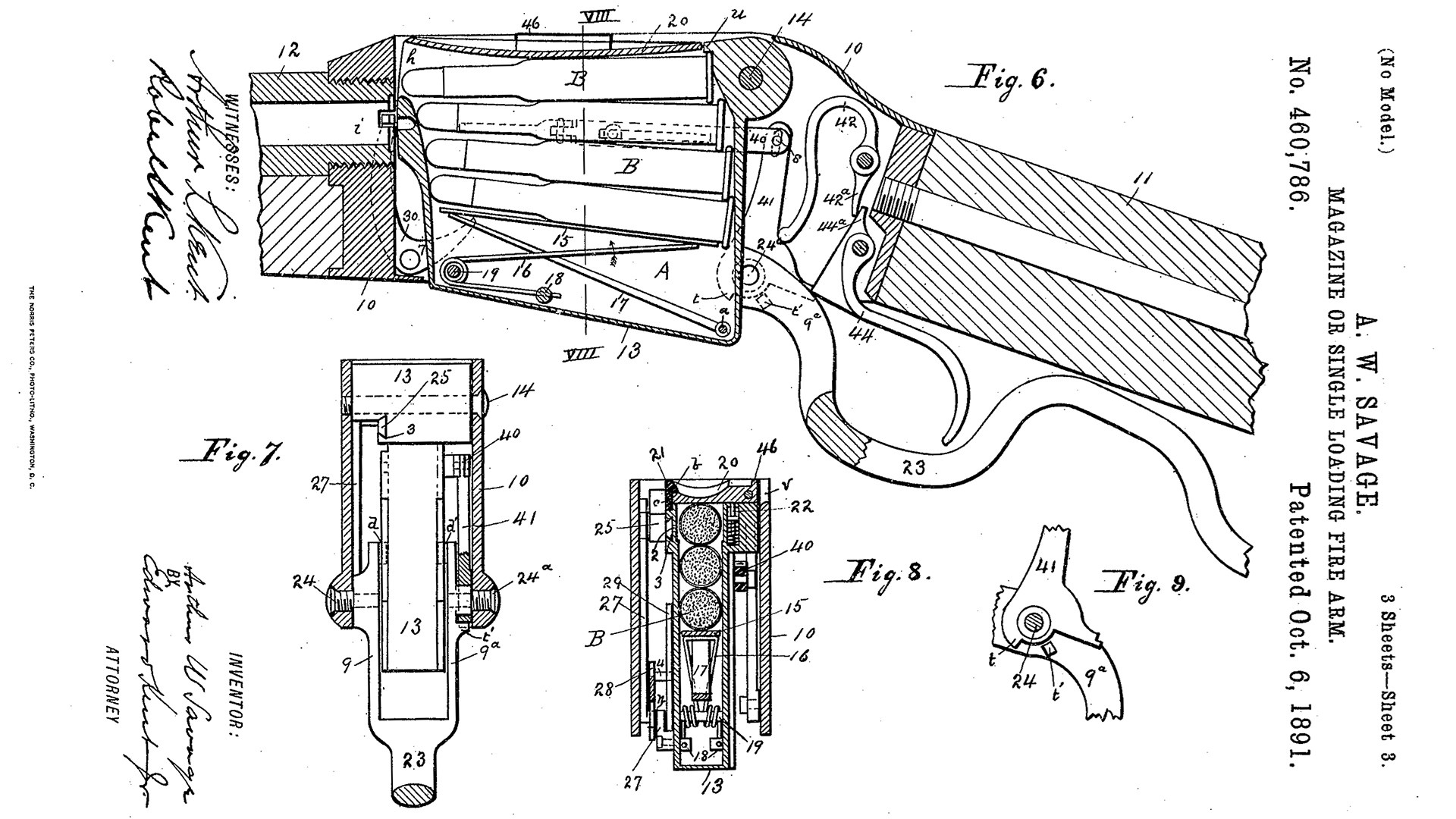
From the days of the Civil War through the 1880s, the tubular magazine predominated on repeating rifles, even on “modern” turn-bolts like the Vetterli, the 1871/84 Mauser, and the revolutionary Lebel. But during the 1880s, the box magazine, designed by James Paris Lee, was also gaining popularity in bolt-action rifle designs. By the early 1890s, Arthur Savage was experimenting with box-magazine-fed lever-actions, leading to his Model 1895 (which evolved into the Model 1899).
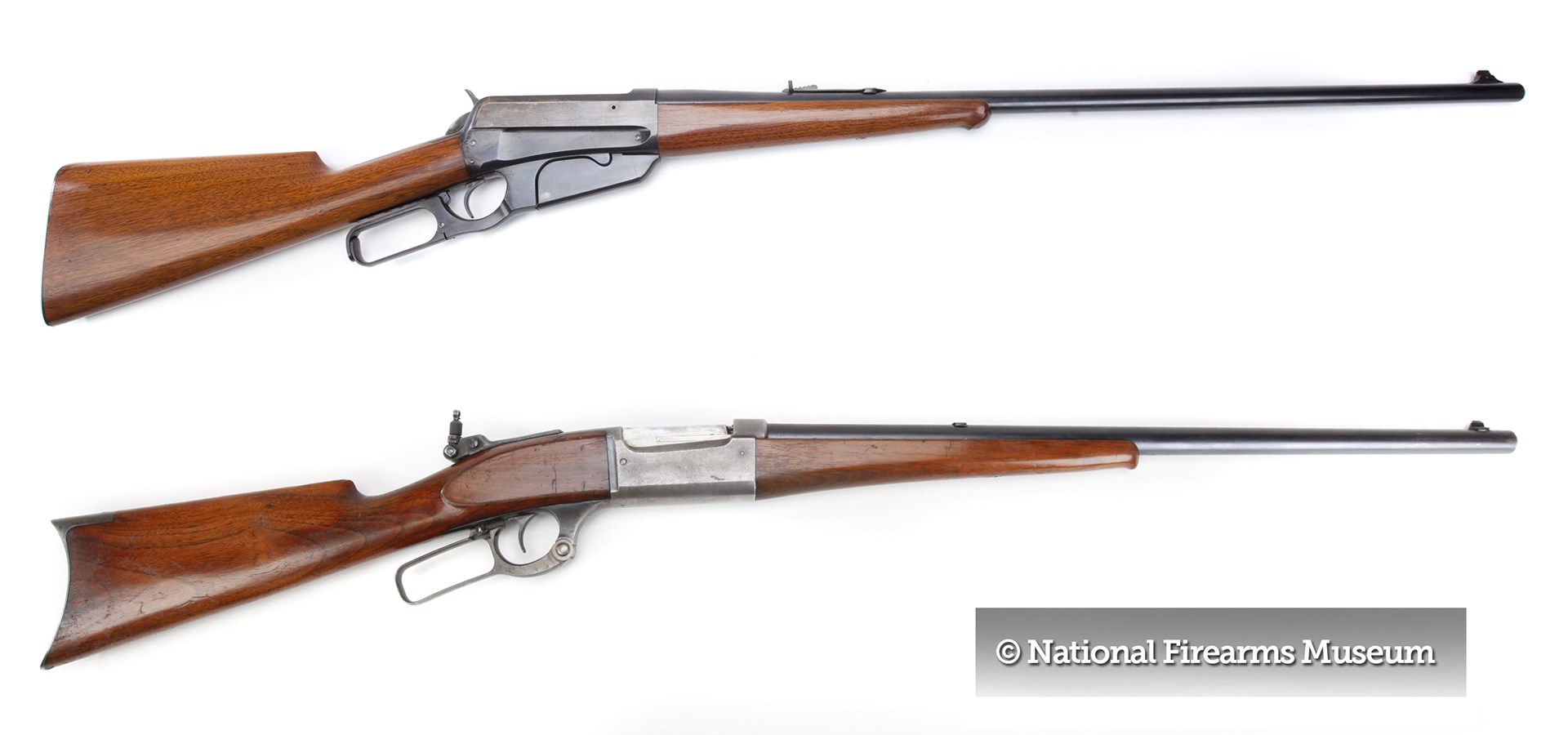
Even Winchester, whose iconic lever-action models from the 1866 to 1894 use a tubular magazine, got into the game with its own Model 1895. The box magazine allowed the rifles to utilize the new smokeless powder, high-velocity cartridges with jacketed bullets. The Savage 99 and Winchester ‘95 both became legends in their own right, with everyone from big-game hunters to troops on the front line.
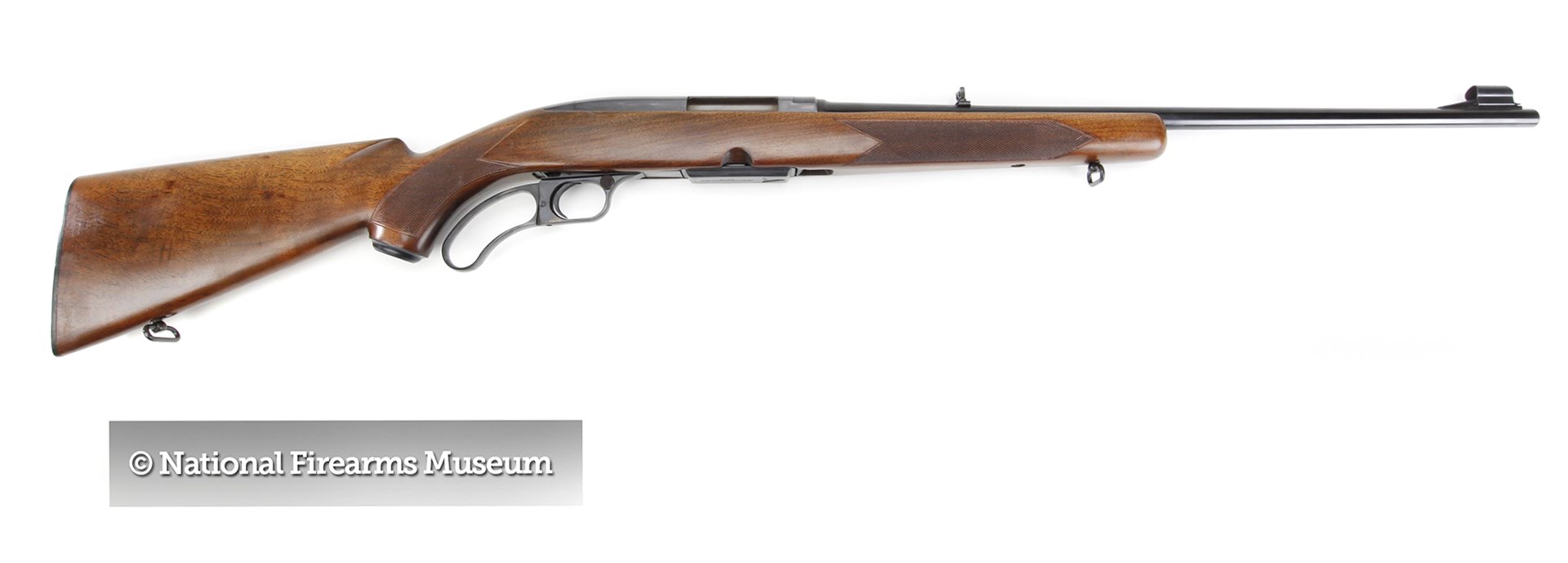
By the 1950s, the idea of a detachable box magazine for quick reloads was becoming popular. Winchester again added that feature to its lever-action rifles with the streamlined and modern Model 88, that combined the detachable box with a front-locking, rotating bolt. The Sako Finnwolf and Browning BLR of a few years later used a similar format.
Henry Repeating Arms has built its brand on tradition, with lever-action rifles with under-barrel tubular magazines that hearken back to Benjamin Tyler Henry’s original design. The company stepped out of that box in 2016 when it introduced the Long Ranger. That rifle combined a rotating bolt with a detachable box magazine that allowed the barrel to free-float.
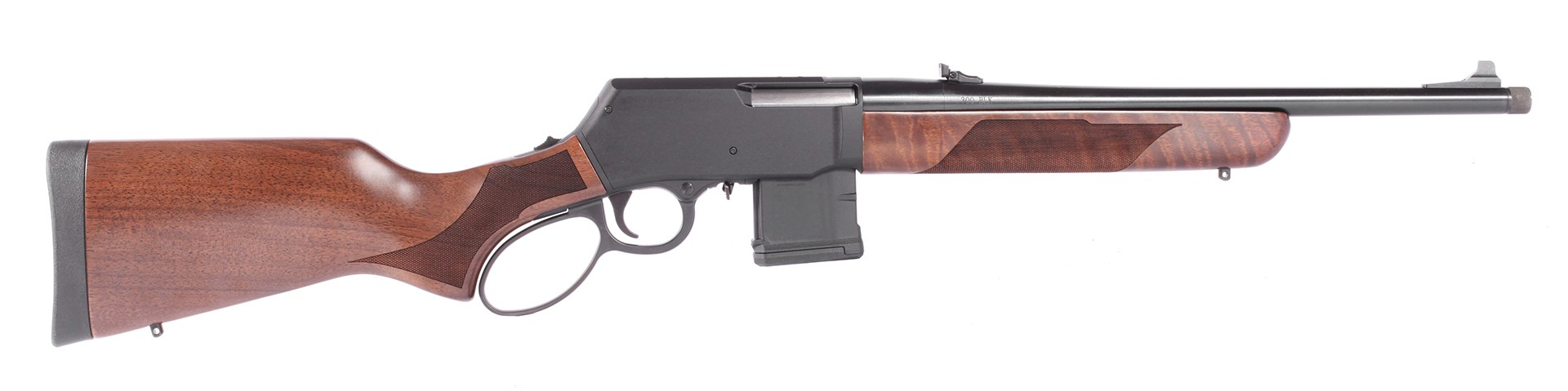
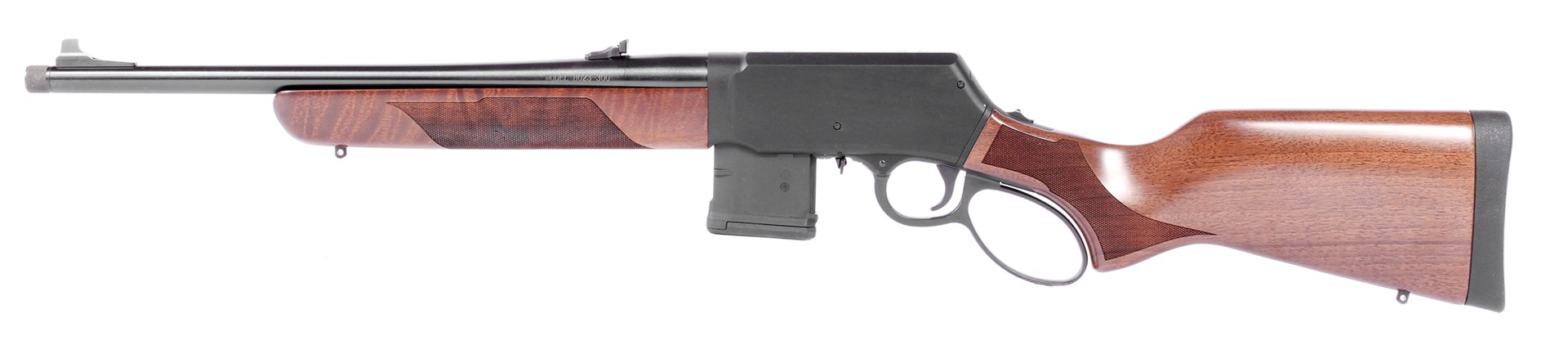
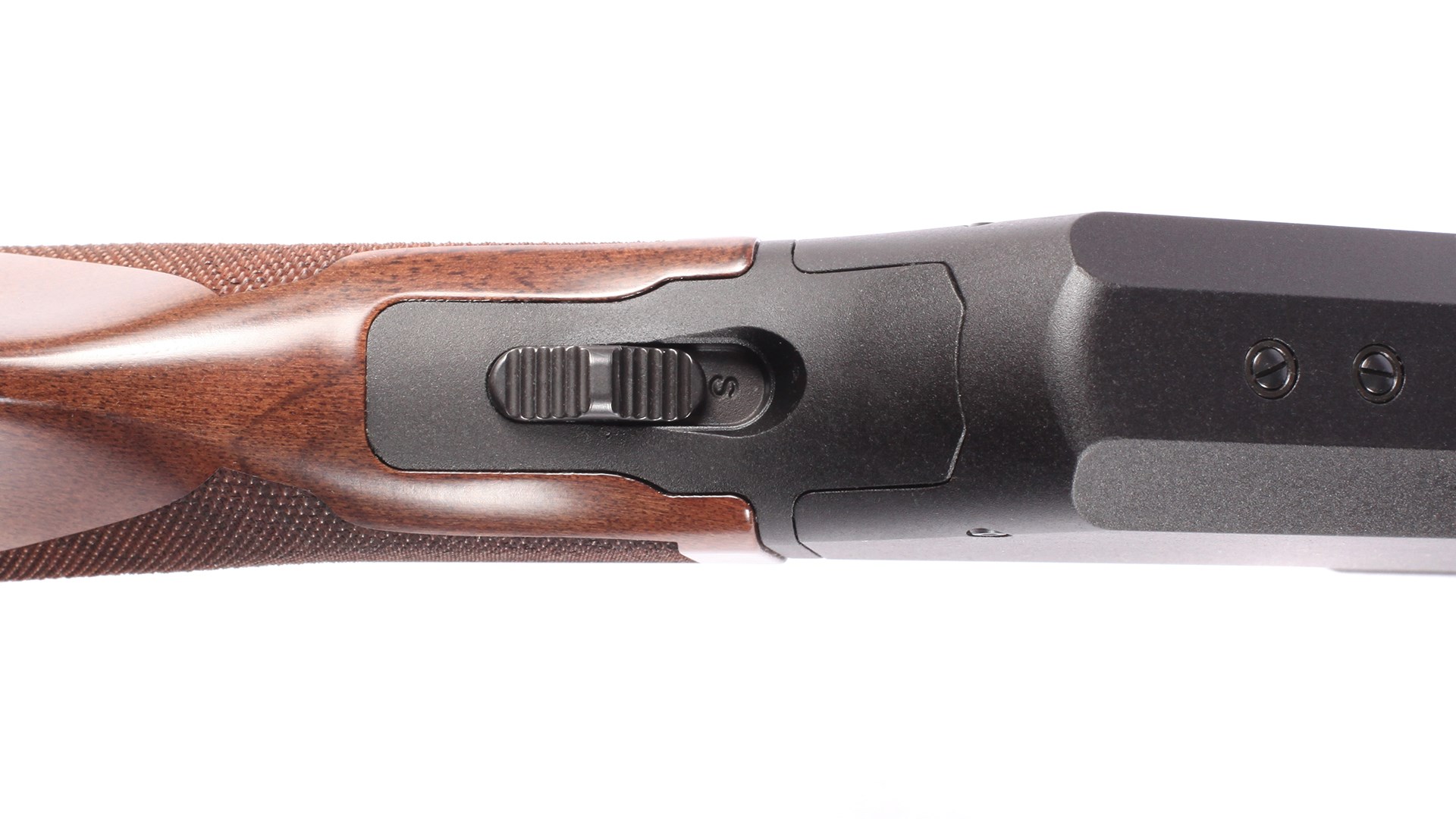
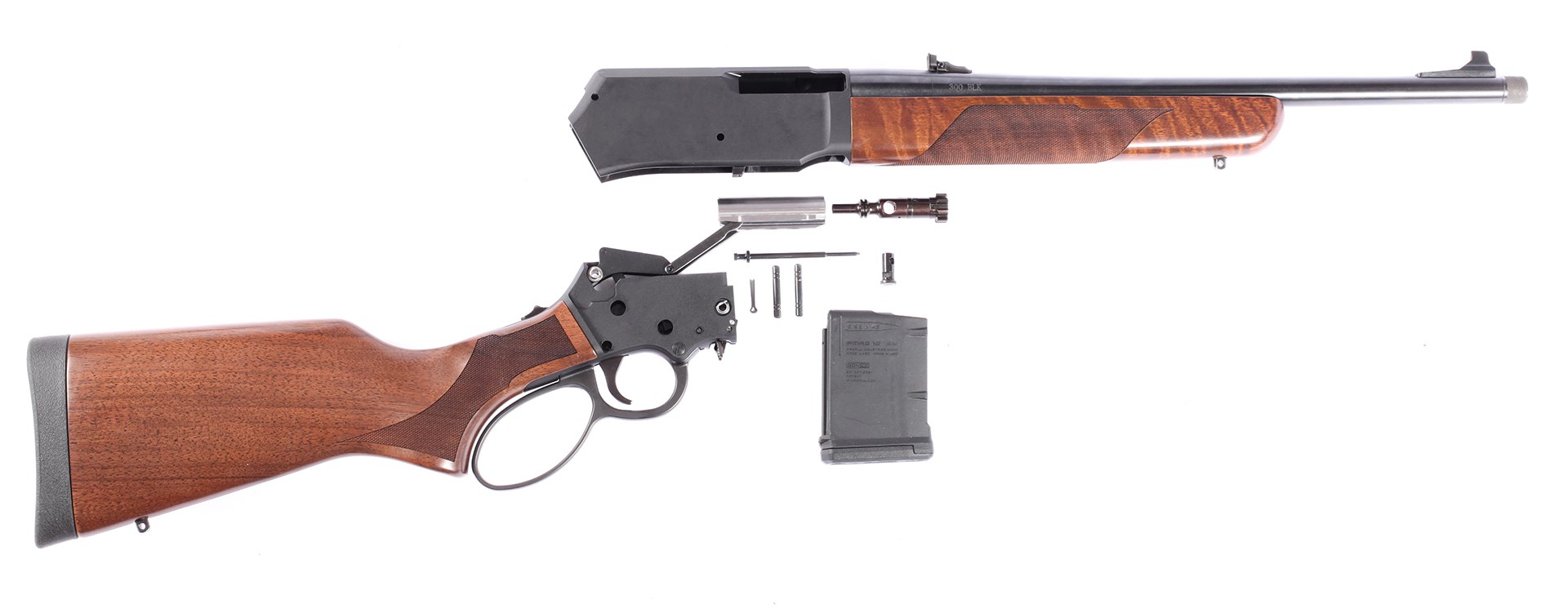
The LASR differs from the Long Ranger in three key ways. First, the design is “hammerless,” with a hammer and bolt that operate totally within the confines of the receiver. Second, it has a sliding tang safety. Last, but not least, it feeds from STANAG/AR-15-pattern magazines instead of the Long Ranger’s proprietary box. Like the Long Ranger, using a box magazine instead of a tube allows the barrel of the LASR to be free floated, with the forearm mounted to a post that attaches to the receiver.
The LASR action is operated by a “patent-pending quad bar linkage and slider crank mechanism.” The bolt unit is two parts, consisting of a carrier and a rotating, multi-lug bolt head that is operated by a cam, similar to an AR-15. The fact that the bolt locks into a barrel extension means the receiver is “unstressed” and can be made of aluminum alloy for weight-savings, and the LASR weighs in at 6.5 pounds.
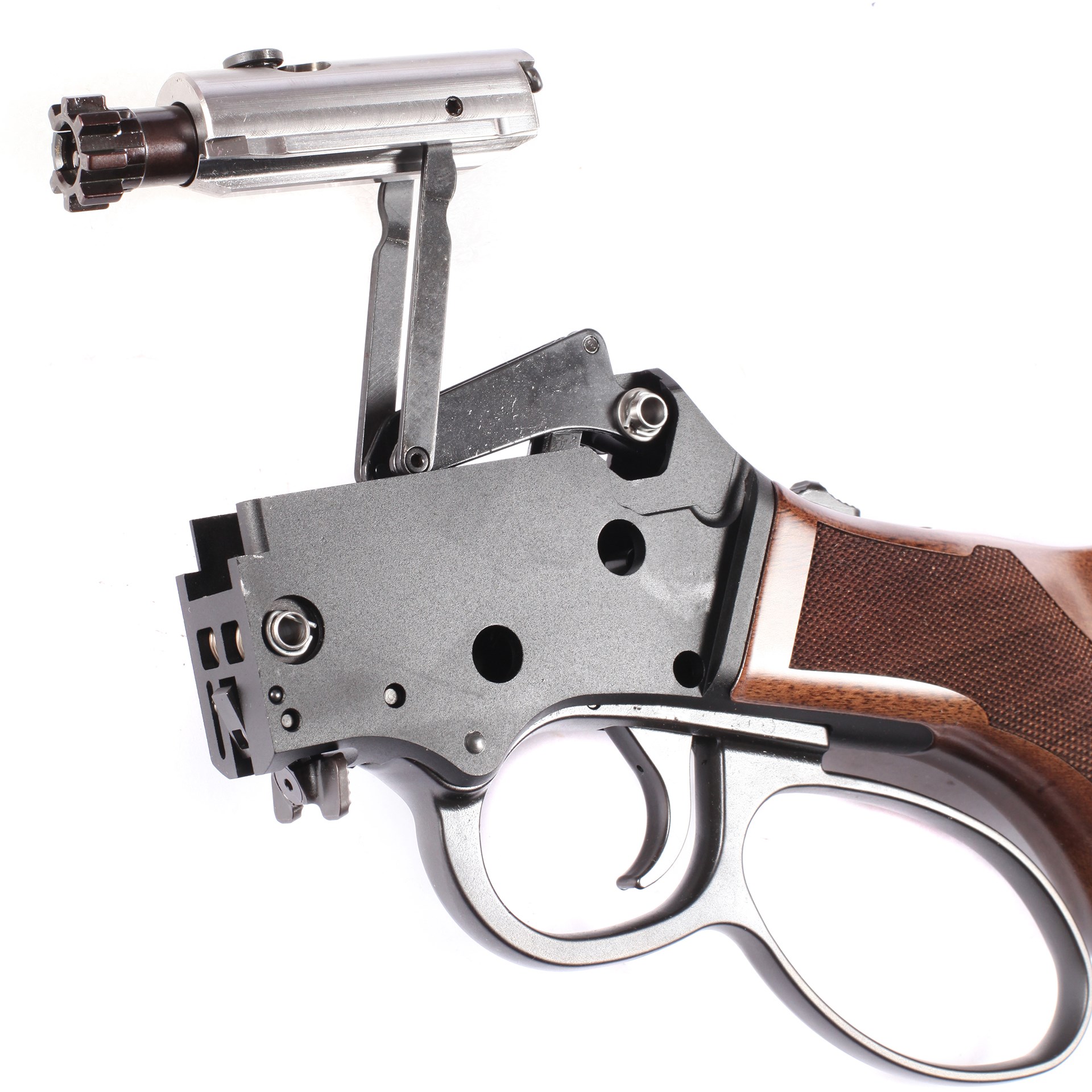
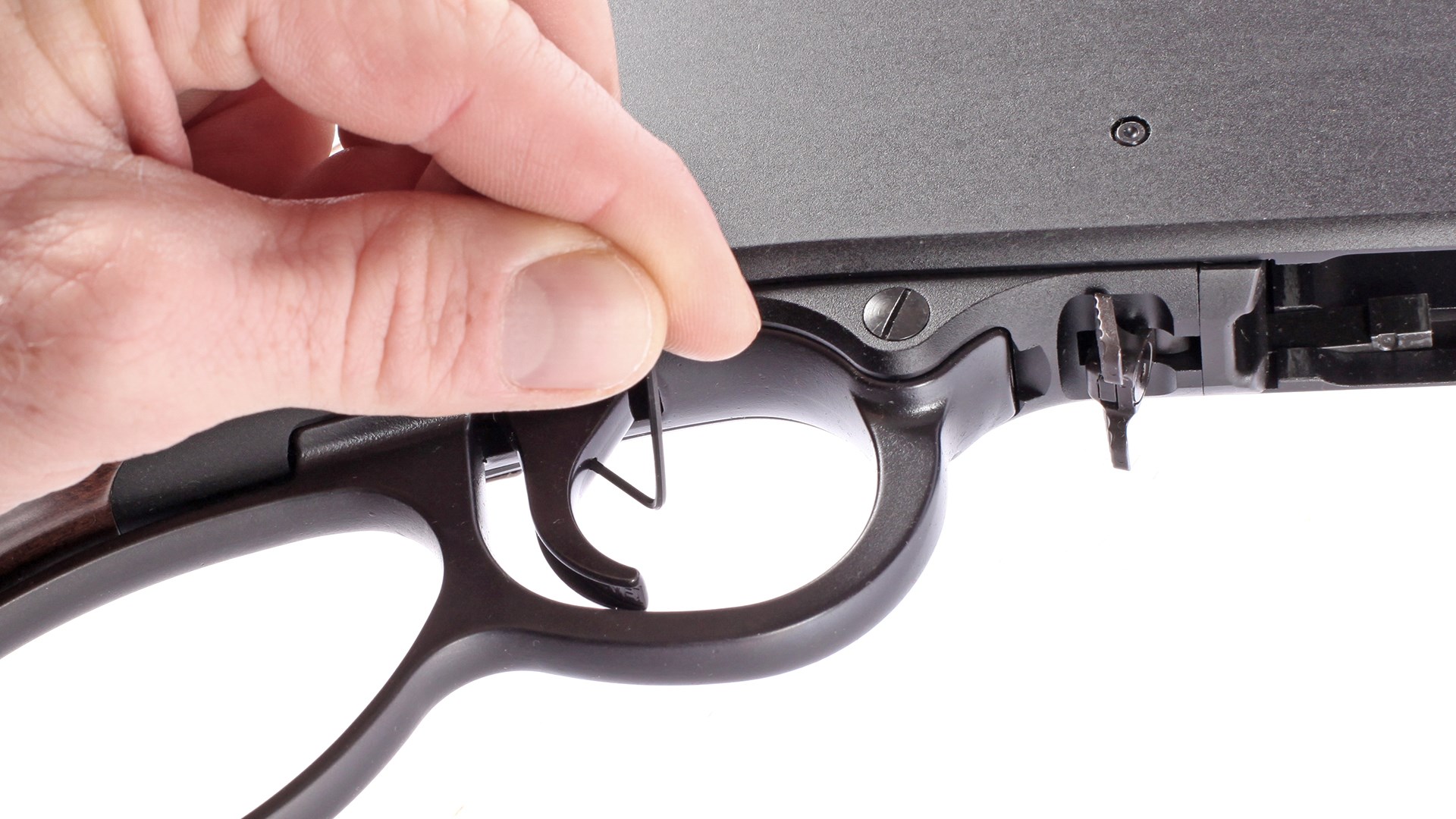
While most lever-actions aren’t known for their exceptional trigger characteristics, Henry calls the LASR’s unit “match-grade,” and it is user-adjustable. The trigger on my test rifle had none of the “play” of a typical lever-gun trigger, and broke crisply at just over 4 pounds after a short take-up. It is certainly one of the best triggers in the class.
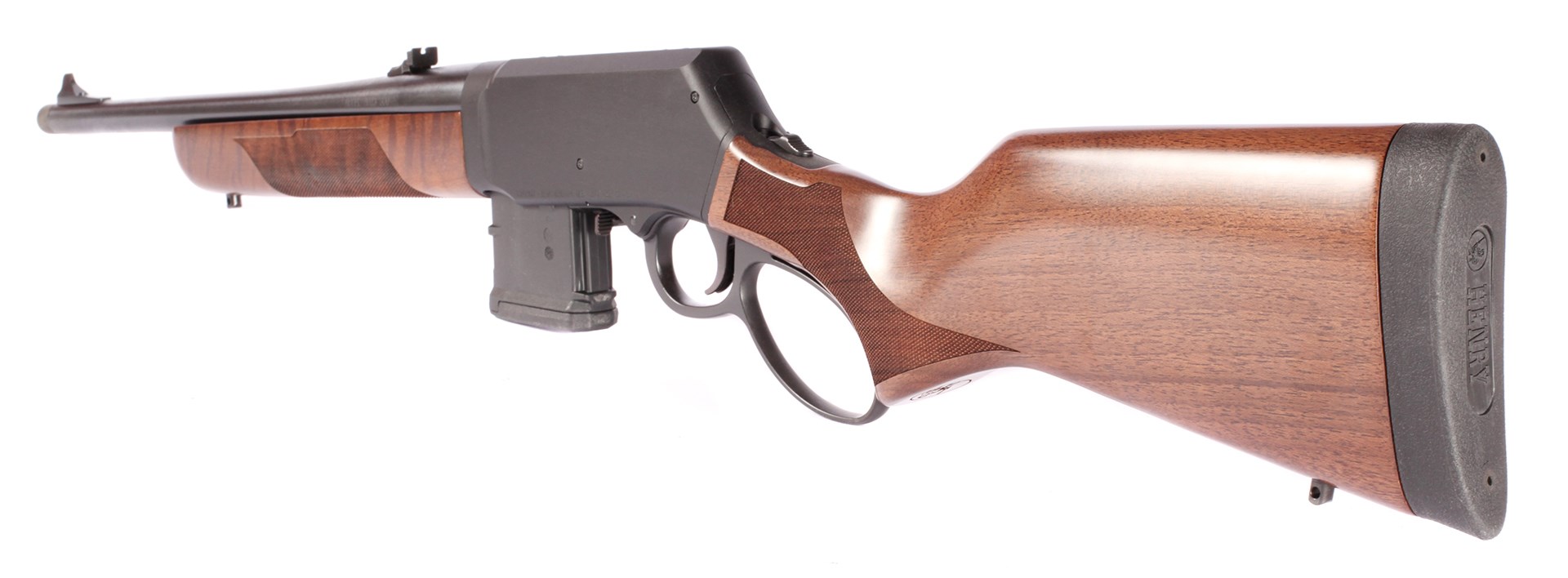
For the traditionalists, the LASR’s furniture is made of American walnut with diamond-cut checkering in the pistol grip and fore-end areas. Quick-detachable sling swivel studs are fitted fore and aft, along with a rubber recoil pad on the buttstock. The buttstock has a full pistol-grip and the lever, which is enlarged for use with gloves, is curved to match.
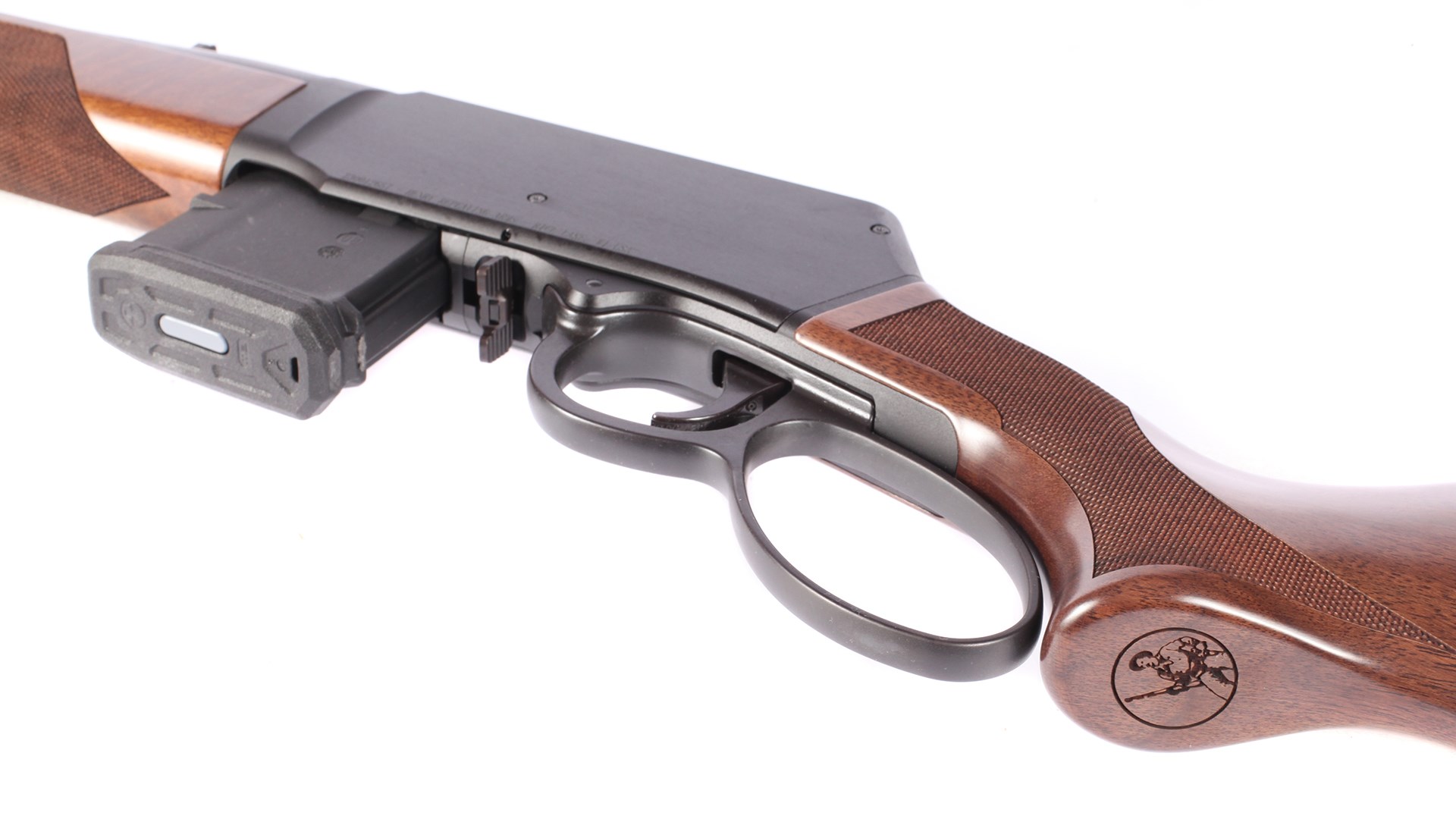
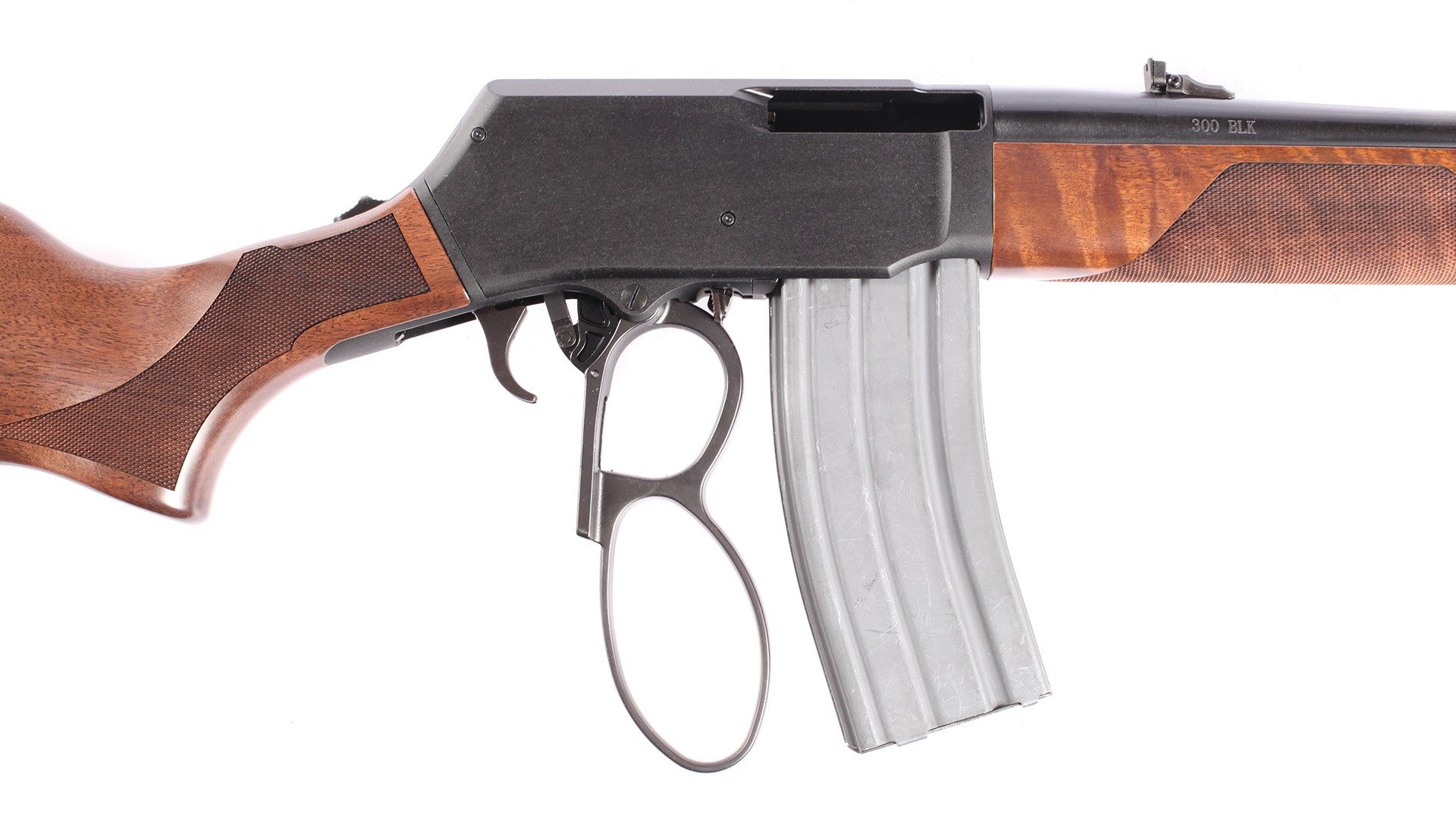
The LASR comes supplied with a single 10-round PMAG, along with a magazine limiter that reduces capacity when installed to five rounds for areas that require that for hunting. I tested a wide variety of AR-pattern magazines, both metal and plastic, with 10- to 30-round capacities, and all functioned perfectly. Even a 100-round BETA mag had plenty of clearance but failed to latch into the LASR’s magazine catch.
Other drum-type magazines on the market may work—not because you need to but because you can. Magazines are released with a paddle-type latch in front of the lever and drop free of the action. This release, combined with the tang safety, make the LASR’s controls fully ambidextrous.
The LASR comes from the factory with iron sights, which consist of a rear sight with a trapezoidal notch, fully adjustable for windage and elevation using the same wrench that is supplied to adjust the trigger, and a front blade on a ramp. Like most Henry products, the LASR’s receiver is drilled and tapped for the common Weaver #63B base, as used by many Marlin products. For testing and hunting, I attached a Picatinny rail base. The LASR would work well with a non-magnified red dot sight or a low-power variable optic (LPVO) scope. I chose the latter, mounting a Burris RT-6 1-6X scope with Burris Signature Zee rings. Compact and lightweight, the RT-6’s 1X magnification, combined with its illuminated reticle, allows it to be used like a red-dot optic for close-range shots.
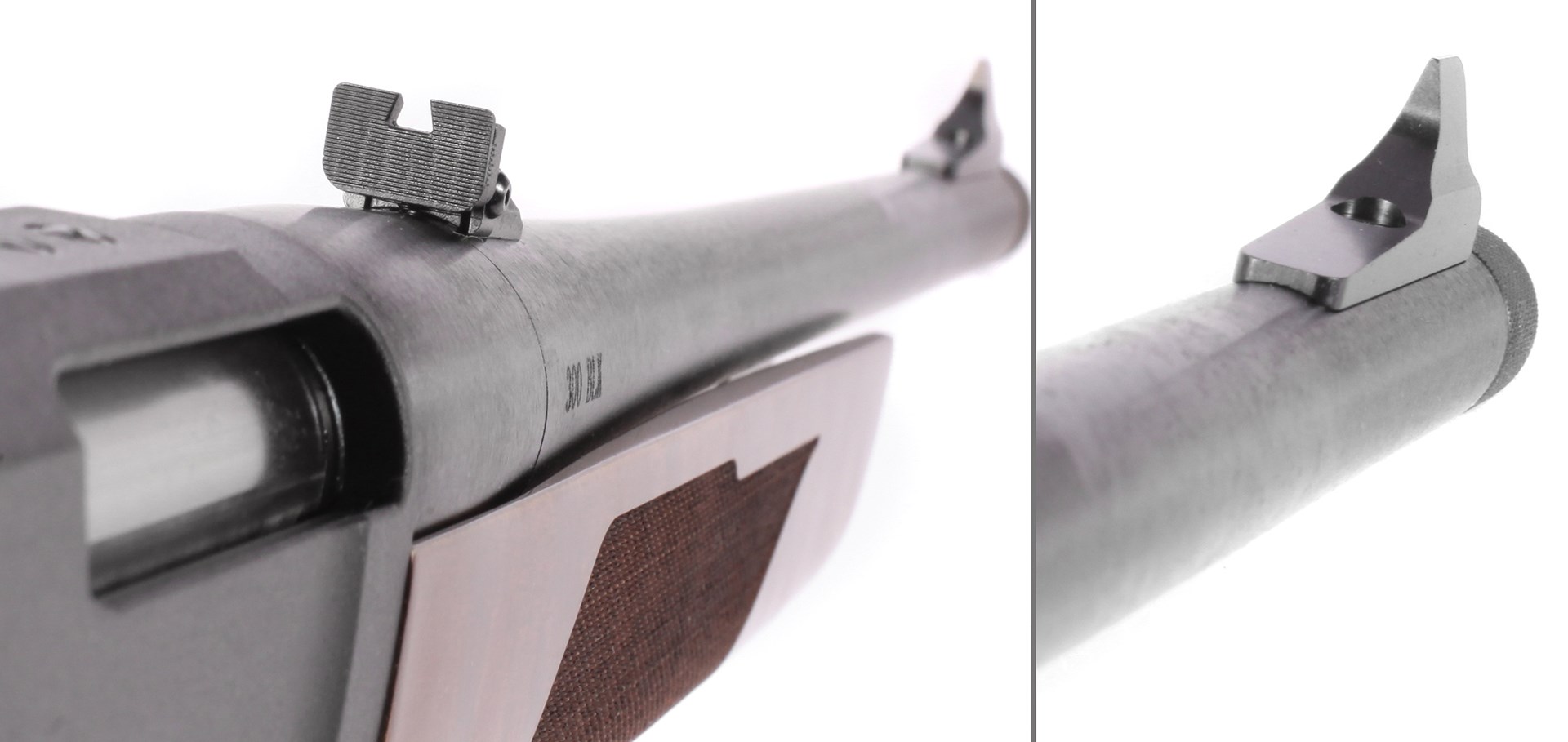
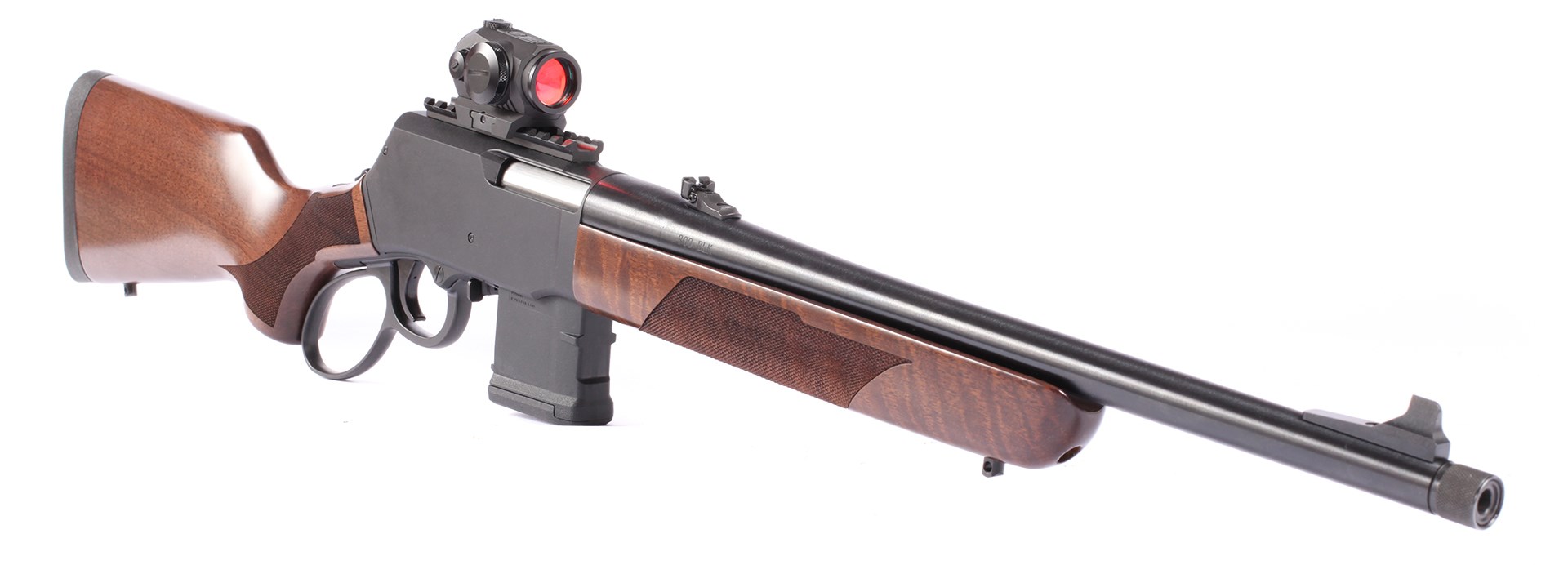
The LASR is available chambered in either .223 Rem./5.56 NATO or .300 Blackout. The former has an 18-inch barrel with a 1:8-inch twist rifling and its muzzle threaded 1/2x28 TPI, while the latter has a 16.5-inch barrel with 1:7-inch twist rifling and 5/8x24 TPI muzzle threads. I opted for the .300 Blackout version, so the rifle could also be used for hunting whitetails in my area.
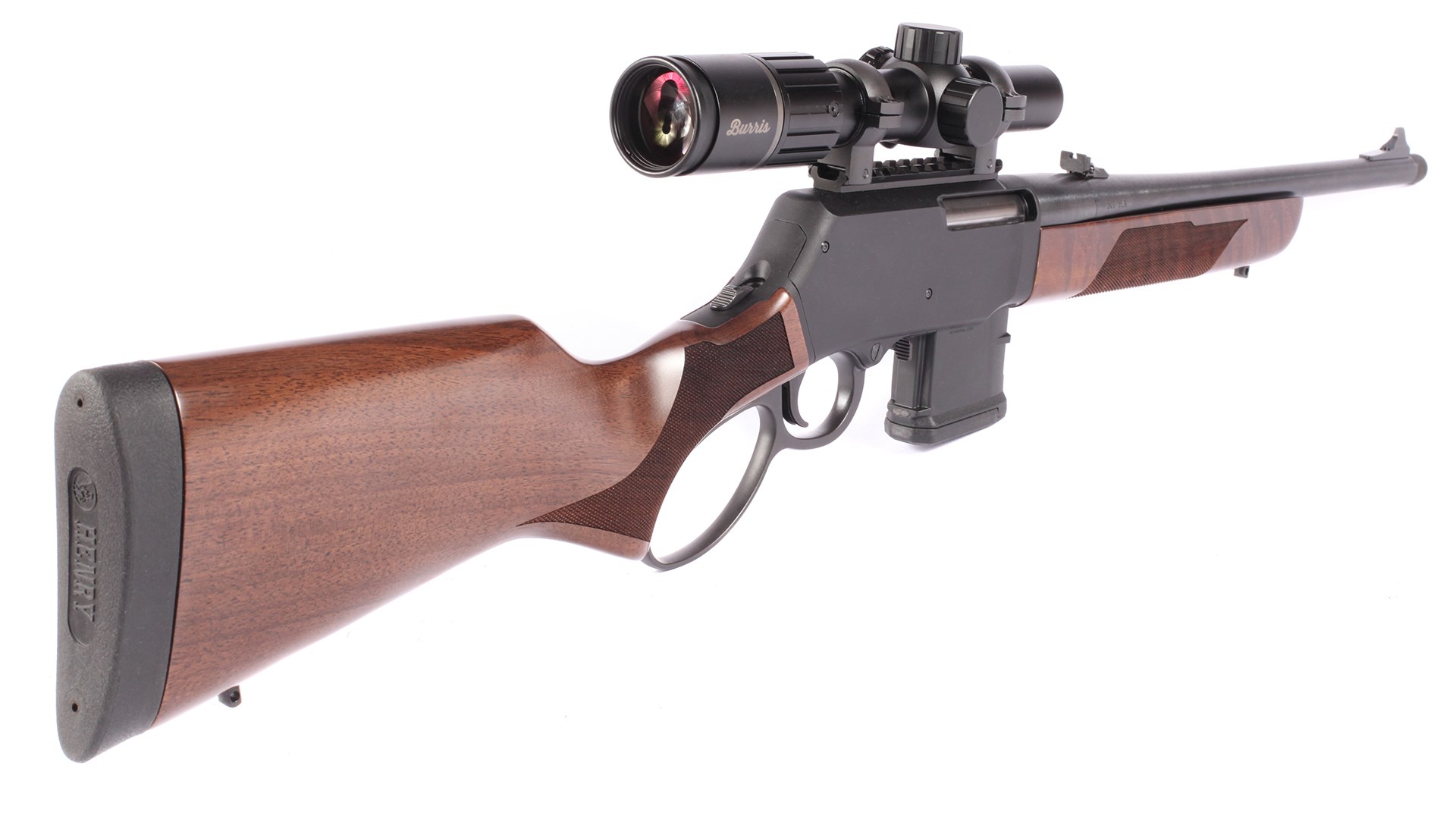
While receiving the rifle days before the start of hunting season limited my formal testing of it, the sighting-in process proved Henry’s claim that the LASR is capable of producing three-shot sub-MOA groups. The LASR’s action is exceptionally smooth compared to traditional lever-actions, with its rotating bolt not having the initial friction of a falling locking block, and it operates with a short lever throw, thanks to its tailored-to-cartridge-length action size. In the field, the LASR proved capable and handy. With the Burris RT-6 and Banish Backcountry suppressor mounted, an Andy’s Leather Rhodesian sling installed, and five rounds in the magazine, the it tipped the scales at just over 9 pounds.

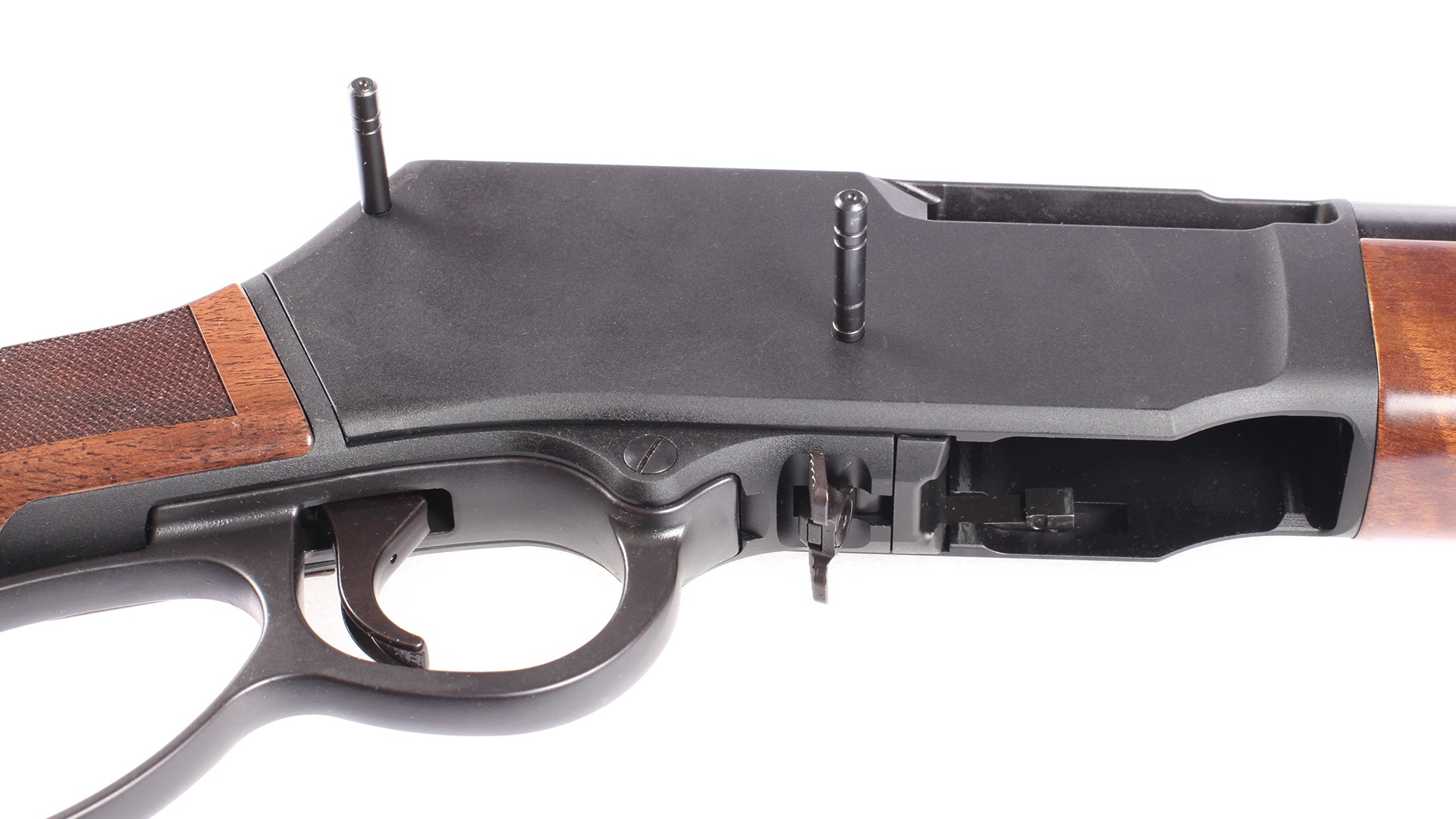
Disassembling the LASR for cleaning involves removing two push pins that hold the firing mechanism and rear stock in place, so that they can be removed from the receiver. This allows the bolt to be removed. A single pin holds the firing pin in place, and removing the firing pin allows the cam to be removed, and the bolt separated from the carrier. With the bolt out, the barrel can be accessed for cleaning from the chamber end.
So what is all this supremacy good for? For the hunter who wants a lever-action, its safety, ease of loading and unloading, and excellent accuracy make the LASR ideal, while its .223 Rem. and .300 Blackout chamberings are a good choice for varmints, predators or close-range whitetail. For those who live in areas that restrict semi-automatic firearms, the LASR offers a quick-firing, quick-loading rifle in two popular self-defense cartridges that feed from a ubiquitous magazine. As a suppressor host, the LASR has the speed of a lever-action, without the action noise or gas blowback of a semi-auto. I tested the rifle with a Silencer Central Banish Backcountry suppressor. The light weight of the Backcountry didn’t affect the rifle’s balance and its short length, combined with the .300 Blackout LASR’s 16.5-inch barrel, still resulted in a compact overall package for blind and brush.
For those non-traditionalists wanting to customize or increase the “tacticalness” of their rifle, the LASR already has aftermarket support, with companies like Midwest Industries and Ranger Point Precision offering modular handguards and buttstocks. Henry has also done its own customization of the LASR, with its Special Products Division (SPD) offering the “Predator” version, with its adjustable cheekpiece buttstock and carbon-fiber wrapped barrel.

One hopes that the LASR will serve as a pattern for future Henry rifles, especially a “large-frame” version that would fed cartrdiges like .308 Win., 6.5 Creedmoor, and .243 Win. from PMAGs, or even .30-06 Sprg.-length cartridges using AICS-pattern magazines. The LASR truly represents a pinnacle in modern lever-action design, with an optics-ready, ambidextrous and customizable firearm that gives a level of accuracy, safety, and usability not found in traditional lever-actions, all while feeding from the most popular rifle magazine currently on the market. It’s enough to make even the most hardcore traditionalist like myself take notice. Long live the lever gun, indeed.
Henry Lever Action Supreme (LASR) .300 Blackout [H023-300] Specifications
Manufacturer: Henry Repeating Arms Company, 107 W. Coleman St., Rice Lake, WI 54868; (201) 858-4400; henryusa.com
Action Type: lever action, centerfire rifle
Chambering: .300 Blackout
Receiver: aluminum alloy
Finish: hard anodized black (receiver), blued (steel parts)
Barrel: six groove, 1:7-inch RH twist, muzzle threaded 5/8x24 TPI
Stock: American walnut
Magazine: 10-round, detachable box, STANAG/AR-15 compatible
Trigger: single-stage; 4-pound, 5.4-ounce pull (adjustable between 3-5 pounds)
Sights: open rear sight adjustable for windage and elevation, front post, receiver drilled for Weaver #63B base
Weight: 6 pounds, 8.5 ounces
Accessories: owner’s manual, muzzle thread protector, magazine limiter, sight and trigger adjustment tool
MSRP: $1,299
Barrel length: 16.88 inches
Overall length: 36.65 inches
Length of pull: 13.75 inches
Drop at comb: 1.42 inches
Drop at heel: 1.34 inches