Memorial Day is a day that is a lot of Americans misunderstand. Frankly, we should thank our active duty military folks and veterans every day, not just on two Federal holidays a year. But that’s not what Memorial Day is for. Memorial Day is about remembering those Americans who sacrificed all for their country and the cause of freedom. It is about memorializing our nation’s war dead. Remembering those who gave “the last full measure,” regardless of where they fell or are interred, from white marble crosses and Stars of David at the American Military Cemetery in Luxembourg, to the “Punch Bowl” (National Memorial Cemetery of the Pacific), to the Somme American Cemetery, military cemeteries in every state or even small plots in hometown graveyards to which a bronze plaque is attached to a family memorial. 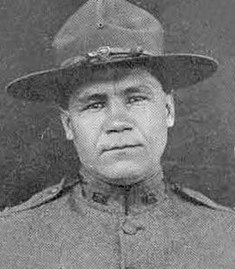
Of the 116,708 Americans who died during World War I—53,402 of whom were combat deaths or “missing”—I'd like to bring the courage and sacrifice of just one of them to your attention 98 years after he fell near Ronssoy, France.
William Bradford Turner was born in Boston, Mass., in 1892. A 1914 graduate of Williams College (where he was in the Kappa Alpha Society), he was football player who became a New York National Guardsmen, signing up in Garden City, N.Y., in 1915. In 1916, he was called up for duty with New York’s “Squadron A” on the Mexican border. By the time he was sent to France in 1917, he was an officer in 105th Infantry Regiment, part of the U.S. 27th Infantry Division, called “O’Ryan’s Roughnecks,” after its commander Maj. Gen. John F. O’Ryan. 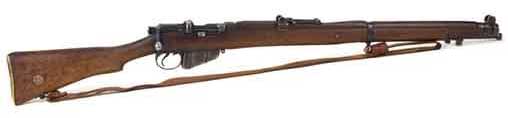
The 27th Infantry Division, made up of New York National Guard units, was actually under the British 4th Army—serving side-by-side with British and Australian troops—and the “Doughboys" in its ranks were actually issued Short, Magazine Lee-Enfield rifles in .303 British. And instead of “damned, jammed” Chauchat, soldiers in the 27th were issued British Lewis guns. 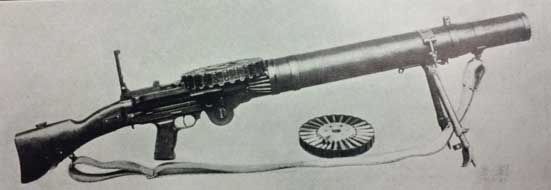
Short, Magazine Lee-Enfield Mk III (top) and Model 1914 Mk I British Lewis Gun
On the night of Sept. 27, 1918 near Ronssoy, France, two companies of the 105th Infantry, including Company M, led by 1st Lt. William Bradford “Brad” Turner, were covering the left flank of the 106th Infantry Regiment’s attack on the outer defenses of the Hindenburg Line—perhaps the most heavily fortified defensive works of World War I that the Germans had been preparing for two years
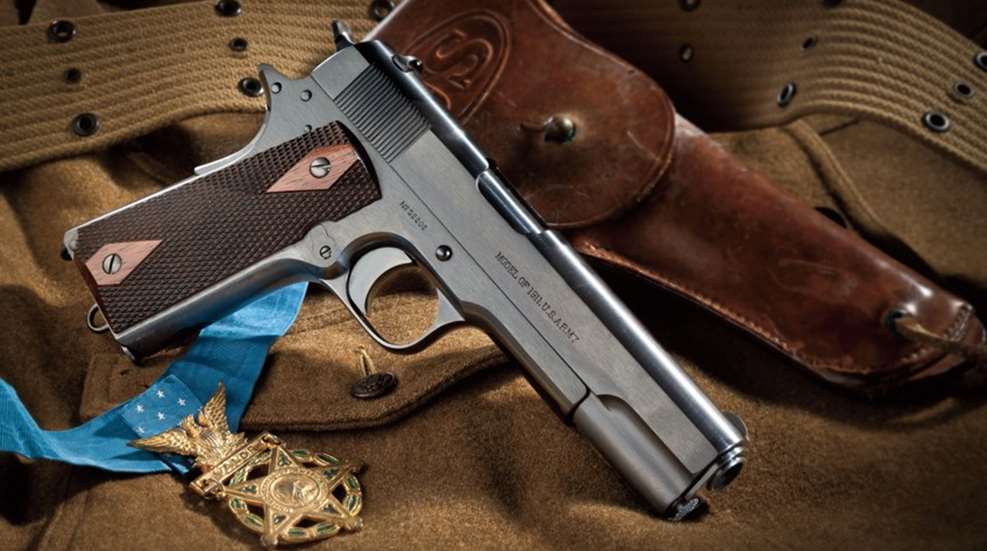
Gallantly leading his men in a night attack, while subjected to murderous machine gun and artillery fire, Turner and his men breached the enemy lines, moving further and further into the enemy’s trench system. Turner and smaller group were separated from the rest of Company M. At one point he and his men were fired upon by German machine gun position that opened up almost directly on top of them. Using his “pistol”—likely a U.S. Model of 1911—Turner silenced the German position. Then he assaulted another machine gun nest, killing the gunner, then his men finished the Germans there. He continued to lead his men deeper into the enemy trench system, and in the process he expended every round of .45 ACP ammunition he had. Continuing the attack, Turner picked up a discarded soldier’s rifle and gave the enemy the bayonet. During the course of the advance, Turner was wounded three times. Eventually, his small command reached its objective, the fourth line of enemy trenches, but it was down to just nine men, and after hand-to-hand combat and fierce German counterattacks, they were surrounded and Turner succumbed to his wounds.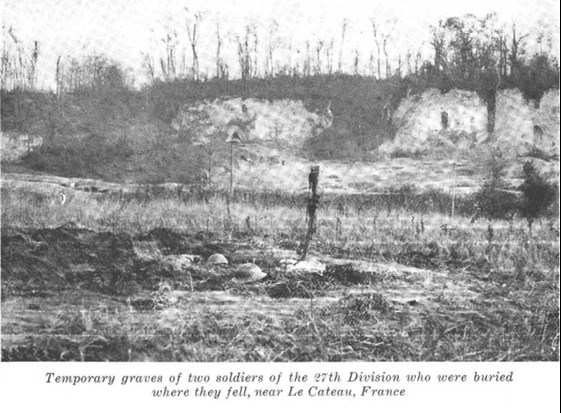
(Image courtesy N.Y. Division of Naval and Military Affairs)
The main attack by the 106th Infantry was unsuccessful that night, and according to O’Ryan’s divisional history, no officers of Company M or Company K of the 105th survived the attack unharmed.
For his bravery, 1st Lt. William Bradford Turner was posthumously awarded the Medal of Honor. Today, he is one of 1,844 Americans interned at the Somme American Military Cemetery and Memorial at Bony, France. Also remembered there are the names of 341 missing Americans from the Great War.
It has been said that when America soldiers go overseas to fight for the freedom of others, all they ask in return is enough ground to bury our dead. On this day, we must remember them. Freedom isn't free, and nearly century ago, William Bradford Turner went “over the top” knowing full well he and his men might have to make the ultimate sacrifice. His last words word before jumping off on Sept. 27, 1918, were reportedly, “If we are prepared to die, we can go forward.”
While at the beach or barbecue this weekend, when you see an American flag take just a moment to say thank you to generations of American like William Bradford Turner, and to remember them. Because that's what this day is all about.
Medal of Honor Citation for 1st Lt. William Bradford Turner, 105th Infantry Regiment, 27th Infantry Division 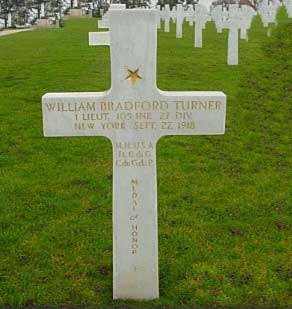
“He led a small group of men to the attack, under terrific artillery and machinegun fire, after they had become separated from the rest of the company in the darkness. Single-handed he rushed an enemy machinegun which had suddenly opened fire on his group and killed the crew with his pistol. He then pressed forward to another machinegun post 25 yards away and had killed 1 gunner himself by the time the remainder of his detachment arrived and put the gun out of action. With the utmost bravery he continued to lead his men over 3 lines of hostile trenches, cleaning up each one as they advanced, regardless of the fact that he had been wounded 3 times, and killed several of the enemy in hand-to-hand encounters. After his pistol ammunition was exhausted, this gallant officer seized the rifle of a dead soldier, bayoneted several members of a machinegun crew, and shot the other. Upon reaching the fourth-line trench, which was his objective, 1st Lt. Turner captured it with the 9 men remaining in his group and resisted a hostile counterattack until he was finally surrounded and killed.”
Image courtesy HomeofHeroes.com.
Most Popular