The handgun cartridge wars are over, and my side lost. Never mind that we had physics, science and logic on our side; they had the internet and it was never a fair fight.
This is a battle that has been fought before and probably will be again. For example, after the gruesome failures during the Moro Rebellion in the Philippines graphically illustrated the folly of using a smaller cartridge, the Army paid attention. That lead to the Thompson-LaGarde Tests, which proved what most of our salted Soldiers already knew: the Army made a mistake abandoning the .45 Colt in favor of the .38 Long Colt, a cartridge equivalent in power to the .380 ACP.
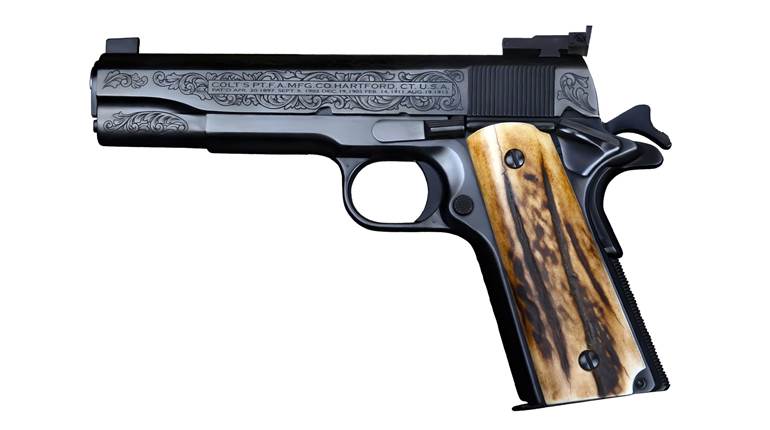
With that newfangled smokeless powder having been recently invented, ammunition makers were able to more or less duplicate the proven performance of the old .45 Colt in the newer, shorter .45 ACP. They put the cartridge in a semi-automatic handgun, the M1911, which went on to make its bones winning two world wars and in countless lesser conflicts. Yeah, I know. “OK, boomer.”
Because of decisions made by folks with little knowledge of terminal ballistics, we collectively lost our way again and things began to backslide. Then, in April of 1986, FBI special agents got into it with a couple of bad guys down in Miami, and the cartridge battle had to be fought again. In the aftermath, it was decided that the 9 mm was a mistake. The crooked path that resulted led through the 10 mm and on to the rise of the .40 S&W.
Today the .40 S&W is gasping for life while the 10 mm is seeing a bit of a resurgence. Oddly enough, though, it’s not for its original intent. It seems that there is a large faction, again ignoring physics and science, choosing the 10 mm for theoretical protection against 1,000-pound Ursa demons. They tend to ignore the high failure rate when it’s actually used. Compared with the more powerful revolvers chosen for bear protection almost exclusively in the past, the 10 mm guns hold more bullets, which is what seems to be most important to today’s heavily online consumers.
Following that, some of the more recent hires for federal jobs thought they couldn’t handle the .40 S&W, so a few “studies” were conducted that concluded all the information from before was now wrong and the 9 mm was indeed a dragon slayer.
The buzzword in today’s defensive-shooting world is firepower. The cool kids all want pistols that hold a lot of ammo. I used to point out the foolishness in sending a swarm of little bullets to do the job of one grown-up slug, but I gave up. The swarm mentality is now mainstream, and, like most controversial things in today’s America, there is no room for discussion. (It’s not just shooting—check out the political world if you want to see some incredibly proud and stubborn ignorance.)
If I had my wish, In a perfect world shooters would make choices that stand up to harsh examination. For example: I often hear, “I need more ammo in my gun to stay in a prolonged fight.”
“Have you tried learning to reload?”
Crickets.
Then of course, there is always the recoil argument. I can tell you that in the hands of an experienced shooter, there is little measurable difference between the most popular defensive handgun cartridges in how recoil affects practical shooting speed or accuracy. Time and again, I have seen guys with .40 S&W or .45 ACP handguns dominate speed-shooting events, both in competition and in defensive training, which includes carry guns. Yes, they practice—that’s why they win. I would point out that if your strategy for self-defense is not practicing, you have already lost. Merely owning a gun is not enough.
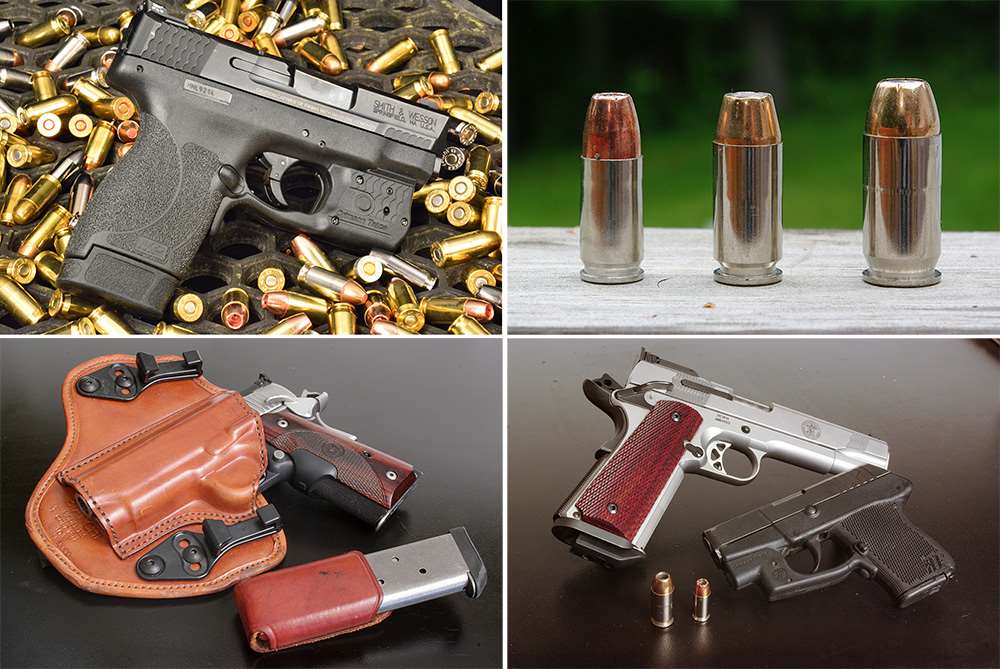
It’s also possible to have both worlds. My gun of choice if I must go into a fight with a handgun is an STI 2011 Tactical in .45 ACP that holds 15 rounds, which is right up there in wonder-nine-capacity territory. Yes, it’s an expensive pistol and is not even made anymore, but there are a lot of .45 ACP handguns currently on the market with greater-capacity magazines over the old 1911. Same with the .40 S&W, where there are magazine options that match a 9 mm pistol’s capacity.
I continued the conversation with my mythical friend who sprang from a conglomerate of modern-day shooters.
“Those are all big guns though, right?”
Indeed, it takes real estate to pack in all that ammo, so none of them are dainty guns designed to fit in your pocket or purse. While 9 mm pistols have gotten super tiny and can carry more rounds in smaller sizes, the ones that can out-capacity modern .40-caliber handguns are still on the larger side.
In truth, the trend now is to smaller, more compact handguns for carry. A lot more folks are carrying subcompact pistols than are lugging full-size, double-stack shooters. But, the lower capacity of these tiny, admittedly convenient handguns negates the “more-firepower” argument even more.
Moving back to the point about larger magazines, for the sake of argument, I’ll concede the question so this can proceed.
If that’s the most important factor, why not use a .22 LR? That little cartridge can pack a lot of ammo in a magazine.
What is scary about that is, I have recently seen some so-called experts on social media promoting the .22 for self-defense. I have shot hundreds, perhaps even thousands, of critters with the .22 LR cartridge, including some bigger ones in emergency situations, so I have some real-world experience of bullet/cartridge performance on living flesh.
Let me be as clear as I can here: I would never pick a .22 LR for my primary self-defense gun. Yes, it’s better than nothing, but that’s not the discussion here. Sure, it can kill a 1,000-pound critter with a carefully placed shot from 6 inches away. But, if I had more word count, I could tell you an amusing (at least after the fact) story about a time when it did not.
I guess I answered the question before I asked it.
“Why don’t you shoot a .22 LR?”
“That’s crazy; it’s not powerful enough.”
Hmmm … I thought the newspeak decided that all handgun cartridges were virtually the same in terminal performance?
“Well, maybe, but I think something bigger is needed.”
Thankfully, there is a bit of hope here.
How about the .22 Mag.? It’s a nasty little round and there are guns out there that hold a lot of ammo in the magazine. KelTec’s PMR30 holds 30 rounds, for example.
On the other hand, I know at least one police officer who owes his life to a bad guy using a .22 Mag. Even with a head shot, he survived. There were mitigating circumstances, but the main reason he is alive and the bad guy is not is the bad guy’s decision to use a .22 Mag. rather than a larger cartridge. So, again, perhaps it’s true that size matters—at least in defensive handguns?
“No, still not big enough.”
What about 5.7x28 mm? There is new ammo hitting the market for that cartridge. Some of the guns hold 20 or more rounds in the magazine.
“I am not sure I trust a small cartridge.”
Oddly enough, that was almost universally what the experts back in the day said about the 9 mm. It’s the same argument now, just different conclusions. You need to ask yourself, what changed? You’ll hear it’s the bullets, but that argument has a lot of flaws, too. In the end, reliable results will depend on the size, weight and speed of the projectile. Bullet performance is more like a bonus than a clear reality, because it’s never guaranteed. Besides, in that newspeak world, the new bullets apparently only work in the 9 mm and not larger calibers in which the same bullet designs can be and are loaded.
So, our discussion has moved away from magazine capacity right back to where it started: cartridge terminal performance. The choice of cartridge won’t be the same for all users and at times it’s a bit fluid. When you are picking a defensive-carry handgun cartridge, where do you draw the line? What is the minimum power level that you will trust in a self-defense handgun? Is the most important thing terminal performance, or is it magazine capacity?
Where is your line?
Of course, the handguns available in any given cartridge are a big factor. But, let’s just set that aside and focus on the cartridges. How small is too small? We have eliminated the rimfires and probably the more exotic .22 centerfires.
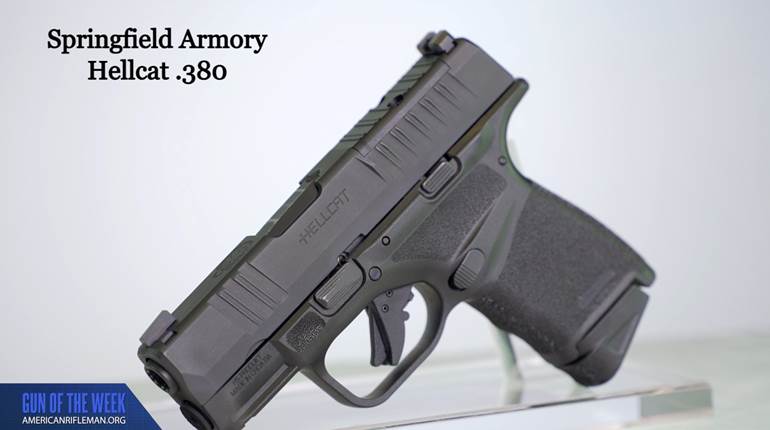
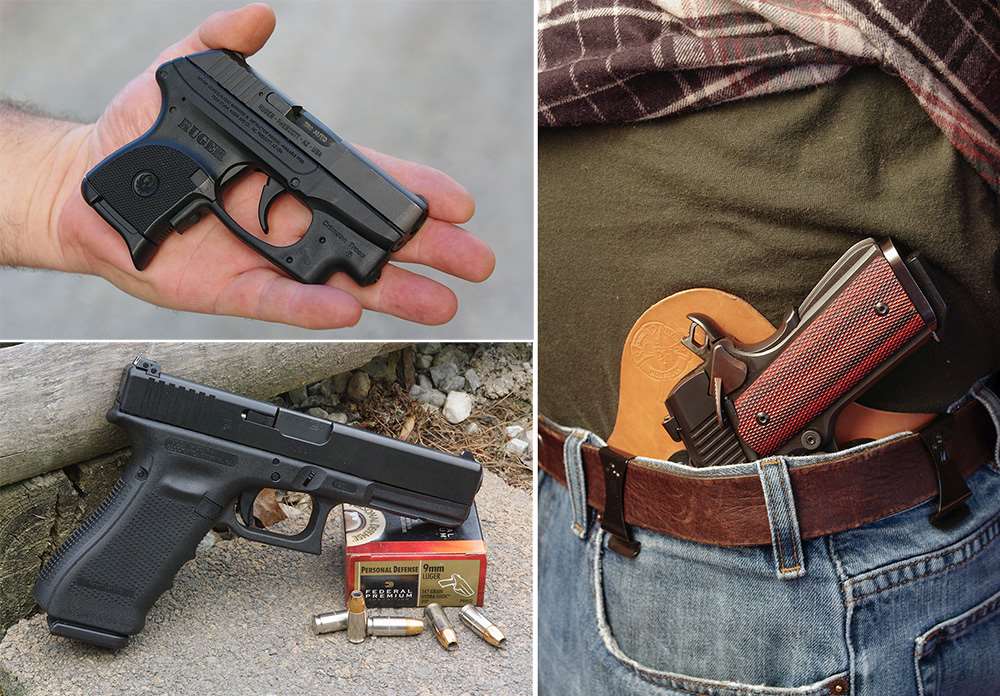
What about the .32 ACP or .380 ACP? They are the starting line, and they are mostly found in tiny carry guns without a lot of magazine capacity. However, some handguns, particularly in .380, do hold a bunch of ammo. Ruger makes one that holds 15 rounds in the magazine, for example.
Moving up to the middle ground in the lineup, we find cartridges like the .30 Super Carry, which kind of came and went. You can still choose it if you like, but why would you? I’ll include the .38 Super because I have one—me and two or three other guys. Ditto with the .357 SIG. Or maybe you will simply follow the pack and pick the 9 mm? After all, all the popular kids are doing it.
Perhaps, like generations before, you prefer your defensive handgun cartridges to start with a four? It might be considered “old boomer thinking,” but the laws of physics have not changed. Those big bores are still as good as they ever were. In fact, as mentioned, those same new wonder bullets that folks rave about for the 9 mm have also made the .40-caliber rounds better, haven’t they?
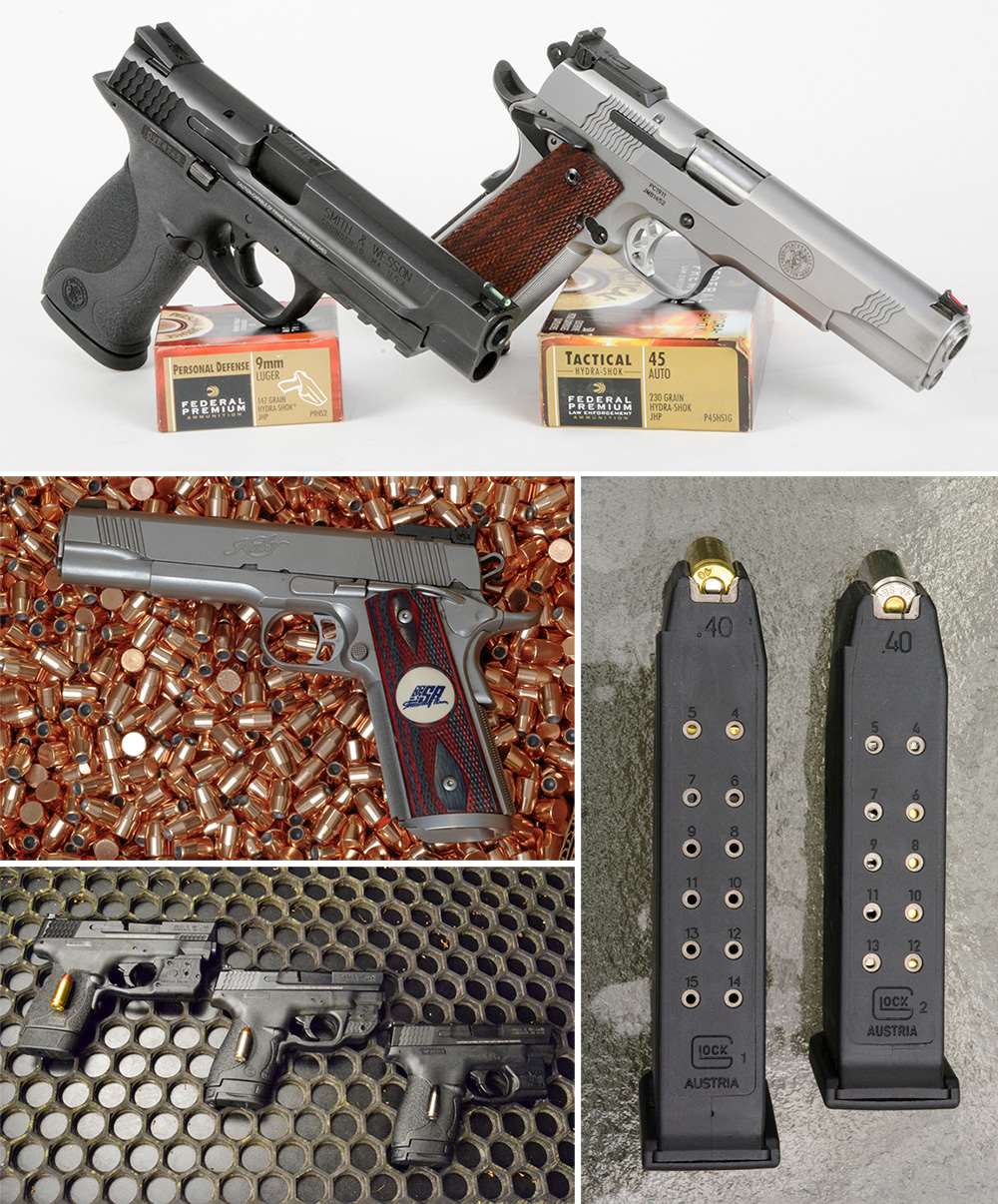
What changed is public opinion. While it was disdained and discouraged a generation ago, the most popular defensive-handgun cartridge today is right smack in the middle of the pack: the 9 mm. It’s sort of like the Toyota Camry of handgun cartridges and probably should come in beige.
In truth, though, nobody ever picked a Camry for its performance. It’s important to note that the only physical connection between you and the threat you are trying to stop is the bullet or bullets you are firing and their ability to neutralize the threat. Failure may lead to very bad things. The odds of you ever using your handgun to defend your life are very low, but they are never zero. Wouldn’t it be a horrible time to discover you made a mistake when some dirtbag is trying to kill you? If it’s a fight-for-your-life situation, where all handgun cartridges are viewed as a compromise anyway, would you choose something because it’s trendy? Or is it because the stuff that’s trendy works pretty well? That’s the question here, isn’t it?
There has never been more information available than right now. But, bad information is a real thing, and there is a lot of it in the gun world. How do you make sensible choices when picking a new carry gun?
Most people just go with what is popular. How else do you explain the Kardashians? If you are a hardcore gun guy, you probably have already looked at all of the information, dumped it into your head, stirred it around, added a bit of bias and poured out a result.
The trouble is that most gun owners are not shooting nerds. They simply want a gun to protect them. If you are serious about this, perhaps it’s better to dig deeper into some credible research. I suggest that there are several choices that will serve you well. Just remember it’s a sliding scale, and no matter what you read on social media, they are not all the same. It makes sense to spend at least as much time picking a handgun to protect your family as you would picking out a new car. Maybe learn the facts and look at information other than what’s on YouTube? Let me also point out that there are these antiquated things called books that have a lot of useful information in them. Check them out. (If you’re reading this, then you’re already ahead of the game.)
Personally, I trust physics and tend to want more energy and bigger holes. However, I am the outlier as the huddled masses are mostly found in the middle ground.
Are they right, or am I? That’s for you to decide.