Most of what we understand today about the terminal ballistics of pistol bullets comes from the Federal Bureau of Investigation. After the infamous “Miami Shootout” in 1986, the Bureau’s ballistics lab went to work establishing testing protocols that remain the standard nearly 30 years later.
The crux of the FBI’s terminal ballistics testing is that a handgun bullet, to have a good chance of causing rapid incapacitation to an assailant, must penetrate to between 12” and 18” in 10 percent ordnance gel. This doesn’t necessarily mean that a bullet that reaches these depths in gel will penetrate as deep in flesh and bone. However, 30 years of laboratory testing and 30 years of officer involved shootings indicate that a bullet that penetrates deeply and expands reliably in gel also penetrates deeply and expands reliably on the street.
While shootings involving law enforcement officers and shootings involving legally armed citizens may not be exactly comparable, the need for handgun ammunition that meets the FBI’s testing parameters is an important point to consider. Bullets designed to meet the FBI standards are usually very durable. This durability yields a bullet that not only expands reliably but also is strong enough to pass through bone and muscle without breaking apart. Generally speaking, a bullet that breaks apart will lose its mass as it penetrates. The loss of mass results in shallow penetration. Conversely, a bullet that fails to expand (usually after passing through a barrier that collapses or plugs the hollow cavity) will not increase in diameter. This can result in excessive penetration and reduce a bullet’s overall effectiveness.
Much of the currently available terminal ballistics data for handguns is for .40 S&W and 9 mm Luger. This is understandable since these two cartridges have become the standard for law enforcement. There are some truly excellent bullets available for these two cartridges and either makes a good choice for both duty and defense. So what about the .38 Special? The .38 Spl. is one of those cartridges we all take for granted. It has been around forever, is available in a dizzying array of handguns and varieties of ammunition and has a good reputation for accuracy. It is also generally accepted as an effective cartridge for personal defense. Once a standard choice for law enforcement work, the .38 revolver is still a prevailing choice for today’s home defender or concealed permit holder.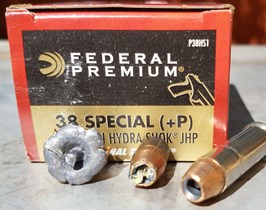
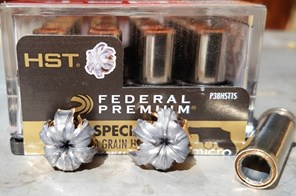
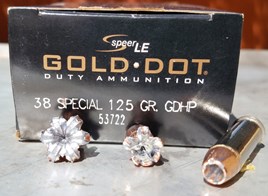
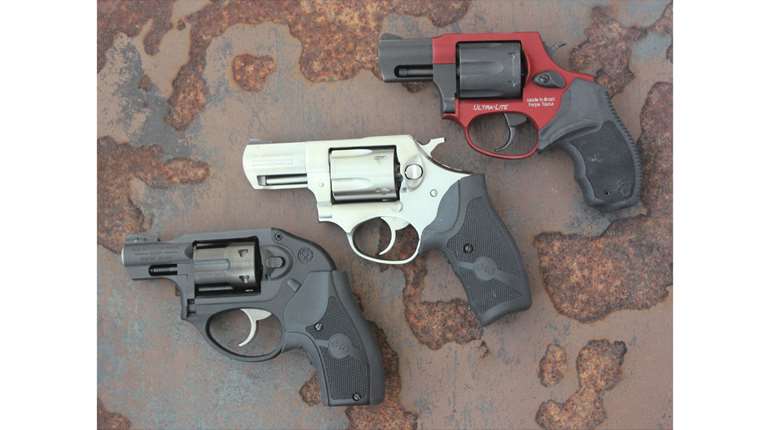
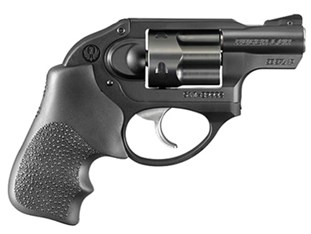
Given the commonality of concealment revolvers chambered in .38, I thought it might be interesting to see how this cartridge fares from a short barrel using part of the FBI testing standard. I used calibrated 10 percent ordnance gel from VYSE and fired five rounds of each load shown on the accompanying chart into gel from a distance of 10 feet. Two rounds of each load was fired into an uncovered block to establish a baseline for penetration and expansion. This was followed by firing three rounds into a block that had been covered with a layer of denim, a layer of insulation and two layers of cotton shirt material. This clothing barrier is an important factor as the materials used can plug a bullet’s cavity and render the hollow point ineffective. I did not test any of the loads through other FBI test barriers such as automotive sheet metal or auto glass since these barriers are probably not a major concern for the average citizen. For the terminal ballistics tests, I chose a Ruger LCR with a 1.87” barrel. Small revolvers of this type are a common choice for lawful concealed carry and make an excellent choice for discreteness.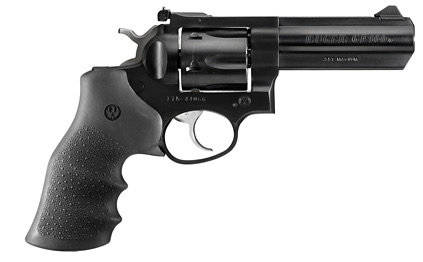
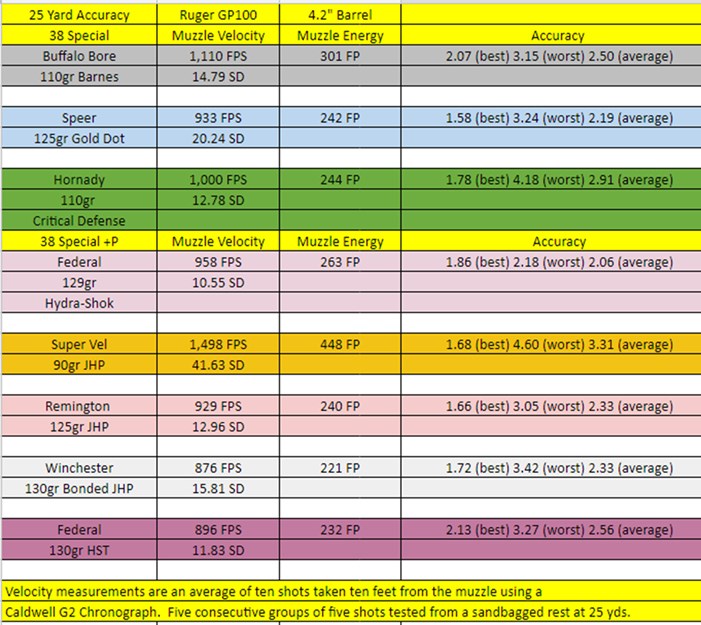
Also tested was accuracy. Each load was fired off the bench from a distance of 25 yards. I fired five groups of fire rounds each for a total of 25 rounds with each load. For this testing, I used a Ruger GP100 with a 4.2” barrel. The GP100 represents a common size and is likely to be carried while hiking or placed within a home in case of emergency.
All told, I tested a total of eight different loads for both accuracy and terminal performance. The .38 Spl. has always been known as an accurate cartridge and most loads produced groups under 3”. The .38 Spl., particularly when used in a full-sized handgun like the GP, is an easy cartridge to shoot and one that does not produce a great deal of recoil or muzzle blast. This is the case even with the hotter +P loads. These same loads, when fired from the lightweight LCR, were still easily manageable and I had no difficulty controlling these revolvers with any of the loads tried here.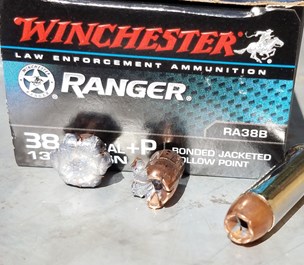
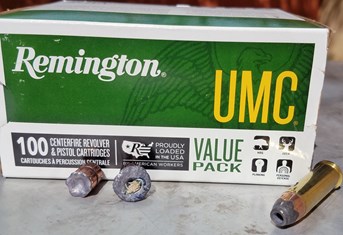
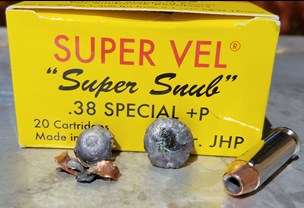
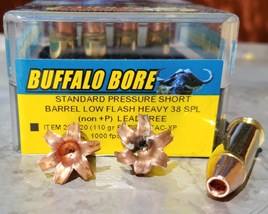
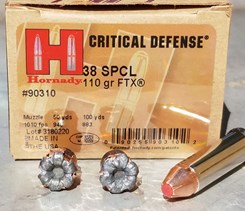
My testing indicates that the .38 Spl., when fired from a short-barreled revolver, struggles to meet the minimum FBI penetration specs. Most loads either lacked the velocity to reach the minimum 12” mark or were of an unreliable design that would not reliably expand when passing through clothing. None of the loads tested met the penetration requirements in both bare gel and gel covered by clothing but, were I to choose to carry any of these loads, I'd pick one that expands consistently while meeting the minimum penetration spec after passing through the clothing barrier. The accompanying photos summarize my testing. Bullets recovered from bare gel are pictured on the left while bullets recovered from clothing are on the right.
The bottom line is that the short barrel really appears to tax the 38’s performance. However, a gun carried on the body is more effective than one that's left at home in the safe. Keep in mind that careful ammo selection may just make all the difference.
Terminal Ballistics (Ruger LCR)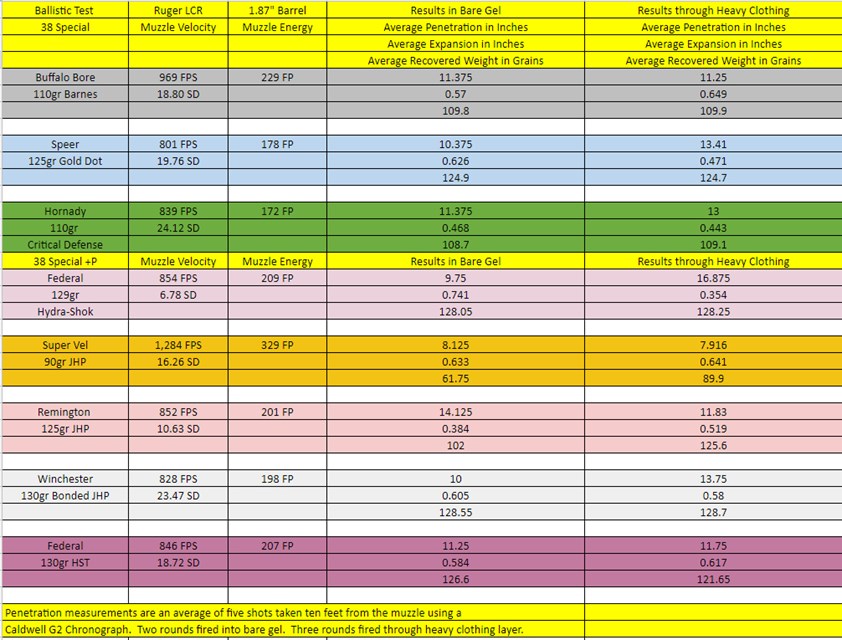
Accuracy (Ruger GP100)