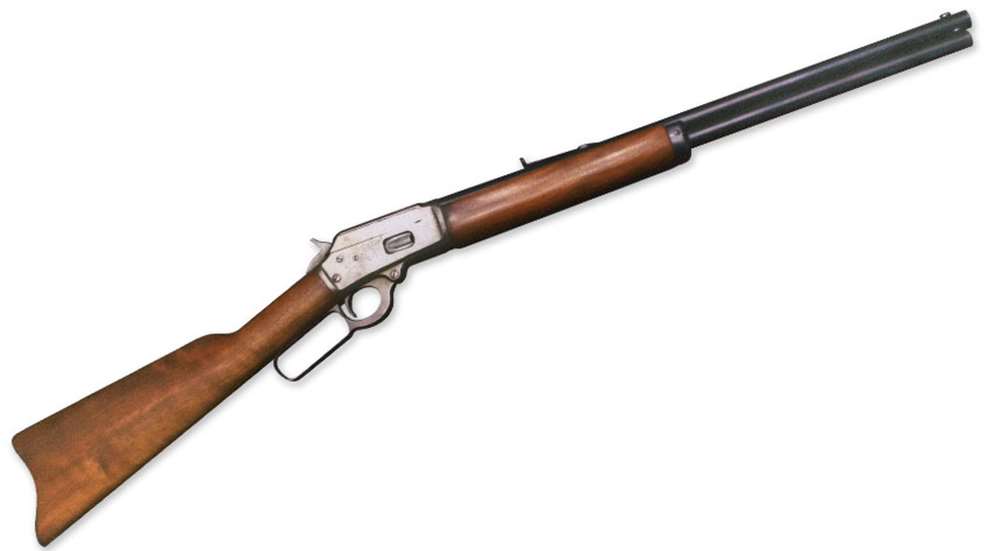
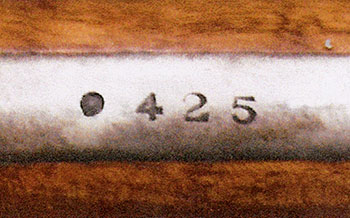
 Q: This .44-40 Win. Marlin Model 1894 lever-action was carried in my father’s police cruiser in Hollidays Cove, W.Va., and is reported to have taken part in the pursuit and stopping of the legendary “Pretty Boy” Floyd in a corn field in East Liverpool, Ohio. Although the Marlin was not fired during Floyd’s apprehension, it was present at the scene. A letter to Marlin Firearms Corp. produced no information at all. I was interested in how old it is. A three-digit serial number, 425, is all that is stamped on the gun aside from patent dates. Interestingly, the barrel’s bore is drilled off-center. I would be pleased if you could give me any information at all as to the age of this gun or its production history. My grandsons want to buy .44-40 Win. ammunition to fire in this gun, but I have told them it is too dangerous to fire modern ammunition.
A: The Marlin Model 1894 lever-action rifle was manufactured from 1894 to 1935. Some 250,000 were eventually built. This very nice repeater was offered for the .25-20, .32-20, .38-40 and .44-40 Winchester cartridges. The earliest rifles were offered in .38-40 Win. and .44-40 Win., so that corresponds with the low serial number on your piece. Model 1894 Marlins were offered in rifle, carbine, baby carbine and musket versions. I would be circumspect about shooting modern .44-40 Win. ammunition in the piece, particularly given its historical significance. If you do intend to fire it, take it to a qualified gunsmith first for approval. —Garry James
Most Popular