Q. I purchased two Belgian-made FN Mauser actions many years ago. They have consecutive serial numbers. I have been unable to ascertain even an approximate date of manufacture. The importer at the time was “Firearms International Corp.” The serial numbers are X-0988 and X-0989. If you can supply a date of manufacture, I would be most appreciative.
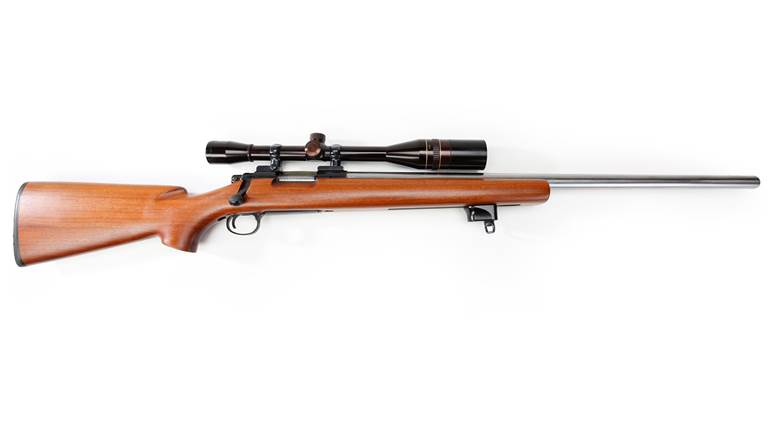
A. Firearms Int’l of Washington, D.C., began offering FN-made Mauser actions and barreled actions in 1947. The first offerings were essentially well-made military style actions, but significant changes and improvements were made over time. In 1957, the zenith was reached with the introduction of the Supreme Model. These actions featured Sako-made adjustable triggers with a sliding safety.
The .30-’06 Sprg. length model, with a 3.375" magazine box, was referred to as the Action No. 1, and the same length magazine model with a magnum bolt face, was known as the No. 7. FN Mauser actions have always been held in high regard. Weatherby used them for its high-performance rifles until 1958, when it introduced the Mark V. Other manufacturers and distributors, such as Marlin, Sako, Colt, H&R and Sears used FN actions to fill-in their center-fire lines. Custom gunsmiths were also a ready market for FN actions.
My reference materials say that the actions were not serially numbered when they left the factory. It was left to the final manufacturing entity to number them when they were barreled and finished. While I can’t say for sure, I suspect that your actions were likely numbered by a distributor or by a custom builder for use as a consecutive pair of rifles. Why they were not completed is obviously open to conjecture.
This “Questions & Answers” was featured in the June 2005 issue of American Rifleman. At time of publication, "Questions & Answers" was compiled by Staff, Ballistics Editor William C. Davis, Jr., and Contributing Editors: David Andrews, Hugh C. Birnbaum, Bruce N. Canfield, O. Reid Coffield, Charles Q. Cutshaw, Charles M. Fagg, Angus Laidlaw, Evan P. Marshall, Charles E. Petty, Robert B. Pomeranz, O.D., Jon R. Sundra, Jim Supica, A.W.F. Taylerson, John M. Taylor and John W. Treakle.
To subscribe to the magazine, visit the NRA membership page and select American Rifleman as your member magazine.
Most Popular