Q. When it comes to lights, I’ve seen a lot more mention of “candelas” being made recently than I have in the past. What is a candela, how does it differ from a lumen and what’s the practical difference between the two from a defensive perspective?
A. How light is measured and quantified is a topic that could fill volumes, involving nuances far more detailed than we have the space to delve into here. And, frankly, such in-depth information isn’t terribly important to the average armed citizen just trying to make an informed purchase of a hand-held flashlight or weapon light—so I’ll try to keep things as straightforward here as possible.
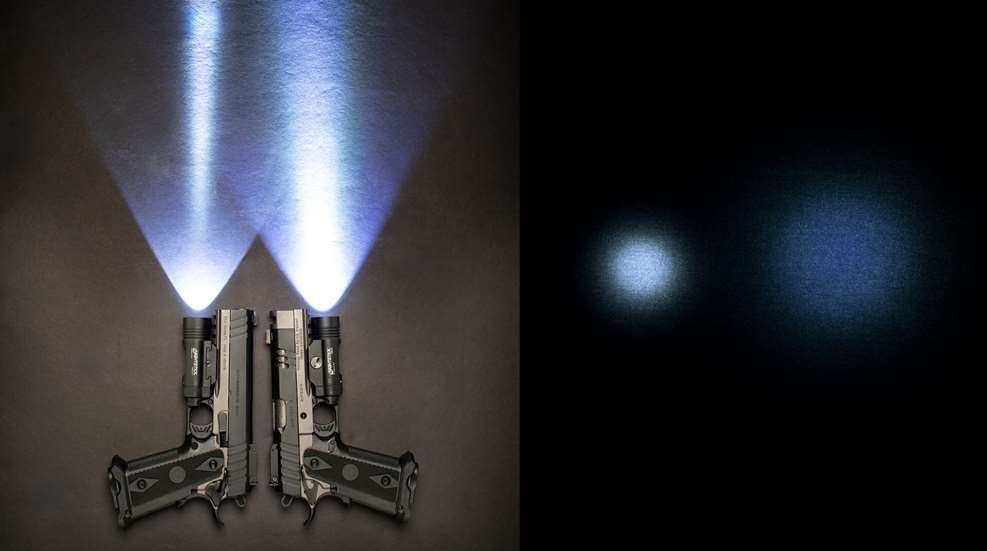
Simply stated, lumens measure a light source’s maximum output power, regardless of direction. Candelas, on the other hand, are a measurement of the source’s focused intensity at a given distance in a specific direction. Lumens have long been the name of the game in the light world, but, as you correctly mentioned, during the past few years more emphasis has been placed on how effectively a given product utilizes its light to illuminate an object or threat downrange, not just its overall “horsepower” in lumens. And depending on the arrangement of a light’s interior reflectors, a light source’s high-lumen output does not necessarily translate to a greater candela measurement.
In flashlight parlance, high-candela models are often referred to as “turbo” lights. While this is an overly simplistic comparison, they can be thought of as spotlights that tightly focus their light into a smaller beam as opposed to a floodlight that illuminates a broader area. As such, a turbo light’s beam will have more reach.
Law-enforcement personnel often favor high-candela lights because their beams can better penetrate tinted car windows. However, because they reflect more off walls and lightly colored objects, turbo lights also create more glare, and, when used with a red-dot optic, have a greater tendency to wash-out the dot reticle. So, it is ultimately up to you to determine whether a high-candela light or one with a less intense, wider-angled beam shape is the best fit for your needs.
—Kelly Young, Senior Executive Editor
Most Popular