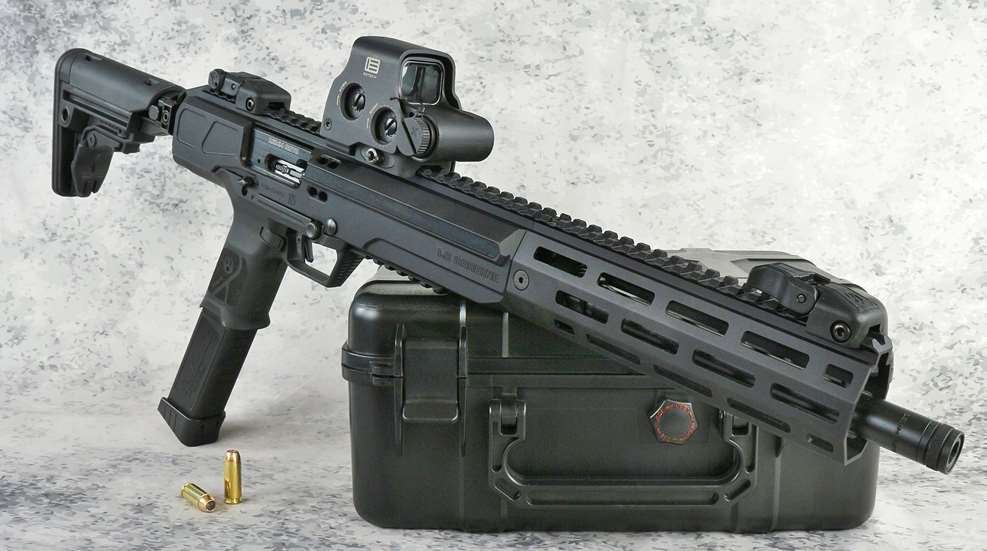
The 10 mm Auto isn’t exactly synonymous with controllability when fired through a handgun. Abandoned by the FBI for the difficulties it created with training new agents, particularly those with smaller hands, it nonetheless has maintained a following among civilian shooters. And better pistols have since shown the world that the 10 mm can, indeed, be harnessed—providing the firearm community with a semi-automatic chambering that rivals the .357 Mag. in power factor. Following the success of its .45 ACP-chambered LC Carbine, Ruger realized that this platform would go a long way toward making the 10 mm Auto more controllable and fun to shoot, and a new 10 mm version was released last year.
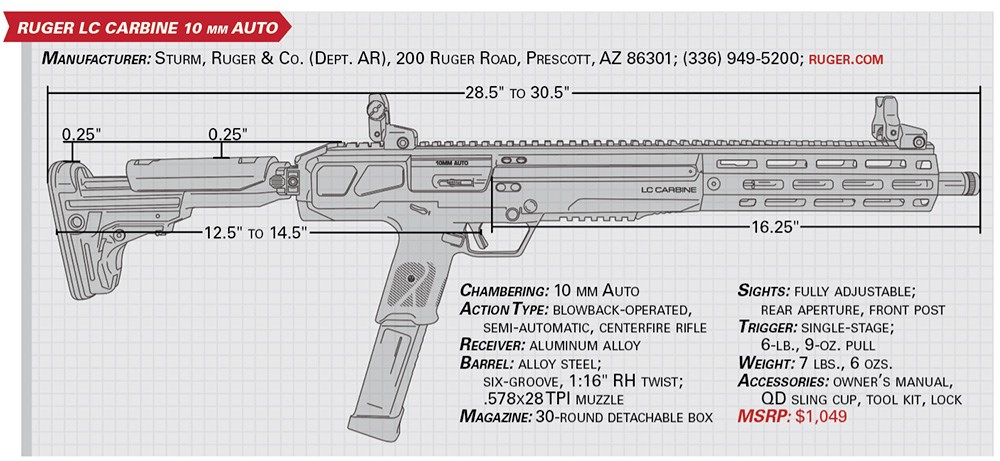
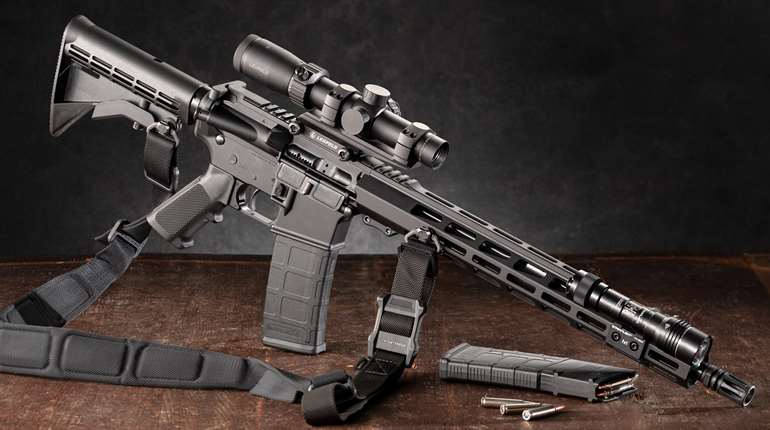
Ruger’s 10 mm LC Carbine is a semi-automatic long gun that works on the straight-blowback principle. When fired, the same energy that drives the projectile down the bore pushes back on the bolt, which extracts and ejects the case while re-cocking the internal hammer. A recoil spring returns the mechanism to battery, chambering a fresh cartridge in the process. Ammunition is fed from a Glock 20-pattern magazine, with a 30-round variant made by SGM Tactical included in the box.
While 10 mm Auto may seem too energetic to function safely without a locking breech, Ruger’s carbine imparts enough delay through the sheer mass of its two-piece bolt. Designing the system so that the buffer assembly runs above the rear part of the bolt instead of behind it allowed Ruger to keep the carbine impressively compact and well-balanced.
The lower half of the rifle is similar to any modern polymer-frame pistol; the magazine well is located within the pistol grip. Nods to southpaws include the reversible non-reciprocating charging handle and magazine-release button and bilateral thumb safeties—which complement the safety blade inside of the trigger shoe. The only control that is hard-wired for right-handed operation is the bolt stop.
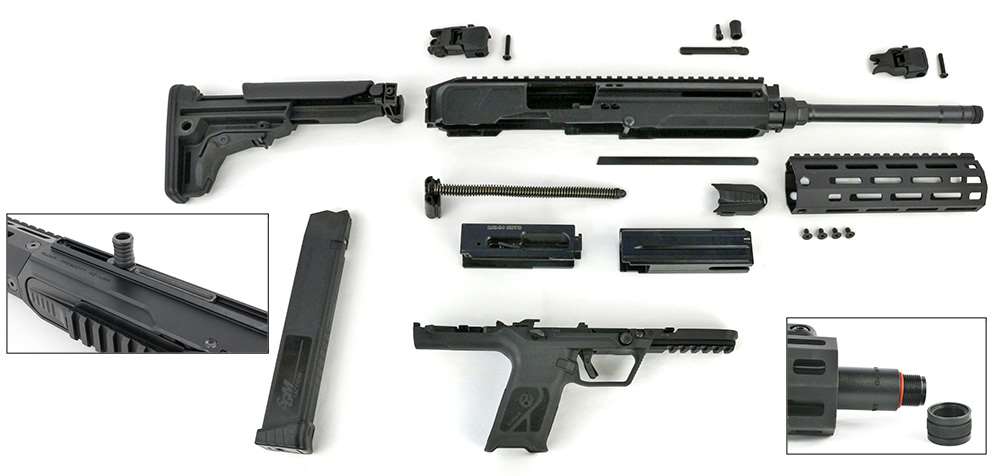
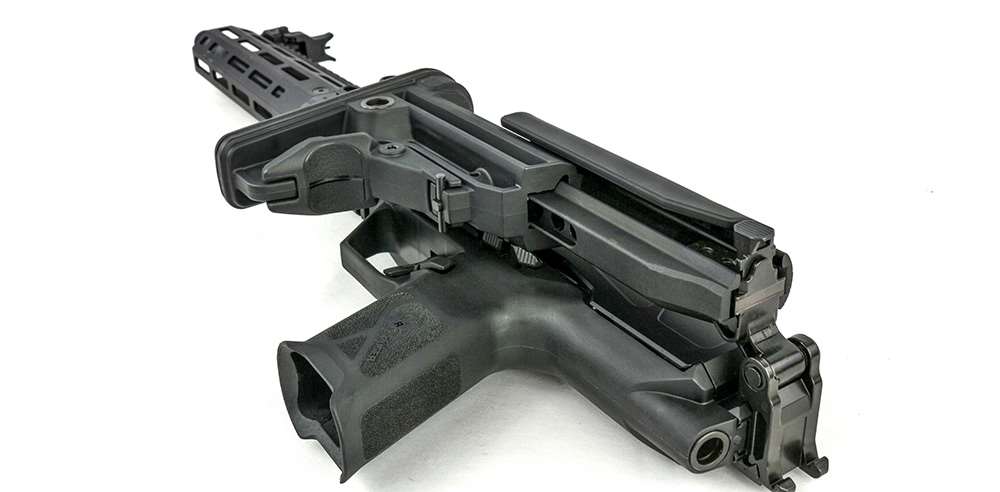
The upper receiver is machined from aluminum alloy, and a full-length Picatinny rail atop it merges seamlessly with the one cut into the 7.5"-long aluminum alloy free-floating handguard, which features seven sides of M-Lok for the mounting of accessories. At the rear end is a vertical Picatinny section that is the attachment point for the adjustable stock. Aside from its variable length of pull, it can also be folded for easy storage. The folded stock locks into place alongside the receiver under detent tension.
Aside from making 10 mm Auto easier to control, chambering it in a carbine increases its downrange velocity and energy thanks to a longer, 16.25" barrel. The LC Carbine’s barrel is attached to the receiver using a barrel nut, and its muzzle is threaded .578x28 TPI for the addition of a flash or sound suppressor. As the extra barrel length also affords the propellant ample space in which to burn, shooters may find the latter more beneficial.
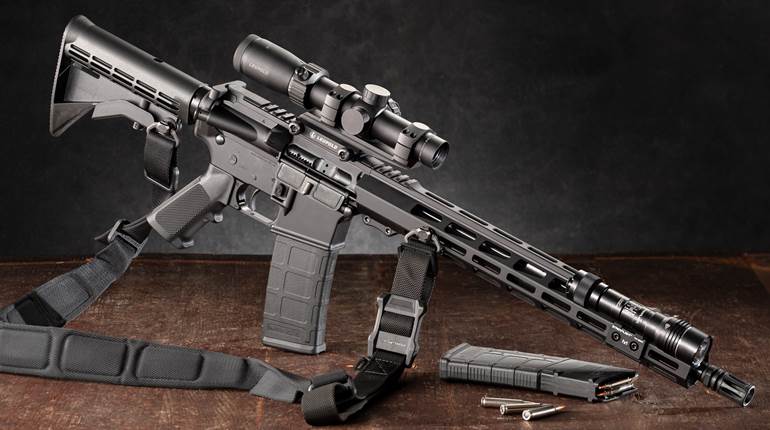
Ruger furnishes the LC Carbine with a set of fully adjustable flip-up aperture sights. However, we mounted an EOTech EXPS3 for our function- and accuracy-testing. We also used a wide variety of ammunition types, displaying the versatility of this cartridge. Federal’s Punch and Nosler’s ASP self-defense loads were selected, as was Remington’s new Core-Lokt Handgun offering to see how the firearm would fare as a woodland game-getter.
Our initial shots helped us gauge the carbine’s consistency, which was certainly impressive; at 50 yards, all three types of ammunition were capable of printing groups that measured less than 2". We also marveled at the velocities that 10 mm Auto reached through a carbine-length barrel. With respect to recoil, a few of our testers admitted they had forgotten that they were shooting a 10 mm. The shooters ranged in height and stature, which gave us an opportunity to utilize the adjustable stock, making the overall experience more comfortable for all involved.
We finished the testing by engaging an array of steel targets that ranged from 25 yards out to 100. Here, we were able to get a feel for the LC Carbine’s ability to recover from recoil and transition to the next target. The evaluation was an overwhelming success, as the firearm delivered on its promise of controllability. Having a balance point closer to the shooter’s core, coupled with its compact overall length, made for snappy swings between targets and agile movements between firing positions.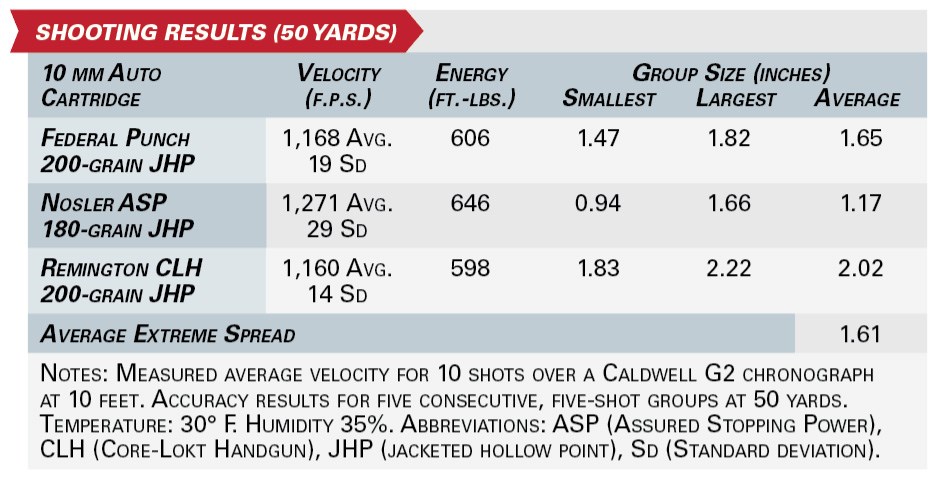
By the end of our range day, we had fired more than 180 rounds without a hiccup. We were hard-pressed to find fault with the LC Carbine during the range session but did need to consult the owner’s manual during disassembly. The only other thing we would like to see is a flush-fit magazine to make bench and prone shooting more comfortable, but, as G20 magazines are fairly common, one can be sourced by the shooter with ease.
Overall, we give this firearm our highest recommendation to the shooter looking to more effectively harness the 10 mm Auto, the hunter looking for a lighter brush gun or the enthusiast who simply enjoys giving steel and paper their just deserts.