Every year at SHOT Show, Canik always showcases a new product spotlight. For the last three years, I've ended up reviewing these guns for NRA Media.
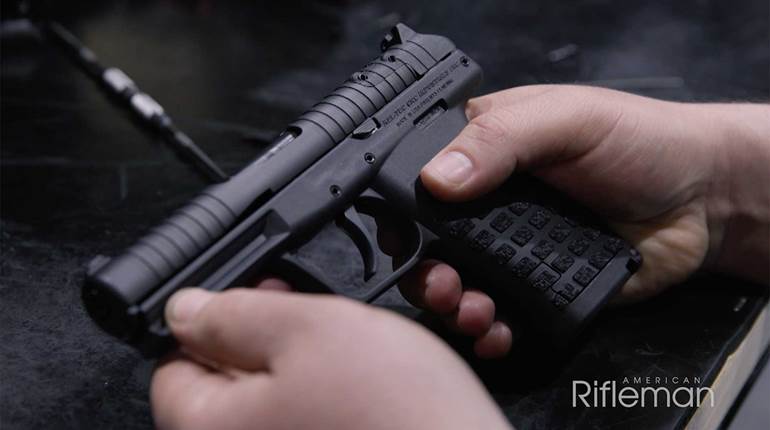
In 2023, it was the all-steel Canik Rival-S. In 2024, it was the Canik TTI Combat. This year, the company introduced the Canik Mete MC9 Prime, a large-but-slim carry pistol that lies in the same peer group as other models like the Glock 48, SIG Sauer P365 X-Macro, IWI Masada Slim Elite and Springfield Armory Hellcat Pro. In addition to being Canik's premium carry-gun offering, the Mete MC9 Prime also holds the distinction of being the first American-made Canik firearm. It's produced in the company's fairly new Florida facility.
Pistols like the Glock 43 and original SIG Sauer P365 kicked off a trend of striker-fired polymer 9 mm pistols that were thin and easy to carry. In the US pistol market, the effects of this trend have been substantial to the point where nearly every major manufacturer now offers slim carry guns. Even HK threw its hat into the ring in 2025 with the launch of the HK CC9. And the new Mete MC9 Prime isn't Canik's first foray into micro compacts; they've had the existing MC9 product line since 2023. Lately, the slim trend has been shifting designs towards better shootability and increased capacity while retaining those thin frames that make them easy to carry.
Canik MC9 Prime Overview
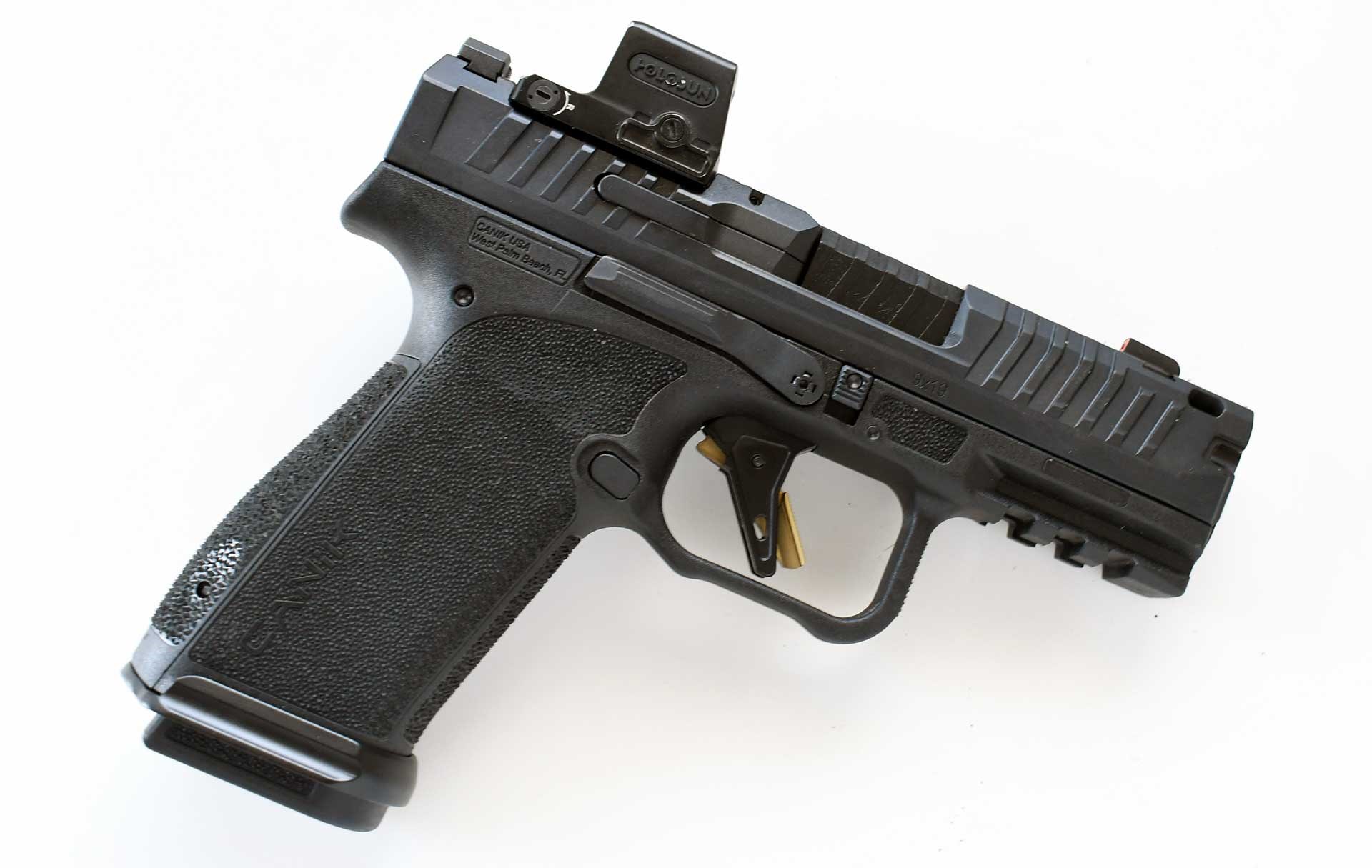
The Canik Mete MC9 Prime is the largest member of the Canik MC9 product line. Mechanically, it follows the same blueprint as other Canik pistols—it employs the signature Canik operating system originally derived from the Walther P99. Similarly, the Mete MC9 Prime retains the manual of arms that is common for most other Canik pistols. Its controls and the way the pistol disassembles are all identical.
The Mete MC9 Prime is also feature-packed with a lot of thoughtful and well-considered details. It neither looks nor feels like a "flattened version" of a Canik Mete SF. Canik's design team objectively did a great job in this handgun's execution. For starters, the MC9 Prime arguably has one of the best-feeling triggers in the slim-gun product category. Moreover, the Mete MC9 Prime is one of the few "slim" guns of any size that offers a pair of fully ambidextrous slide-stop levers. Amidst the crop of modern thinner carry guns, this feature is conspicuously missing in this product category. To my knowledge, the HK CC9 is currently the only other ultra-compact with fully ambidextrous controls.
Finally, the Mete MC9 Prime has the de-rigueur-for-2025 integral compensation ports right before its muzzle. Since this pistol has so many interesting features, I think its porting is actually somehow the least interesting aspect about it.
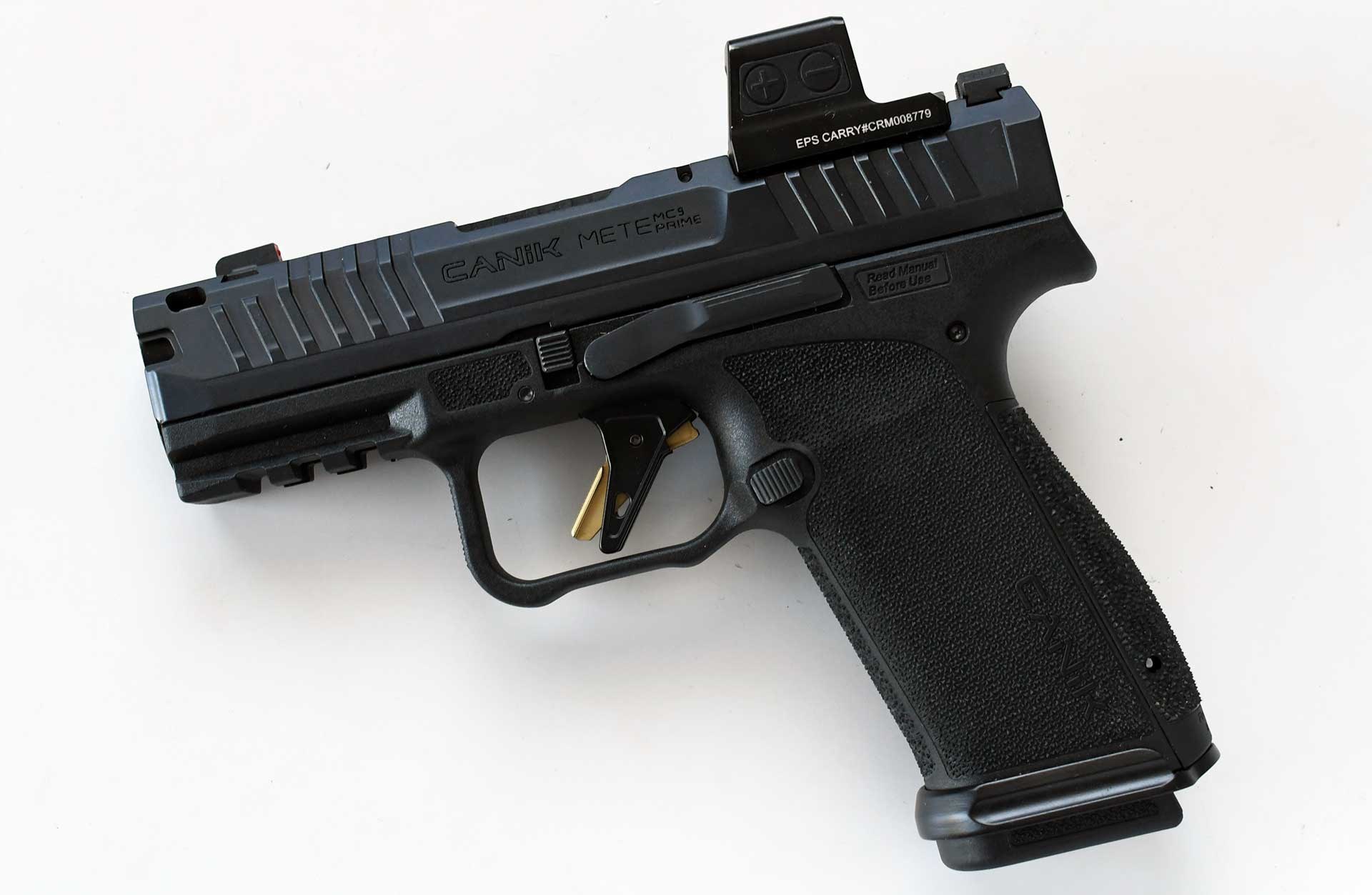
The Prime's Grip & Frame
Like other Canik pistols, the Mete MC9 Prime retains a useful neutral grip angle. Even though it ships with its own 17-round standard-capacity magazines, the gun readily accepts any other standard 18-round Canik magazine. Despite the fact that the Mete MC9 Prime feeds from a "standard" magazine, its frame is only around 1.117 inches at its widest point (not counting the removable magazine well). For the sake of comparison, the Prime's fantastically slim "peer," the SIG Sauer P365 FUSE/X-Macro, is roughly 3/100ths of an inch slimmer along the same part of the grip.
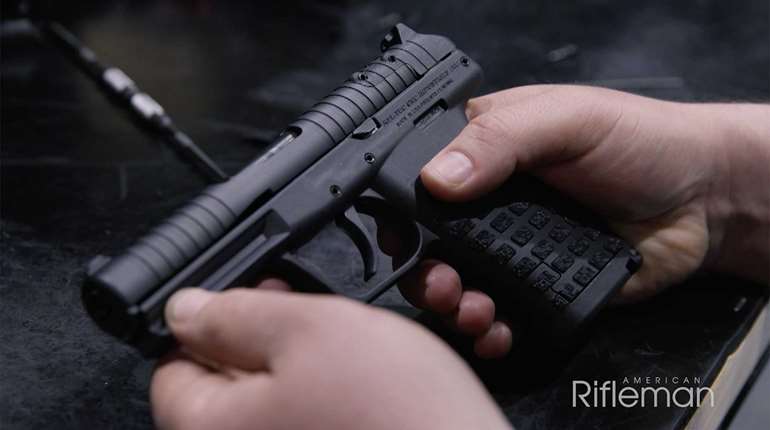
In addition to being fairly slim while still feeding from regular-sized double-stack magazines, the MC9 Prime's grip itself isn't a copy-paste job from other Mete pistols either. Not only is the trigger guard decently undercut, but its grip is also subtly re-contoured and re-textured. The MC9 Prime borrows the same 3-D pyramid texture first seen on the TTI Combat's grip. More importantly, the texture covers even more surface area on the right and left sides of the grip.
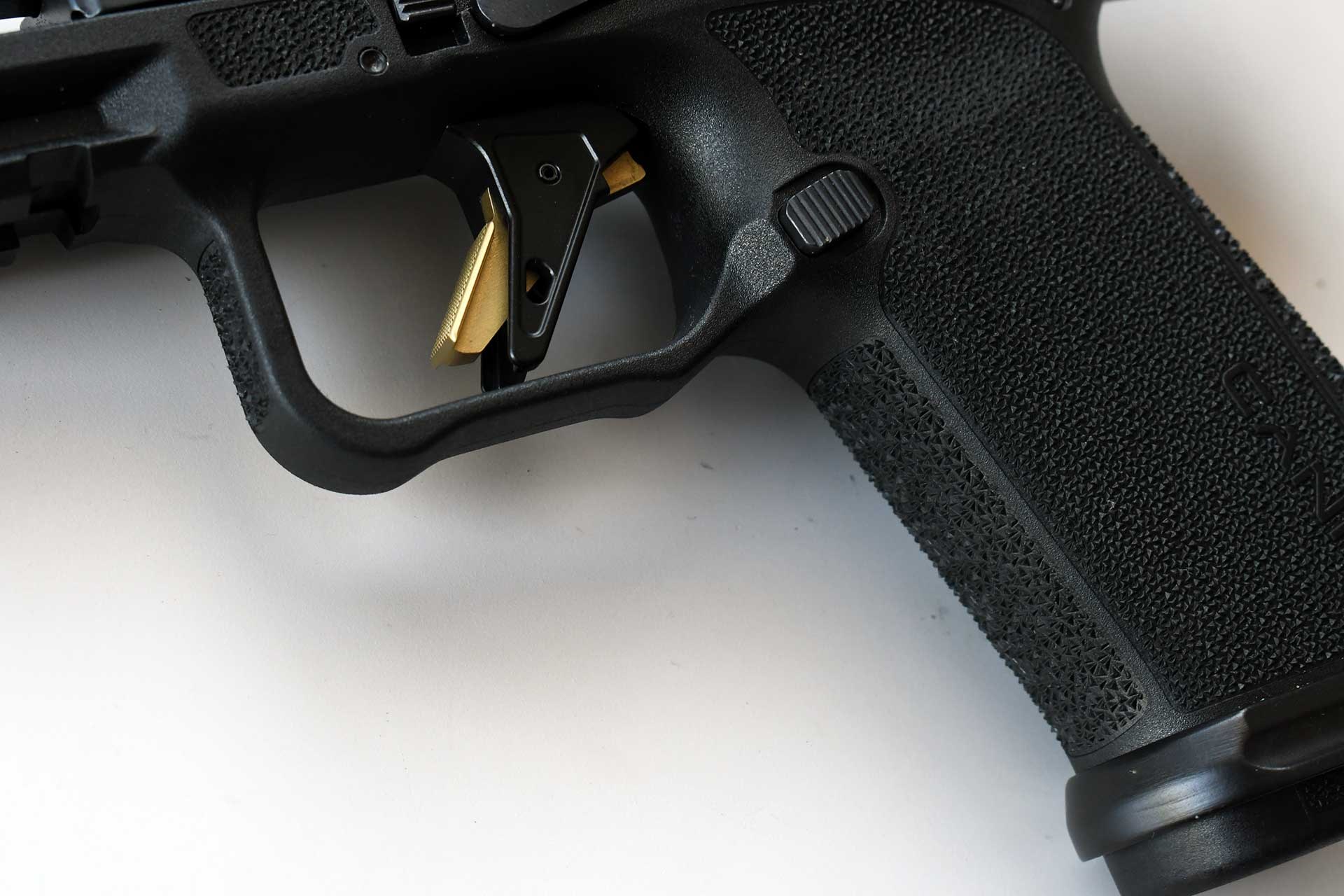
Typically, the grip texture on polymer-framed Caniks lines up with the magazine release and the bottom portion of the trigger guard. On the MC9 Prime, the grip texture continues well above that point — it's almost flush with the slide-stop levers. Moreover, the texture found on the MC9 Prime's front straps and interchangeable backstraps is thoughtfully slightly coarser. It's a great detail considering how critical the front and rear surfaces are to successful handgun shooting.
 The MC9 Prime's dust cover area includes a Picatinny accessory rail. Since it's compact-sized, it will accommodate smaller tactical lights like Streamlight's TLR-7 series.
The Prime's Sights, Slide & Barrel
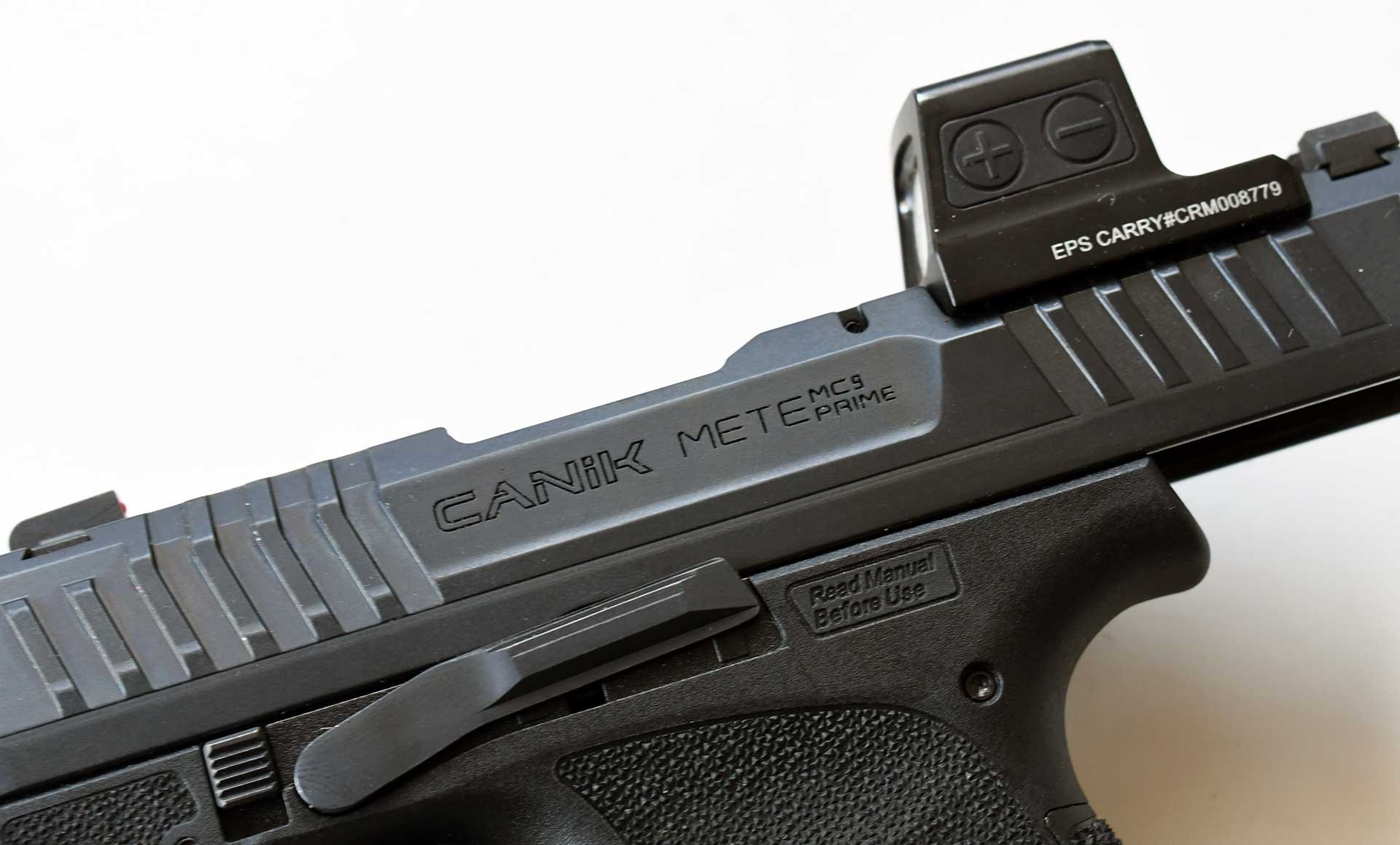
Like other Mete pistols, the factory-cut MC9 Prime slide accepts Shield RMSc footprint optics. Likewise, one can easily mount any Holosun-K footprint optics without any extra shims or adapters. I mounted the Holosun EPS Carry that Big Tex Ordnance loaned me for this review. The EPS Carry's overall profile, enclosed-emitter design and low deck height lends itself well for carry firearms.
The EPS Carry's low deck height allows it to adequately co-witness with the MC9 Prime's standard Night Fission tritium defensive sights. This set of sights has a contemporary design. The front sight has a bold, easy-to-see orange insert with a central tritium vial while the rear sight is serrated and has a wide square notch. Two smaller auxiliary tritium vials are also included on the rear sight.
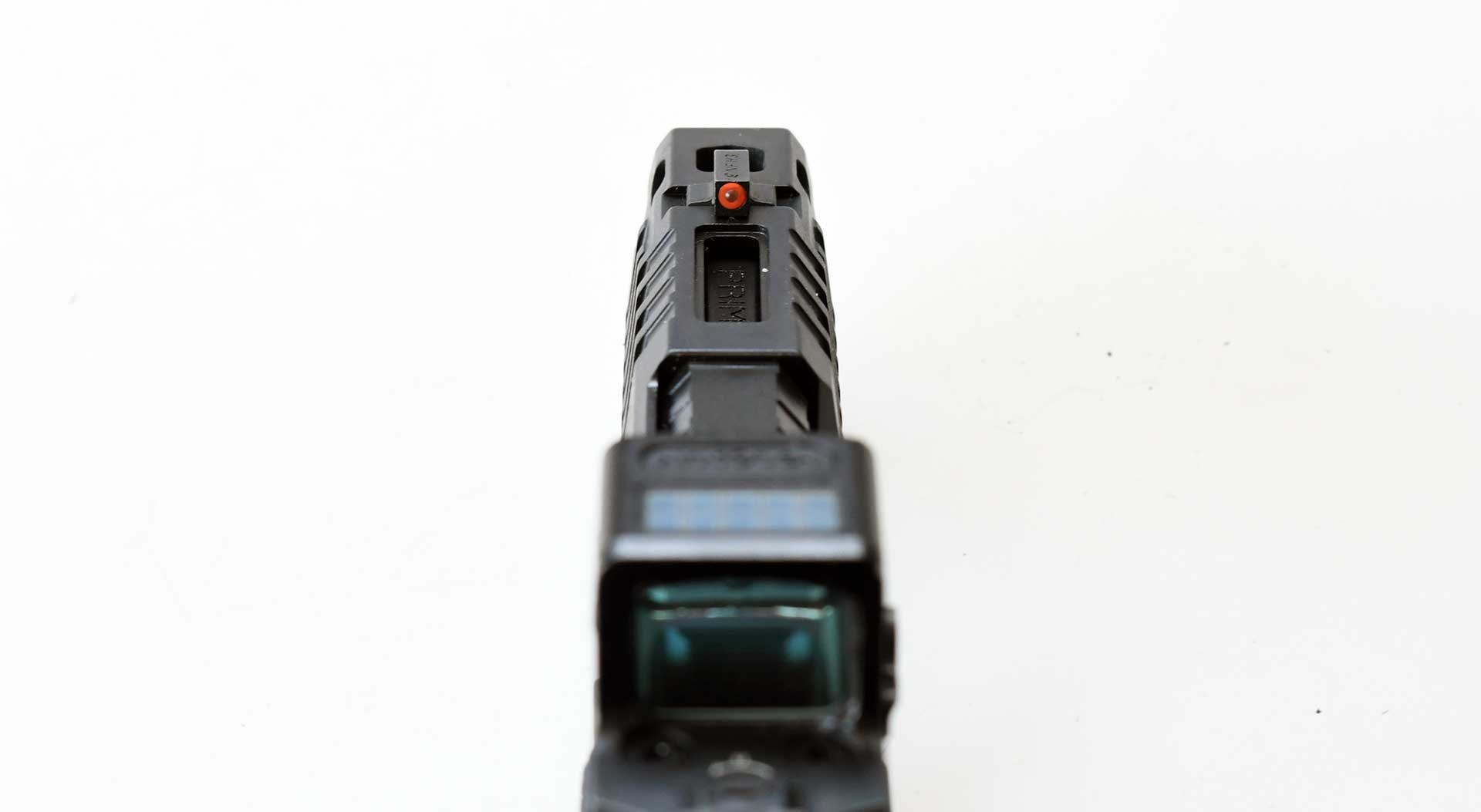
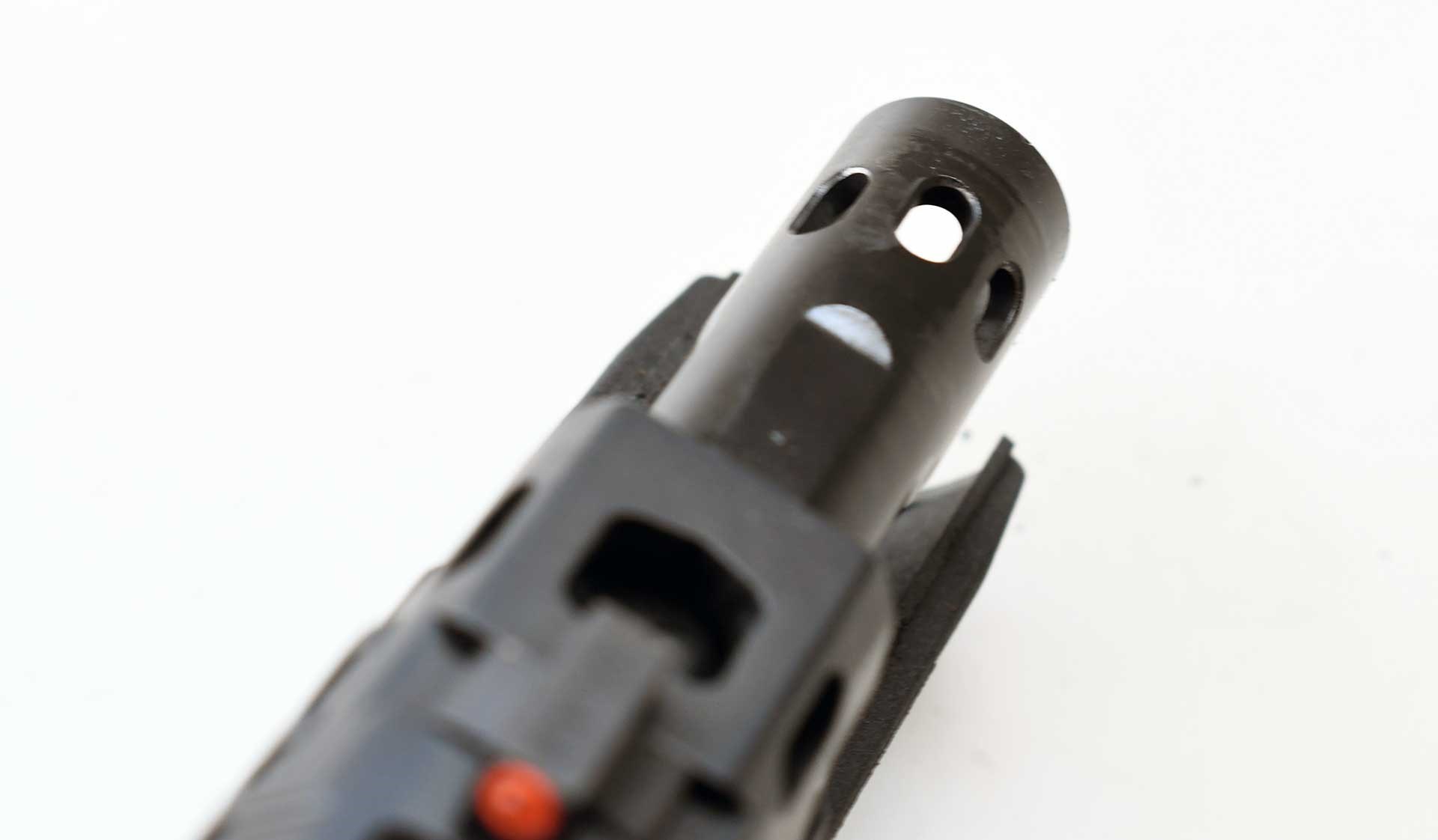
MC9 Prime slides have the same futuristic style and pattern seen on the Canik Rival series. Both the front and rear of the slide feature coarse, easy-to-grab slide serrations. They're much needed since the Prime's recoil spring assembly lies on the stiffer side — necessary to handle 9 mm at its size. Prime slides also have a lightening cut towards the front, behind the front sight. Furthermore, they have three distinct ports that line up with the MC9 Prime's unique ported barrel, also with three distinct ports just before the muzzle. These ports are located at 11, 12 and 1 o'clock, respectively.
The 3.64-inch barrels found in these guns are semi-fluted with some decorative flats. However, the flats cease at the muzzle and the fluting flares back out to the barrel's default outer diameter. All porting is located directly over this area. Internally, this same area just behind the muzzle is counterbored, and the crown is set back approximately 0.59 inche deep. With the exception of the two additional ports, this arrangement is quite similar to what I saw in the Smith & Wesson Carry Comp. Effectively, this handgun has a 3-inch barrel with a half-inch freebore ported area.
The Mete MC9 Prime's Trigger
Canik directly incorporated its highest-performance flat-faced trigger shoe into this gun. It's the same trigger shoe found in the Rival, Rival-S and the TTI Combat models. However, the poundage on the MC9 Prime's trigger is heavier given its mission of being a defensive carry pistol. The difference in trigger breaks between this gun and my TTI Combat is quite noticeable. Using my electronic trigger-pull scale, ten trigger pulls averaged 4 pounds, 4.5 ounces (for reference, the TTI Combat's trigger averaged 3 pounds, 6 ounces).
Fully prepping the trigger (including depressing the bladed safety over the trigger face) causes it to move approximately half an inch until it meets its breaking point. After the shot, the trigger lets out approximately a quarter inch before reset. As a rule of thumb, "slim" carry guns don't necessarily have the best or most agreeable triggers. By virtue of Canik retrofitting the MC9 Prime with its best-performing trigger, I wouldn't be surprised if this pistol had the best overall trigger among its peer group. More importantly, it lends itself well to increasing the user experience while shooting this pistol, especially when paired with a red-dot sight and its phenomenal grip.
The Mete MC9 Prime at the Range
I benched the Canik Mete MC9 Prime at 15 yards and fired three different types of factory-loaded 9 mm cartridges to evaluate its accuracy following the NRA's classic protocols. I included Hornady's Critical Duty 124-grain +P JHP, Eley's Minor Competition 115-grain FMJ and, as a wild card, Hop Munitions 147-grain Poly FP — an actual action pistol competition cartridge primarily meant for full-size guns. Hop Munitions loads this cartridge to a subsonic standard muzzle velocity of 900 FPS to make a minor power factor.
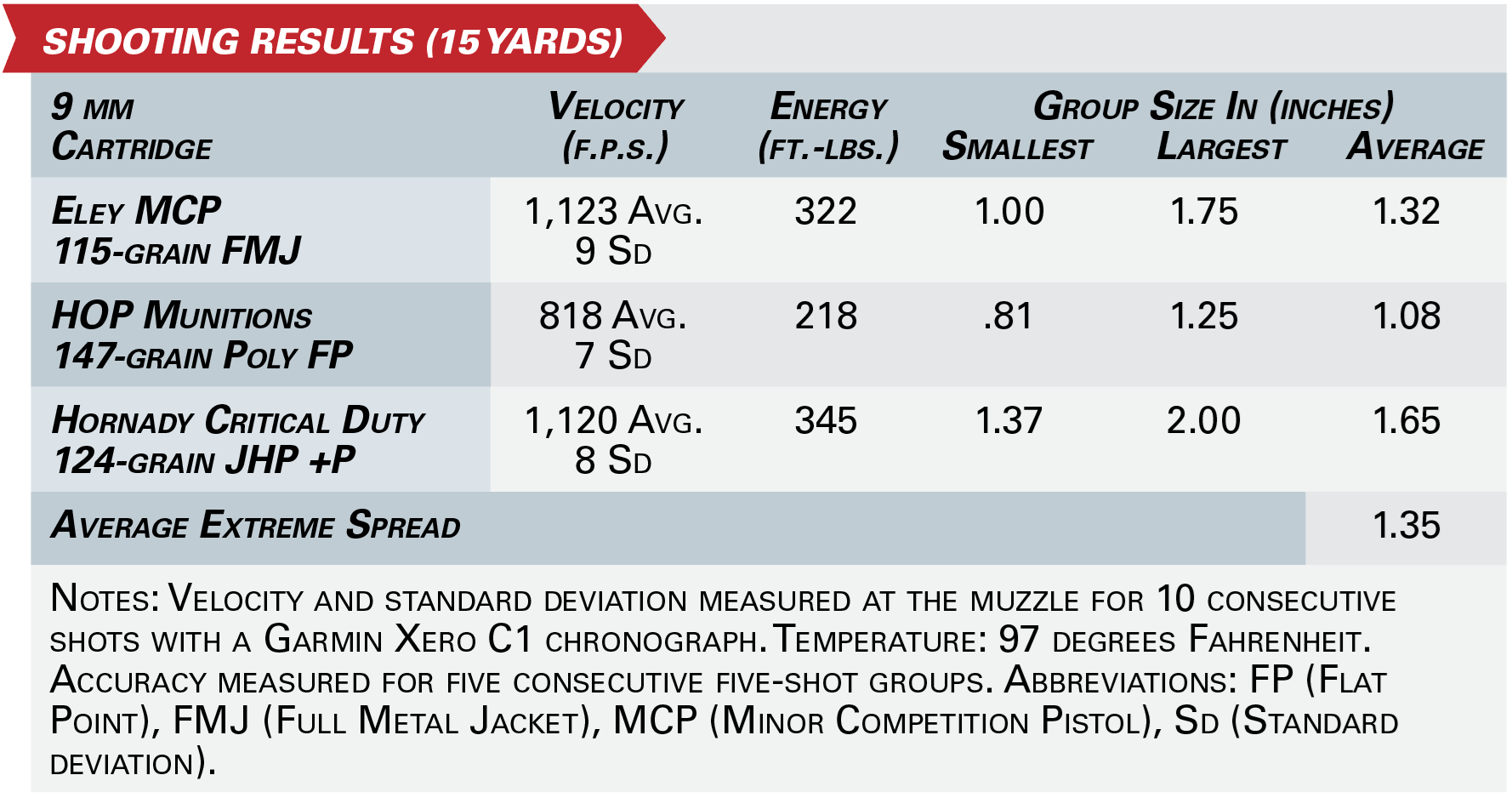
I deliberately folded Hop Munitions' polymer-coated, flat-point round into my review because I wanted to see whether the Mete MC9 Prime could handle subsonic 9 mm out of the box. It's something many guns can't do without changing springs, but this pistol cycled the ammo without issue. It also proved that the Prime had no trouble feeding ammunition with a flat-point profile.
At 15 yards, I had no issue printing reasonable groups with any of the three cartridges mentioned. Were I to consider carrying this pistol defensively, I'd be inclined to further test it with something like Federal's 147-grain HST ammo, given that this pistol seems to have an affinity for heavyweight 9 mm bullets.
The Takeaway
Overall, I found the Mete MC9 Prime to be quite user-friendly. These attributes perhaps boil down to two primary components: its outstanding grip and its trigger.
Lacking any technical equipment, describing felt recoil is always subjective. I thought the MC9 Prime's felt recoil was less snappy than the typical "slim" pistol. While I do think some of this is driven by its integrated porting at the muzzle, I also believe its generous grip design and the way its slide is sprung are also contributing factors.
I could take or leave the porting, but the reason I emphasize the Prime's grip and trigger is because those two are the primary contact points with the shooter's hands. They're also the peripherals used to exert the most control over the pistol. If a handgun were a car, these would be the steering wheel and the tires, if you will.
As a category, "slim" guns tend to be harder to shoot given their shape and size. Relatively speaking, 9 mm is also fairly snappy in slimmer pistols. While the Canik Mete MC9 Prime counters this with its grip, trigger and the porting, it does come at a cost of size. Among its peers, the MC9 Prime is on the bigger and taller side, just like its SIG P365 X-Macro and FUSE counterparts. Given the MC9 Prime's feature set and controls, I do think this pistol could become a contender in its category.
Canik Mete MC9 Prime Specifications
Manufacturer: Canik
Country Of Origin: United States
Action Type: Striker-Fired Semi-Automatic
Caliber: 9mm
Capacity: 17+1
Frame: Polymer
Slide: Steel
Barrel Length: 3.64 inches
Sights: Drift-adjustable serrated Night Fission square notch rear sight, Night Fission tritium front-sight
Trigger Pull Weight: 4 pounds, 4.5 ounces
Length:6.73 inches
Width: 1.16 inches
Height: 5.43 inches
Weight: 23.38 ounces
Accessories: Two 17 round magazines, hardware, carry holster, cable lock, extra backstraps, documentation/manual and hard-sided carrying case
MSRP: $649
Most Popular