In 2024, Winchester Ammunition did something not often done in the ammunition world: introduce a new rimfire cartridge. To boot, the company's new .21 Sharp design was based on one of the most popular and oldest cartridges on Earth: .22 Long Rifle. To better understand what Winchester did in this new round and why they felt the need to update the venerable .22 LR, American Rifleman traveled to Oxford, Miss., to get an inside look. Watch our full "American Rifleman Television" feature segment above to hear Winchester's .21 Sharp story.
"Rimfire is obviously one of the most popular types of ammunition in the world," said Will Moore, new product manager, Winchester Ammunition. "We've got a long and storied history of new cartridge introductions and innovation, whether it's centerfire, shotshell, but specifically within rimfire, .17 WSM is an extremely popular new cartridge that we came out just within the last 10 years, but, with respect to .21 Sharp, we had, for the last several years, really dove in deep on trying to manufacture a lead-free projectile in .22 Long Rifle that was accurate. We couldn't find one in the marketplace. We knew that there was a demand for it and a need for it."
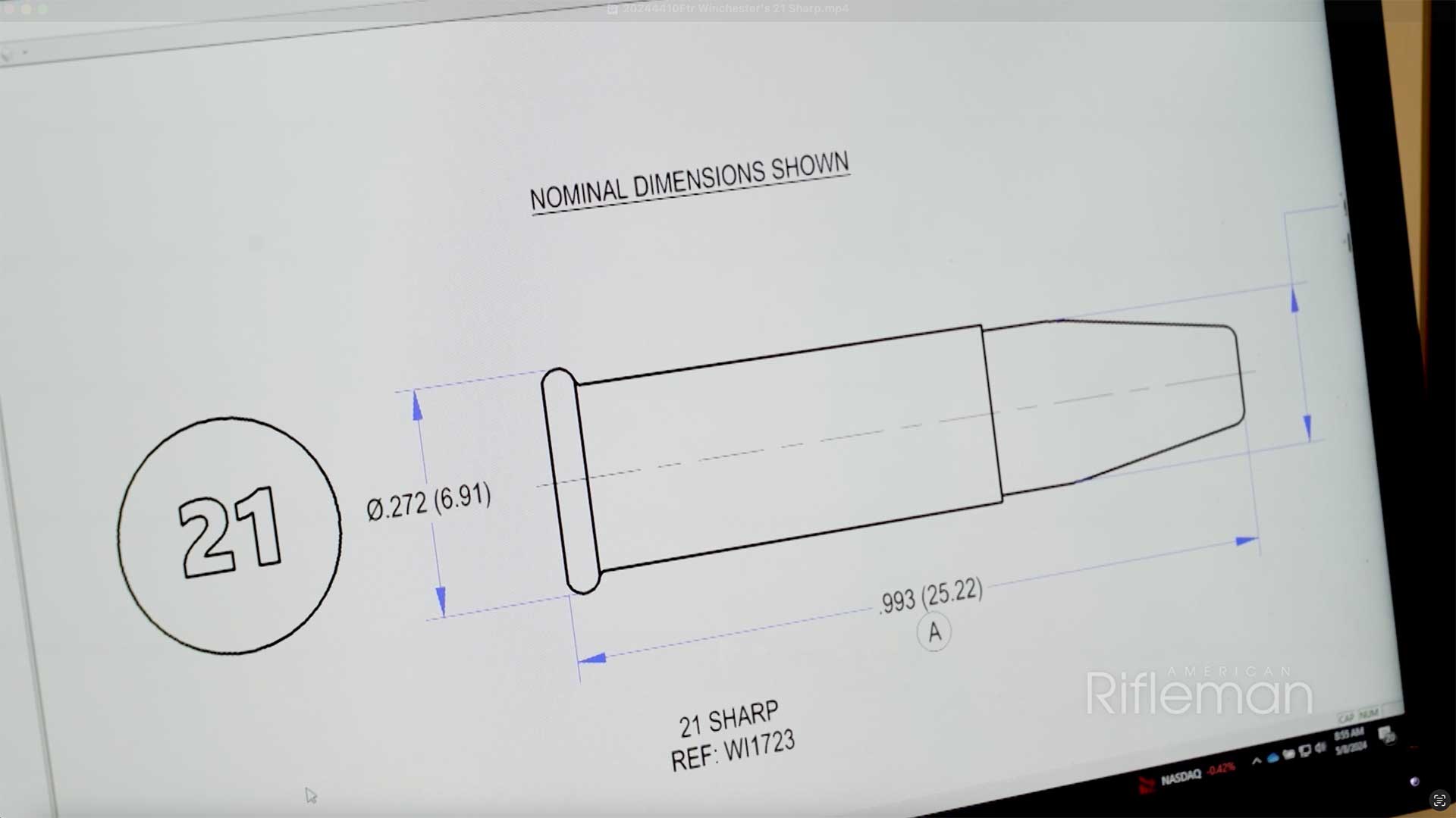
Notably, the need was for an inexpensive, yet capable, rimfire cartridge that wasn't going to cost much more than the cheap and plentiful .22 Long Rifle, yet provided not only greater ballistic capability but also allowed manufacturers to make use of both jacketed and lead-free projectiles. To make it inexpensive, Winchester had to rely on its existing equipment designed to load the .22 Long Rifle.
"We wanted to really take the best of both worlds, keeping all the efficiencies that we've got with .22 Long Rifle and now making a new chamber for it, a new caliber for it, to utilize modern type projectiles, bullets that don't have to have a rebated heel, and have lead obturate out to engage the rifling," Moore said. "We're going to be able to do a lot of cool and innovative things with .21 Sharp that you just can't do with .22 Long Rifle."
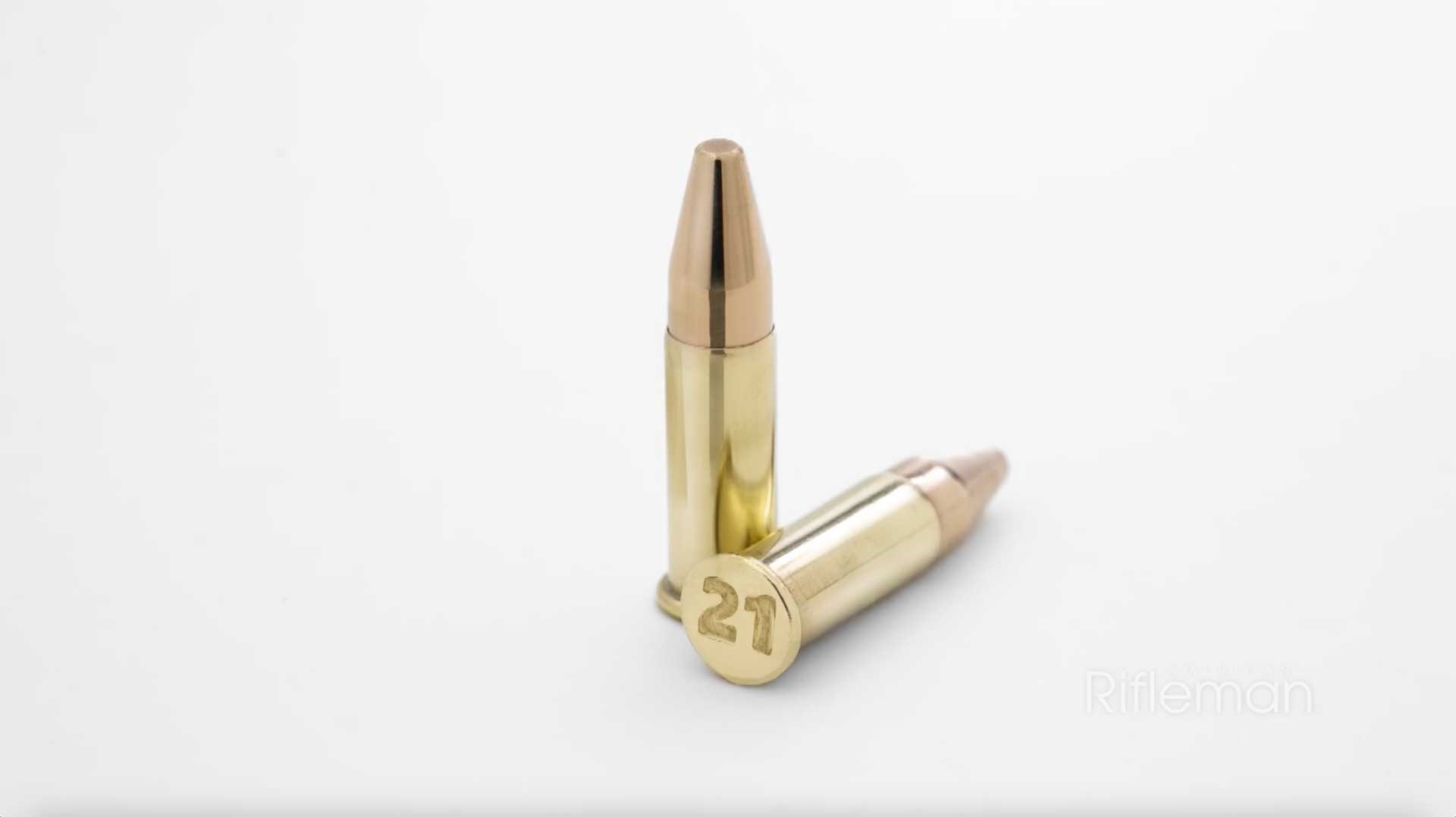
With the new .21 Sharp design, Winchester is now able to load a range of different projectiles. At launch, the cartridge was available with four different projectiles: a 42-grain FMJ, 37-grain Black Copper Plated, 25-grain lead-free Copper Matrix and a 34-grain Super X JHP. Additionally, because the parent case is still the .22 Long Rifle, manufacturers can simply put a .21 Sharp barrel on existing designs made for the .22 LR.
" So .21 Sharp fits that need, very specifically in that it fits in very common rifle platforms that firearms manufacturers will just be able to chamber and put a barrel on a firearm, you know, chambered in .21 Sharp," said Kyle Masinelli, director of innovation and strategy, Winchester Ammunition. "So the, the entry point on the rifles and the overall cost and investment is going to look very similar to .22 Long Rifle. However, the cartridges are designed around all the technology that's incorporated in a magnum rimfire cartridges."
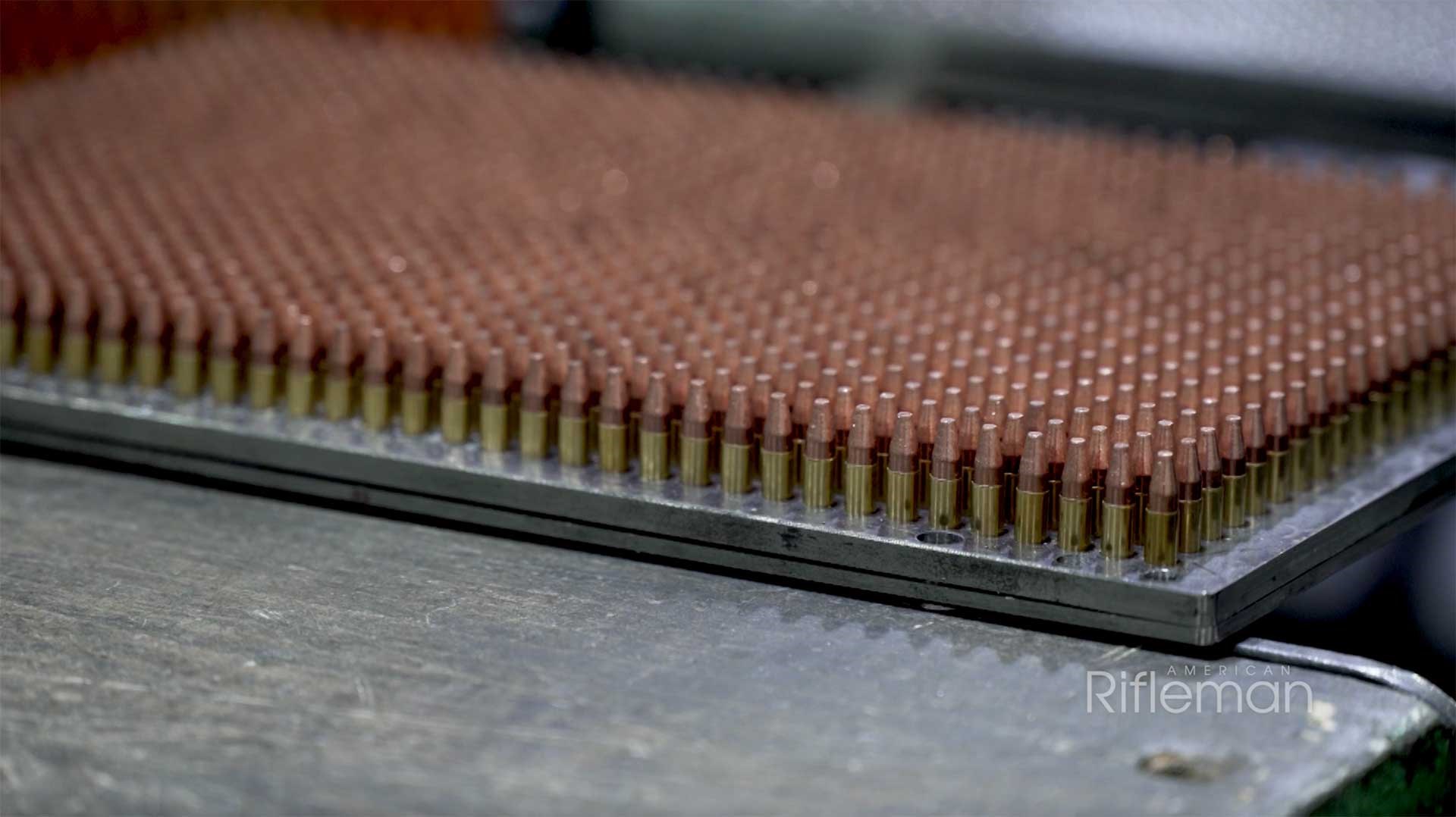
Because the design ultimately does away with the archaic rebated heel found on the original .22 Long Rifle design, the .21 Sharp provides some additional performance and offers some flexibility to manufacturers and consumers, particularly shooters in areas that prohibit lead ammunition.
"[The] .21 Sharp was based around jacketed projectiles primarily," Masinelli said. "So because of that, traditional lead core projectiles, whether it be a hollow point projectile or a full metal jacket projectile designed for plinking, that improved accuracy is going to be present in that firearm system. However, because that firearm system was designed around jacketed type projectiles, we can go with monolithic. We can design monolithic projectiles of lead-free design in various different constructions to where we can get all the benefits that you'd see in accuracy performance in lead-free projectiles in a centerfire type rifle design, but provide that at a very attractive price point and a low cost to participate in within a rimfire cartridge."
To watch complete segments of past episodes of American Rifleman TV, go to americanrifleman.org/artv. For all-new episodes of ARTV, tune in Wednesday nights to Outdoor Channel 8:30 p.m. and 11:30 p.m. EST.