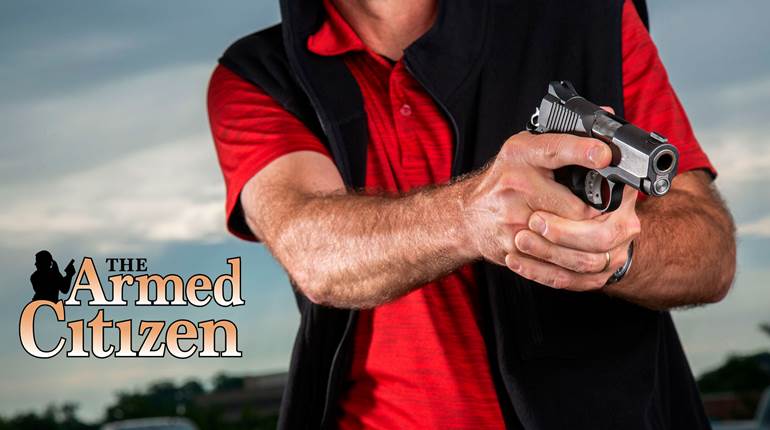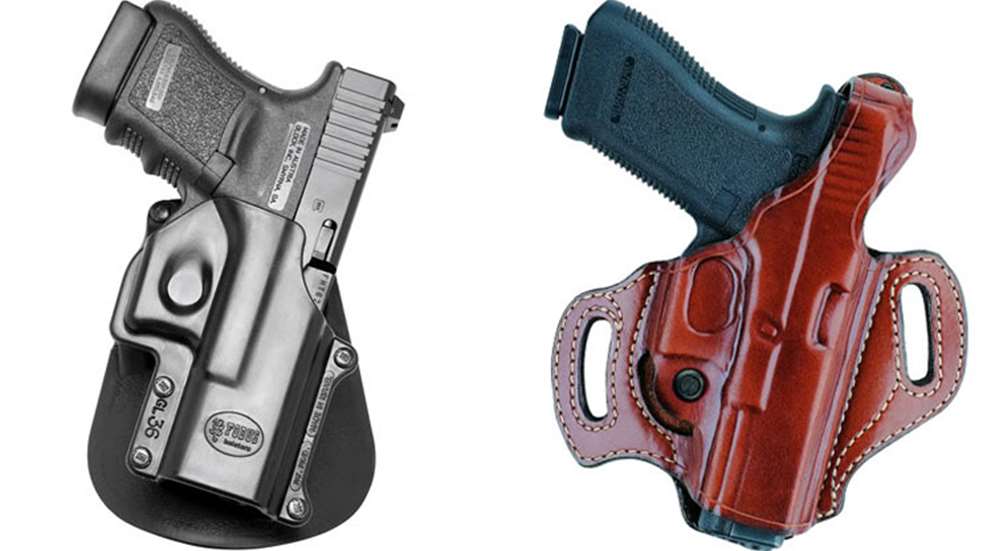
Among the various characteristics that are important to the selection of defensive holsters is the ability to access the defensive handgun with just one hand. The reason for this is that the other hand may be very busy during a criminal attack.
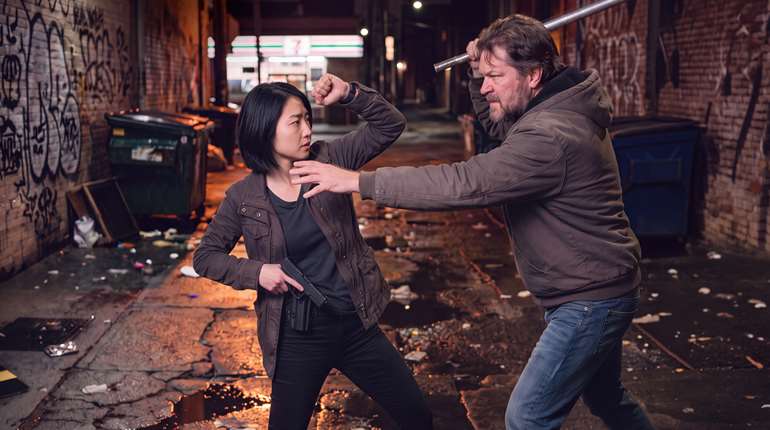
Criminal attacks are not static affairs like training on the shooting range. The bad guy is not going to just stand there, exactly 15 yards away, with his body squared toward you. In reality, the criminal is going to be advancing so rapidly that you may well have to use your support hand to push him away while you reach for your handgun. It is also a simple fact that criminals tend to run in packs and you may have one attacker trying to grab you while another points a firearm at you. Being able to access your defensive handgun with one hand is important in a real-world scenario.
Unfortunately, too many women are carrying their handguns in purses. And some men have even begun to use shoulder bags (“man purses”) for the same purpose. And many folks, men and women alike, are relying on fanny packs to carry their hardware. These carry methods nearly always require two hands to get the handgun into action.
Even worse are the ankle holsters that some people favor. Yes, they do a good job of hiding a small handgun. But they require a person to either kneel or stand on one foot while getting the pistol into play. It is fairly easy to see why kneeling or standing on one foot is not a good position to be in when a crook is in your face. In addition, one hand has to pull up the trouser leg while the other goes for the defensive handgun.
While these carry methods might be alright for carrying a second handgun, they should not be used to carry the primary defensive pistol. It is far better, not to mention quicker, to have the handgun concealed somewhere in the upper portion of your body. Any of the various waistband holsters and shoulder holsters will give a quicker draw and, more importantly, a one-handed draw.
Give some thought to your carry method and give it the one-handed test. Your life could very well depend on it.
Most Popular