This article, "I Have This Old Gun: Montgomery-Ward's Western Field Model 10," appeared originally in the May 2015 issue of American Rifleman. To subscribe to the magazine, visit the NRA membership page here and select American Rifleman as your member magazine.
During the first part of the 20th century, when the United States was transitioning from an agricultural to a more urban nation, inexpensive shotguns were the first choice for farmers and city dwellers who needed, respectively, a tool for keeping the fox from the henhouse and the means for an affordable and enjoyable weekend afield.
Thus, the single-shot, smoothbore shotgun reigned supreme, as it was less expensive than a double, and relatively trouble-free. It became many a boy’s first gun, as well as a working tool on ranches and farms. During the Great Depression, such guns were the means for putting meat in the pot.
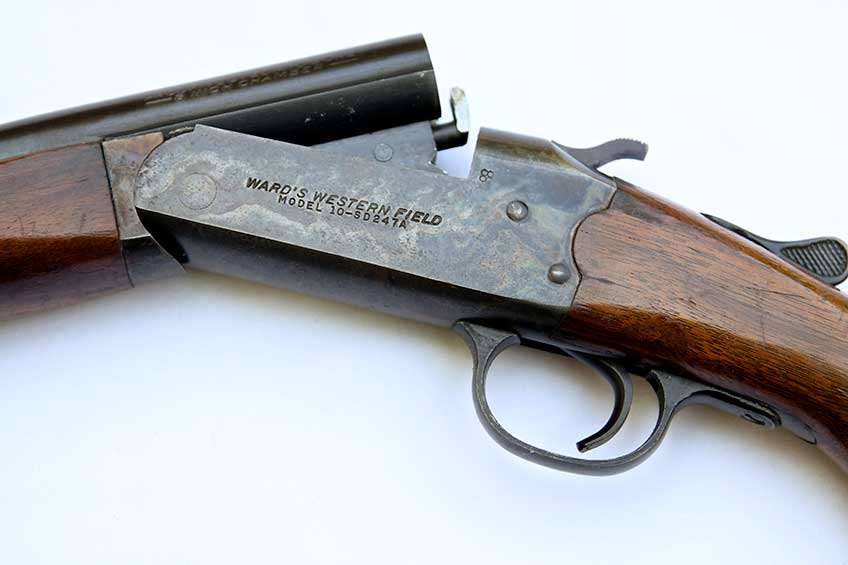
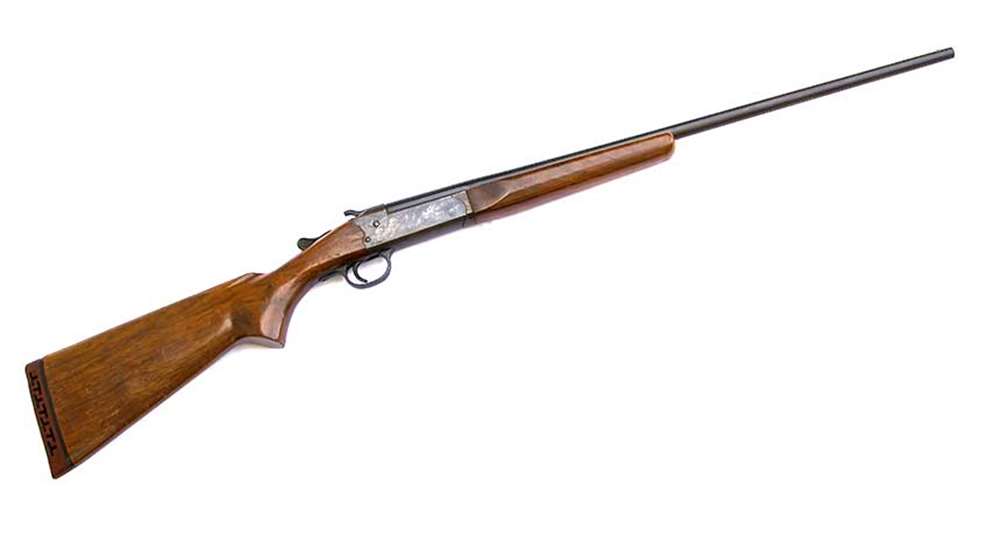
Many companies turned out countless thousands of these no-frills single-shots in 12, 16 and 20 gauges, as well as .410 bore. The gun shown here is a classic example of these ubiquitous break-opens. It is stamped “Ward’s Western Field,” which was a private brand sold by Montgomery Ward through its stores and mail-order catalogs.
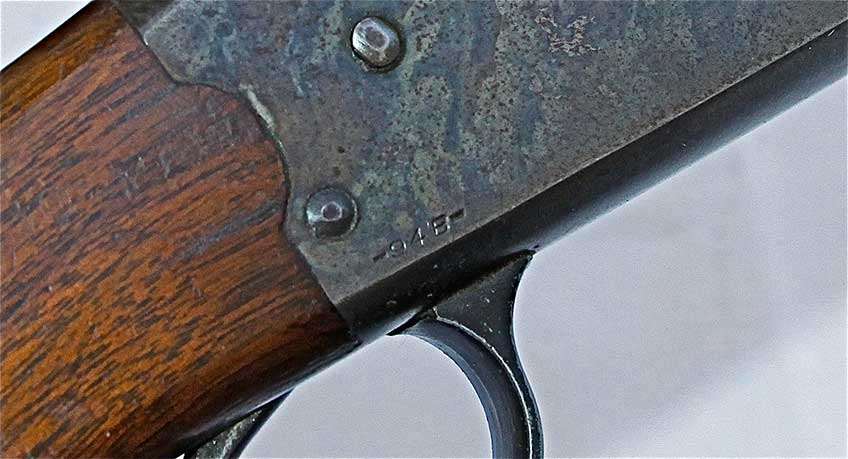
Although the “Western Field” name was also used by others, including Iver Johnson, the subtle “94B” stamped on the lower-right-hand portion of the receiver tells us this gun is actually a Stevens Model 94B made by Savage Arms after it had purchased the J. Stevens Arms & Tool Co. in 1920.
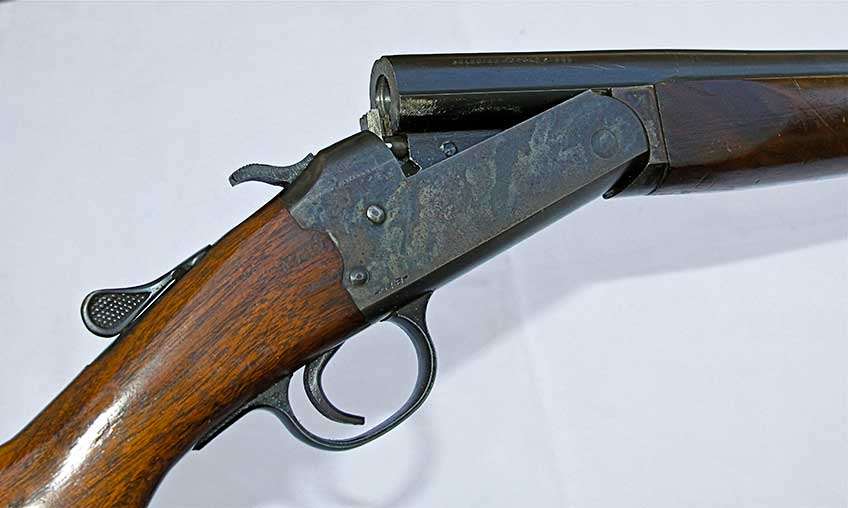
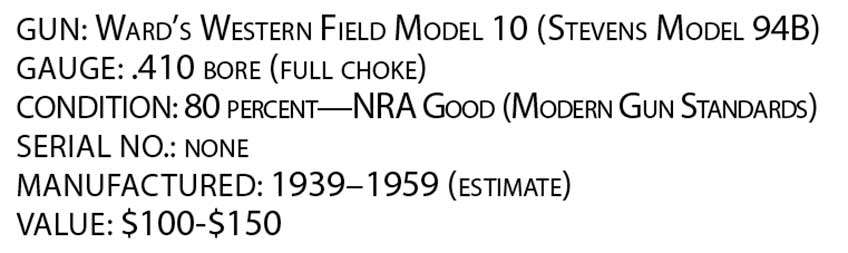
The Stevens Model 94B was first produced in 1929 and remained in the line until 1969. Unlike the larger 12-ga. versions, this well-used, full-choke .410 bore (along with the 16 and 20 gauges, which featured modified chokes) was built on a smaller frame.
In spite of its economical price (in 1957, for example, it sold for $25.90) these utilitarian guns exhibited a number of desirable features, including a rubber recoil pad, case-hardened frame, automatic ejector, two-way opening lever for both right- or left-handed shooters, and a rebounding hammer, later changed to a half-cock.
This version, made before the Gun Control Act of 1968, bears no serial number and, not surprisingly, came from a Midwestern farm. It shows heavy use, yet still locks up tightly.
However, as Steve Fjestad states in the Blue Book of Gun Values, “To date there has been very little interest in collecting Montgomery Ward guns, regardless of rarity... As a result, prices are ascertained by the shooting value of the gun, rather than its collector value.”
Nonetheless, it is a good example of the utilitarian firearms that have played important roles throughout our nation’s history.
Most Popular