Drilling Down Into Ruger’s Past

by
posted on September 12, 2017
** When you buy products through the links on our site, we may earn a commission that supports NRA's mission to protect, preserve and defend the Second Amendment. **
drilling.jpg

William B. (Bill) Ruger and partner McMillan Clements formed The Ruger Corp. in 1945, and a small, wood-frame building in Southport, Conn., was leased to serve as a headquarters and machine shop. Although Clements brought in a government hardware contract, it turned out to be a financial liability, and Ruger ultimately bought out Clements. A major hardware jobber from New York then convinced Ruger to design and produce a line of quality carpenter tools, suggesting the risks were minimal and the potential for profits high. With a small crew of machinists and metalworkers, Ruger produced and marketed a line of precision hand drills, spiral screwdrivers and bit braces. But competition was well-established, and Ruger’s high-quality tools proved to be too expensive.

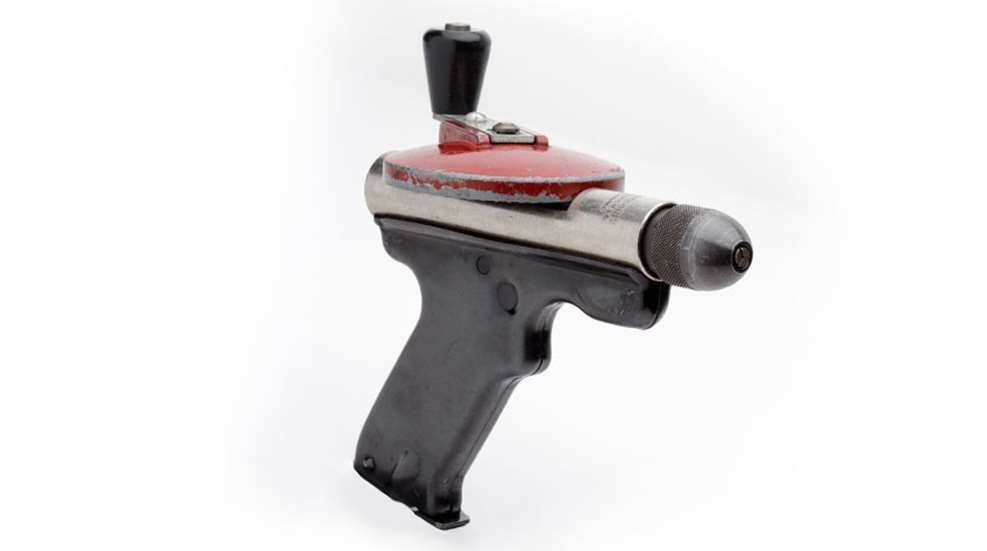
By mid-1948, Ruger’s tool business was in serious financial distress, and the bank foreclosed that fall. Tools, machinery and raw materials were sold by way of a bank auction, although Ruger was able to buy back most of the machinery and raw materials. It was clear from the beginning that Bill Ruger’s eventual goal was to manufacture firearms. The Ruger Corp.’s letterhead read: “Manufacturers: RUGER AUTOMATIC PISTOLS – LARGE SCREW MACHINE PRODUCTS”. The first gun was, of course, the Standard Model .22-cal. pistol, and it’s no coincidence that the now-iconic pistol’s grip frame bears a striking resemblance to that of the hand drill pictured here. 

Additional Reading:
The First Ruger

Latest

Subsonic Ammo 101
Subsonic Ammo 101

Subsonic Ammo 101: Everything The Suppressor Shooter Should Know

Slower-than-sound rounds are an art as much as a science. For target shooting, bullet upset is not important, but if you’re using subsonic loads for hunting or self-defense, it becomes critical.

I Have This Old Gun: Model 1874 Gras Rifle

Following the Franco-Prussian War of 1870, the French military were in desperate need of a new service rifle. Their answer was the Model 1874 Gras, which was largely an update to the earlier Chassepot design.

Compact & Quiet: CMMG's ZEROED Banshee

CMMG has expanded its Banshee line of AR-style rifles with the ZEROED, a firearm that is optimized for suppressor use.

Making the A-Cut: Springfield Armory's COA-Ready Operator, TRP & DS Prodigy Pistols

Springfield has already released a COA-ready version of its Echelon earlier this year, and the new models will bring the A-Cut to the company’s hammer-fired handguns, including the 1911 Operator, 1911 TRP and 1911 DS Prodigy.

Skills Check: Snake-Eyes Drill

Our drill this month trains you to form a stable firing platform early enough to gain optimal control before the shot breaks. Timing is of the essence.

A Memorial Day Conversation With Grey Team

Grey Team was founded to help armed services members and veterans with the physiological impacts traumatic brain injuries, post-traumatic stress disorder, chronic pain and more.

Interests


Get the best of American Rifleman delivered to your inbox.