** When you buy products through the links on our site, we may earn a commission that supports NRA's mission to protect, preserve and defend the Second Amendment. **
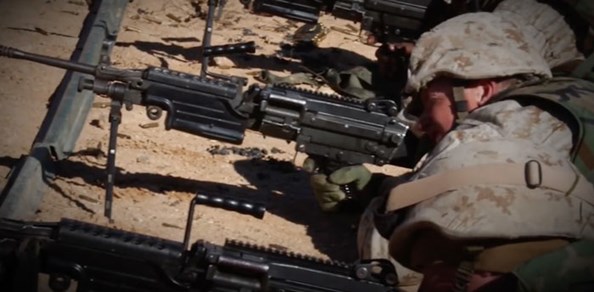
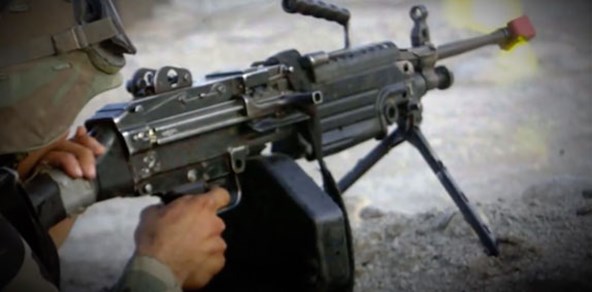
Earlier this year, FN announced the M249S Para, a semi-automatic-only, closed-bolt version of the gun used by elite operators within the U.S. military. But the military's M249 SAW—Squad Automatic Weapon—introduced in 1984, is the Light Machine Gun of U.S. forces and many U.S. allies. It has seen action in every major conflict involving the United States since 1989. Firing the standard 5.56 mm NATO round, the M249 has stood the test of time due to its versatility and adaptability to circumstances. Learn more about the history and evolution of the FN M249 SAW in this "I Have This Old Gun" segment from a recent episode of American Rifleman TV.
Federal Ammunition announced this week that it has entered into an agreement that allows the U.S. Army to utilize its patented Peak Alloy ammunition case technology for use in multiple cartridges and weapon systems.

Each self-defense case is different. As we read them, we find ourselves wondering what we would have done, and then asking if the citizen made the best decisions possible in the worst-case scenario.
Way back in the day, the three Rs of learning were colloquially known as "Readin’, Rightin’ and Rithmatic." In today's modern performance shooting, the three Rs become Rise, Return and Realignment, the core mechanics of recoil control.
Slower-than-sound rounds are an art as much as a science. For target shooting, bullet upset is not important, but if you’re using subsonic loads for hunting or self-defense, it becomes critical.
Following the Franco-Prussian War of 1870, the French military were in desperate need of a new service rifle. Their answer was the Model 1874 Gras, which was largely an update to the earlier Chassepot design.