Q: After speaking to the top shooters in my group of friends about bore cleaning, I’ve learned that there are differing views. One cleans his rifle after every use. The other two clean only sporadically, on the theory that if the bore is cleaned it needs to get dirty again before it shoots consistently. Of the two that don’t clean, one shoots only moly-coated bullets. We shoot both .22 rimfire and center-fire. Which, if either, of these practices is correct?
A: As you have found, there is no unanimity regarding this subject. Quality .22 rimfire bores firing quality ammunition may truly never need to be cleaned. The only reason requiring cleaning is a build-up of lead fouling. A dry bore can cause even the best barrels to foul with quality ammunition, so be sure to oil a clean bore.
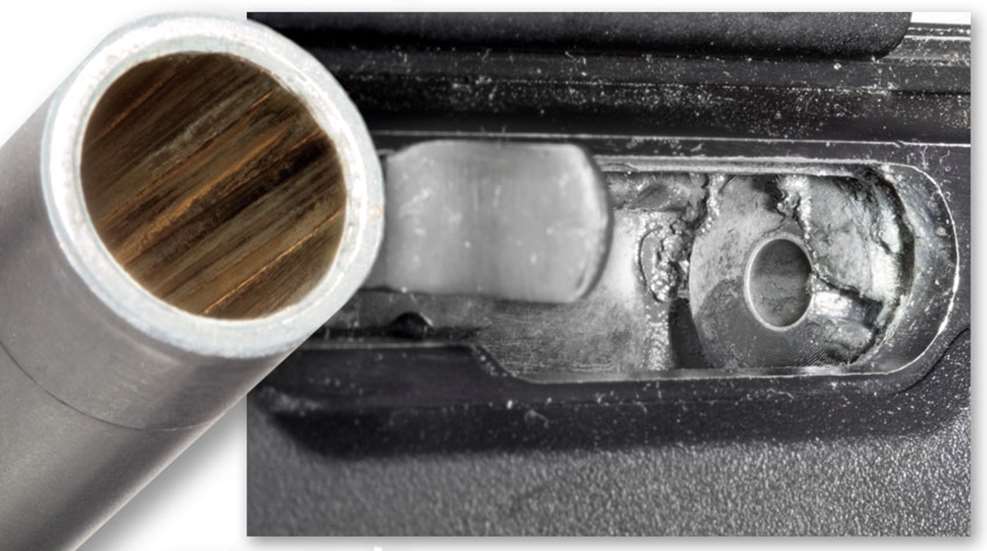
Jacket fouling in a center-fire bore is inevitable, and significant jacket fouling predictably degrades accuracy. Obviously some competition rifles may have to fire 100 or more rounds without cleaning. And varmint shooters fire hundreds of rounds in a day, seldom stopping to clean. Jacket fouling rarely removes itself. On the other hand, if a well-made barrel shows no tendency toward copper fouling, and accuracy does not degrade from shooting session to shooting session, then frequent scrubbing is not warranted.
One final note: Any anticipated extended storage period should be preceded by a cleaning and oiling, for purposes of preservation.
—John Treakle
Most Popular