This year marks the 30th anniversary of the adoption of the U.S. M9 pistol as made under contract by Beretta for the U.S. government. It also likely marks the last year the M9 will be made in Beretta USA’s Accokeek, Md., manufacturing plant. Likely the most tested handgun in U.S. military history, the M9—love it or not—was reordered to the tune of up 120,000 pistols as recently as 2012. And the U.S. Marine Corps seems extremely happy with its version of the M9—the M9A1—which includes better sights and an accessory rail on the dustcover adopted in 2006.
There have been trials and attempts to find a different handgun for U.S. troops, including the dropped Joint Service Pistol (JSP) program. Did you ever wonder where all the “Flat Dark Earth” big services pistols with ambidextrous controls came from? That was the JSP. And there is another in its early stages at the time of this writing. The U.S. Army Modular Handgun Program has 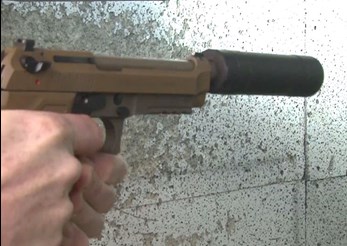 had an “Industry Day” and set out many of the at times contradictory requirements in its RFP for the Army’s next handgun. As I have written previously, I am all for American soldiers having the best tool for the job, and that includes their sidearms. But in looking at programs like the XM8 and Carbine Replacement Program, the Army does not have outstanding track record when it comes to changing over to the next generation of small arms. The U.S. M16/M4 family is better than it has ever been, as are the M249 SAW and M240. There are more modern design available, but are they so superior to warrant a change that merits the increased price tag, which goes far beyond merely the sticker price of a new gun? The training and logistics side of a new “system” can add hundreds of millions of dollars to the cost. So what is the next great leap forward? And how long will it take?
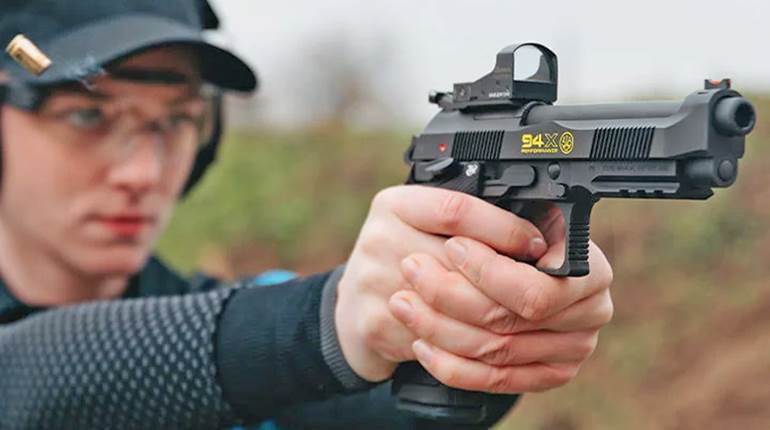
Beretta, under the terms of its contract, has suggested an Engineering Change Proposal (ECP) to the M9, which according to Beretta, gets its new variant of the M9 to around 84 percent of what the Army has said it wants out of the MHP requirements. Beretta calls this new guns the M9A3 (it’s a working name the company gave it, not a title bestowed on the gun by the Army). The biggest changes include things that likely should have been upgraded anyway, including an accessory rail, the thinner Vertec grips and frame for smaller handed soldiers, suppressor capability and windage adjustable, dovetailed front sight.
This week I met with Beretta to have a look at the new gun and get a full briefing on what the company is trying to accomplish. I had a chance to shoot the M9A3 suppressed and unsuppressed, and found the changes substantive and worth doing. In particular, the new grip shape will handle one of the biggest complaints lodged against the M9, and that is grip size. Smaller-handed shooters have trouble getting their hands around big guns, and the M9 is a full-size service pistol. For those who want it the way it is, engineers developed a wrap-around grip that closely follows those of the original.
Regardless of what happens with the MHP—let alone when—the M9A3 is an upgrade in features to a well-proven handgun. And for those reasons alone it is worth a close look.