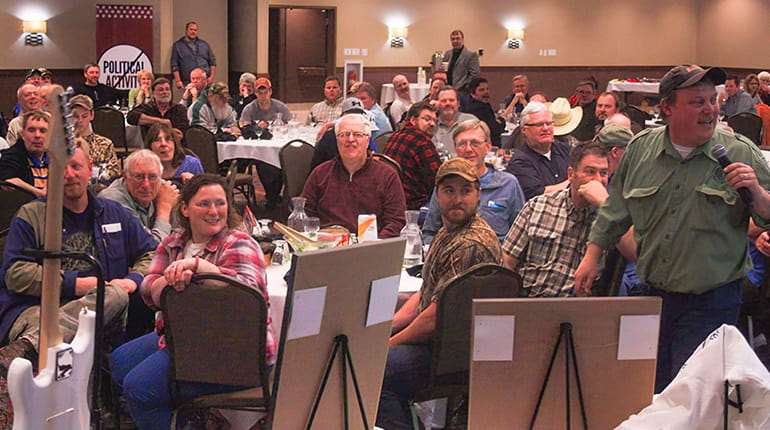
Rob Pincus is one of the best know self-defense trainers in the industry these days. Those who attended this year’s NRA Annual Meetings in Indianapolis had the opportunity to participate in a seminar focused on the concepts and practices he teaches in relation to self-defense inside the home. This year the double-sized room was packed wall to wall, with standing room only.
The ICE training system developed by Pincus is founded on the use of counter-ambush tactics. Simply stated, if we knew ahead of time about a threat, we would find a way to avoid it. Therefore, we need to train and equip ourselves for those events that catch us off guard. Like those times when we are relaxing at home and we are suddenly faced with an imminent threat of physical harm from an intruder. In the course of his presentation, Pincus focused on five core tactics home defense, which he expanded upon in the course of the lecture:
1. Evade: This involves moving yourself as far away from the threat as possible, or at least out of the range of the intruder’s attack.
2. Arm: Get a hold of whatever defensive devices you have in your home, whether it is a firearm or something else.
3. Barricade: Make it harder for the threat to reach you. This can include closing doors, turning off lights, or moving to a secure location in the home.
4. Communicate: Contact the authorities and request emergency services to be sent to your location. If the intruder knows where you are, then warn them that the Police are on their way, that you are armed, and that you will fire if they continue to attack.
5. Respond: If after taking the previously listed steps to avoid the confrontation the threat is still coming, then act to defend yourself.
After going over these principles in detail, Pincus moved on to several related topics that were discussed to help the audience to consider what kinds of choices they need to make in regards to preparing a defense plan for their homes, including the differences between storing and staging firearms, what state defensive firearms should be kept in, how to secure firearms against unauthorized access, and a look at which pistols, rifles, and shotguns he would recommend for personal protection in the home.
This class was packed with more useful information than one would expect to hear in just an hour. Rob Pincus is a skilled instructor with a conversational style that makes learning from him easy and enjoyable. To learn more about the books, videos, and classes available from Rob Pincus and ICE Training, visit the Personal Defense Network at www.personaldefensenetwork.com.