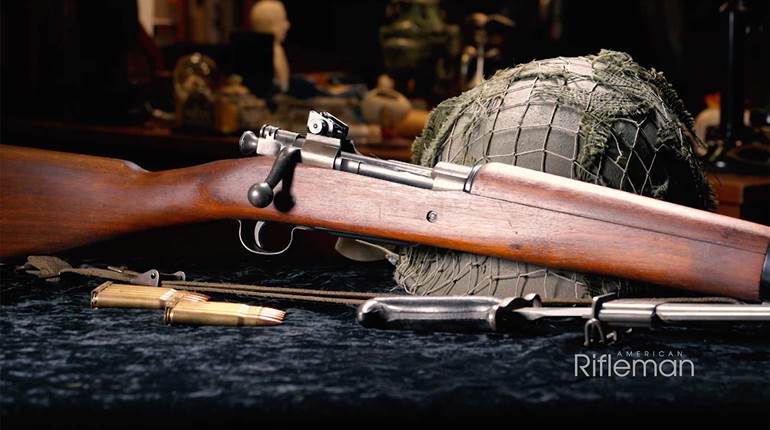
Q: I noticed in the "Forgotten Guns of D-Day" (June 2014, p. 42) that the bolt-action Springfield rifle was designated as the "M1903" or "M1903A3." But in other articles, I have seen it called a "U.S. Rifle, Caliber .30, Model of 1903." So why are there different names?
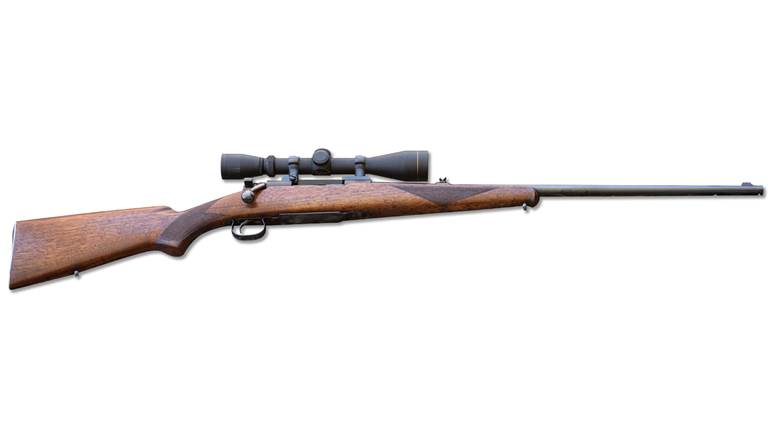
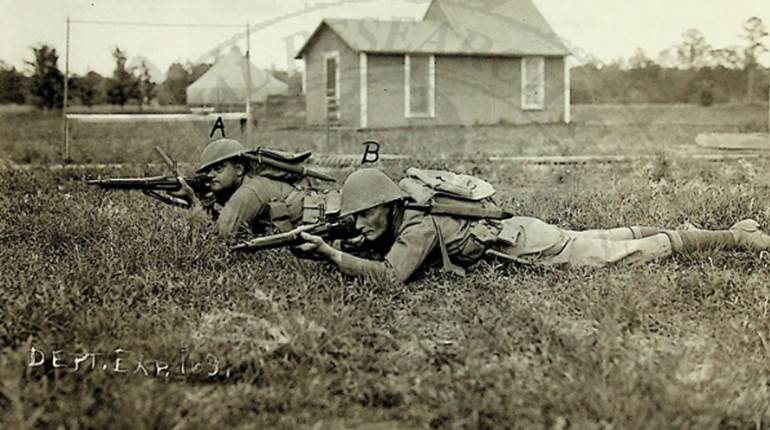
A: Before April 11, 1922, the U.S. Army Ordnance Dept. named all types of ordnance-including small arms-by identifying what is was, its ammunition and then the year of adoption. For example, the '03 Springfield was the "United States Rifle, Caliber .30, Model of 1903." In 1922, Ordnance went to a new system that included the name of the gun, the caliber and then an "M" followed by the year of adoption. Major changes would be represented in "Marks."
 On July 30, 1925, the Ordnance Dept. went to a briefer description of the item, its chambering, then a letter "M" and its number in order of adoption. Thus, John Garand's rifle became the "U.S. Rifle, Cal. .30, M1." If a design was already in service, it did not get a new number. Major changes would get a suffix, i.e., "Submachine Gun, Cal. .45, M1A1." Experimental or developmental guns were given a "T" prefix and an "E" suffix, i.e., T3E2, until May 8, 1958, when the prefix went to "XM." If the design was adopted, the "X" was simply dropped.
-Mark A. Keefe, IV, Editor In Chief
Most Popular