In pretty much all self-defense situations, distance is your friend. Putting distance between you and an attacker increases your chances of getting away unscathed, without having to use force to defend yourself.
If, however, you do have to draw and fire, you don’t want to stand like you’re on the firing line of the local range. Instead, you should move away from the danger to potential cover. As such, you need know how to fire on the move, possibly at a moving target.
While running all out and blasting away looks really cool in the movies, it’s actually an excellent way to waste ammunition and possibly hit something, or someone, for which you’re not aiming (remember you’re not using blanks). You are responsible for every single bullet that comes out of your gun, so unless you have a good sight picture of your target, even when moving, you shouldn’t press the trigger. Also, if you’re running full speed, you should probably keep running on out of the danger zone, so you won’t have to shoot anyway.
Moving forward or backward in a fight is fairly simple. Move forward by stepping out with the lead foot, landing on the heel and rolling to the toe. The same motion in reverse is used to move backward, toe to heel. Lateral motion is obtained by what is called “Big Step, Little Step.” Take a long step with the lead foot in the direction that you want to go and follow it with a shorter step from the opposite foot in a shuffling motion, making sure you don’t cross your feet. All movement, regardless of direction, should be conducted with the upper body slightly forward and the knees slightly bent.
Once the motions are understood, practice is needed for proper use. Unfortunately, many ranges are not set up to allow movement when shooting. One way to obtain movement training is through competitions such as USPSA and IDPA. Another is with an unloaded handgun in the comfort of, well, anywhere that won’t result in someone dialing the number of a Porsche model.
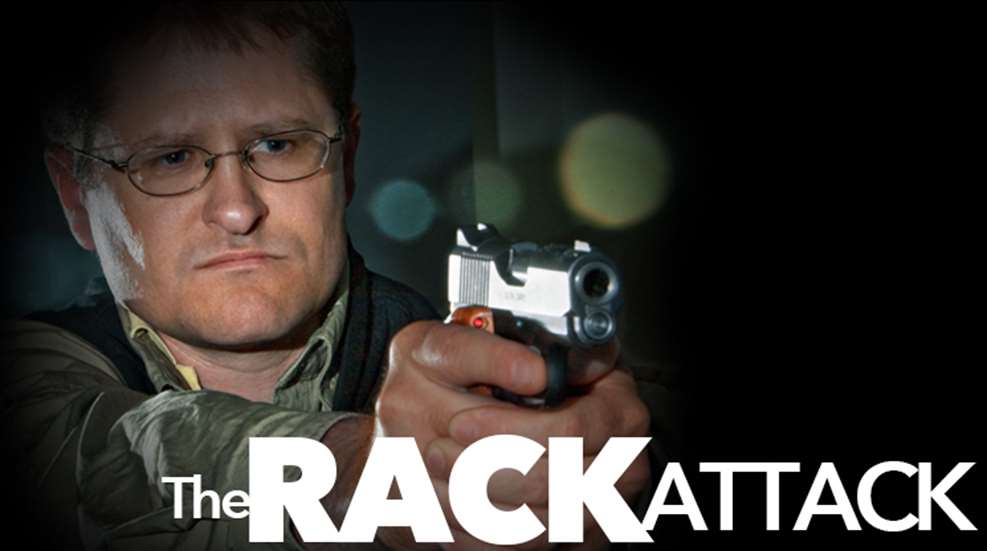
In a fairly open area, set up a target at about eye level. Then, check to ensure your gun in unloaded and that there is no ammunition is in the room. Double check the gun. While any handgun can be used, or even no gun if you only want to practice the motions, a semi-auto with second-strike capability or a revolver is best to allow multiple trigger pulls, paired with a hammer-activated laser, such as the LaserLyte LT-PRO, to mark hits.
Once everything is safe and set up, start slow from multiple locations with the gun in a holster and concealed by a cover garment. You can use furnishings as cover or concealment, and as barriers to force changes in direction. As you get more comfortable, speed up, add more targets and additional trigger pulls.
Once you feel you’ve mastered the craft, have a partner place the targets without your knowledge or try it in the dark with a light. There is almost no scenario that can’t be set with the right imagination and space.
Most Popular