The advent of tank warfare during World War I introduced a totally new battlefield threat to the infantryman. The first operational tank was fielded by the British during the Battle of the Somme in September 1916, and the French developed their own tanks in the spring of 1917. Although slow- moving and plagued by mechanical difficulties, the tanks were relatively safe from rifle and machine-gun fire and struck fear into the average German soldier.
But, the Germans soon concluded that a large-bore rifle firing a high-velocity cartridge would be able to penetrate the armor of these early armored vehicles. The famed Mauser Werke at Oberndorf designed a massive, single-shot, bolt-action rifle. The hefty 35.8-pound weight of the rifle was supported by a folding bipod with spiked feet. Overall length was 67 inches (slightly shorter than the height of the average man at the time), and the gun was chambered for a 13 mm cartridge with an 800-grain bullet exiting the muzzle faster than 2,700 fps. It could stop any tank on the battlefield at that time. However, limited numbers of the Mauser 13 mm anti-tank rifles were fielded before the Armistice, and the gun did not have any significant impact during the war.
Early American Anti-Tank Rifles
On Nov. 2, 1918, the U.S. Army evaluated a prototype magazine-fed, bolt-action .50-cal. rifle designed by Winchester, dubbed the “Model 1918 .50-Cal. High-Power Bolt-Action Swivel Gun.” It might have had some application as an anti-tank rifle, but further development was dropped with the ending of the war. The gun was subsequently used primarily to test the early .50-cal. cartridges being developed for the M2 Browning heavy machine gun.
In 1921, the Browning .50-caliber machine gun was adopted, and the Army believed that if an anti-tank rifle should be required, it would meet the need. The U.S. was hardly alone in its lack of a suitable infantry anti-tank weapon during the post-World War I period. However, in the early 1930s, Germany was working on improved tank designs that did not go unnoticed. A number of nations, including England, Japan, Czechoslovakia, Poland, Sweden, Italy, Switzerland, Finland, Denmark and the Soviet Union began development of anti-tank rifles in varying calibers with bolt-action or semi-automatic mechanisms.
The British .55-Caliber Boys Anti-Tank Rifle
In October 1934, the British military assembled a design team under the supervision of Capt. H.C. Boys, assistant superintendent of the design department at the Royal Small Arms Factory, Enfield, tasked with the development of an anti-tank rifle originally dubbed the “Stanchion” gun. Capt. Boys died while the weapon was still being developed, and it was renamed in his honor.
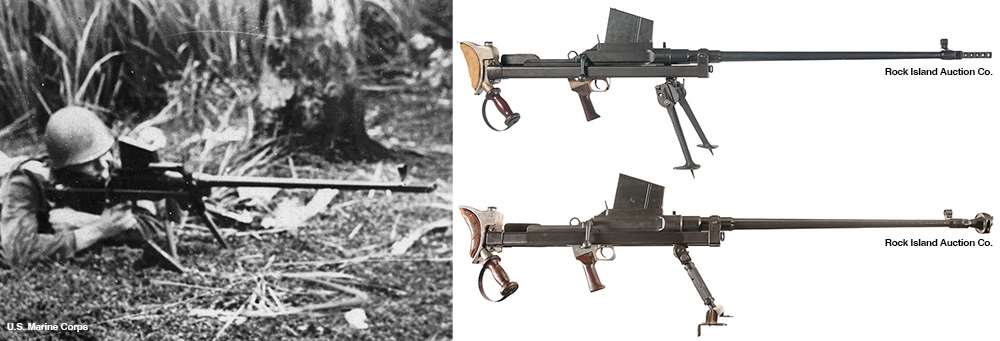
On Nov. 24, 1937, the “Rifle, Anti-Tank, .55 in. Boys Mark I” was approved for service. The gun utilized a conventional bolt-action mechanism with a five-round detachable box magazine, scaled up to accommodate a .55-caliber cartridge. However, by the time the rifle went into production, it was already essentially obsolete as a “tank killer” due to the tremendous strides made in improving tank armor by the late 1930s.
Nevertheless, the Boys anti-tank rifle was subsequently used with some success against lightly armored Japanese and Italian tanks and fixed positions such as pillboxes and gun emplacements.
Modifying The Browning Machine Gun For Anti-Tank Use
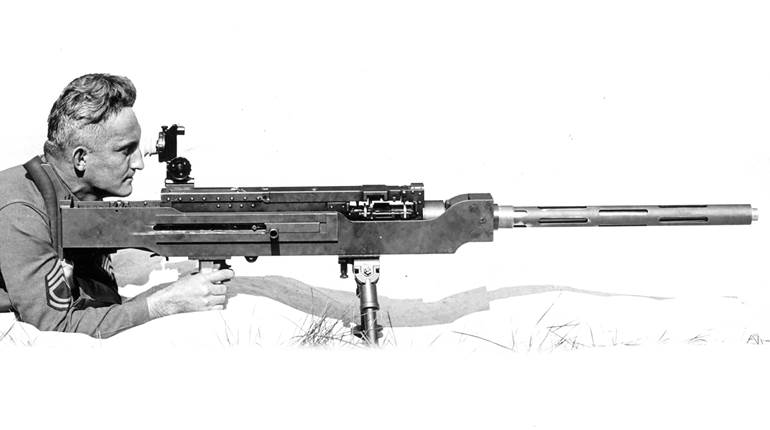
In the late 1930s, with war looming on the horizon, U.S. Army Ordnance embarked on the development of an anti-tank version of the Browning .50-caliber machine gun. This was to be accomplished by equipping the machine gun with a pistol grip, bipod and shoulder stock, which would eliminate the need for the heavy tripod. The gun was designated as an “Anti-Mechanization Weapon.” Since full-automatic fire from a gun of this configuration would be uncontrollable, as well as unnecessary, the experimental .50-caliber anti-tank gun was capable of semi-automatic fire only. Thus, it could be used with short belts of ammunition, which helped to further reduce weight. While designed to be operated by one man, the gun was quite hefty. Even though it could be broken down into two sections, two men were still required to move it any appreciable distance.
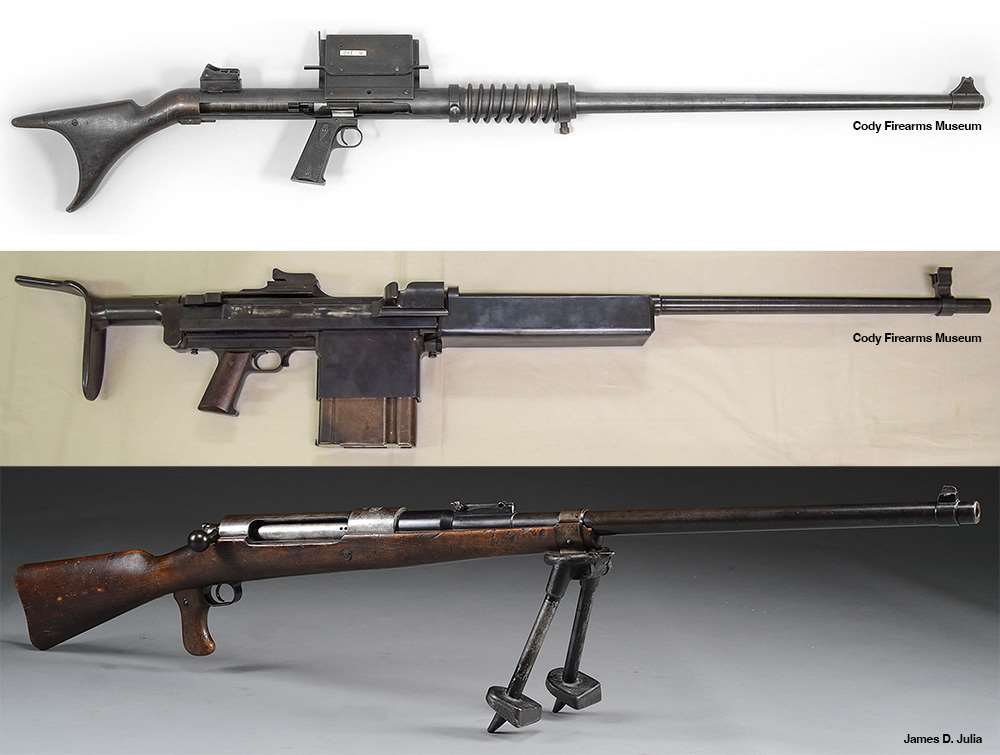
There were apparently three different types of prototypes fabricated and tested. The first type, tested in the late 1930s, was an early M2 air-cooled, .50-caliber machine gun fitted with a shoulder rest, pistol grip and bipod resting in a spring-loaded (and rather massive) “soft mount” surrounding the receiver. The gun was also equipped with a T3 optical sight. The second pattern was a modified M2 heavy-barrel, .50-caliber ground machine gun with a 36-inch barrel, bipod, pistol-grip assembly, butt rest and shoulder pad, and it, too, was fitted with a T3 sight. The final model was similar to the second pattern, but fitted with a 45-inch barrel and a slightly different bipod and shoulder pad. After the testing was completed, a September 1940 report stated:
“The Chief of Infantry recommended that the present standard mount and gun [M2 with tripod] be considered superior to the subject gun for infantry use and that the subject gun be not adopted as standard. The present standard mount and gun have greater mobility. Their total weight is approximately 22 pounds heavier, but it can be broken down into 3 loads while the weight of the subject gun can be broken down into only 2 loads, the heaviest being 77 pounds.”
Thus, on the eve of the World War II, the United States military did not have a man-portable anti-tank weapon in its inventory. By the time the United States entered the conflict, it was clear that effective anti-tank weapons would be required. Such weapons as the “Bazooka” rocket launcher and anti-tank rifle grenades were eventually developed, but for the first year of the conflict, Uncle Sam’s infantrymen had nothing in their inventory that could be used in an anti-tank role.
Raiders And Rangers With The Boys Anti-Tank Rifle
When the U.S. Marine Corps formed its Raider Battalions early in the war, the need for some sort of anti-tank weapon that could be carried by troops during the fast-moving engagements envisioned for these units was clear. To fill this void, the Marines turned to the British Boys anti-tank rifle. The fact that some of the weapons were being made in Canada simplified procurement. Boys anti-tank rifles were issued to Marine Raider units and utilized in several campaigns such as the Makin Island raid and Solomon Islands campaigns, including Guadalcanal. As stated in the book “Our Kind of War:”
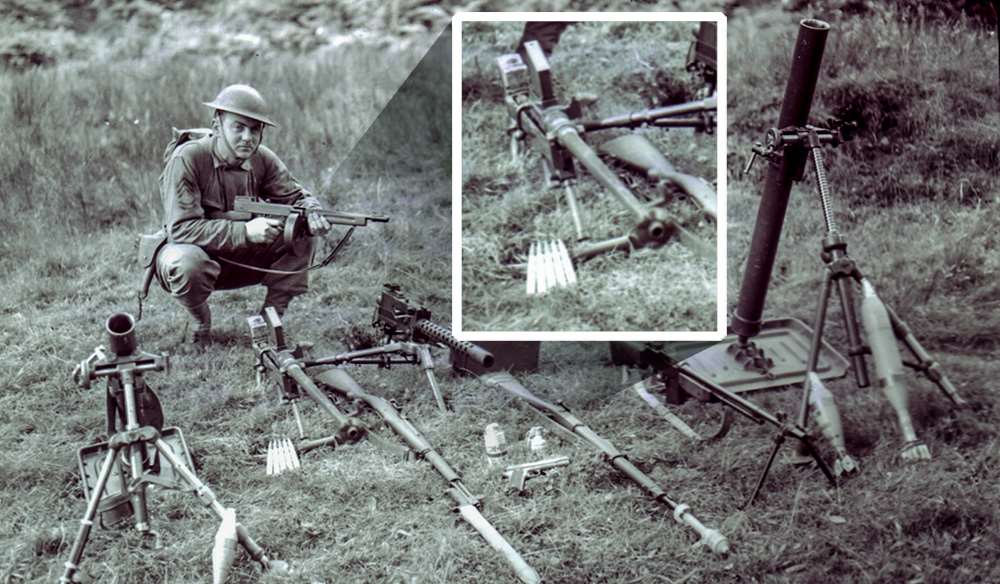
“Unusual to the Raiders was the Canadian Boys .55-caliber Anti-Tank gun ... The Raiders called this massive 36-pound weapon the ‘Elephant Gun.’ … Its high velocity, armor-piercing shells gave … much needed firepower to knock out armored vehicles, flak towers, and engines of all types. A single Boys Rifle was issued to each Marine Raider company. It was .55 caliber with a five-round magazine of armor-piercing shells. It has a muzzle velocity of 3,000 fps, and was deadly accurate up to 2,000 yards.”
There were mixed feelings regarding the efficacy and popularity of the Boys rifle by the Marine Raiders. On one hand, the book claims Raiders loved the hard-hitting “Elephant Gun.” On the other hand, a 1943 report of the various weapons used by a Marine Raider Battalion on New Georgia Island had the following succinct summation of the weapon: “Rifle, Boys, AT, Cal. .55; of absolutely no use in jungle warfare.”
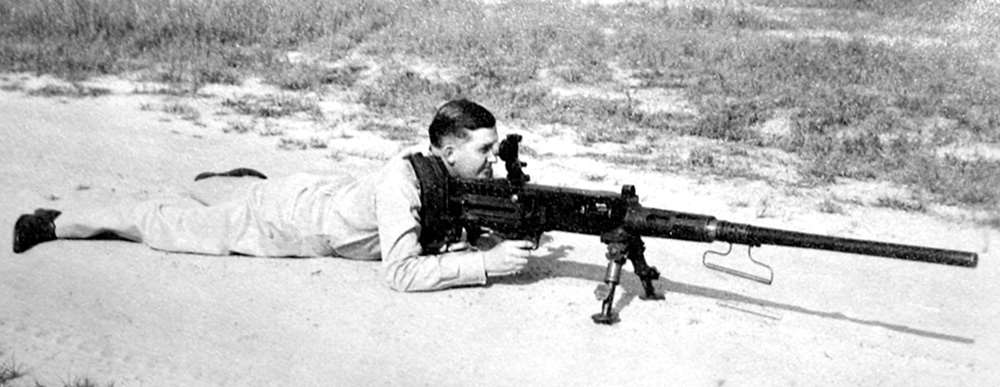
The weight of the Boys rifle, along with the scarcity of suitable targets in the Pacific, were significant disadvantages. The introduction of the Bazooka and anti-tank rifle grenades resulted in the Boys anti-tank rifles being dropped from the Marine Corps inventory in 1943.
While the use of the Boys AT rifle by the Marine Raiders has been discussed in several books and articles, the issuance of the firearm to U.S. Army Rangers has received scant coverage. Since the newly formed Army Rangers would need the same type of weaponry as the Marine Raiders and British Commandos, it is no surprise the Boys rifle was selected, since it was the only man-portable anti-tank weapon available at the beginning of the war. The original Table of Organization and Equipment (TO&E) for a Ranger Battalion in 1942 authorized 20 Boys .55-caliber anti-tank rifles. The Boys rifles procured by the Rangers were the English-made Mark I variant with a round muzzle brake and folding monopod.
While the Boys anti-tank rifle was primarily used for training, 50 Rangers were attached to the Canadian and British troops during the ill-fated 1942 Dieppe raid in France. Boys anti-tank rifles were employed during the action, with some Rangers serving alongside Canadian Commandos. Other than this limited action, the rifles continued to be used for training until dropped from the Ranger Battalions’ inventory when the Bazooka became available.
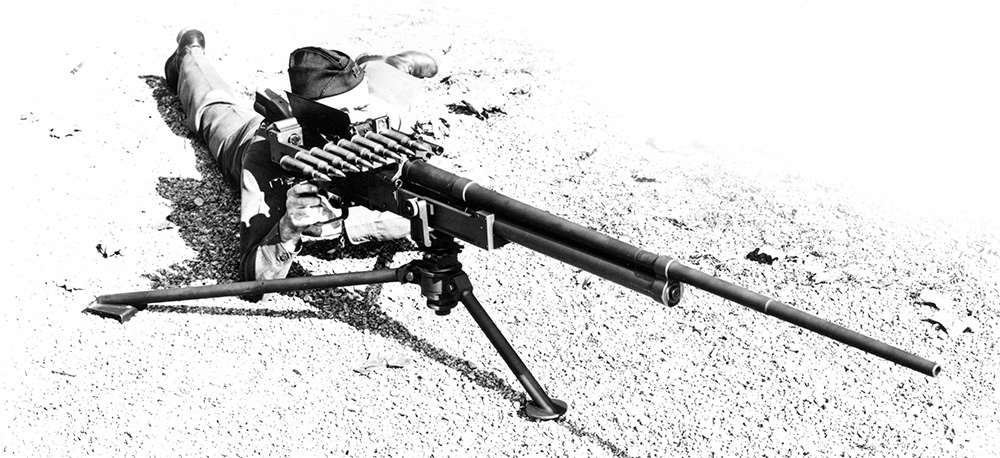
While soon outclassed by more effective anti-tank weapons, the Boys anti-tank rifle was there when no other weapon of that type that could be carried and operated by one man was available. While it may be a case of damning with faint praise, it can be said that the Boys rifle was better than nothing.
What Could Have Been: Final Experiments In American Anti-Tank Rifles
Even though the Boys anti-tank rifle was dropped from active use as a front-line combat weapon after 1943, there was still some interest in the development of a large- caliber rifle for use against armored vehicles. Winchester designed a semi-automatic rifle chambered for the standard .50 BMG cartridge based on what was essentially a strengthened, scaled-up M1 Garand action. The rifle was purportedly developed for the Canadian Armed Forces as an anti-tank option and was tested in late 1944. Although it passed all field tests, the German surrender in May 1945 resulted in the Canadian government canceling the project.
As the potential of an anti-tank rifle based on the .50-cal. machine gun in the late 1930s and early 1940s was being evaluated, the Ordnance Department had a similar gun in parallel development. However, the rifle was chambered for a more powerful round since it was apparent that the .50 BMG round was not sufficient to defeat the armor of the new German tanks.
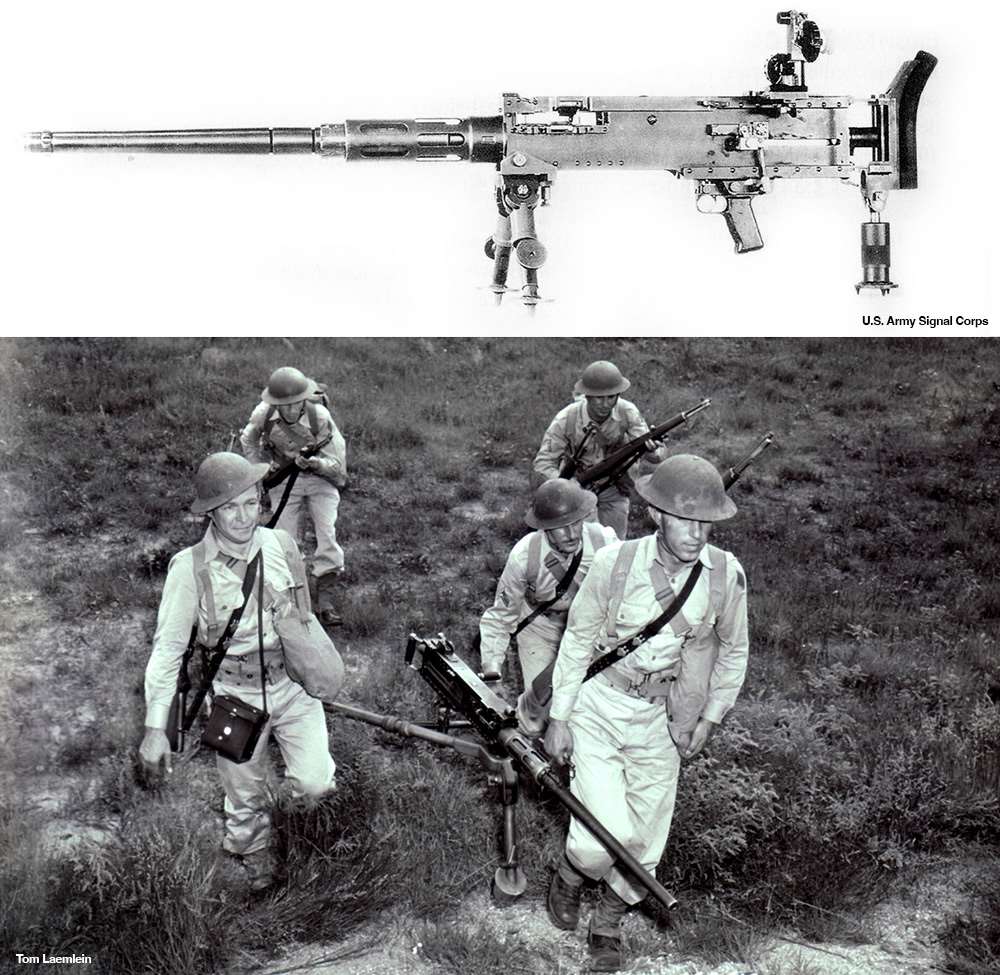
As early as 1939, the Ordnance Dept. was developing a .60-caliber cartridge that could be used for aircraft armament as well as for a new type of anti-tank rifle. While the .60- caliber, armor-piercing cartridge was being developed, work began on a prototype semi-automatic anti-tank rifle. Designated as the “T1E1,” the weapon was tested at the Aberdeen Proving Ground on Oct. 30, 1942.
The results of the testing at Aberdeen have not been found, but Ordnance Department records indicate that all work on the .60-caliber anti-tank rifle was suspended in May 1943 when the Ordnance Committee concluded that, based on combat reports, such a firearm would be effective only against the lightest of armored vehicles. Although work continued on a .60-caliber aircraft machine gun throughout the war and into the post-war period, this marked the end of the development of an anti-tank rifle by the United States. Modern tank armor had rendered the concept of an anti-tank rifle obsolete as much more effective weapons using shaped charges, such as the Bazooka and anti-tank rifle grenades, were developed and put into production in late 1942.
The sudden abandonment of the .60-caliber T1E1 left the .55-caliber Boys, by default, the only anti-tank rifle to see combat use by U.S. armed forces during World War II. The interesting story of these little-discussed guns is an integral, if minor, part of the story of American infantry weapons of the Second World War.