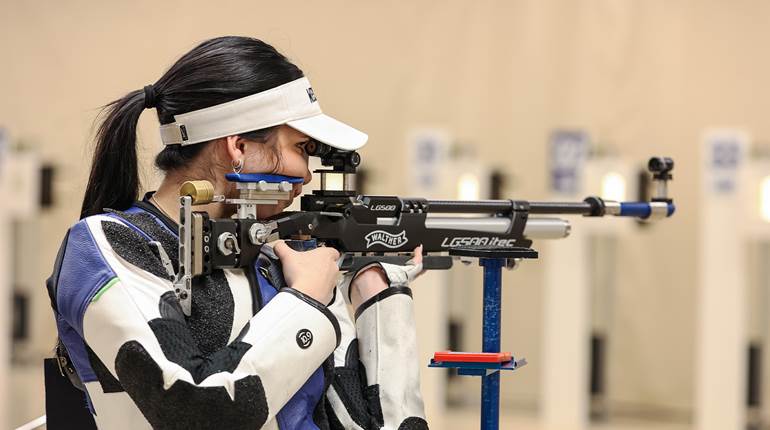
Tension is the killer of performance. Not the scenario. Not the distance. Not the buzzer. Not the risk. Tension. Whether you’re managing a lethal-force encounter, running a stage in competition or working a timed drill from concealment, performance shooting reigns king, and one of the most brutal and insidious king-slayers of all time is self-induced tension.
It’s corrosive to repeatable, on-demand performance, and the worst part is that it doesn’t come from the outside world. It emerges from between your ear protection.
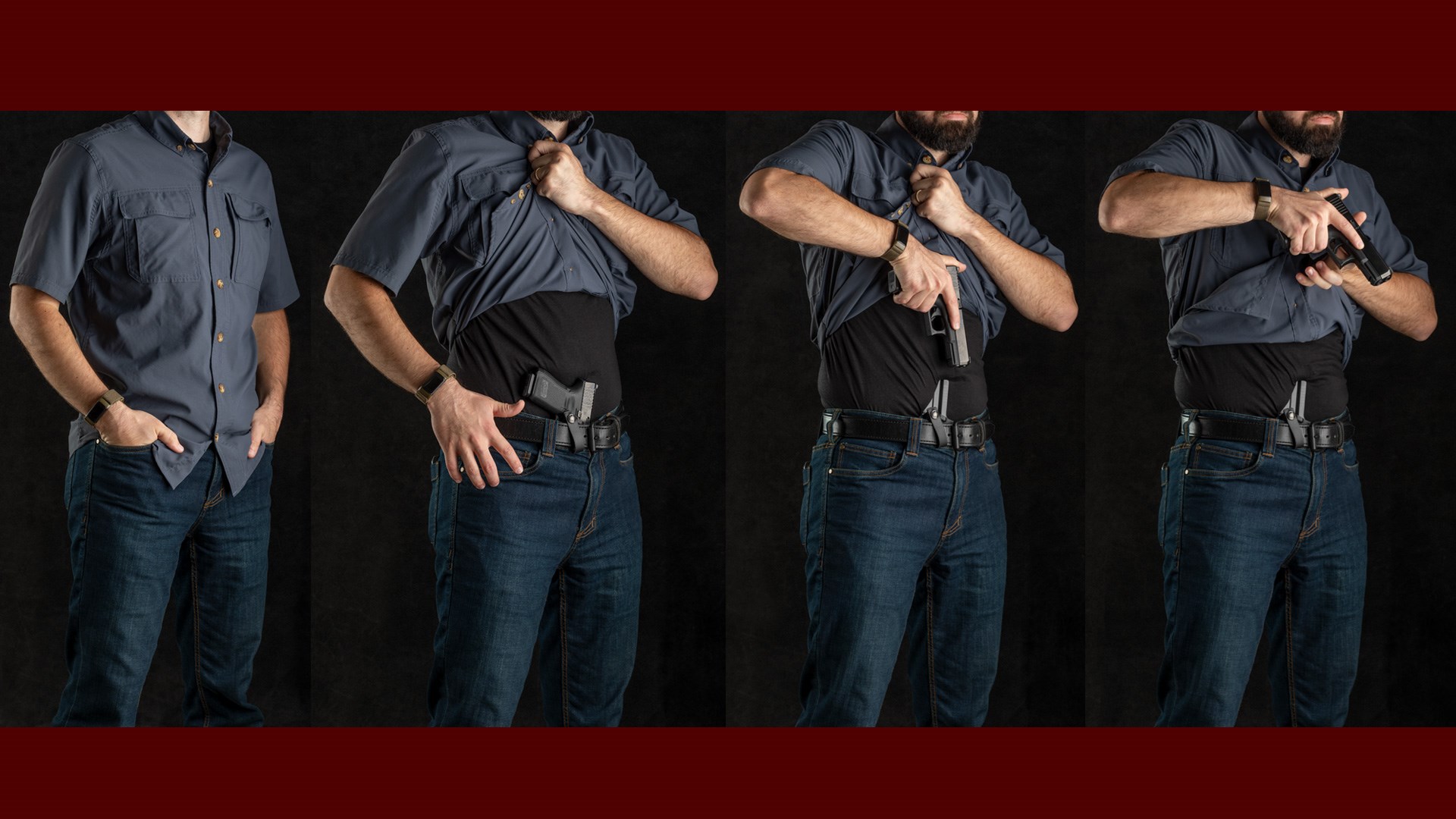
Physical tension is the most visible form, and yet most shooters rarely recognize it in themselves. Presenting from the holster, you’re already moving at the upper edge of your physical speed envelope while simultaneously operating a secondary layer of control where your trigger finger must deliver a direct amount of pressure required to release the hammer or striker, but not so much that it introduces unwanted input into the gun. The split second you push beyond that threshold, you disturb alignment.
The shooting process is unforgiving: bring stability to alignment and press without disturbing that alignment. Every ounce of unnecessary tension destabilizes that process. You see it all over the range; jaw clenching, shoulders creeping upward, breath holding, squinting through the “gorilla brow,” knees locking, over-gripping or regripping, and a host of other tension-induced cycles. None of it helps alignment. None of it helps fire control. If tension doesn’t support sights or trigger, it’s parasitic.
Top-tier shooters learn to separate functional tension from corrosive tension.
Functional tension is durable grip pressure, a stable firing platform and process integrity; the elements that directly support realignment during recoil. Corrosive tension is internal, pressure-driven tightening; the unnecessary muscular effort that creeps in when you’re trying to go fast or avoid failure. One contributes to control. The other degrades it.
The body under stress wants to contract. It wants to brace. It wants to protect. But bracing is not performance. In fact, the harder you try, the worse it gets.
Mental tension is even more destructive because it shows up before your pistol ever clears Kydex. On the command of “Standby,” or the instant before the buzzer, something happens between your earmuffs. Anticipation spikes. Outcome obsession creeps in. You start trying to “go fast.” You start thinking, “Don’t screw this up.” You start forcing your body to “make the hit.” That effort injects tension into the system before the shooting process even begins.
Pressure doesn’t create mistakes. Tension does. The body tightens as a result and does not improve performance. When the mind fixates on results like speed, accuracy, winning the fight or the stage, it abandons the only thing that produces those results: the shooting process itself.
Speed is a measurement of how long it took you to execute the shooting task. Accuracy is a measurement of your round placement during the shooting process. Chasing speed and accuracy directly is folly; they are byproducts of efficiency and control, which includes your control of tension.
When shooters try to “make up time,” they abandon visual discipline or emotionally spike after a miss, either way introducing even more tension into the system.
Under duress, small inefficiencies are amplified. Over-gripping becomes shaking. Rushing becomes loss of visual discipline. Anxiety replaces confidence. The buzzer already applies pressure. The scenario, distance, time and consequences already apply pressure. You do not need your own nervous system adding to it.
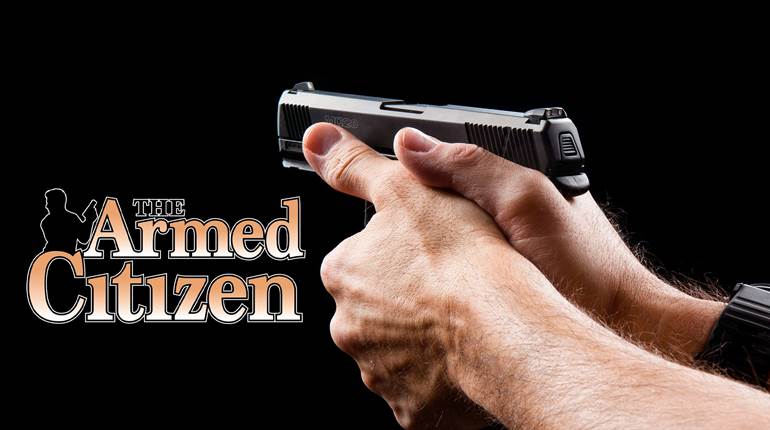
Here’s the counterintuitive but legit truth: comfort under duress improves efficiency and control. It's simply discipline. Loose shoulders. Neutral neck. Relaxed facial muscles. Build and sustain a durable grip. The gun should track because of structure and timing, not because you are strangling it into submission. When the upper body remains stable and the grip remains unchanged, transitions become fluid, recoil becomes predictable, and your trigger press stays clean.
None of this means stress disappears. It doesn’t. The goal isn’t calm; the goal is functional. You train comfort with discomfort. You run drills on timers until the timer loses its emotional charge. You expose yourself to elevated heart rate and/or decision pressure until they become familiar terrain. Through repetition, scenarios go flat. The body learns that the stimulus is not a threat but part of the task.
Visualization plays a role here as well. Mentally rehearsing the process in the theater of your mind reduces novelty and lowers anticipatory anxiety. The nervous system cannot reliably discern imagined reps from physical reps; both prime the neuromuscular pathway. In the immortal words of the most decorated shooter in the history of shooting sports, Rob Leatham, when asked, “How do you deal with tension?” he responded, “Oh, I still experience tension, but I have learned to be comfortable being uncomfortable.”
Practical calibration is not glamorous, but it works. Consciously drop your shoulders before the start signal. Set and maintain zero change in grip pressure. Let your face remain neutral. Don’t forget to breathe. Maintain the integrity of your firing platform. Accept mistakes without emotional impact. Focus on what you see, not what you fear.
Run the process and let the results happen. Because in both combat and competition, tension is the destroyer of performance. You will never eliminate it entirely, but you can manage it. You can learn to be comfortable being uncomfortable. You already have enough external variables messing with your mind, you don’t need your own mind adding to the chaos. Either you control tension or tension controls you.