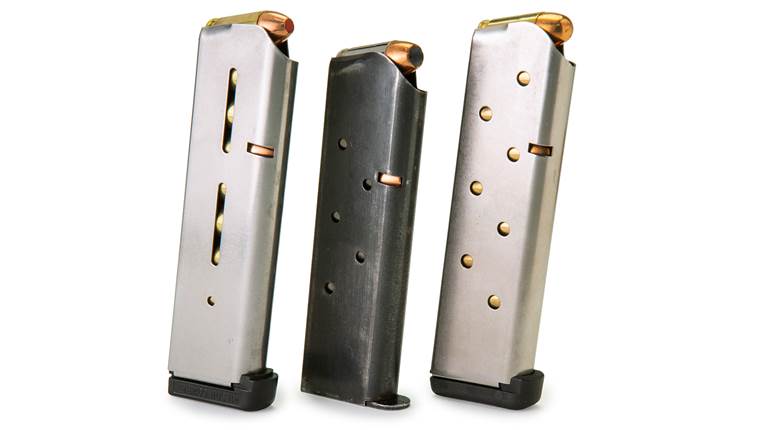
A semi-auto handgun contains a number of parts that require upkeep and care to ensure proper functioning. While most concealed-carry advocates are extremely proactive about caring for their guns, many forget the importance of the item that handles its feeding-the magazine.
If a magazine has a weak spring or an obstruction, then the gun will have problems loading, preventing it from firing. Burrs on the lip can also cause malfunctions at a critical time. As such, it is just as important to maintain the magazines as it is the gun itself.
The first step is to have multiple magazines for your gun so that they can be rotated on a regular basis and so you can still carry the gun if a magazine goes bad. Personally, I have four magazines for my Kimber, which I rotate monthly. Two are always loaded, one in the gun with a spare, while two rest unloaded in the safe.
Next, you need to ensure that the magazines are working properly. Every time that I swap magazines, I check them by loading both with dummy rounds and cycling the slide until the gun is empty and the slide locks. This ensures that rounds will load from the magazine and eject from the gun. Of course, this test can also be conducted at the range, which is more fun and provides additional training, but when life gets busy, using dummy rounds at home will provide the assurance that the magazine will work when needed.
Now if your magazines ever do fail to work, you can either replace them or repair them. Most people should probably find a gunsmith to handle any repairs, but an Internet search could possibly provide some insight, such as this piece located on Brownells' website. Just be prepared to purchase new if the damage becomes worse through your efforts. I’m not a gunsmith so will probably just buy new ones if problems arise. I am also always on the lookout for deals on magazines that fit my various firearms.
Part of being prepared to protect life and family is ensuring that your tools are in working order, including the magazines. If the gun can’t be fed, it won’t work. It’s like trying to drive without tires on the car.
Most Popular