Legislation signed into law during March recaptured significant portions of the Second Amendment for law-abiding citizens in several states. Reversing infringements on the right to keep and bear arms is a growing trend in much of the nation, although left-leaning politicians and a liberal minority continue wagging the gun-control dog elsewhere and in the mainstream media.
Governors in Louisiana and South Carolina signed Constitutional Carry measures in March. It is already effective in the latter state, but residents in the Pelican State have to wait until July 4 for it to become law. The number of states with similar laws now stands at 29.
The Louisiana law is groundbreaking in another way. Valid carry permit holders will have a modest layer of legal protection typically reserved for first responders. News6, an ABC-affiliate in Philadelphia, explains, “The law also makes Louisiana the first state to grant concealed carry license holders a degree of qualified immunity from lawsuits if they use their weapons in self-defense, a provision currently reserved primarily for law enforcement officers.” The provision is not blanket immunity, as the many civil suits filed against police officers attest.
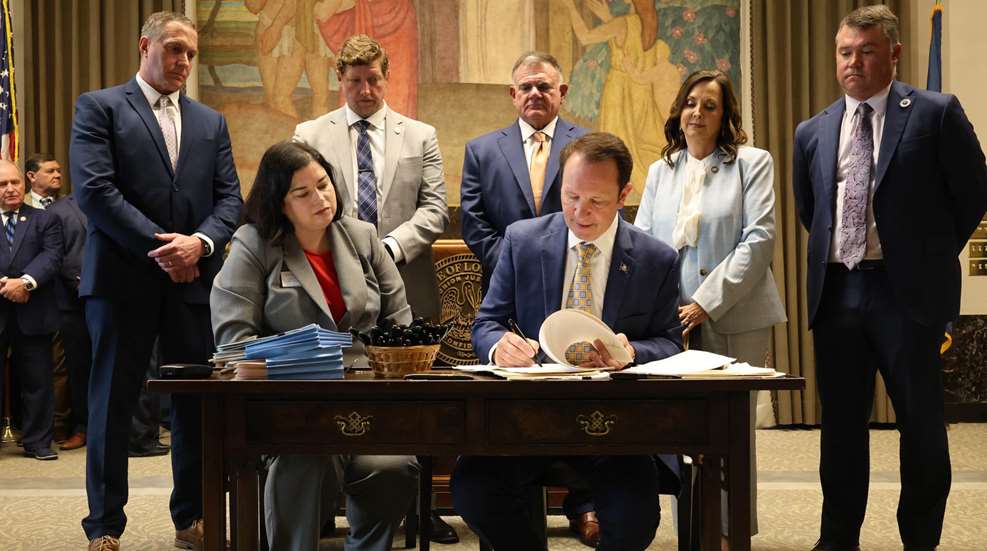
A total of 11 crime-related bills were signed into law by Louisiana Gov. Jeff Landry (seen above, r.) on March 5, including the Constitutional Carry measure. “Today, we made good on our promise to deliver sweeping reforms to our criminal justice system. Reforms that put the interests of victims before the interests of criminals. Reforms that uplift and support our police officers. Reforms that deliver true justice to the victims of crime. Reforms that make our streets and communities safer for all,” he said during the signing ceremony.
When Gov. Henry McMaster signed South Carolina’s Constitutional Carry measure on March 7, it also brought significant changes to other gun-related statutes. It’s now legal for a permit holder to carry in an establishment that serves alcohol, if the permittee doesn’t consume any while on the premises. Charleston, SC’s Post and Courier explains the changes in detail, with one of the more noteworthy being removal of a requirement that gun owners have their handgun “... secured in a closed glove compartment, center console, in the trunk or inside of a secure compartment ...” while driving.
Early in March, Indiana Gov. Eric Holcomb signed legislation that, “provides that only the state of Indiana may bring or maintain an action by or on behalf of a political subdivision against a firearm or ammunition manufacturer, trade association, seller, or dealer concerning certain matters.” According to a National Sporting Sports Foundation press release, by preventing other government entities in the state from doing so baselessly it effectively ends “The City of Gary’s nearly quarter-century old frivolous lawsuit against firearm manufacturers [that sought] to hold them responsible for the criminal actions of unrelated and remote third parties.” Also in March, South Dakota Gov. Kristi Noem signed a measure that allows those with an enhanced carry permit to carry on school grounds with permission from the principal.
Louisiana and South Carolina join 27 other states in recognizing Constitutional Carry. The others on that roll are: Alabama; Alaska; Arizona; Arkansas; Florida; Georgia; Idaho; Indiana; Iowa; Kansas; Kentucky; Maine; Mississippi; Missouri; Montana; Nebraska; New Hampshire; North Dakota; Ohio; Oklahoma; South Dakota; Tennessee; Texas; Utah; Vermont; West Virginia; and Wyoming.
Most Popular