One of the newer innovations in hunting riflescopes is the bullet-drop aiming points found on the reticle, which help hunters to successfully and humanely harvest game at longer distances, and eliminate the need to "hold" over a deer's back and hope the shot falls in the vital area.
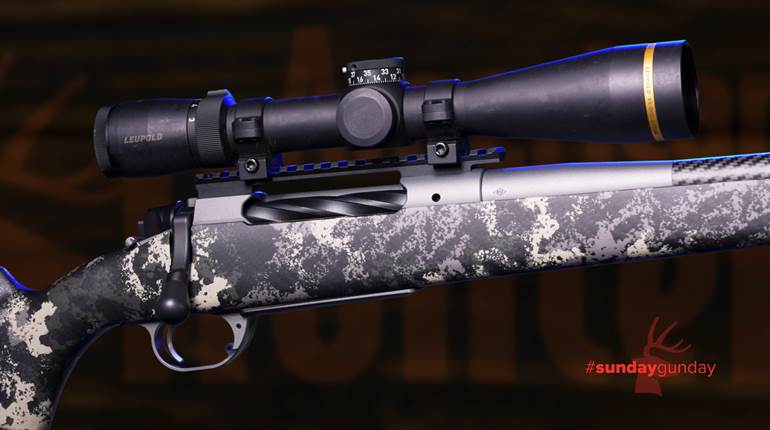
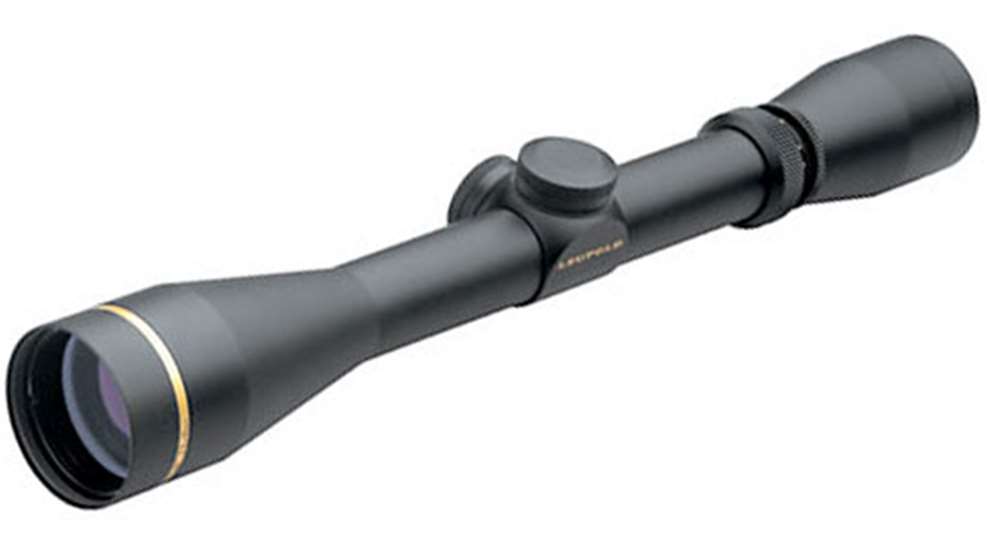
Leupold & Stevens entry into this segment of the market is a long-range (holdover-reticle) Ballistics Aiming System series of riflescopes for hunting big game and varmints. One in this series is the Ultimate Slam riflescope, designed for muzzleloaders and shotguns.
UltimateSlam scopes are available in 3-9x40 mm and 2-7x33 mm, and feature the SABR (Sabot Ballistics Reticle) that provides aiming points for 50, 100, 150, 200, 250 and 300 yards. A unique feature of the scopes is a power-set adjustment located on the magnification ring, calibrated to work with either two- or three-pellet charges of muzzleloader propellent, as well as with a shotshell setting for slugs.
A .50-caliber sabot with a 250-gr. bullet is recommended for muzzleloader use, with the scope adjusted to the appropriate power/pellet-charge setting. When using the scope on a shotgun with a 12-gauge slug, the shotshell setting is employed. However, if shooting a 20-gauge slug, the two-pellet muzzleloader mark is the correct setting. After matching the setting to a load, a shooter must ensure that the bullet trajectory corresponds to the progressive aiming points when the scope is zeroed dead-on at 100 yards.
I mounted a 3-9x Ultimate Slam scope on my .50-caliber Thompson/Center Omega muzzleloader for a sighting-in and practice shooting session, and found the scope bright and easy to focus so that the reticle was sharp and clear. Leupold says the firearm can be sighted-in at 100 yards using any magnification setting. I always sight-in hunting-rifle scopes at the highest magnification when using a variable, since it is easier to see distant targets and invariably I end up using the highest magnification when shooting at game. The 9x magnification also happens to be the three-pellet setting on the magnification ring.
The finger-click elevation and windage dials are much easier to use than using a quarter to adjust old-style turret dials. The ¼-moa adjustment clicks are distinct and accurate. Because of the overhead baffling system at my range, I could only shoot up to 200 yards. A variety of bullets were used when test-firing the gun. Like with most muzzleloaders, the powder charge must be matched with the proper bullet to find the best accuracy. The Barnes Spit-Fire TMZ 250-gr. sabot grouped the best at 100 yards with some three-shot groups measuring around 1.5 inches.
Keeping the scope on the three-pellet setting, I fired the muzzleloader at 200 yards using the 200-yard reticle dot. The first shot was about two inches low and the second shot was a dead-center hit. Two weeks later I repeated the same test at 200 yards. The first shot was three inches low and the second hit dead-center. Windage was perfect on all four shots.
The true test, of course, came in the field on a deer hunt at the Marriott Ranch in northern Virginia. Using my laser rangefinder to determine the distance, I harvested a mature management doe at 211 yards using the 200-yard aiming dot.
The muzzleloading bear season was also open, and during the hunt's final evening a black bear boar wandered into a cornfield at dusk. I was able to anchor him at 147 yards using the 150-yard aiming point.
Considering the trajectory of a muzzleloader bullet and shotgun slug, a scope with precise aiming points that compensate for drop is extremely valuable, if not a must, when shooting at longer distances. Most muzzleloaders with standard reticle scopes are sighted in at 100 yards, and shooting at game much beyond that requires guessing where to hold. With the UltimateSlam scope the guessing is eliminated and I was able to more than double my rifle's effective shooting distance.
As long as users take time at the range to find their best ammunition combo and to verify the aiming points by shooting on paper at the actual specified distances, this scope could prove helpful to many blackpowder and slug hunters.
Most Popular