Louis and Elias Haimans were two brothers who immigrated to the United States from Prussia shortly before the American Civil War started in April 1861. Settling in Columbus, Ga., they opened a tinsmithing shop that soon grew to a fairly significant arms factory. Initially, they produced swords and knives, but within a year they had accepted a contract from the Confederate government for 10,000 Colt-style revolvers.
Columbus Fire Arms Mfg. produced a six-shot, .36-cal., steel-frame revolver that had seven-groove rifling and a half-round, half-octagon barrel, similar to, but smaller than, a Colt Dragoon. Unlike most Confederate revolvers, this gun was perhaps the most abundantly marked. The name “Columbus Fire Arms Manuf.” and “Columbus, Ga.” appeared on the barrel and cylinder. Serial numbers were stamped on the frame, barrel and backstrap. A large “CS” is sometimes also encountered on the trigger guard.
The factory was so large, it was said that it encompassed an entire city block and employed between 100 and 500 workers. A shortage of trained machinists during the war prevented the Haimans brothers from producing even one percent of the guns contracted for by the Confederate government.
Within two years of winning the contract for 10,000 revolvers, the Confederate government bought out the Haimans brothers and assumed control of the factory in 1863. The highest known serial-numbered revolver is in the 90s, leaving most collectors to assume that fewer than 100 were ever made. Of that 100, only four are currently known to have survived the war and are in collections.
NRA Museums is fortunate to have Serial No. 89, the second highest serial number known, as a recent bequest from the Doc J. Thurston, III, estate. Or so it would seem.
Sadly, curatorial staff and numerous experts have examined the revolver and have come away with mixed opinions. While some believe the gun itself is original and correct, they suspect the serial number and “CS” stamps are not contemporary to the manufacture of the gun, and may have been added much later. Others feel the entire gun is a bad copy and nothing more than a fake, intended to deceive the purchaser into believing it was an original.
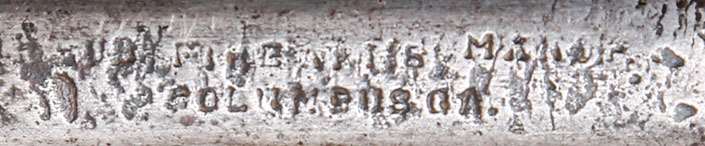
The most condemning aspect of the firearm is that the serial number and “CS” stamp are deep, clear and crisp. The “Columbus Arsenal Georgia” markings and the general condition of the gun are fairly well-worn and faded to smooth metal, a condition not consistent with the other marks—pretty much a bright red flag to a collector or academic trying to research and study such things.
Had the spurious serial numbers and the ubiquitous “CS” not been added at a later point, this gun would surely pass muster and be one of the very rarest of the rare Confederate revolvers known.
Most Popular