This is the 250-year anniversary of the Declaration of Independence, which in 1776 declared the “self-evident” truth that all men have the “unalienable rights” to “life, liberty and the pursuit of happiness.” Governments are instituted “to secure these rights,” but if it “becomes destructive to these ends, it is the right of the people to alter or to abolish it, and to institute new government ... .” If “a long train of abuses and usurpations ... evinces a design to reduce them [the people] under absolute despotism, it is their right, it is their duty, to throw off such government, and to provide new guards for their future security.”
With that, the Continental Congress declared the colonies “to be free and independent states ... absolved from all allegiance to the British Crown.” Relying “on the protection of Divine Providence,” the signers of the Declaration “mutually pledge to each other our lives, our fortunes and our sacred honor.” The United States of America was born.
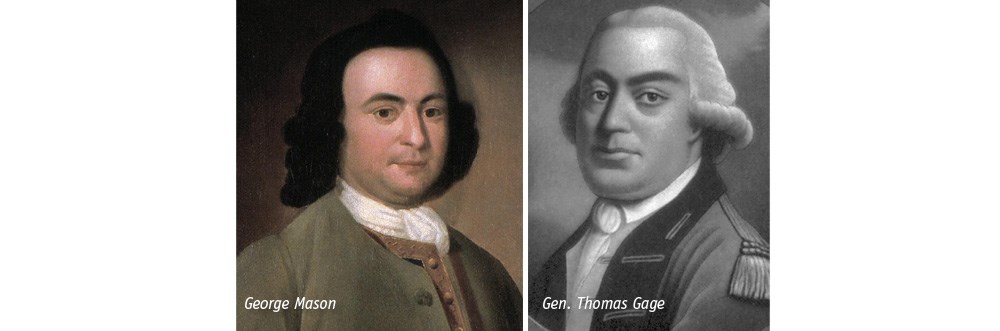
The newly independent states then began to adopt constitutions with bills of rights. The Virginia Declaration of Rights of 1776, authored by George Mason, declared: “That a well regulated Militia, composed of the Body of the People, trained to Arms, is the proper, natural, and safe Defense of a free State … .” The Pennsylvania Declaration of Rights of 1776 was more explicit, stating: “That the people have a right to bear arms for the defense of themselves, and the state … .” Vermont copied that language in 1777. North Carolina recognized “That the People have a right to bear Arms for the Defense of the State,” while Massachusetts declared in 1780, “The people have a right to keep and bear arms for the common defence.”
Among the “long train of abuses and usurpations” referred to by the Declaration was the deprivation of the colonists’ right as English subjects to “have arms for their Defense” as secured in the English Declaration of Rights of 1689. It started in 1768 when British troops were coming to occupy Boston. As a patriot reported in the Boston Gazette on Sept. 26, 1768, three things “more grievous to the People, than any Thing hitherto made known,” were threatened, “1st, that the Inhabitants of this Province are to be disarmed. 2d. The Province to be governed by Martial Law. And 3d, that a Number of Gentlemen who have exerted themselves in the Cause of their Country, are to be seized and sent to Great-Britain.”
James Otis, Samuel Adams and other patriots orchestrated a stormy meeting of the townsmen at Faneuil Hall in Boston that recalled the guarantee of the right of Englishmen to “have arms for their Defence” and admonished the inhabitants to “always be provided with a well fix’d Firelock, Musket, Accouterments and Ammunition,” as the militia law required.
The coming months saw increasing friction between the townsmen and the Redcoats. In early 1769, it was reported, “That the inhabitants had been ordered to bring in their arms ... and that those in possession of any after the expiration of a notice given them, were to take the consequences.” That turned out to be a rumor, but it expressed the danger that they feared.
Conditions only worsened between the Boston Massacre in 1770, when Redcoats shot and killed five townspeople, and the Boston Tea Party in 1773, when patriots armed with axes and pistols dumped tons of tea into the bay. More troops arrived, and the elected town selectmen were replaced by Crown-appointed rulers, who proposed “that the inhabitants of this Town should be disarmed … but happily a majority was against it.”
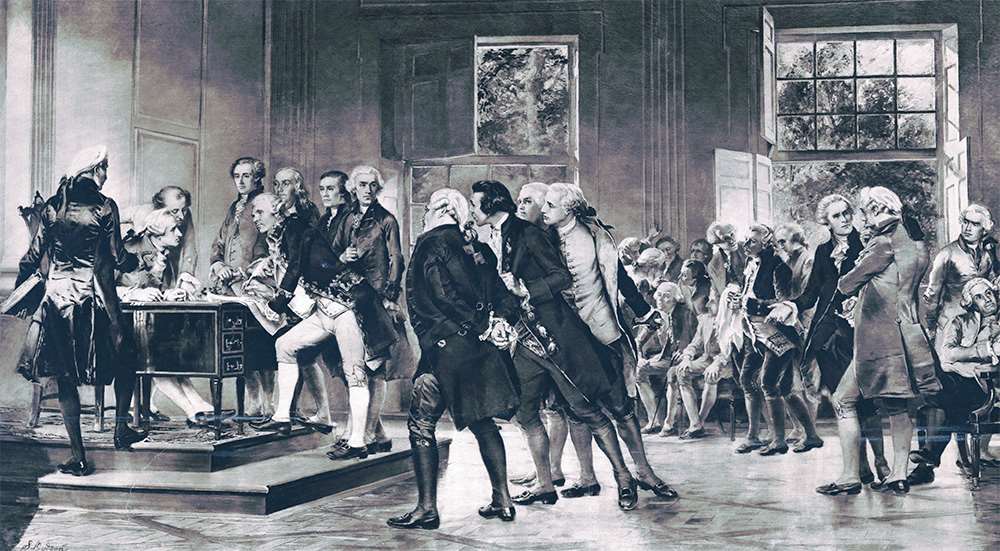
In 1774, British Gen. Thomas Gage began seizing the powder houses where large quantities of blackpowder were stored, preventing merchants from withdrawing their gunpowder to sell to the inhabitants. The Crown decreed a ban on the import of arms and ammunition into the colonies. South Carolina’s patriotic governing body found that this “too clearly appears a design of disarming the people of America, in order the more speedily to dragoon and enslave them; it was therefore recommended, to all persons, to provide themselves immediately, with at least twelve and a half pounds of powder, with a proportionate quantity of bullets.”
Lord Dartmouth, secretary of state for the colonies, urged Gen. Gage in an October 1774 letter to consider “disarming the Inhabitants of the Massachusetts Bay, Connecticut and Rhode Island,” but Gage responded, “Your Lordship’s Idea of disarming certain Provinces would doubtless be consistent with Prudence and Safety, but it neither is nor has been practicable without having Recourse to Force, and being Masters of the Country.”
That was easier said than done. As Charles Lee expressed it in a pamphlet printed throughout the colonies, “The Yeomanry of America have, besides infinite advantages, over the peasantry of other countries; they are accustomed from their infancy to fire arms; they are expert in the use of them … .”
Peter Oliver, a prominent Tory, recalled: “The People were continually purchasing Muskets, Powder & Ball in the Town of Boston, & carrying them into the Country; under the Pretence that the Law of the Province obliged every Town & Person to be provided with each of those Articles.”
Lieutenant Frederick Mackenzie, of the Royal Welch Fusiliers, noted in a January 1775 diary entry that the people “are taking every means to provide themselves with Arms; and are particularly desirous of procuring the Locks of firelocks, which are easily conveyed out of town without being discovered by the Guards.”
Gage wrote to Dartmouth in March 1775: “The most natural and eligible mode of attack on the part of the people is that of detached parties of bushmen who from their adroitness in the habitual use of the firelock suppose themselves sure of their mark at a distance of 200 rods.” (He may have meant 200 yards, as 200 rods would be 1,100 yards.)
While Massachusetts took the center-stage, the other colonies were preparing for the worst. In his “liberty or death” oration on March 23, 1775, to the Virginia Convention of Delegates, Patrick Henry implored: “They tell us … that we are weak—unable to cope with so formidable an adversary. But when shall we be stronger? … Will it be when we are totally disarmed, and when a British guard shall be stationed in every house? … Three million people, armed in the holy cause of liberty … are invincible by any force which our enemy can send against us.”
By then, Gen. Gage had stepped up the seizure of arms and ammunition that citizens were transporting from Boston to the countryside. Militia companies were organizing and exercising with arms. For Gage, the time had come to strike. On April 19, 1775, the armed colonists clashed with British regulars at Lexington and Concord (April 2025, p. 32).
“Disperse you Rebels—Damn you, throw down your Arms and disperse!” shouted British Maj. John Pitcairn at the militiamen who were assembled on Lexington’s common. “Upon which the Troops huzz’d, and immediately one or two Officers discharged their Pistols, which were instantaneously followed by the Firing of four or five of the Soldiers, then there seemed to be a general discharge from the whole Body.” So went a widely published version recounting that fateful day.
The Redcoats next marched on Concord, where they searched houses and destroyed military stores. One account verified that “even women had firelocks. One was seen to fire a blunderbuss between her father and husband from their windows.” As many as 3,500 militiamen fought the British.
Lieutenant Mackenzie recorded that, during the British retreat back to Boston, the Americans ambushed them from houses and behind walls and hedges. He conceded, “These fellows were generally good marksmen, and many of them used long guns made for Duck-Shooting.”

But what transpired after the day of the “shot heard round the world” was perhaps more significant as a motivation to recognize the right to keep and bear arms in bills of rights. That event was Gen. Gage’s confiscation of the arms of the inhabitants of Boston.
Gage promised the town committee at its meeting on April 23, “that upon the inhabitants in general lodging their arms in Faneuil Hall, or any other convenient place, under the care of the selectmen, marked with the names of the respective owners, that all such inhabitants as are inclined, may depart from the town … . And that the arms aforesaid at a suitable time would be return’d to the owners.”
According to the contemporary historian Richard Frothingham, “the people delivered to the selectmen 1,778 fire-arms [muskets], 634 pistols, 973 bayonets, and 38 blunderbusses.” There survives “A List of the Persons Names who lodge their Arms with the Selectmen pursuant to a Vote by them passed yesterday & also of the Number by each delivered.” It shows a total of 321 names with the types and quantities of arms each surrendered. The majority turned in just one musket (recorded as a “gun”), many of which included a bayonet.
While the agreement called for the temporary safekeeping of the arms by the town selectmen, Gage had his soldiers seize them. In his diary on April 27, the day the arms were surrendered, British Lt. John Barker recorded: “The Townspeople have to day given up their Arms to the Select Men, who are to deliver them over to the Gen[era]l.” A letter reprinted in the Pennsylvania Reporter stated: “This day, the Governor has disarmed all the inhabitants, after giving his word and honor that soldiers should not molest or plunder them.”
On the same day as the arms surrender, Bostonians were told at a town meeting that Gen. Gage would permit them to leave, but that they must apply for passes. Procuring passes became very difficult.
Lexington and Concord, then Boston, were just the first steps to disarming and putting the Americans under foot. The Virginia Gazette, June 24, 1775, reported “that on the landing of the General Officers, who have sailed for America, a proclamation will be published throughout the provinces inviting the Americans to deliver up their arms by a certain stipulated day; and that such of the colonists as are afterwards proved to carry arms shall be deemed rebels, and be punished accordingly.”
The Declaration of Causes of Taking Up Arms of July 6, 1775, drafted by Thomas Jefferson and John Dickinson and passed by the Continental Congress, protested Gage’s seizure of arms as follows:
“The inhabitants of Boston being confined within that town by the General their Governor, and having, in order to procure their dismission, entered into a treaty with him, it was stipulated that the said inhabitants having deposited their arms with their own magistrates, should have liberty to depart, taking with them their other effects. They accordingly delivered up their arms, but in open violation of honor, in defiance of the obligation of treaties, which even savage nations esteem sacred, the Governor ordered the arms deposited as aforesaid, that they might be preserved for their owners, to be seized by a body of soldiers; detained the greatest part of the inhabitants in the town, and compelled the few who were permitted to retire, to leave their most valuable effects behind.”
Gage’s perfidy contributed to Americans’ historical mistrust of government control of their firearms. His promise that surrendered firearms would be returned to their owners was a lie. When they abandoned Boston in 1777, the British destroyed the firearms. The longstanding American aversion to firearm registration that continues today is rooted in the historical experience that it will lead to confiscation.
Now that the war was raging on, British policy was to confiscate all arms other than those belonging to loyalists. New York Gov. William Tryon decreed in late 1776, “That all offensive arms, indiscriminately, be forthwith collected, in each manor, township and precinct, as soon as possible, to deliver them up at head-quarters, to the Commander-in-chief of the King’s troops.” As Thomas Paine wrote on a drumhead by campfire in The American Crisis: “These are the times that try men’s souls.” He took note of the frequently repeated British order that “all inhabitants who shall be found with arms, not having an officer with them, shall be immediately taken and hung up.”
By 1777, confident of a British military victory, Colonial Undersecretary William Knox circulated to members of the Ministry a comprehensive policy entitled “What is Fit to be Done with America?” It stated: “The Militia Laws should be repealed and none suffered to be re-enacted, & the Arms of all the People should be taken away.”
But that was not to be. The Americans won their independence. They followed up with the federal Constitution and the Bill of Rights, which reflected the rights sought to be destroyed by the Crown—not the least of which was the Second Amendment right of the people to keep and bear arms.

But how has that arms guarantee fared as we celebrate the 250th anniversary of our Declaration of Independence? Since that time, through thick and thin, the American people have consistently exercised their right to keep and bear arms and have resisted attempts to confiscate them. While the historical facts differ, most obviously in that no modern government has ever tried to use force to confiscate arms from the people at large, parallels remain.
Consider Gen. Gage’s demand to the inhabitants of Boston that if they turn in their firearms to their elected selectmen, the names of owners would be recorded and the arms would be returned when the emergency ended.
Compare that with the registration schemes that have persisted for almost a century now. In 1934, proponents of the National Firearms Act sought to restrict pistols and revolvers, which were removed from coverage by pressure from spokesmen like Karl Frederick, then president of the NRA. Even after passage, President Franklin D. Roosevelt’s attorney general, Homer Cummings, continued to push bills to require registration of all firearms. Congress not only rejected that but also enacted the Property Requisition Act of 1941, which declared that war measures could not be used to “authorize the requisitioning or require the registration of any firearms possessed by any individual for his personal protection or sport” (other than NFA firearms).

When the Gun Control Act was working its way through Congress in 1968, amendments to require registration were defeated again and again. The Firearm Owners Protection Act of 1986 explicitly prohibits gun registration via ATF regulations, and the 1993 Brady Act prohibits the attorney general from using the instant background-check system to register firearms. Our political equivalents to Gen. Gage and the Crown have been no more successful than their colonial counterparts in taking the steps required to confiscate firearms.
With the exception, that is, of the federal “assault weapon” ban of 1994 that expired a decade later, and the handful of populous states such as California, New York and the other nanny states that ban outright the most popular rifles in the United States such as the AR-15. Persons who owned them when the laws passed were required to register them, although the majority of owners did not do so. They justifiably feared eventual confiscation. Residents of those states who possess unregistered firearms face arrest and imprisonment.
But as much or more than any other group, America’s gun owners are the political descendants and the beneficiaries of the brave patriots who signed the Declaration of Independence and their compatriots who took up arms. Americans have exercised the right to keep and bear arms from colonial times through today. Recognition of that right has kept America free from tyranny and makes America exceptional among the nations of the earth.
The National Rifle Association has played no small part in preserving our free society. Founded in 1871 to promote marksmanship for the national defense, it implemented what became the Civilian Marksmanship Program beginning in 1905 and continues its support today. Politically, the NRA, through its Institute for Legislative Action, founded in 1975, has effectively represented the interests of the millions of American gun owners in the legislatures throughout the United States.
The patriots who won our independence were accustomed to firearm use and trained to become superior marksmen. In a 1768 issue of the Boston Evening Post, it was said that the members of New England’s 150,000-strong militia “all have and can use arms, not only in a regular, but in so particular a manner, as to be capable of shooting a Pimple off a man’s nose without hurting him.” While exaggerated, it expressed the Americans’ prowess with marksmanship.
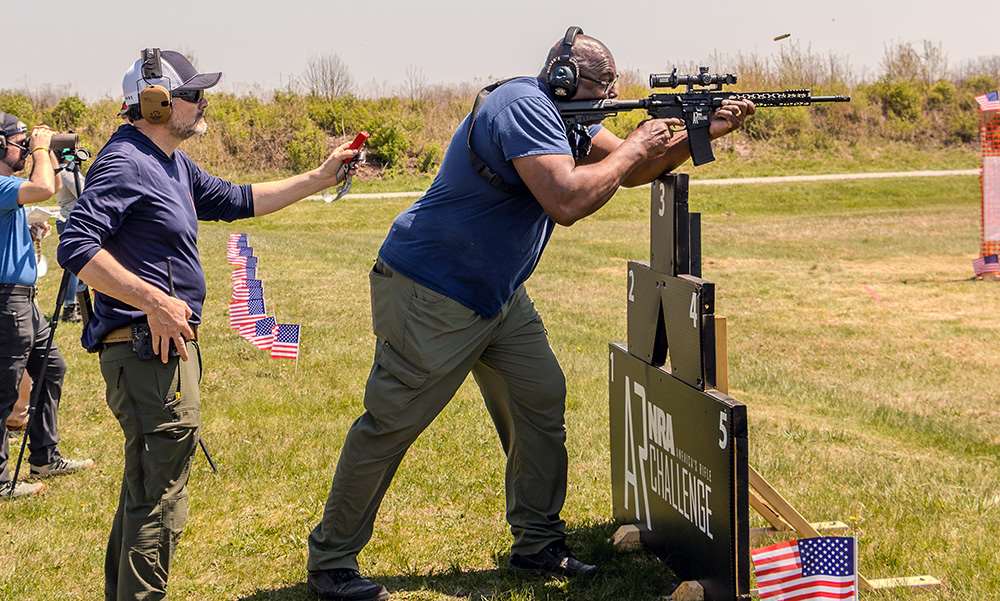
As heir to that tradition, the NRA recently launched America’s Rifle Challenge (arc.nra.org), which recognizes that “the AR-15, owned by tens of millions of responsible American citizens, is truly America’s Rifle. Commonly owned and used for self-defense, recreation, hunting, competition and all forms of sport shooting, the proper use of America’s Rifle by responsible firearms owners is vital for the protection of our homes, our nation and our way of life.” The program offers different levels of training and competition with AR-15-type rifles.
While protected by the Second Amendment, the AR-15 is at the top of the list of firearms that some politicians connive to ban and have banned in a handful of states. NRA’s response to these latter-day prohibitionists who act in the tradition of Gen. Gage in 1775 is to train more American citizens in the use of this fine rifle.
It is truly time to celebrate America and its Second Amendment. The United States is 250 years old, the NRA is 155 years old and America’s riflemen continue to hold the torch of freedom.
Attorney Stephen P. Halbrook is a senior fellow with the Independent Institute. He is also a firearm historian and the author of 11 books, including That Every Man Be Armed: The Evolution of a Constitutional Right, The Founder’s Second Amendment and A Right To Bear Arms.
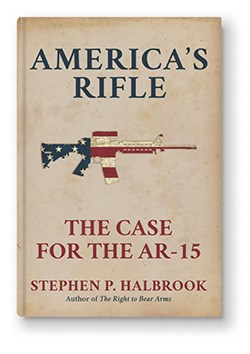 America’s Rifle: The Case For The AR-15
Collectively, Americans own more than 44 million AR-15s and other similarly configured semi-automatics, making it as ubiquitous a firearm as rifles and muskets were in the American founding era. In America’s Rifle: The Case For The AR-15, Halbrook provides a comprehensive look at the deeply rooted Anglo-American tradition of bearing arms, as well as the ubiquitous presence of commonly owned repeating firearms within American culture. He also provides a clear understanding of what defines the modern AR-15 and debunks the commonly heard “assault weapon” misnomer, a term that didn’t even exist until 1989, yet is so often used by anti-Second Amendment activists.
Across four parts and 15 chapters, Halbrook offers readers a clear and thorough walkthrough of Second Amendment jurisprudence, as well as firearm development and usage, laying the groundwork for a well-crafted series of rebuttals that conclusively disprove the historical, legal and policy arguments so often used by gun prohibitionists. In so doing, Halbrook demonstrates that gun bans are antithetical to the U.S. Constitution and reaffirms the truth known to millions of Americans: that the AR-15 is America’s rifle.
Price: $19. Contact: Stephen Halbrook, Attorney at Law; (703) 359-0938; stephenhalbrook.com.
Most Popular