There’s an obvious need for care in the handling of pistols and revolvers. Nobody disagrees with this premise. Ignorance, inattention, apathy or just plain human error sadly results in tragedies every year. Naturally, there are training programs to address the issues associated with learning safe gun handling.
Everybody who sets about organizing such a program wants to make safety rules so positive, so certain and so profound that there is little chance that they will ever be violated. In the course of all this effort, some gun educators are actually complicating the learning process.
I read a new set of rules recently and had to pause at the first line. It stated, “Treat every gun as though it was loaded, until verified otherwise.” What happens at that point? Is it then OK to point the gun at other people? After all, you have verified that the gun is unloaded, so it is no longer dangerous. The point is that the instruction is not well phrased and implies there are two different sets of gun-handling rules-one for loaded guns, another for unloaded ones. It should be obvious that this is not true. It also flies in the face of human experience, which tells us that simple, straightforward rules that are easily understood are more likely to be obeyed. This is true even with sophisticated, educated people. There is not much equivocation in an eight-sided red sign that says “STOP.”
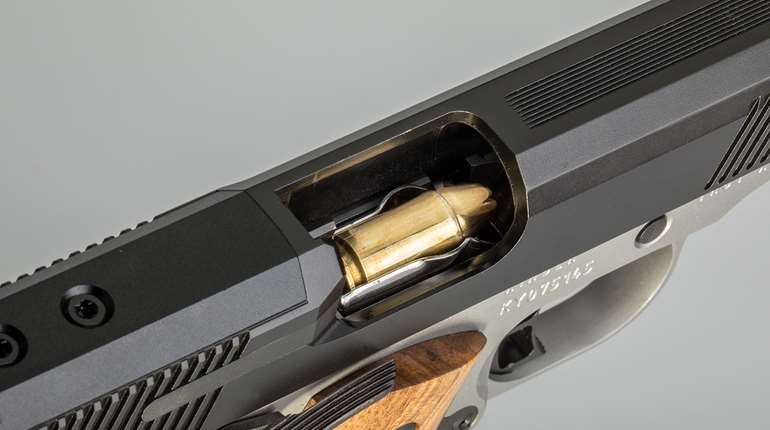
That is why I prefer to use the simple statement that is Rule No. 1 in Jeff Cooper’s set of four. The late Col. Cooper put it this way: “All guns are always loaded.” Critics have questioned this rule on the grounds that it isn’t directive. It doesn’t tell you to do something-or even refrain from doing something. But it does state a condition of awareness. If it is a gun, it is loaded. Loaded when you just checked it, loaded right after you removed it from your holster and no one else touched it, loaded when taken from a safe where it has been stored for years-always, always loaded. All the specifics of where the muzzle is pointed and where your trigger is placed and how you fire it-all flow from the firm understanding that the gun is loaded. How simple can you get?
Most Popular