There are shooting sports enthusiasts in the community who have a bucket list. It includes those rifles, shotguns and handguns they would like to shoot someday, if they could just get their hands on one. The work I do has provided opportunities to test-drive a variety of models over the years. But there are still a few on my list that I'm hoping to work with.
One of those guns has been the Czech vz. 61 Scorpion. Chambered in .32 ACP, the original military variant is a compact machine pistol, capable of semi-automatic or full-automatic fire, that was developed by Miroslav Rybář to serve as his graduate thesis for the Czech Military Training Institute. One assumes it must have passed muster, because it was adopted by the Czech security forces in 1961, and it remained in service until 1979. Its small size, folding stock and signature profile have contributed to this pistol's appearances in a variety of Hollywood action movies and video games.
The vz. 61 in its original selective-fire and folding stock configuration cannot be legally shipped into the U.S. due to the National Firearms Act and importation bans. However, semi-automatic-only versions of the platform that are rebuilt from parts kits in country can be sold over the counter like other semi-automatic pistols. For those who want the folding shoulder stock, these kit guns need to be registered as short-barreled rifles (SBR) with the ATF before a stock can be legally attached.
The semi-automatic vz. 61 Scorpion pistols are not too hard to find, but they can be relatively expensive to purchase. A quick tour of the pistols available from online dealers revealed steel-framed semi-automatics available for real-world prices ranging from around $900 to $1,000. Although these are price tags that the more dedicated fans can work with, they are on the high side for the more casual collectors.
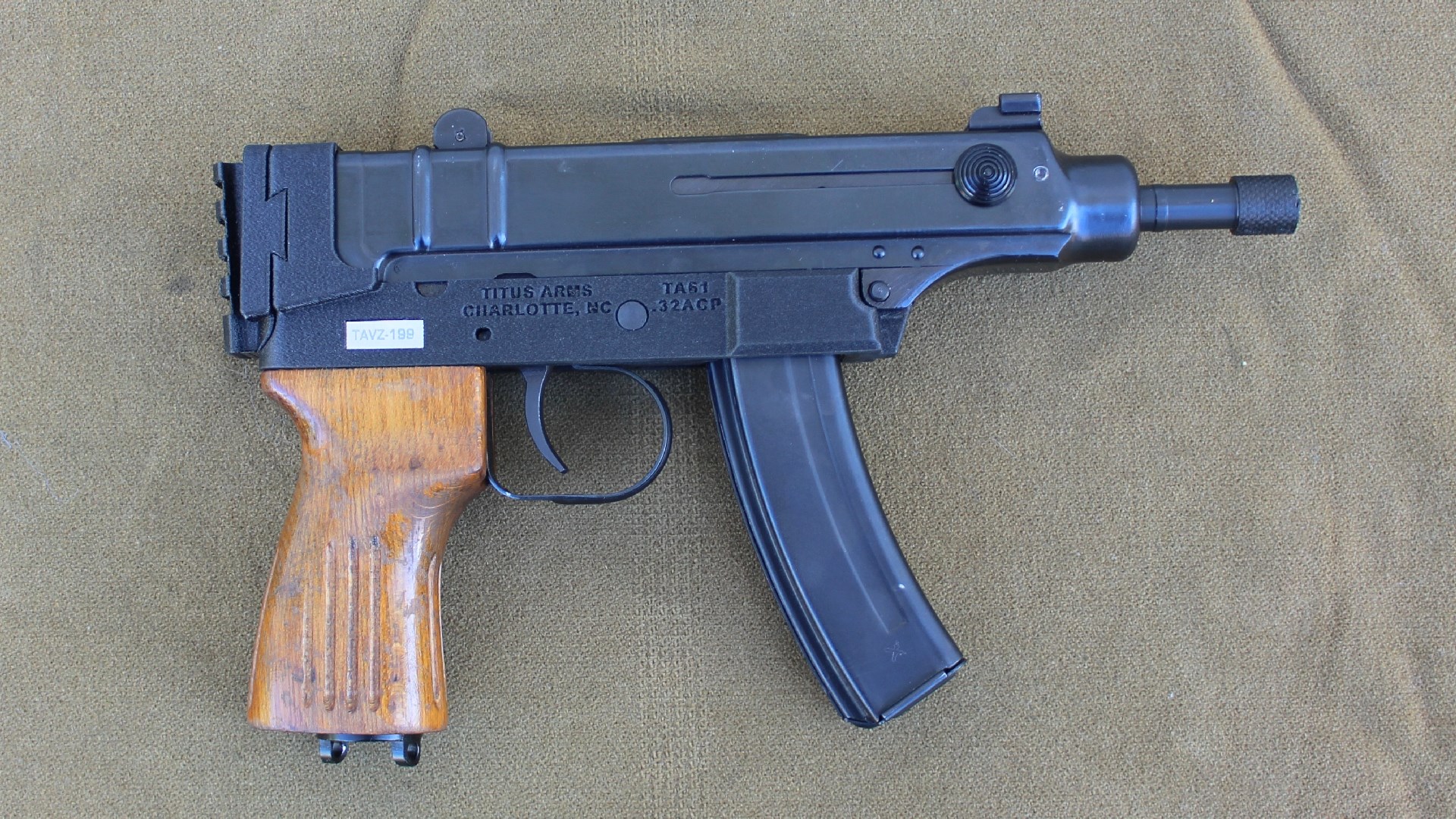
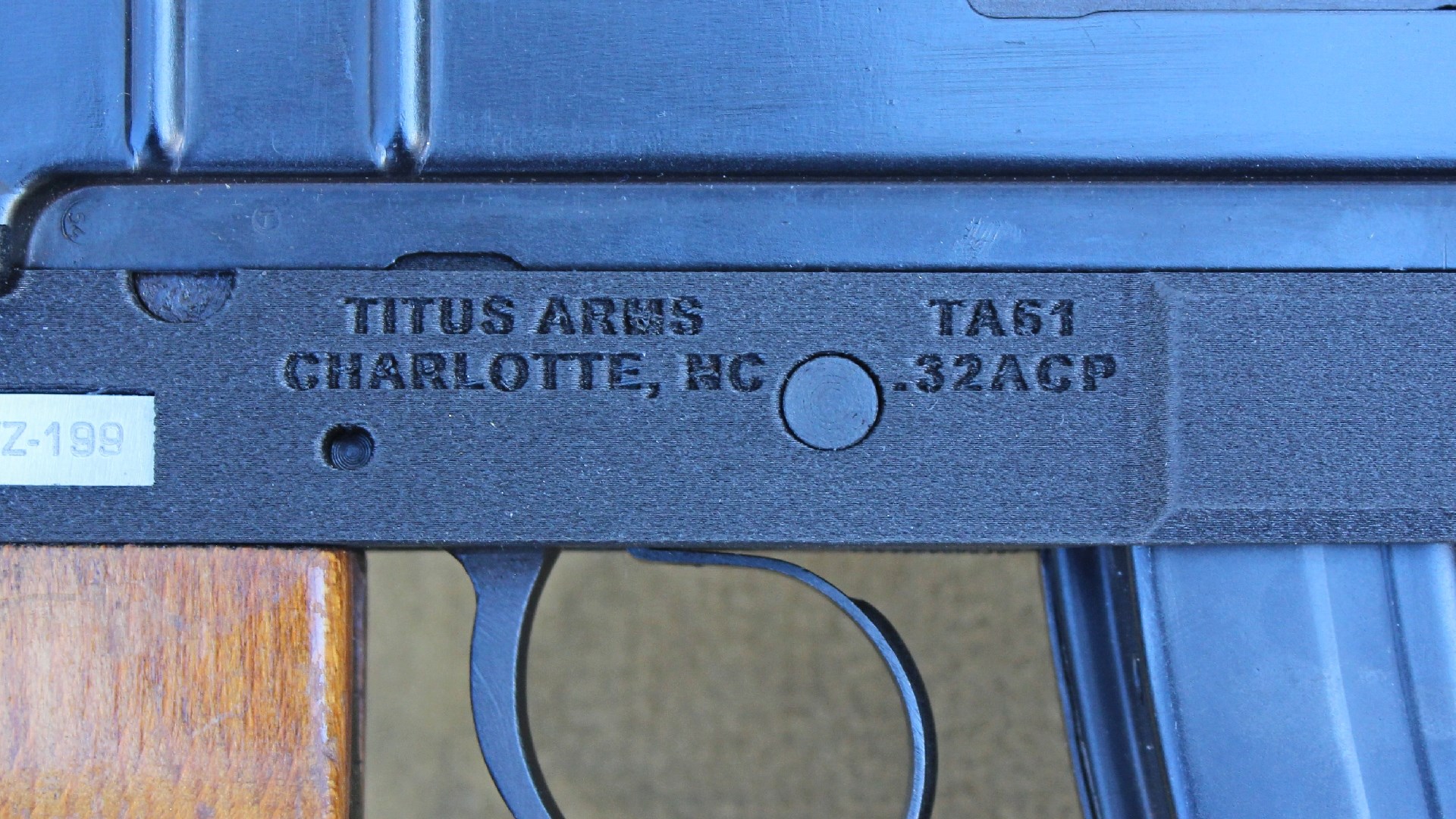
But the selection of vz. 61 options expanded in 2025 with the release of the more affordably priced TA61 variant from a new company called Titus Arms. These pistols have listed prices starting at $595. I was intrigued by the lower cost, as well as how the company goes about making these guns more affordable, so I requested one for this evaluation.
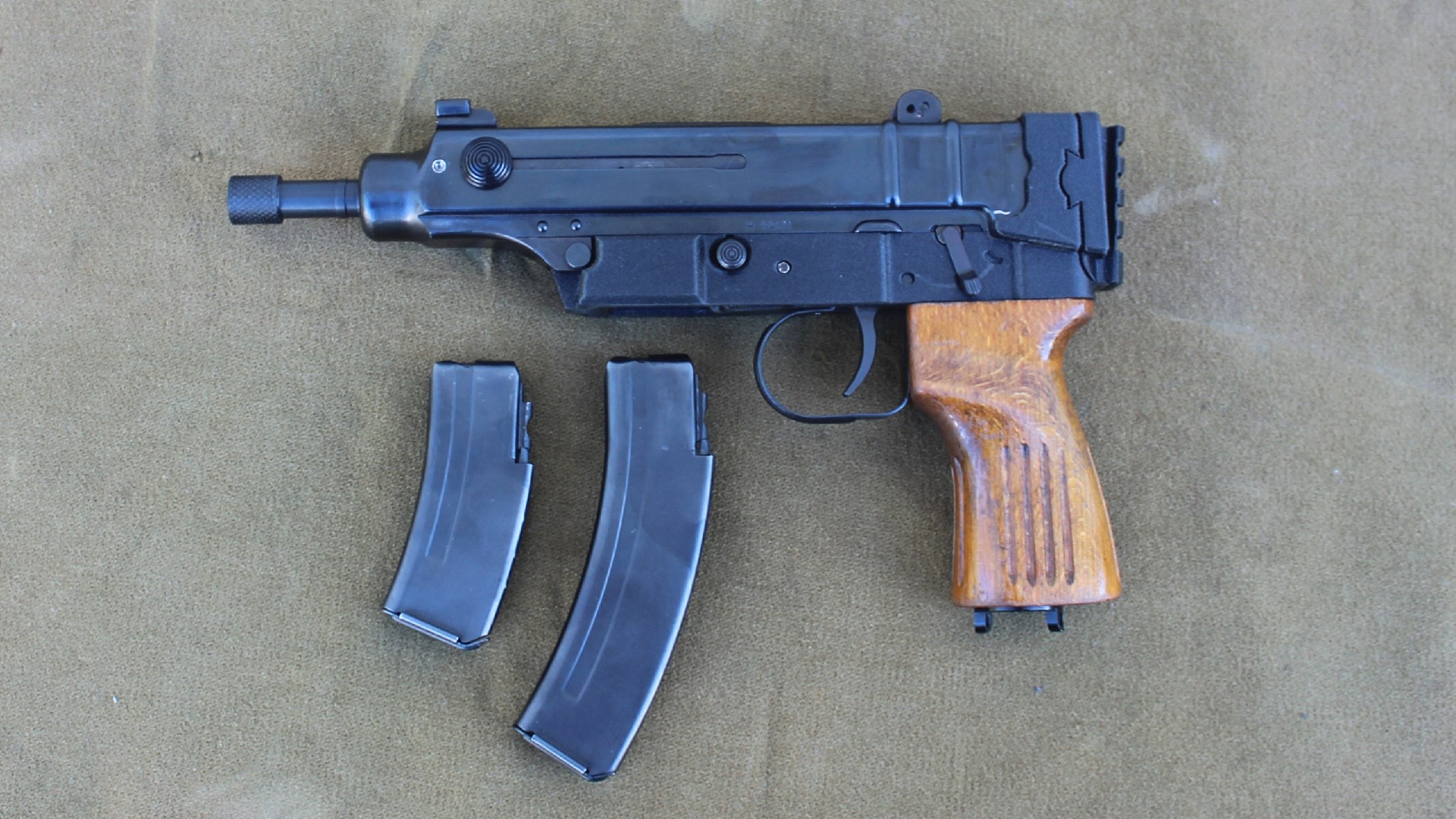
Although Titus Arms had dubbed the TA61 as a "clone" in its literature, these pistols are assembled using original Czech va. 61 Skorpion parts kits. These components includes the stamped sheet steel upper receiver and sights, the straight blowback-operated bolt assembly, trigger and trigger guard, the wood grip assembly and most of the small parts and controls. Titus Arms also includes the factory original magazines. The two key component changes are the American-made lower receiver and barrel.
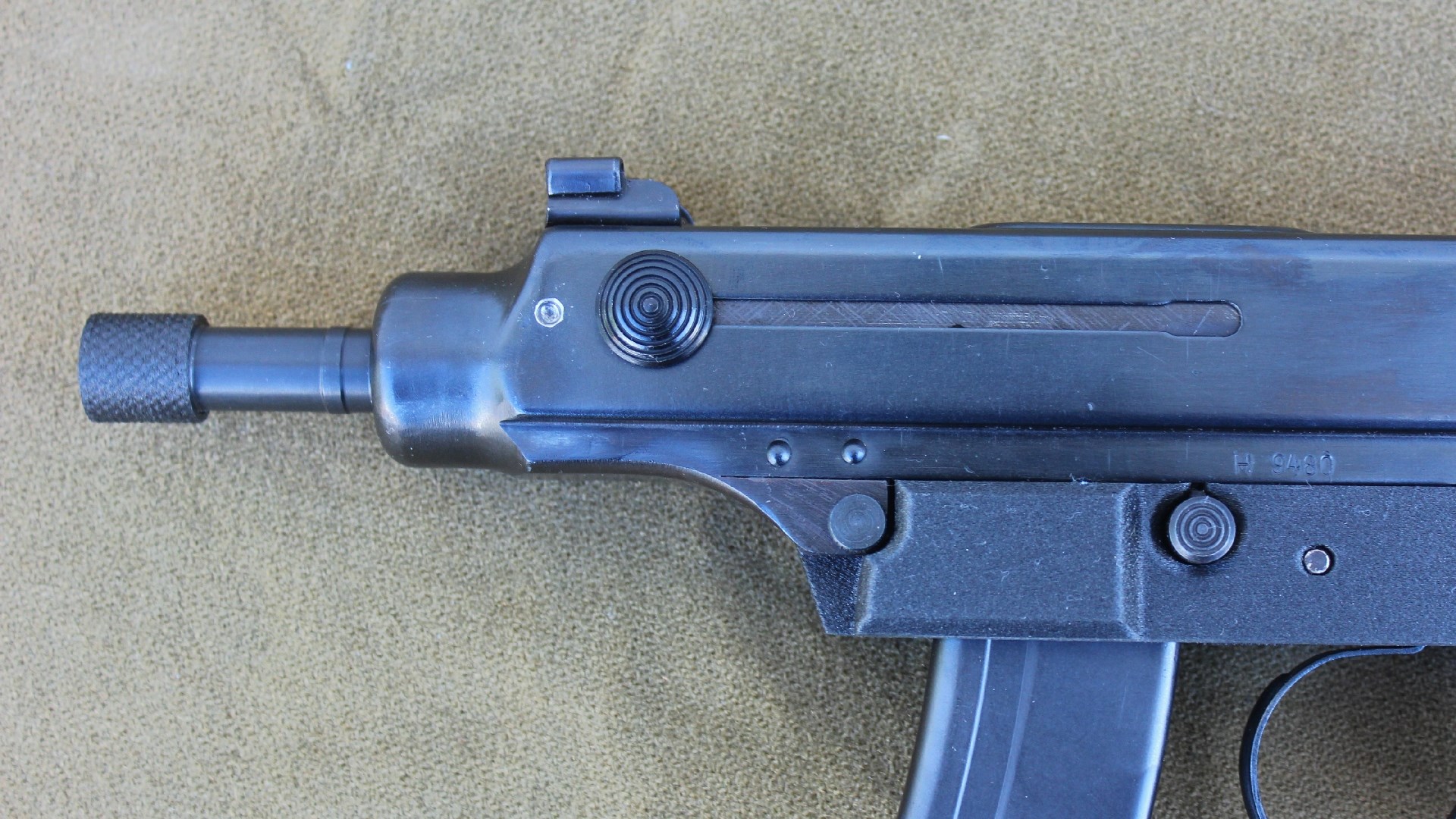
The original selective-fire lower receiver has been replaced with a semi-automatic, in-house 3D-printed, carbon-fiber fill nylon lower. The use of polymer significantly reduces production costs and the pistol's weight. The TA61 tips the scales at 36 ounces when unloaded and with no magazine inserted. This makes it about 10 ounces lighter than models with steel lowers.
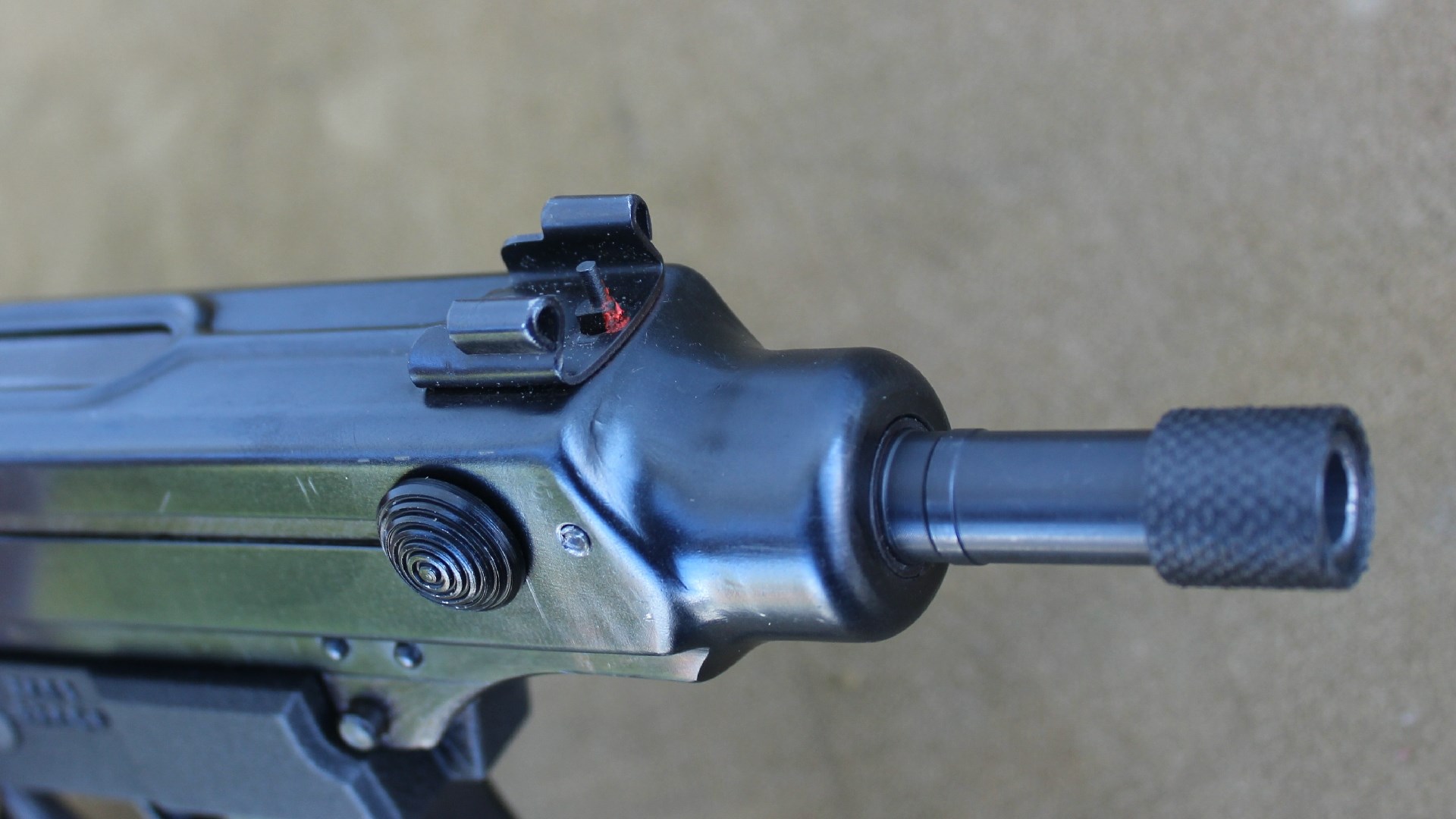
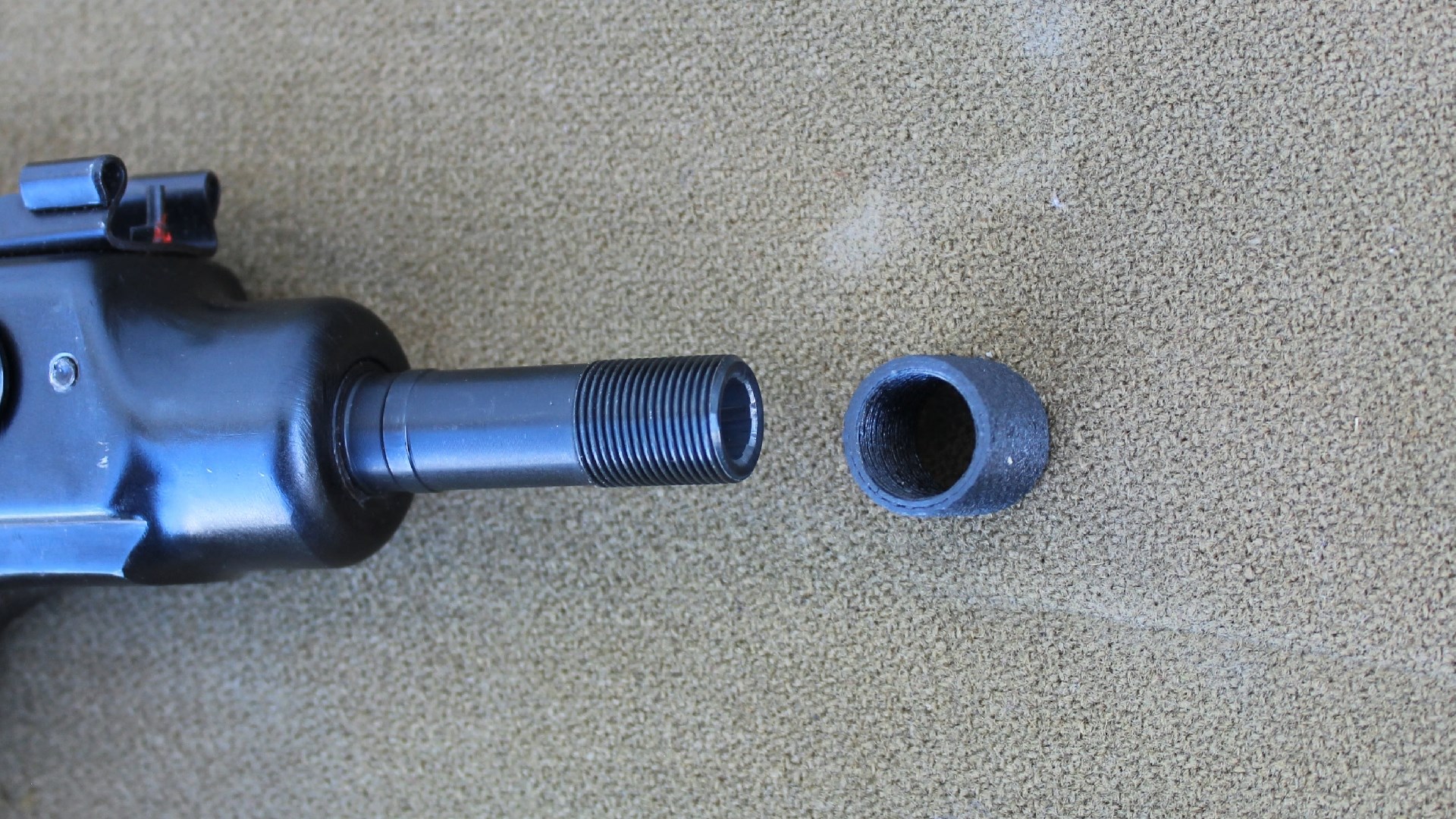
The factory barrel has been replaced with a 4.25-inch long, blued-steel barrel made here in the U.S. An added modern feature of this barrel is a muzzle threaded at ½x28 tpi to accommodate popular muzzle devices, including compensators and sound suppressors. A textured 3D-printed thread protector is provided.
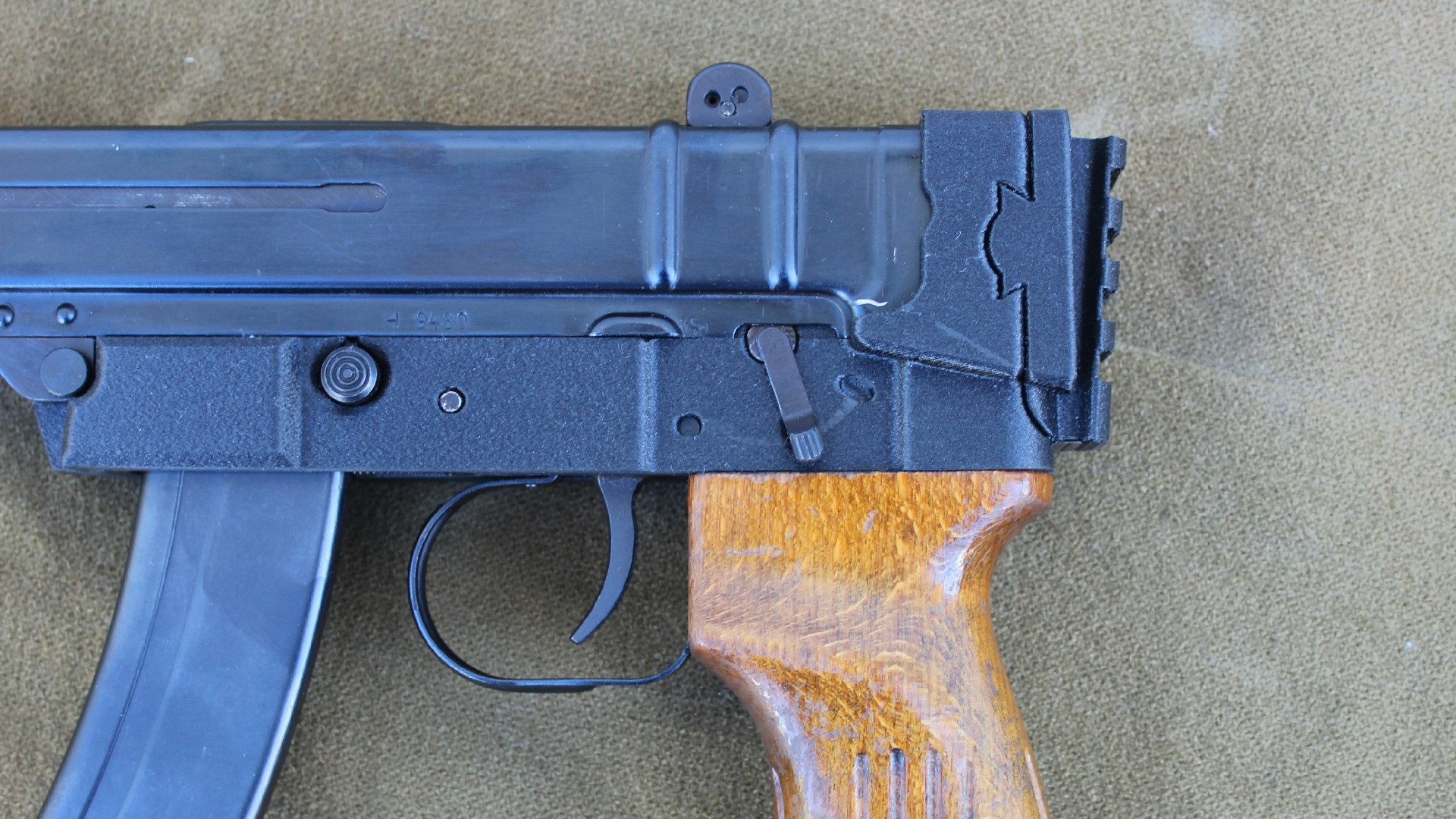
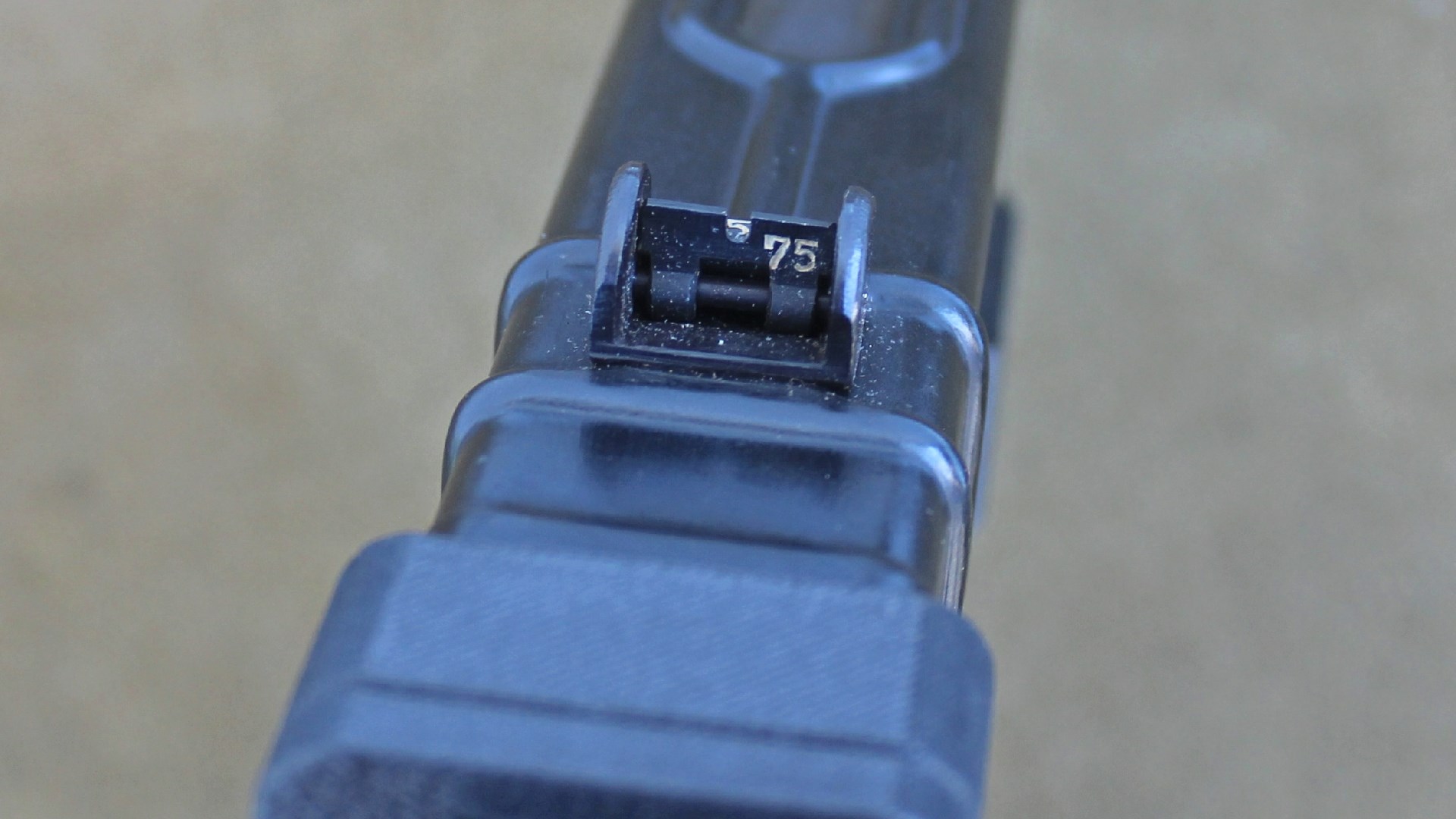
The upper receiver is stamped from a carbon steel sheet and treated with a blued finish. Since this is a surplus component, folks should not be too surprised to see some wear here. But the pistol I received showed only a tiny ding on the right side. Otherwise, the finish was intact. The height-adjustable front post sight is set into a winged sheet metal plate, which in turn, is spot-welded to the upper. The square-notch rear sight can be flipped for two distance settings; an optimistic 75 meters or an improbable 150 meters.
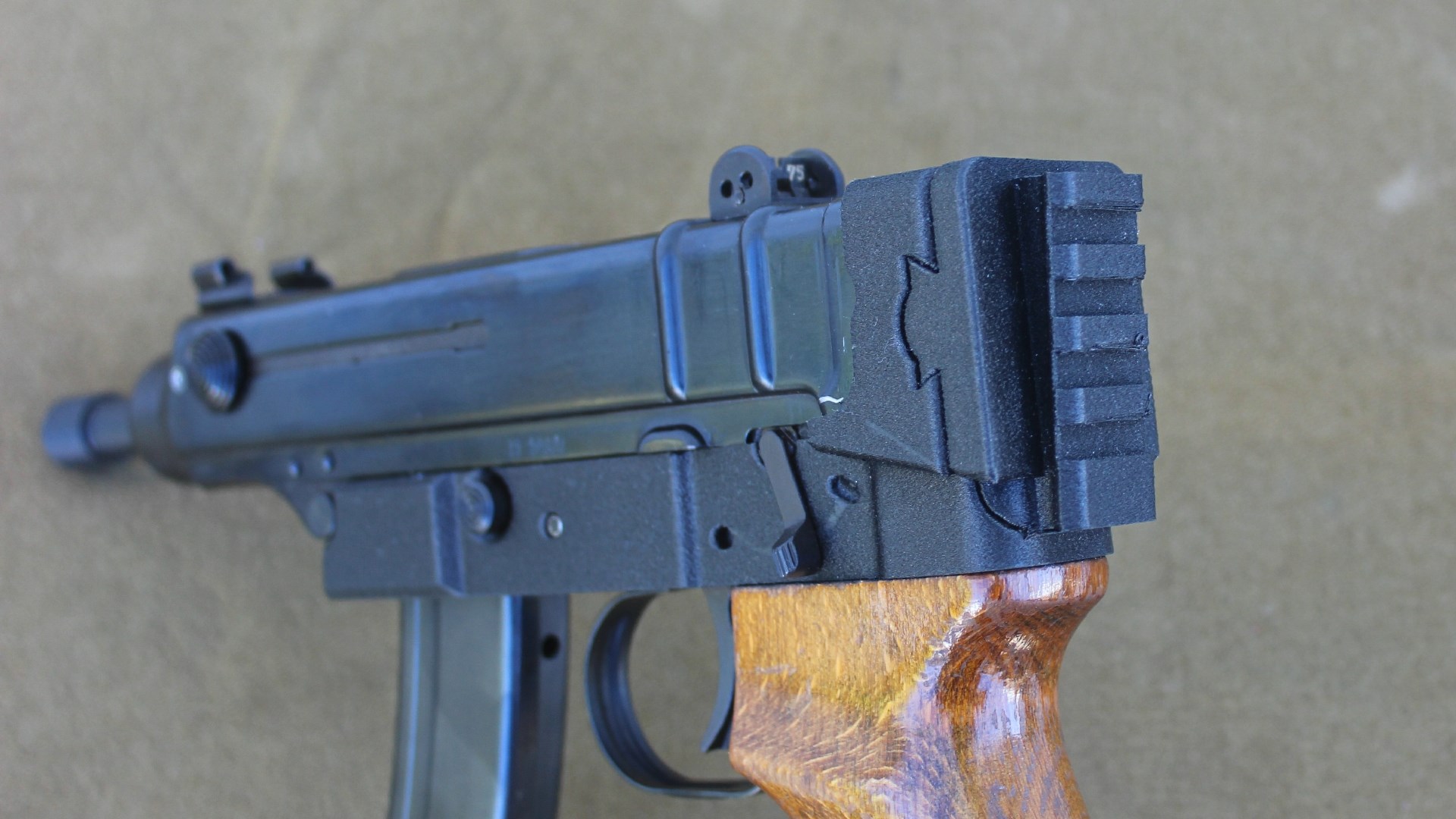
The vz. 61 Scorpion design is intriguing to work with because it differs so noticeably from modern polymer-frame, striker fired pistols. Spent cartridges are not ejected to the right. Instead, they are launched straight up through a top-side ejection port situated in between the iron sights. The bolt assembly is fitted with rounded right and left side cocking knobs.
Both knobs must be grasped at the same time to pull the bolt back for loading and unloading. This makes the bolt operations accessible for right or left-handed shooters but it still takes some getting used to. The bolt locks open when the last shot is fired. Once a loaded magazine is in place, the bolt knobs need to be pressed back about half an inch and released to close the bolt and chamber a fresh round.
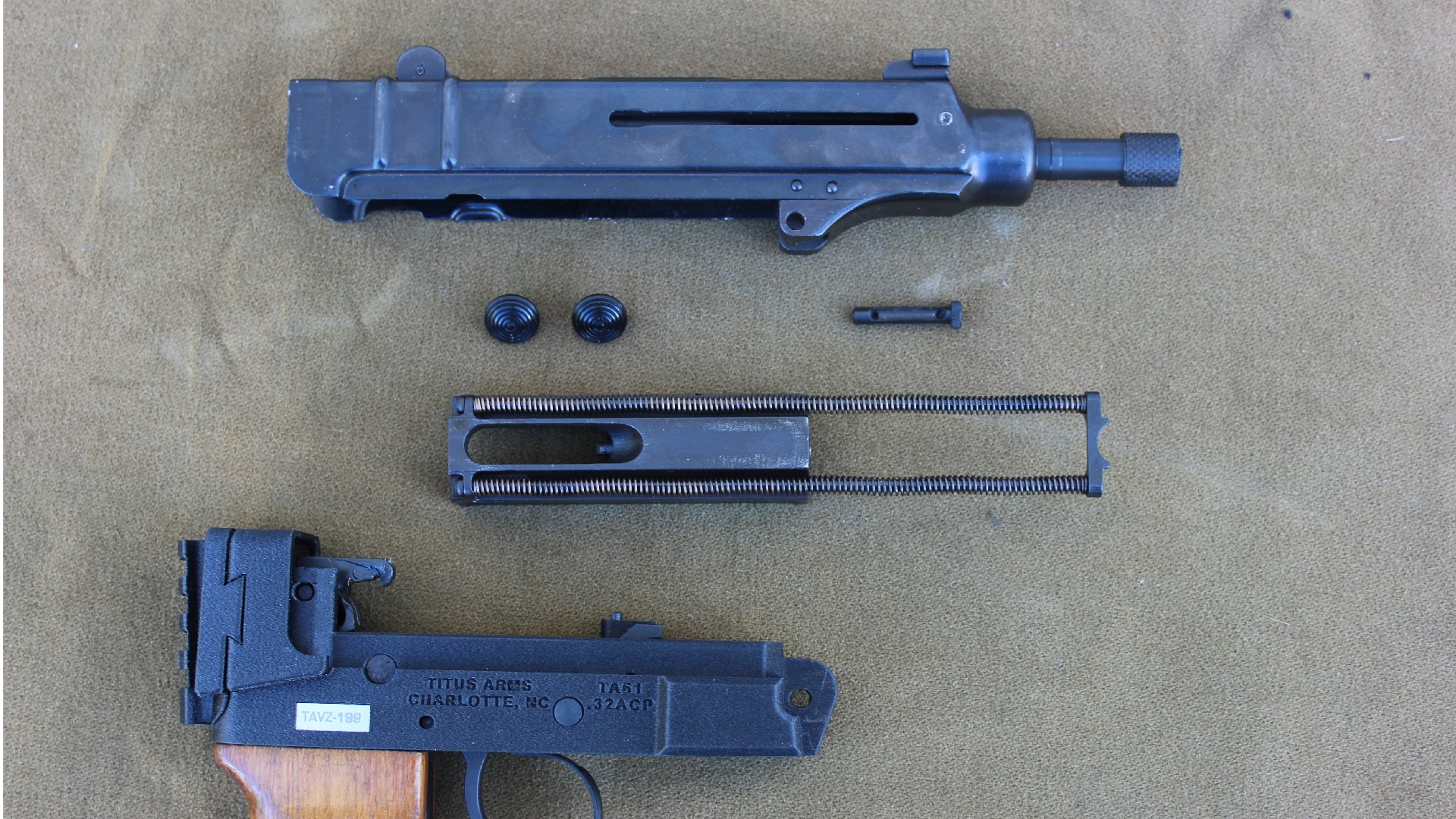
The telescopic bolt assembly, which fits around a good sized portion of the barrel, is fitted with a spring-loaded extractor set into the bolt's head. The fixed double ejector protrudes from the pistol's frame. The bolt is supported by two slim guide rods, a pair of round wire recoil springs and a steel clip which secures the springs to the rods. This is a direct blowback assembly, meaning, the weight of the bolt and the pressure of the springs hold the bolt closed until the pistol is fired. There is no delay mechanism.
However, because the bolt is relatively light, the action incorporates an inertial rate reducer device. Housed inside the wooden pistol grip, this device works to slow the machine pistol's full-automatic rate of fire from 1,000 rounds per minute to a more manageable 850 rounds per minute. As the bolt travels rearward, it strikes a cam that pushes downward on a spring-loaded, weighted block installed inside of the wooden grip.
At the same time, the bolt engages a hook positioned behind the bolt that secures the bolt in its rearmost position. The block inside the grip momentarily drops down, stops and then is pressed back up by the spring supporting it. When the block returns to the top of the grip, it disengages the bolt hook so that the bolt is free to travel forward and chamber a fresh round from the magazine along the way. For the TA61, Titus Arms recommends lubricating the bolt hook with gun grease instead of oil to ensure reliable operation.
The printed lower receiver is fitted at the front end with a steel pivot pin, not unlike that of an AR-15 rifle. With the magazine removed and the pistol completely unloaded, the pin is pulled most of the way out to the left side of the frame where it is captured by a spring-loaded detent. With the pin in this position, the upper can then be pulled forward slightly and swung upwards in order to remove the bolt assembly for cleaning and lubrication. Although I separated the upper and lower for photography, it's not necessary to do so for routine maintenance.
The round-button magazine release is found on the left side of the lower receiver just behind the magazine well opening. This pistol accepts curved, blued-steel vz.61 Scorpion magazines available in 10- or 20-round ammunition capacities. Don't forget that the .32 ACP is a semi-rimmed cartridge. This means that, when loading the magazines, the rim of the round being inserted needs to rest in front of the rim of the cartridge below it.
The generously sized sheet steel trigger guard houses the curved extension of the single-action trigger. Since this is a handgun built primarily from military surplus parts, I was not expecting the trigger to feel as good as it did. Instead of having a heavy or sluggish trigger pull, it had a slight, light take-up before a slightly mushy break with only 2 pounds, 1 ounce of trigger pull, according to a Lyman Products digital trigger gauge. The trigger reset was short and distinctive as well. In short, it was an unexpectedly easy-going and comfortable trigger to use.
Although this pistol does sport the original metallic three-position safety lever, it no longer provides a full-automatic fire position. Swinging the lever all the way forward to the first receiver notch, or all the way back to the third notch, sets the safety into Fire mode. The centrally located second notch serves as the Safe position. Setting the lever here blocks the bolt and trigger from cycling so as to prevent the gun from firing.
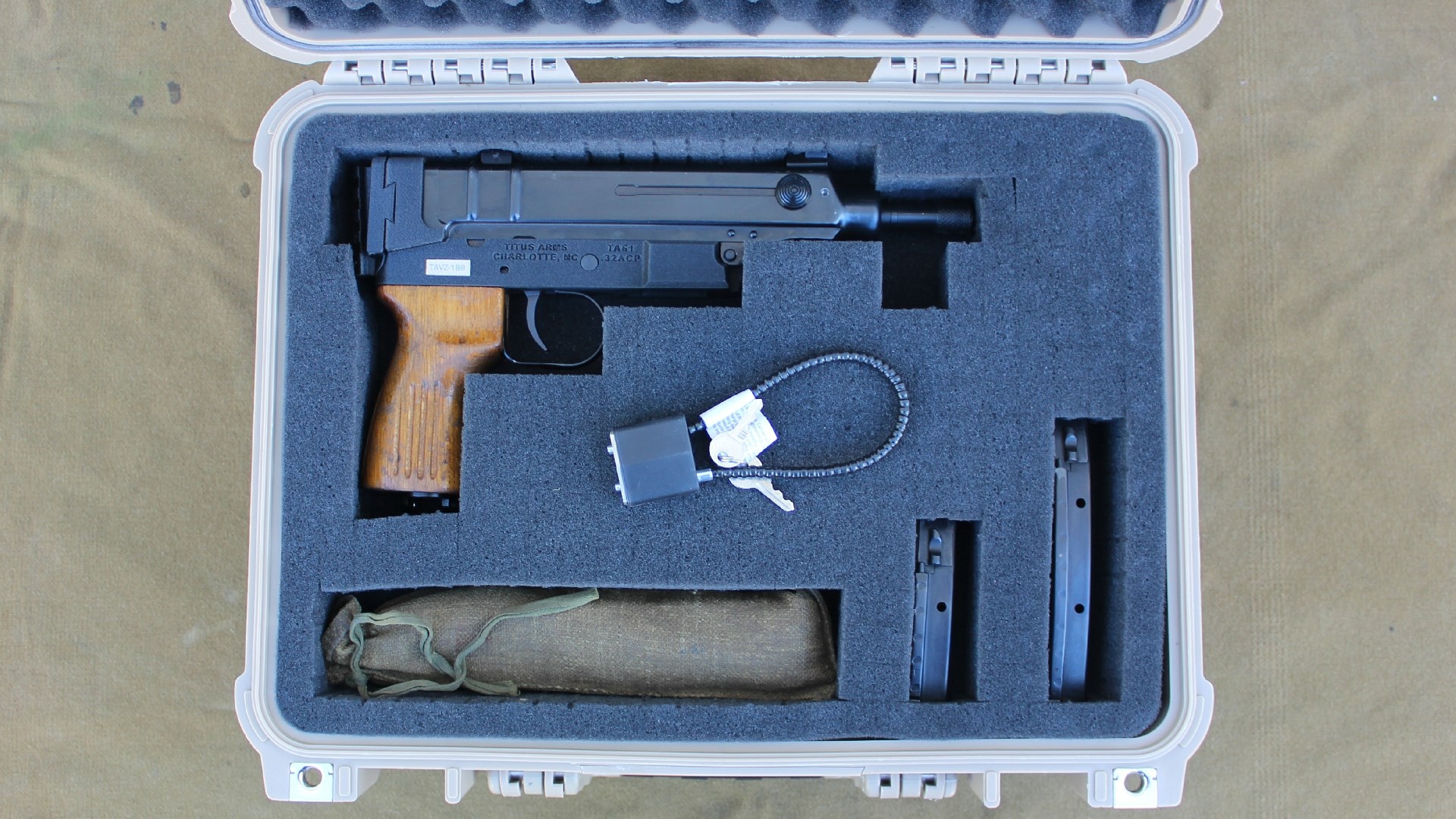
The remaining surplus component is a solid walnut grip with a profile unique to this platform. At the rear of the polymer receiver is a large dovetail that can be fitted with the vz. 61 Skorpion machine pistol's folding stock. In this case, that slot was filled with a polymer block sporting a 2-inch long, vertical, five-slot Picatinny rail. This rail can be used to mount stabilizing wrist braces. The polymer rail looks serviceable but personally, I think it would be good for Titus Arms to develop and offer a more sturdy aluminum rail. The other accessories shipped with this gun include a pair of magazines, one of each capacity, a surplus cleaning kit, a cable lock and a heavy-duty lockable Apache 3800 travel and storage case.
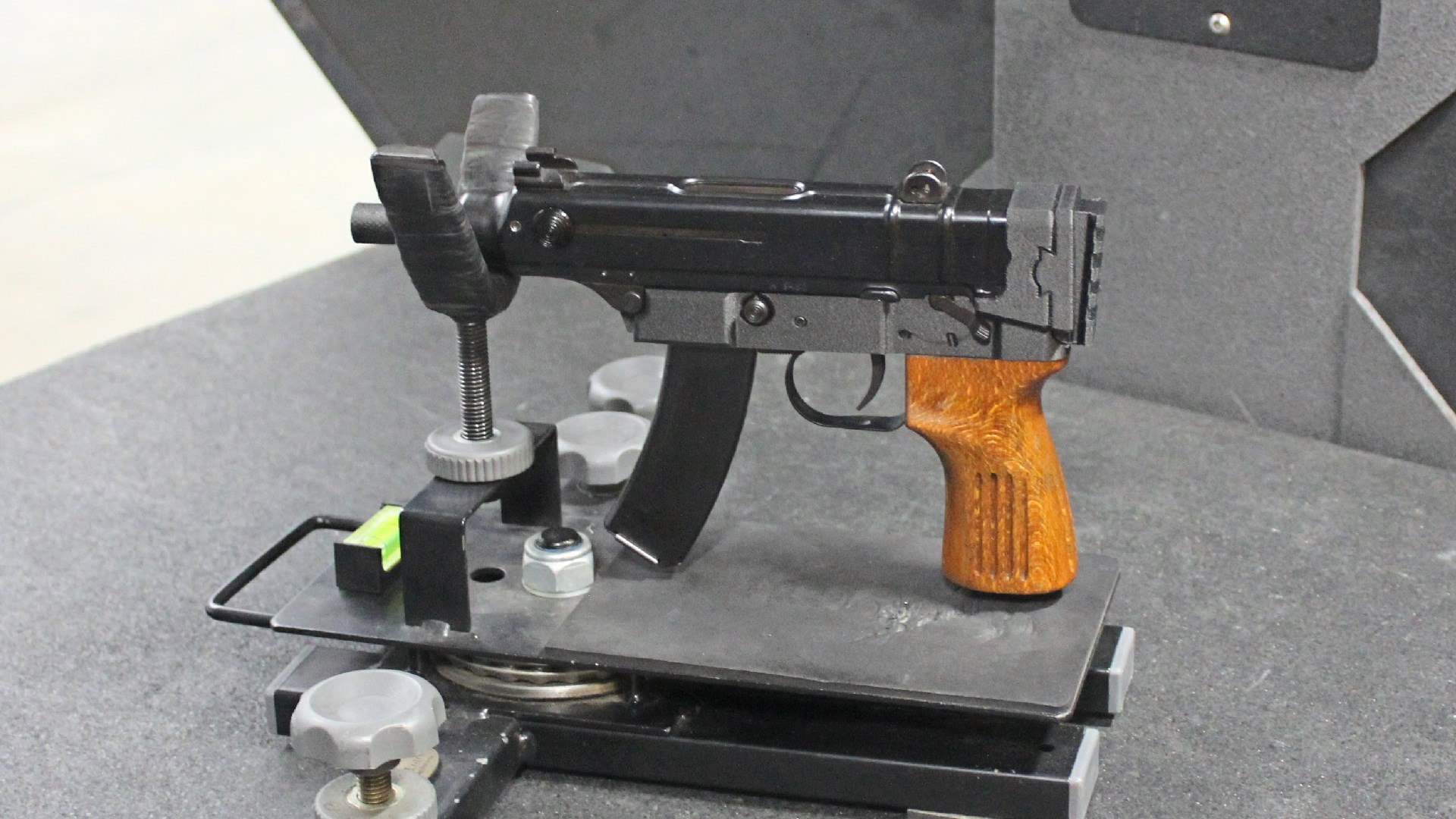
At the shooting range, the TA61 was put through its paces using a total of four magazines, three of the 20-round units and one 10-round magazine. They and the pistol worked flawlessly when loaded with compatible .32 ACP ammunition. Titus Arms is explicitly clear on its website, and in the pistol's printed materials, as to which loads can be counted on to cycle reliably.
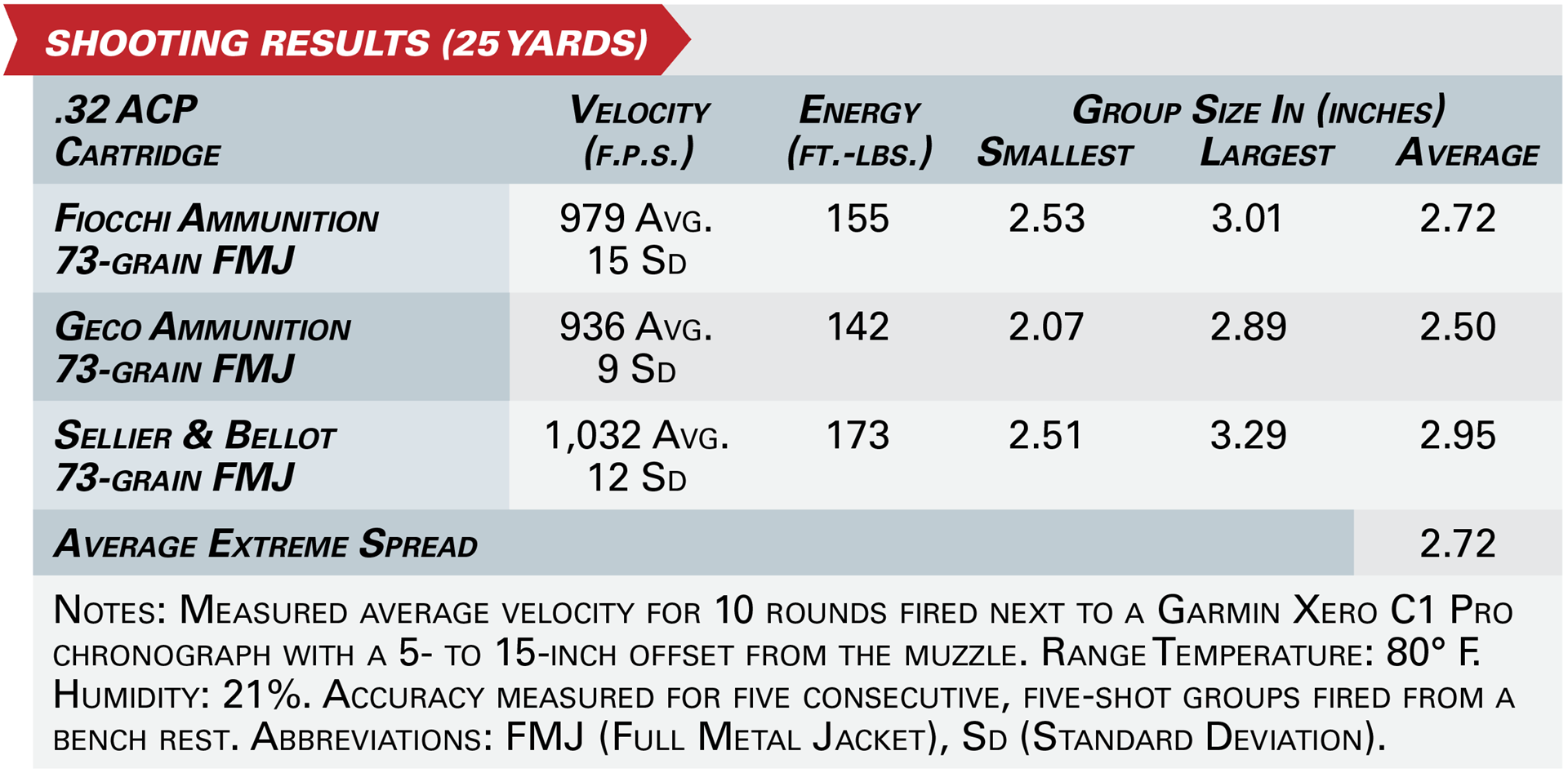
Because of the vz. 61-style bolt rate reduction mechanism, this pistol requires 7.65 mm Browning (European specification) loads topped with 73-grain full-metal jacket bullets to ensure the action cycles reliably. The two loads in this class that the company recommends are available from Fiocchi USA and Sellier & Bellot (S&B). Geco Ammunition also offers a suitable load. These three rounds have listed velocities of 984 to 1043 fps. I did some digging around and found I had a couple of boxes each of the Fiocchi and Geco offerings. The good folks over at AIM Surplus kindly provided the S&B ammunition for this test.
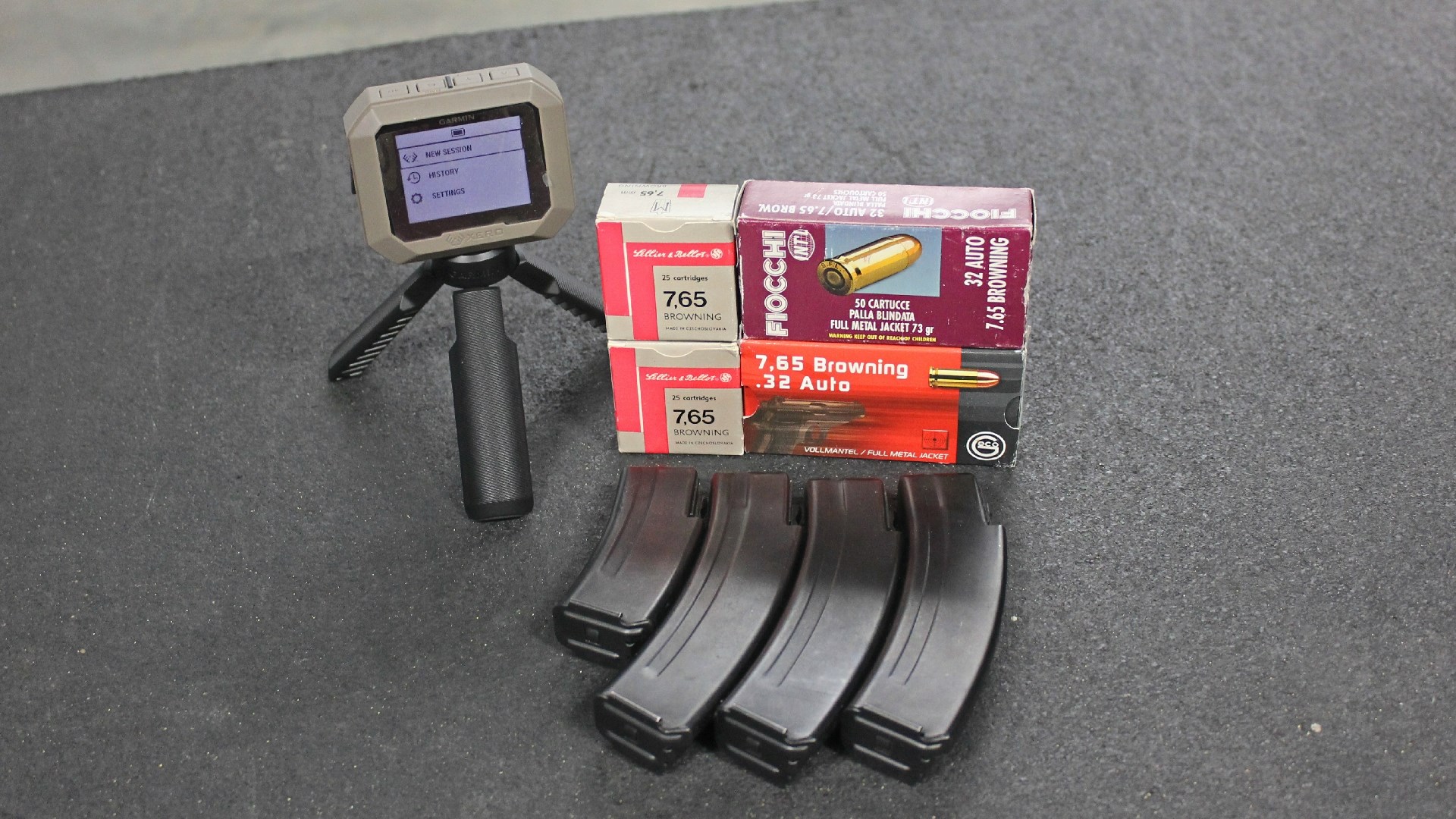
Out of curiosity, I brought along a box of Winchester USA ammunition that has operated properly in other .32 ACP semi-automatic pistols I've tested. These rounds are topped with a 71-grain full-metal jacket bullet with a listed muzzle velocity of 905 fps, which is between 79 to 138 fps slower than those of the recommended loads. Out of the 10 rounds of Winchester ammunition fired, the pistol experienced three failures to chamber properly with one of those rounds crushed and deformed against the feeding ramp. These failures were a clear indicator that the bolt was not being driven back hard enough to chamber the next round. As for the 73-grain loads, they fed, fired and ejected properly.
The other consideration in regards to the range test was just how far out the paper targets should be posted for the five-shot group testing. Technically speaking, because this pistol has a 4.25-inch barrel, the targets would usually be hung at 25 yards. However, its rebuilt construction and vintage sight set (a polite way of saying difficult-to-see) had me wondering where the practical accuracy distance would actually be.
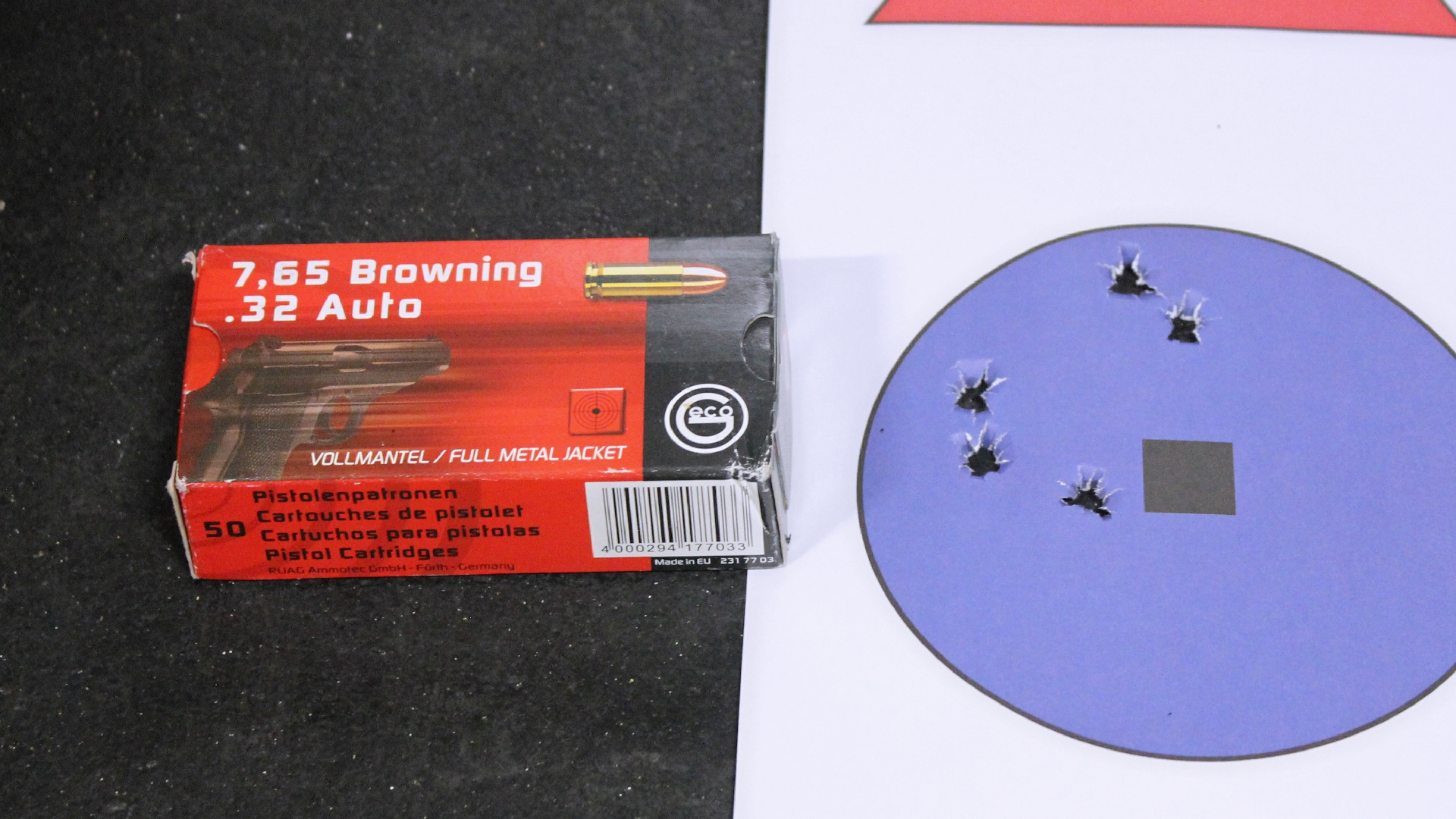
The rule of thumb I use for practical pistol accuracy consists of bench-rested five-shot group averages of around 3 to 3.5 inches at a given shooting distance. If the groups are that size or smaller, then all is well. If the shots spread out to around 4 inches or more, then the gun and ammunition combination is being fired past its practical accuracy limits, at least when I'm the person working the trigger.
Using the Fiocchi ammunition, the pistol printed a 1.86-inch group at 7 yards. At 15 yards, the two groups fired were in the golden 3.5-inch or so range. With the targets set at 25 yards, the two groups fired opened up to 7.37 inches and 9.22 inches. Based on these results, I hung up a fresh target and conducted the formal five, five-shot group accuracy testing at 15 yards. A Garmin Xero C1 Pro chronograph was used to measure average bullet muzzle velocities for 10-shot strings. Here are the results:
The Titus Arms TA61 proved to be both an enjoyable and interesting pistol to work with. It's an ideal option for casual collectors who want to scratch a vz. 61 Scorpion itch without breaking the bank to do so. It's a classic design that provides a unique shooting experience and a slice of military shooting history in the same package. If you are asking yourself if this is a good pistol for home defense, you're missing the point. This is a pistol to buy because you've always wanted something this cool in your collection. For more information, visit titusarms.com
TA61 Specifications:
Manufacturer: Titus Arms
Model: TA61
Action: single-action; straight blowback-operated; centerfire semi-automatic
Caliber: .32 ACP (7.65 Browning)
Finish: blued steel, 3D printed carbon-fiber filled nylon
Grip: one-piece walnut
Sights: adjustable post front; flip adjustable square notch rear
Barrel Length: 4.25 inches
Overall Length: 11 inches
Height: 6.625 inches
Width: 1.28 inches (receiver)
Weight: 36 ounces, unloaded, no magazine
Capacity: 10+1 or 20+1 Rounds
Twist: six-groove, 1:16-inch RH
Accessories: heavy-duty lockable travel case, two magazines, surplus cleaning kit, trigger lock, owner's instructions
MSRP: $595