by
Support NRA American Rifleman
DONATE
** When you buy products through the links on our site, we may earn a commission that supports NRA's mission to protect, preserve and defend the Second Amendment. **
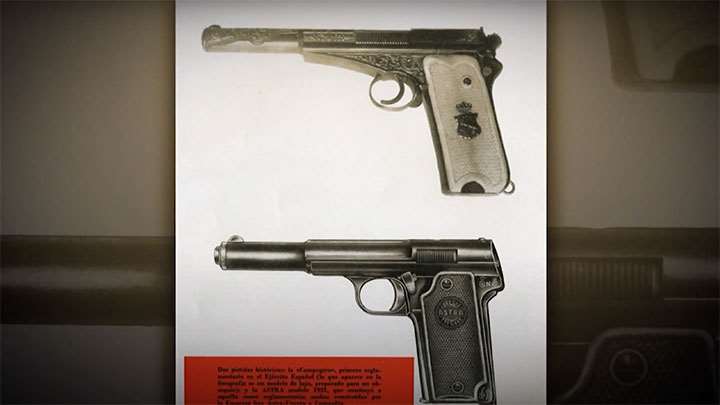
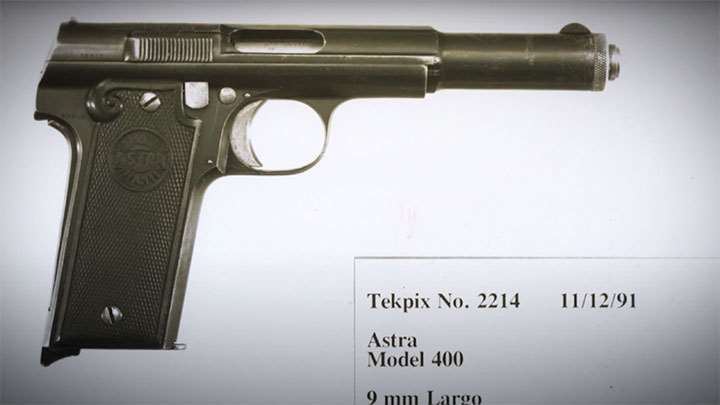
In 1919, the Spanish military began a search for a new handgun to replace the Campo-Giro service pistol used during World War I, chambered in 9 mm Largo. The design of the Campo-Giro inspired the creation of a new semi-automatic, blowback-action handgun designed by Pedro Careaga, which was selected by the Spanish military in 1921 as the Modelo 1921 or Astra 400. Chambered in the same 9 mm Largo cartridge as the previous Campo-Giro, the Astra 400 used a simple blowback action that did not use any locking surfaces to delay opening of the bree
Due to this design feature, the Astra pistols required a heavier slide and action spring, resulting in a stiff slide and a weight profile similar to the M1911. The frame and slide were both constructed of steel, with a tubular-shaped slide. The only main controls were a combination slide lock and safety tab on the left side of the frame and a magazine release at the bottom of the grip. The Astra handguns were produced by Astra-Unceta y Cia SA, with the Model 400 being manufactured largely for the Spanish military.
A smaller version of the design was also made for export, chambered in .32 ACP and .380 ACP as the Astra A300. The A300 was designed for domestic and export sales in mind, and its smaller size and more common chambering made it more desirable for the American market than the larger Astra 400. The Astra A300 has a length of just over 6" and at a weight of 22 oz. Through the 1930s and 1940s, more than 108,000 Astra A300 handguns were made.
During World War II, the smaller size and reliable design of the Astra Model 300 made it a popular option for the Luftwaffe, and it was used by Germany during the war in both the .32 ACP and .380 ACP. These pistols were marked with a German Waffenampt code, signifying adoption for German field use. Though the Astra 400 and Astra 600 were commercially available, the Astra A300 was the most successful in terms of popularity and numbers sold.
The unique layout of the Astra A300 slide and frame also made it more visually intriguing, compared to other mass-produced blowback handguns of the time. In 1946, the Spanish military adopted the Star Model A and retired the Astra 400. This stopped the production of the larger Astra models, though production of the Astra A300 for export sales continued until 1950.
To watch complete segments of past episodes of American Rifleman TV, go to americanrifleman.org/artv. For all-new episodes of ARTV, tune in Wednesday nights to Outdoor Channel 8:30 p.m. and 11:30 p.m. EST.
The Campo-Giro on top versus the Astra Modelo 1921, or Astra 400.
Due to this design feature, the Astra pistols required a heavier slide and action spring, resulting in a stiff slide and a weight profile similar to the M1911. The frame and slide were both constructed of steel, with a tubular-shaped slide. The only main controls were a combination slide lock and safety tab on the left side of the frame and a magazine release at the bottom of the grip. The Astra handguns were produced by Astra-Unceta y Cia SA, with the Model 400 being manufactured largely for the Spanish military.
A right-side view of an Astra 400 semi-automatic, blowback-action pistol chambered in 9 mm Largo.
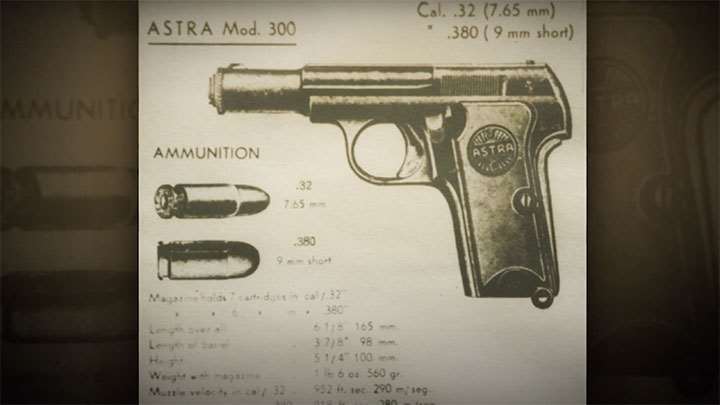
A smaller version of the design was also made for export, chambered in .32 ACP and .380 ACP as the Astra A300. The A300 was designed for domestic and export sales in mind, and its smaller size and more common chambering made it more desirable for the American market than the larger Astra 400. The Astra A300 has a length of just over 6" and at a weight of 22 oz. Through the 1930s and 1940s, more than 108,000 Astra A300 handguns were made.
An illustration of the smaller Astra 300 chambered in .32 ACP and .380 ACP.
During World War II, the smaller size and reliable design of the Astra Model 300 made it a popular option for the Luftwaffe, and it was used by Germany during the war in both the .32 ACP and .380 ACP. These pistols were marked with a German Waffenampt code, signifying adoption for German field use. Though the Astra 400 and Astra 600 were commercially available, the Astra A300 was the most successful in terms of popularity and numbers sold.
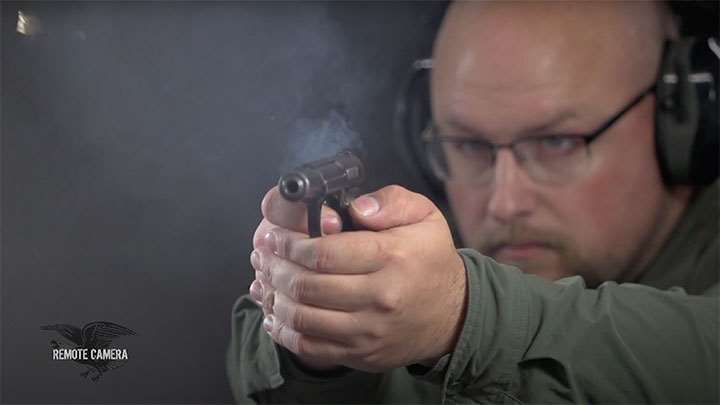
Shooting an Astra 300 pistol.
The unique layout of the Astra A300 slide and frame also made it more visually intriguing, compared to other mass-produced blowback handguns of the time. In 1946, the Spanish military adopted the Star Model A and retired the Astra 400. This stopped the production of the larger Astra models, though production of the Astra A300 for export sales continued until 1950.
To watch complete segments of past episodes of American Rifleman TV, go to americanrifleman.org/artv. For all-new episodes of ARTV, tune in Wednesday nights to Outdoor Channel 8:30 p.m. and 11:30 p.m. EST.